Treatment of landfill leachate: removal of ammonia by struvite formation
Abstract
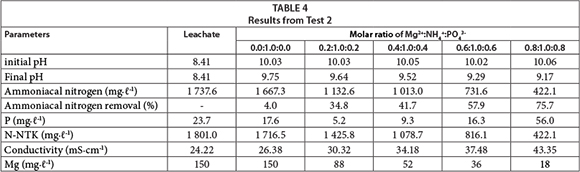
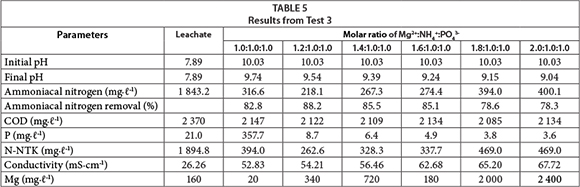
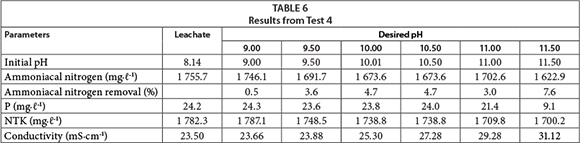
This paper presents a study of ammoniacal nitrogen removal by chemical precipitation resulting in the formation of ammonium and magnesium phosphat (MgNH4PO4∙6H2O), known as struvite, from the leachate in the Delta A landfill, located in the city of Campinas, Sáo Paulo, Brazil. After the addition of a magnesium source (MgCl2∙6H2O), and phosphorus (Na2HPO4∙12H2O), ammoniacal nitrogen was precipitated as highly insoluble salt. The removal of ammoniacal nitrogen from the leachate exceeded 85% when the reaction was performed at an initial pH of 10.0. The highest efficiencies were achieved when the molar ratio between the ions involved in the reaction, i.e., Mg2+:PO43-:NH4+, was 1.2:1.0:1.0, respectively.
landfill; leachate; ammonia; nitrogen removal
 Thumbnail