The nexus of technology, finance, and governance in South African wastewater management: a systematic literature review
Abstract
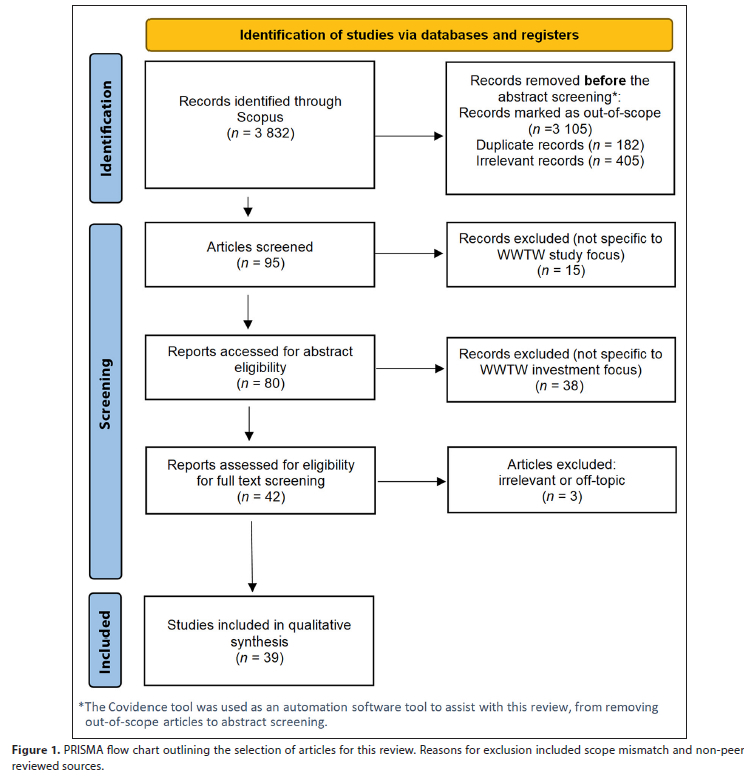
South Africa's wastewater treatment facilities (WWTWs) are facing a growing crisis. According to the Green Drop Progress Assessment report, which served as the baseline for operational planning in 2024, 64% of WWTWs are classified as being in a high or critical risk state. This decline is driven by a mismatch between infrastructure investment, governance capacity, and technological choices, compounded by the failure of most municipalities to produce Wastewater Risk Abatement Plans. A systematic literature review (SLR) of 39 peer-reviewed and grey literature sources was conducted, guided by the PRISMA framework, to analyse South African wastewater services and WWTWs. The findings highlight a crucial trade-off between energy-intensive mechanical systems and resilient nature-based solutions. Additionally, barriers in financing and regulatory enforcement create a gulf between innovation and practical implementation. This paper presents a phased strategic plan: immediate regulatory enforcement to stabilise existing assets; medium-term integration of renewable energy and decentralised systems to enhance resilience; and long-term financial restructuring to attract private-sector investment.
wastewater treatment; nature-based solutions; South Africa; infrastructure financing; innovation; water security
 Thumbnail