Aerobic biotransformation of 2, 4, 6-trichlorophenol by Penicillium chrysogenum in aqueous batch culture: degradation and residual phytotoxicity
Abstract
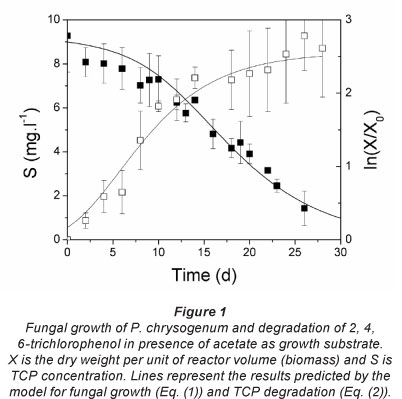
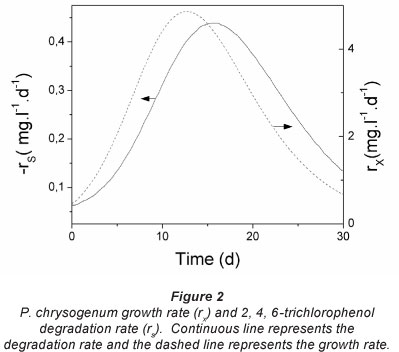
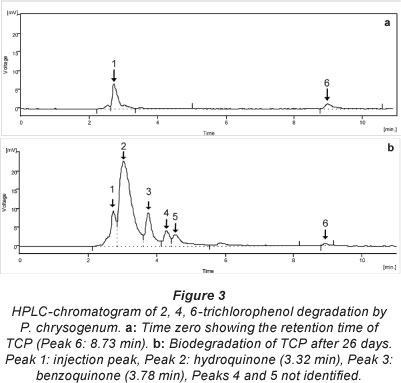
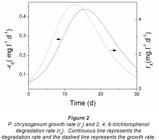
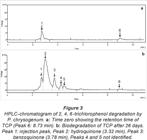
2,4,6-trichlorophenol (TCP) is a toxic compound widespread in the environment, with numerous applications. There are many fungi capable of degrading it, although little attention has been paid to non wood-degrading species. Penicillium chrysogenum ERK1 was able to degrade 85% of TCP in batch cultures in the presence of sodium acetate. Degradation rate was fitted to a specific first-order kinetic and the growth rate was fitted to a Gompertz model. Hydroquinone and benzoquinone were identified as degradation intermediates. The phytotoxicity of the residues was reduced by half after fungal treatment. These results suggest that Penicillium chrysogenum can be applied successfully to biodegrade TCP.
2, 4, 6-trichlorophenol; Penicillium chrysogenum; biodegradation; phytotoxicity
 Thumbnail
 Thumbnail
 Thumbnail