The ecological and economic benefits of investing in the rehabilitation and management of the Kluitjieskraal Wetland in the upper Breede River Catchment, South Africa
Abstract
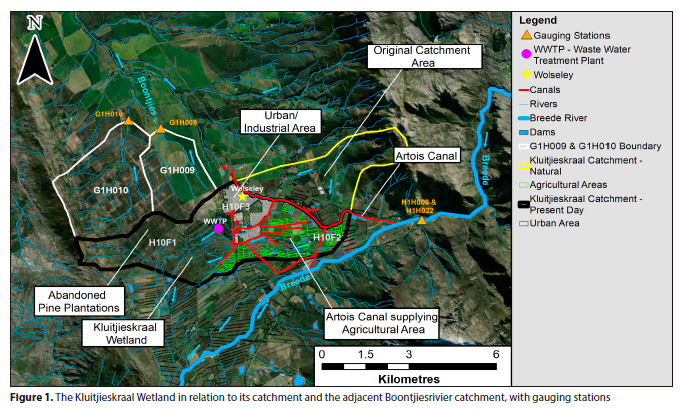
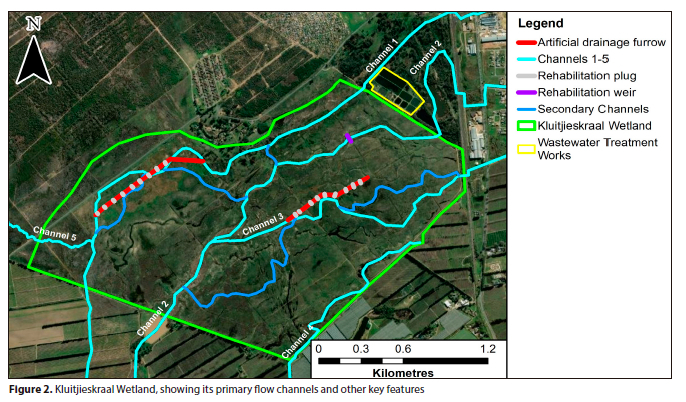
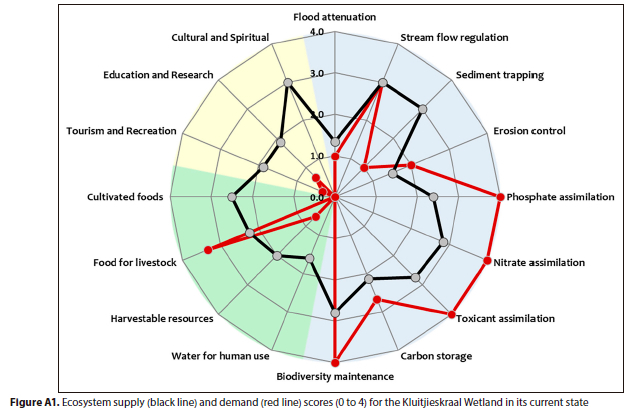
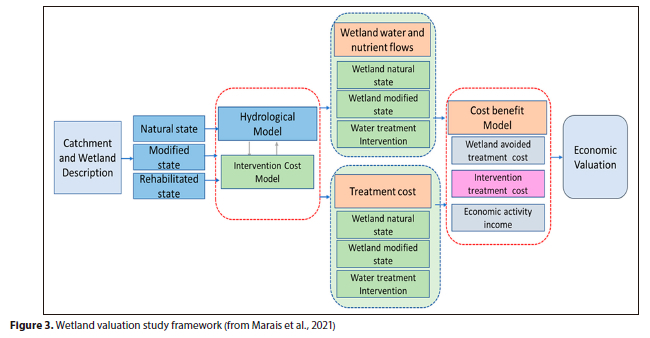
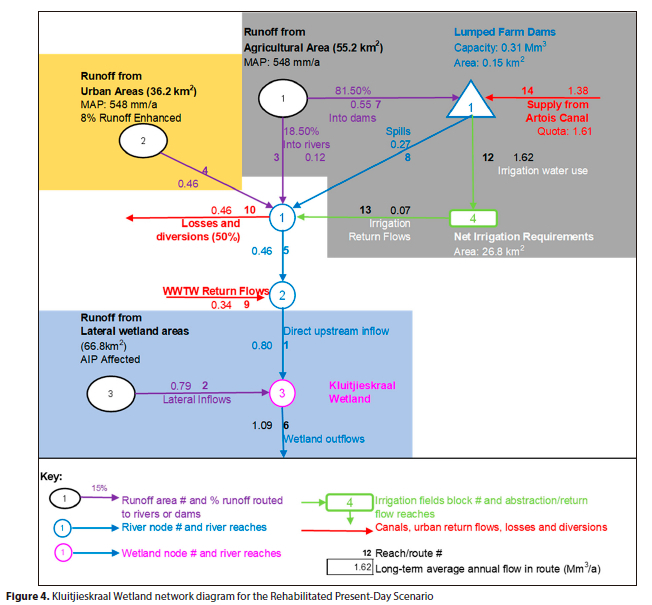
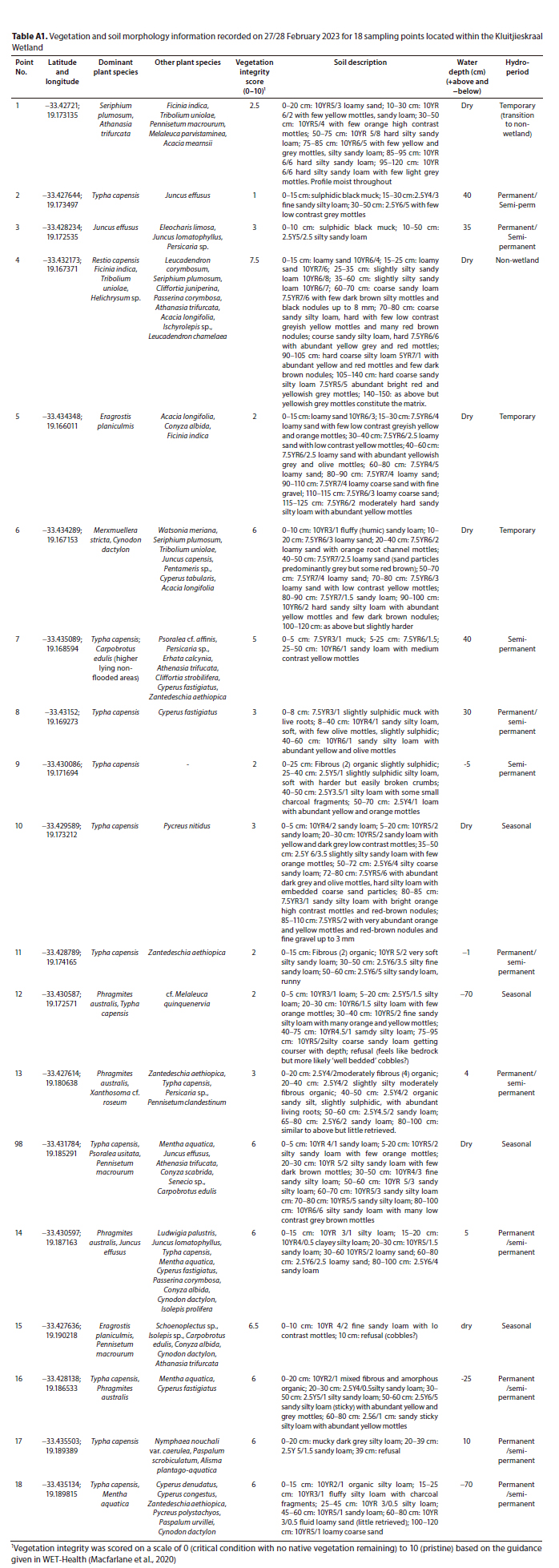
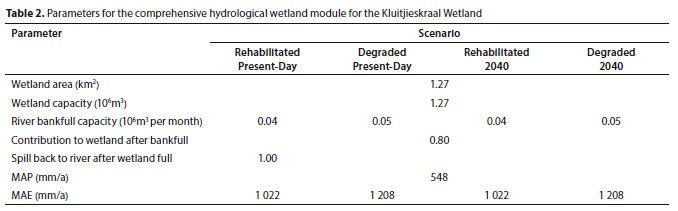
Despite growing water quality issues in South Africa, there have been few assessments of ecological infrastructure (EI) investment focussed on water quality enhancement. The Kluitjieskraal Wetland in the upper Breede River Catchment was selected for such an assessment, given that it has been the focus of long-term rehabilitation and management interventions (including the control of invasive alien plants and the 'plugging' of drainage canals) and is strategically located immediately downstream of the Wolseley town and its wastewater treatment works. This paper reports on the ecological and economic outcomes of these interventions. The study demonstrates the application of an interdisciplinary assessment approach for investment in EI, which included stakeholder engagement, and an ecological, hydrological and economic assessment. Underpinning the study was a WET-Health and WET-Ecoservices assessment and a detailed WRSM2000-Pitman model configured for the wetland in a rehabilitated present-day scenario and for a degraded scenario without interventions. A key outcome of the interventions was an increase of 11 ha of wetland area (and associated vegetation and sediments) in contact with low to medium flows, thereby significantly increasing the wetland's capacity to assimilate nutrients. Based on the replacement-cost method applied in the study, the water quality enhancement benefits of the interventions were valued at 1 201 301 ZAR/a; considerably higher than the combined contribution of the other ecosystem services valued, namely, sediment retention and livestock grazing. While the functionality of the wetland has been significantly enhanced, the recovery of the vegetation from its historically disturbed state to a more natural state is limited to localized areas where species characteristic of Breede Alluvium Fynbos wetlands (including the Critically Endangered Leucadendron chamelaea) persist.
wetland rehabilitation; nutrient assimilation; replacement costs; invasive alien plant control
 Thumbnail
 Thumbnail
 Thumbnail
 Thumbnail
 Thumbnail