Who wants to be an agent? A framework to analyse water politics and governance
Abstract
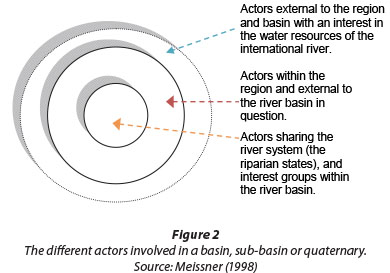
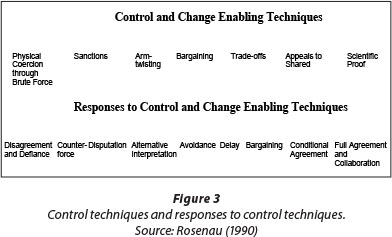
The purpose of this paper is to introduce a framework to analyse water politics and governance. The framework has been constructed from a social constructivist perspective. This theory places attention on the role of normative aspects like ideology, values, interests and culture in politics. This means that a theory of international relations such as neorealism, neoliberalism or structuralism would be appropriate but limiting for the analysis of water politics, in terms of the range of actors, processes and issues focused on. The framework's niche lies in that it focuses attention on non-state actors. This carries the potential to widen the understanding of the role and involvement of such actors in water politics and governance. The framework has five components: description of the geographic area or issue; the actors involved in water politics and governance; the (hydropolitical) history of the issue; the actors' power to enable change; and the type of interaction between the actors. In order to illustrate the components, examples from South and Southern Africa, and specifically the Kunene, Limpopo, Okavango and Orange River basins are used
Water; politics; governance; agential power; river basin; authority; ideology; economy
 Thumbnail
 Thumbnail