Response surface optimization with central composite design of a coagulation process using Opuntia microdasys coagulant for turbid water treatment
Abstract
Water treatment using chemical coagulants is still a challenging issue in developing countries due to the high cost of purchase and the residuals of coagulants in sludge. Bio-coagulants are considered suitable substitutes for chemical coagulants. These materials are environmentally benign, non-toxic, and generate reduced sludge quantities in comparison to traditional chemical coagulants. This research aimed to evaluate the performance of different parts (cladodes and seeds) of locally available cactus species (Opuntia microdasys) as novel natural coagulants. Turbidity removal from turbid water was monitored under varying pH and doses of cladodes and seeds. Additionally, the effect of coagulation by cladodes and seeds on water treatment was investigated and optimized. Fourier transform infrared (FTIR) spectroscopy was conducted to elucidate the coagulation mechanism and experiment of coagulation was designed using response surface methodology (RSM). Seeds resulted in the optimum turbidity removal efficiency of 98% at pH 7 and 60 mg/L coagulant dose, while the cladodes resulted in a maximum turbidity removal of 85% at pH 7 and 40 mg/L coagulant dose. Analyses of variance (ANOVA) revealed that coagulant dose and pH both play a very important role in turbidity removal. Protein-specific functional groups (Amide I (C=O), medium 1° amines, and medium aliphatic amines) were identified by FTIR analysis to confirm the presence of protein content in cladodes and seeds likely responsible for the mechanism of coagulation. Floc sizes of cladodes and seeds, analysed through micro-photographic analysis, were less than 10 µm and up to 50 µm, respectively.
bio-coagulants; water treatment; Opuntia microdasys; fruit; seeds; cladodes
INTRODUCTION
Water quality is one of the important factors for the well-being of humans (Kaczmarek et al., 2023). Treated surface water is a typical source for public water supply systems. This supplied water is utilized for drinking purposes. In Europe about 35-45%, and in the USA approximately 66%, of public water supply sources are surface water (Al-Weshah, 1992). In Pakistan, about 16 million people lack access to safe drinking water and therefore rely on unsafe water sources (Tabraiz et al., 2016). Water quality in developing countries is affected by climate change, which often increases the chance of waterborne diseases in the community (Jalees et al., 2022; Zeeshan et al., 2026). The change in rainfall patterns due to climate change is seen in Pakistan, causing floods (Iqbal et al., 2019; Muzammil et al., 2023). Flooding results in poor-quality water because of erosion and the inputs of man-made and anthropogenic impurities (Nanditha et al., 2023). The surface runoff from floods brings in suspended matter, including clay, silt, microorganisms, and organic and inorganic matter, making the water turbid and unfit for human consumption (Liu et al., 2024; Zahara et al., 2026). The presence of turbidity in surface water induces unpleasant taste and odour issues, along with bacterial growth in water distribution systems.
To reduce turbidity in surface water sources, coagulation-flocculation processes are considered to be very effective (Jalees et al., 2023; Shabanizadeh and Taghavijeloudar, 2023). Although many new techniques have been developed for water treatment, such as membrane filtration (Goswami and Pugazhenthi, 2020), nanoparticles (Jalees et al., 2023), ion exchange (Liu et al., 2021), precipitation (Pillai and Thombre, 2024), adsorption (Farooq et al., 2019; Jalees et al., 2022), and electrolytic methods (Abu Hasan et al., 2020). The coagulation-flocculation process is considered a vital step for turbidity removal from water. Generally, coagulants are categorized as chemical and natural. Chemical coagulants, for example, alum, poly-aluminium chloride (PACL), and ferric chloride, are used to treat water and wastewater (Arulmathi et al., 2019; Iqbal and Zahra, 2018).
There are many disadvantages to the usage of chemical coagulants in water treatment. The carbon footprint associated with chemical coagulants represents significant environmental concern. The use of alum as a coagulant accounts for about 35% of a water treatment facility's carbon footprint. Additionally, in humans, it has been suggested that Alzheimer's disease is associated with the excessive use of alum salt. Moreover, the addition of alum requires significant pH modification, yields large amounts of sludge of limited recycle potential, and presents problems of sludge management and disposal (Yin, 2010). In Australia, alum sludge disposal cost was approximately AUD 130 AUD/ t (Saleem and Bachmann, 2019).
Furthermore, in drinking water, residual aluminium presence reduces the water disinfection efficacy (Driscoll and Letterman, 1995). Also, some chemical coagulants such as acrylamide (a synthetic organic polymer) have neurotoxicity as well as strong carcinogenic properties (Zahara et al., 2026).
For water treatment, extensive use of iron salts causes visible rust and blood-coloured stains (Shahzadi et al., 2024).
Due to the drawbacks of chemical coagulants, the use of natural bio-coagulants (BCs) has become more popular. BCs are abundantly available, low-cost, and have no effect on the pH of treated water (Dulta et al., 2024). Furthermore, as compared to chemical coagulants, BCs are more effective as they produce less sludge and are non-toxic (Koul et al., 2022).
Natural coagulants are renewable, degradable, and non-hazardous (Saleem and Bachmann, 2019). They help colloidal particles destabilize and form micro- and macro-flocs by charge neutralization or polymer bridging. Macro-flocs are eliminated by particles settling, whereas micro-flocs require flocculants or the aid of filters for their removal (Koul et al., 2022; Miller et al., 2008).
Most natural coagulants are derived from plants. Several studies have been carried out on different plants as natural coagulants for water purification. Moringa oleifera (Gandiwa et al., 2020), nirmali seeds (Arora et al., 2023), cactus (Kalibbala et al., 2023), and tannins (Tomasi et al., 2022) are considered four major plant materials that are commonly known for water treatment. Moringa oleifera is the most used natural coagulant (Gandiwa et al., 2020), having equivalent efficacy to alum. For Moringa seed extract, coagulation mechanisms are inter-particle bridging, adsorption, and charge neutralization (Okuda et al., 2001). Moreover, the seed extracts from black gram (Gunaratna et al., 2007), chickpea (Cicer arietinum) (Pal, 2024), pea (Pisum sativum) (Muhammad et al., 2020), tamarind (Tamarindus indica) (Buelvas-Caro et al., 2020), okra (Deswal et al., 2023), papaya (Carica papaya) (Yimer and Dame, 2021) and mucilage from cactus pear (Opuntia ficus-indica) (Ahmad et al., 2022) have also proved to be potential coagulants for treating surface water. Often, natural extracts are locally available and do not require large amounts of pH adjustments; hence they are low-cost alternatives to chemical coagulants. It has been reported that protein content present in plants is responsible for coagulation activity (Iqbal et al., 2019). Cicer arietinum has been explored as a natural coagulant compared to M. oleifera and Dolichols lablab. Maximum turbidity removal of 86% was observed using the coagulant extract of Cicer arietinum, with 2.6 g/L coagulant dose. Additionally, it was observed that the removal efficiencies of all coagulants were significantly higher in high-turbidity water compared to low-turbidity water (Iqbal et al., 2019).
Due to the limitations of chemical coagulants, there is an increasing demand to find novel natural coagulants with strong coagulation capability to purify water. Moreover, their abundance and availability must be considered to confirm widespread availability. The coagulation mechanisms in natural coagulants have not been adequately explored, and the impact of pH on their effectiveness has received limited attention (Choy et al., 2015). Furthermore, previous research has investigated the potential of coagulation within a single or limited pH range or concentrated on adjusting a single variable, like pH or coagulant dose. Limited research has explored the interactive effects of concurrent variations in coagulant dosage and pH. Therefore, the primary aim of this study was to evaluate the coagulation efficacy of novel coagulants, specifically the cladodes and seeds of Opuntia microdasys, a cactus species, which has not been previously explored. The cladodes and seeds of Opuntia microdasys offer a promising, sustainable alternative for treating low to moderately turbid water sources, particularly in rural areas with limited access to conventional chemical coagulants.
MATERIALS AND METHODS
Collection and characterization of sample
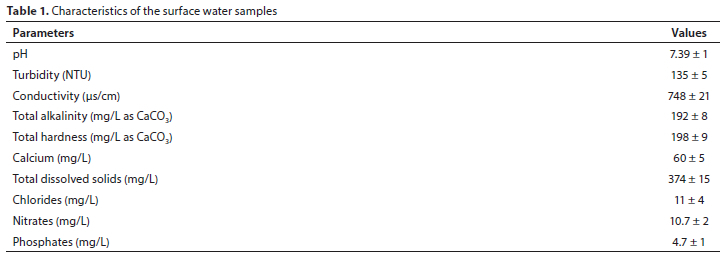
In this study, Rawal Lake, Rawalpindi, located at a latitude of 33°42' 0" N and a longitude of 73°10' 0" E, was selected as a surface water sample source. Ten grab samples were collected from Rawal Lake at 30-min intervals from 10:00 to 15:00 in July 2024. After that, a composite sample was prepared by thoroughly mixing these samples. Then samples were stored in airtight bottles at 4°C. Water quality parameters were measured using standard methods to characterize the sample. Table 1 presents the characterization of the samples.
Preparation of coagulants
A species of cactus, Opuntia microdasys, was selected to study its different parts (cladodes and seeds) as natural coagulants to remove turbidity from water. The cladodes and seeds were collected from a village named Kala Tehsil of Sawabi, Pakistan. Seeds of light brown colour were extracted from the fruit of Opuntia microdasys, thoroughly washed and then rinsed with distilled water to remove mucilage, whereas large-sized cladodes of Opuntia microdasys were processed by removing outer skin and dividing the inner part into 0.5 cm fine strips. After that seeds and processed cladodes were sun dried for 48 h and then dried in a laboratory oven for 1 day at 103°C. The materials were individually crushed and ground using a grinder (Cambridge GC-5026) to obtain a powdered coagulant. The resultant powder was then sieved through a No. 40 sieve (0.42 mm opening) to obtain particles of approximately 0.42 mm in size. An aliquot of 2.5 g of the sieved coagulant was dissolved in 1 000 mL of deionized water for each coagulant type. The mixtures were then stirred for 30 min under magnetic stirring to facilitate the extraction of water-soluble active constituents, such as polysaccharides and proteins, that are generally reported as the most important active constituents involved in coagulation-flocculation in natural coagulants (Driscoll and Letterman, 1995). Later, the suspensions were filtered through Whatman filter paper No. 42 to get clear filtrates and were used as crude extract stock solutions.
The concentration of the stock solution was reported as that of the initial amount of raw material used divided by unit volume (2.5 g/L), as commonly reported in natural coagulant studies, where the soluble extract was assumed to be the effective active fraction. The stock solution was appropriately diluted to create working coagulant doses of 20, 30, 40, 50 and 60 mg/L, which were added to the water samples as required.
Characterization of coagulants
Fourier transform infrared (FTIR) analysis was performed by JASCO FT/IR-4100 for both coagulants (seeds and cladodes) of Opuntia microdasys to identify protein-specific functional groups in each coagulant via the preparation of pallets. To prepare a pallet for FTIR analysis, potassium bromide and coagulant powder were mixed in a ratio of 1:25, ground and then compressed with a mini hand compressor.
Experimental design and optimization of parameters using central composite design (CCD)
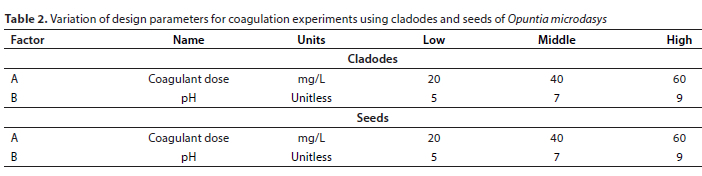
Design-Expert was used to design the experiment and response surface methodology (RSM) with central composite design (CCD) was used for the optimization of the response against the independent variables (coagulant dose and pH). Table 2 presents a detailed design summary. RSM combines mathematical and statistical techniques and is widely used for optimizing responses and designing experiments (Arulmathi et al., 2019). The actual experimental values were analysed by several models (e.g., linear, quadratic, cubic, etc.) and the best model was chosen to evaluate the effect of independent variables on the response (turbidity removal). To validate the statistical significance of the models analysis of variance (ANOVA) was applied. To optimize the response variable, a desirability function was used. The coefficient of determination (R2) expressed the goodness of fit of the polynomial model and Fishers F-test was used to check the model's statistical significance. The model terms were evaluated using a significance level of α = 0.05.
The experiments were performed separately for the two coagulants. The first experiment involved the use of cladodes, while the other experiment examined seeds as a coagulant. In the first experiment, the treatment variables included pH (ranging from 5-9) and dose (ranging 20-60 mg/L). For the second experiment, the treatment variables were pH (5-9) and seed coagulant dose (20-60 mg/L), with turbidity removal (%) as the response variable. A total of 13 experiments were conducted for each coagulant.
A quadratic polynomial model was used to predict the response.

In Eq. 1, Y and βo are denoted as predicted response and model coefficient, respectively, whereas βi, βii and βij are expressed as linear, quadratic and interactional impacts of the model, respectively.
Coagulation-flocculation test procedure
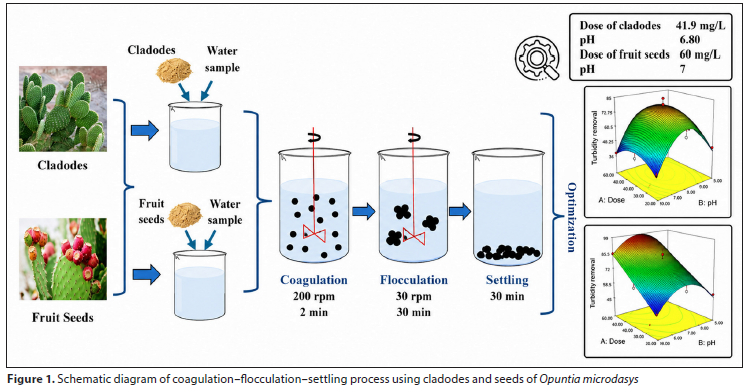
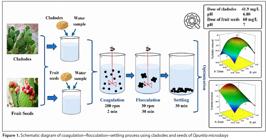
A coagulation-flocculation experiment was conducted using a jar test apparatus (Phipps and Bird, model PB-900 flocculator, Richmond, Virginia, USA) at a controlled room temperature of 25 ± 2°C. Each beaker was filled with 1 000 mL of surface water sample, and the pH was adjusted to the desired value using 1 M NaOH (Sigma-Aldrich, St. Louis, MO, USA) and 1 M H₂SO₄ (Sigma-Aldrich, St. Louis, MO, USA). Subsequently, an appropriate coagulant dose was introduced into the samples. The jar test procedure involved rapid mixing at 200 r/min for 2 min, followed by slow mixing at 30 r/min for 30 min, and a 30-min settling period. The pH of the sample was measured using a pH meter (Hach sens ION+ 3 pH meter, Loveland, CO, USA), while turbidity was quantified using a turbidity meter (Hach 2100 AN Turbidimeter, Loveland, CO, USA). Control samples were analysed at each pH level, and the residual turbidity was assessed at the end of each experimental trial. A schematic representation of the process is provided in Fig. 1.
Microscopic analysis
Microphotographic examination of the suspensions was performed using an Olympus BX61 microscope to assess the size of the flocs prior to and following the coagulation-flocculation process.
Statistical analysis
To determine the most appropriate model for coagulant performance, the experimental data were fitted to various models. The selected model was subsequently utilized to assess the influence of independent variables on the dependent variable (response). An analysis of variance (ANOVA) was conducted to ascertain the statistical significance and evaluate the model's accuracy by comparing the experimental and predicted outcomes. A significance threshold of α = 0.05 was applied.
RESULTS AND DISCUSSION
FTIR analysis
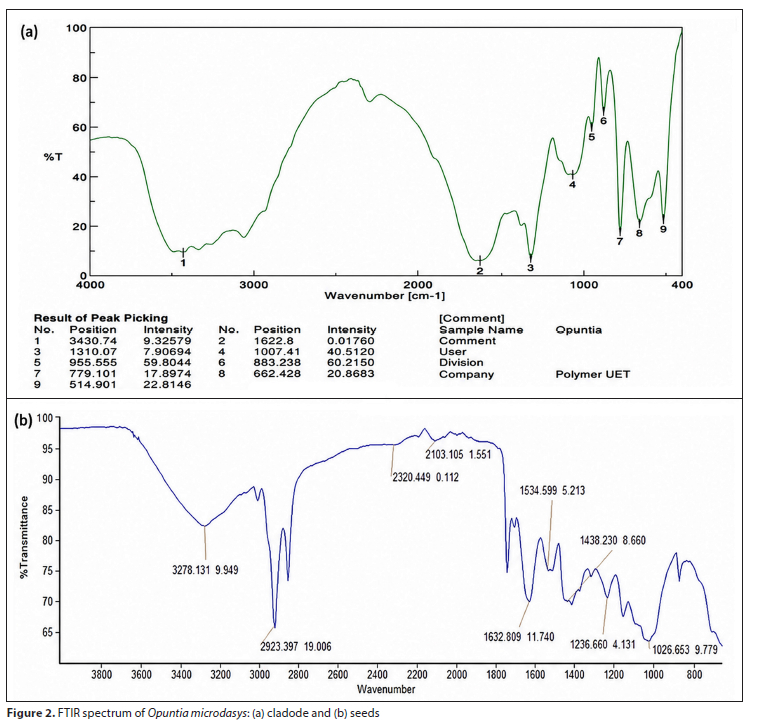
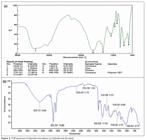
The FTIR spectrum of Opuntia microdasys cladodes and seeds is presented in Fig. 2, illustrating the presence of functional groups characteristic of proteins. Figure 2a shows that the spectrum of Opuntia cladodes exhibits 9 distinct peaks, with Amide I (C=O), Amide V (C=O), and Amide IV (O-C-N) amide groups identified within the sample. The peaks at 779.101 cm-1 and 883.238 cm-1 correspond to the strong and broad bands of primary (1°) and secondary (2°) amine groups, while the peak at 1 319.07 cm-1 confirms the presence of aromatic amine groups. Additionally, the peaks at 1 622.8 cm-1 and 1 067.41 cm-1 verify the presence of medium-strength 1° amine groups and aliphatic amines, respectively. Figure 2b reveals that the FTIR spectrum of Opuntia seeds also displays 9 peaks, with Amide I (C=O), Amide II (C-N, N-H), and Amide III (C-N, NvH) amide groups detected. The peaks at 1 026.653 cm-1 and 1 236.660 cm-1 indicate the presence of medium-strength aliphatic amines, while the peak at 1 632.809 cm-1 corresponds to medium 1° amine groups. Furthermore, the peak at 3 278.131 cm-1 confirms the presence of both medium-strength 1° and 2° amines, as well as amides. These findings collectively suggest that Amide I (C=O) is a common functional group in both the cladodes and seeds. Moreover, both coagulants share the presence of medium-strength 1° amines and aliphatic amine groups, which are likely responsible for the observed coagulation activity.
Turbidity removal by cladodes and seeds
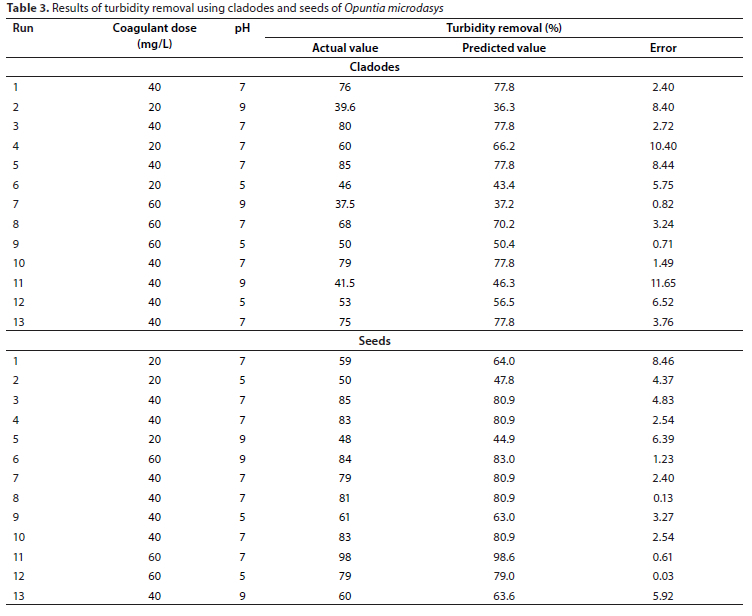
The overall turbidity removal efficiency of cladodes and seeds varied considerably, from 37.5% to 85% and 48% to 98%, respectively, as shown in Table 3. For cladodes and seeds, the highest turbidity removal, at 85% and 98%, was obtained at pH 7 with 40 mg/L and 60 mg/L coagulant doses, respectively. Other notable removal efficiencies for cladodes were 80% at pH 7 and 40 mg/L dose, 68% at pH 7 and 60 mg/L dose, and 46.0% at pH 5 and 20 mg/L coagulant dose. For seeds, 85% removal efficiency was obtained at pH 7 and 40 mg/L dose. Moreover, turbidity removals of 79.0% at pH 5 and 60 mg/L dose, and 61% at pH 5 and 40 mg/L dose, were observed. These results demonstrate the effectiveness of cladodes and seeds as coagulants, particularly at around neutral pH.
Optimization of pH and coagulant dose for turbidity removal
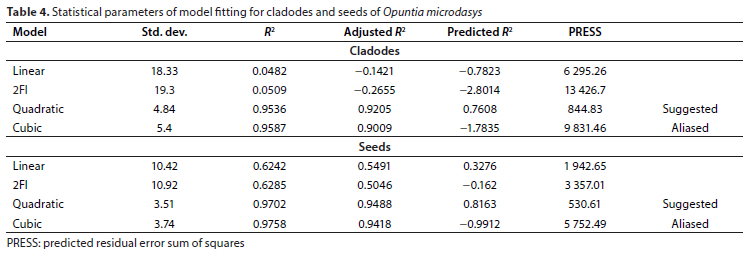
Experimental data for turbidity removal were fitted to linear, 2FI, quadratic, and cubic models, as presented in Table 4. For cladodes and seeds, cubic models were aliased and thus excluded from further comparison, while the quadratic models appeared more favourable for both coagulants due to their low standard deviations and predicted residual error sum of squares (PRESS) values. Moreover, the smallest difference was observed between the adjusted R2 and predicted R2 (0.159 for cladodes and 0.13 for seeds, which are below the acceptable threshold of 0.2) for the quadratic model. These R2 values were also lower than those for the other models.
Therefore, the quadratic model was determined to be the most suitable for describing the experimental data for the cladode and seed coagulants, as they offer a reasonable R2 value (0.95 and 0.97 for cladodes and fruit seeds, respectively), low standard deviation (4.84 for cladodes and 3.51 for seeds), and PRESS value (844.83 for cladodes and 530.61 for seeds).
The quadratic models for cladode and seed coagulant performance are represented by Eq. 2 and Eq. 3, respectively:
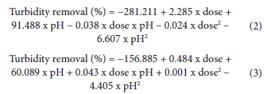
Equations 2 and 3 can be used for the prediction of turbidity removal using cladodes and seeds, respectively, at any given pH and dose level.
Diagnostic response surface plots, including the normal probability and predicted versus actual plots, were used to check the adequacy of the prediction quadratic model. The normal probability plots of residuals for removal of turbidity by using cladodes and seeds are presented in Fig. 3a-f, respectively, which do not indicate proof of high variation from normality. The predicted versus actual plots for removal of turbidity by using cladodes and seeds are presented in Fig. 3a and 3d, respectively, which show sufficient agreement between experimental and predicted results from the quadratic model.
Contours and 3D response surface plots are presented in Fig. 4a-d, illustrating the turbidity removal efficiencies achieved by the cladode and seed coagulants. The contour lines in Fig. 4a and 4b demonstrate the interaction between the pH and coagulant dose and their impact on the turbidity removal by cladodes and seeds, respectively.
The optimum turbidity removal efficiency achieved by the cladodes was 85% with a 40 mg/L coagulant dose and pH 7, while seeds removed 98% turbidity from the sample at pH 7 and 60 mg/L coagulant dose. For cladodes, a significant reduction in turbidity removal efficiency was observed with an increase in pH. Colloidal particles generally carry a negative charge (Yin, 2010), and the addition of hydrogen ions likely neutralized the negative charge on their diffuse layer, thereby facilitating coagulation by enhancing particle aggregation or minimizing the requirement for binding sites on the coagulant. Another possible explanation is that the addition of hydrogen ions neutralized the negatively charged sites on the coagulant, reducing repulsive forces and enhancing adsorption and inter-particle bridging. Decline in turbidity removal was also observed with the decrease in pH, because, as the pH decreases, the coagulant's charge properties change, often making it less effective in neutralizing the negative charges on suspended particles. This reduces the coagulation and flocculation efficiency, leading to decreased turbidity removal. Additionally, at lower pH, some coagulants may undergo hydrolysis or precipitation, further reducing their effectiveness. Furthermore, the observed decrease in coagulation efficiency at higher coagulant doses is typically attributed to charge neutralization, indicating that excessive dosing may result in the re-stabilization of previously flocculated colloidal particles.
Consequently, lower coagulant doses are advantageous for minimizing treatment costs. The 3D plot of cladodes (Fig. 4c) revealed that turbidity removal efficiency was predominantly influenced by pH, with the coagulant dose exerting a negligible effect.
For seeds, with the decrease in coagulant dose, a notable decline was observed in turbidity removal efficiency. This decline in turbidity removal can be due to the insufficient dose of coagulant to effectively destabilize and aggregate suspended particles in the sample. Coagulants neutralize the negative charges on the particles and allow the particles to cluster together and form bigger aggregates (flocs) that can be easily removed. If the dose is too low, there may not be enough coagulant molecules to interact with all the particles, resulting in incomplete flocculation. This leads to lower efficiency in turbidity removal. Additionally, an insufficient coagulant dose may not sufficiently overcome the natural repulsive forces between particles, preventing effective aggregation and reducing the overall coagulation performance. Figure 4d shows that turbidity removal efficiency by seeds was highly dependent on coagulant dose, with a minimal effect due to pH.
Surface water typically has a pH range of 7-8.5 (Ahmad et al., 2024). For drinking water, pH for effective disinfection ranges from 6.5-8.5 according to the WHO guidelines (Vogelmann et al., 2026). Since cladodes and seeds perform well in a neutral pH range, they are effective for drinking water treatment.
Apart from RSM, the optimization of conventional and bio-based coagulants in water treatment has been transformed by the application of artificial intelligence (AI) techniques (Sharma et al., 2026), including fuzzy logic (FL) (Ding et al., 2025) and artificial neural networks (ANNs) (Raj et al., 2024). ANNs accurately model and predict coagulation outcomes, including the effects of dose on parameters of water quality like turbidity and pH (Raj et al., 2024), while genetic algorithms (GAs) optimize coagulant mixtures and doses by addressing complex variables. Together, these AI-based methods contribute to the development of more economical, effective, and sustainable water treatment solutions, supporting global efforts to improve public health and environmental protection (Singgalen, 2024).
The desirability function from the design of experiment (DOE) methodology was employed to optimize the independent variables, including coagulant dose and pH. Turbidity removal was selected as the response variable to be maximized, while the independent variables, namely dose and pH, were constrained within specified ranges. The optimized results for cladodes and seeds are presented in Fig. 5a-c and 5d-f, respectively. For cladodes, the maximum turbidity removal efficiency was 77.81% at pH 6.8 and 41.87 mg/L dose. For seeds, 98.74% turbidity removal efficiency was obtained at 60 mg/L dose and pH 7. Though turbidity removal for cladodes is slightly lower than the experimentally achieved turbidity removal of 85%, and for seeds is very close to the experimental value (98%), the optimization results based on the statistical model are considered more reliable.
For comparison, a study on Strychnos potatorum seeds achieved 93% turbidity removal in synthetic turbid water containing kaolinite, under optimized conditions of pH 7, a retention time of 70 min, and a dose of 40 mg/L. These findings are similar to those achieved in this study in terms of dose, pH, and turbidity removal. The turbidity removal efficiency (98%) for seed coagulant was notably higher than that for many other natural coagulants, according to the literature (Choy et al., 2014; Shahzadi et al., 2024). Additionally, the optimum pH (7) for turbidity removal by seeds was ideal for the treatment of surface water.
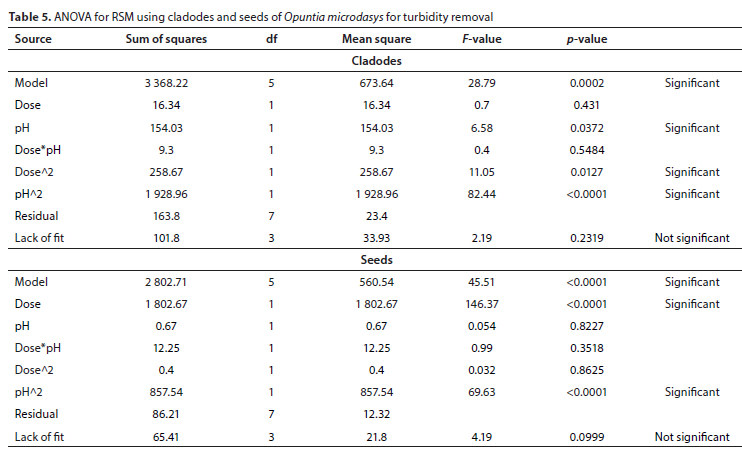
The ANOVA results for the cladode and seed models are presented in Table 5. For cladodes, the model p-value of 0.0002 is below 0.05, and the model's F-value of 28.79 exceeds the critical F-value of 2.74, thereby confirming the statistical significance of the quadratic model at the 5% significance level. Similarly, for seeds, the model p-value of 0.0001 is also below 0.05, and the F-value of 45.51 surpasses the critical F-value of 2.74, indicating a strong fit for the quadratic model.
Microscopic analysis
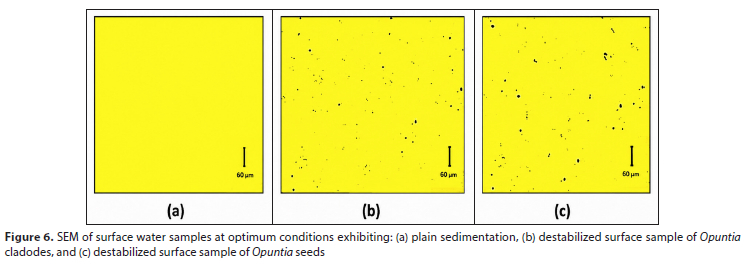
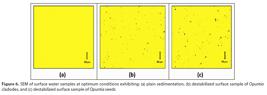
Figure 6 shows the microscopic analysis of surface water samples at 200 x magnification. Plain settling (30 min settling time) of surface water samples was performed to compare floc sizes produced in sedimentation before and after addition of coagulant doses (Fig. 6a). Figure 6b depicts the floc formation during coagulation with Opuntia cladodes; floc sizes observed were less than 10 µm. It can be observed that particles formed agglomerates, and the flocs formed were irregularly shaped and uneven. Figure 6c presents the flocs formed during coagulation with Opuntia seeds and floc sizes observed were up to 50 µm. Very large and well aggregated flocs can be observed from the figure. The dominant mechanism observed for both coagulants was adsorption. However, the phenomenon of precipitation was also examined to some extent.
Cost of treatment
The use of natural coagulants is gaining widespread attention because they are environmentally friendly and biodegradable, thus providing a sustainable substitute for chemical coagulants (Halder, 2021). The economic feasibility of cladodes of Opuntia microdasys was compared with the conventional coagulant (alum) in the present study (Table 6). Treatment cost was estimated considering the optimum dosage for coagulant and unit price of raw materials. The outcome shows that the material cost of natural coagulants is a little higher than that of alum. Specifically, the treatment cost for cladodes was found to be 0.000033 USD/L, for seeds 0.000053 USD/L, and for alum 0.000012 USD/L. This is due to the relatively high unit cost and dosage of the natural coagulants. However, it must be noted that the present cost estimation is based only on material cost, and other factors which might affect the overall treatment cost, such as energy used, labour and large-scale processing have not been considered. Natural coagulants, although slightly more expensive than chemical coagulants, still have many environmental and operational benefits. These include lower sludge toxicity, better biodegradability and removal of secondary pollution from chemical additions. Thus, it is not only the direct cost of coagulants that should be compared, but their long-term sustainability and environmental impact should also be taken into account. These findings are consistent with those of previous studies involving the use of natural coagulants, which showed that the natural coagulants were competitive, while also providing a beneficial environmental effect, albeit with a minor cost difference. The results indicate that the Opuntia-derived coagulants offer a promising and environmentally friendly alternative to conventional water treatment solutions, especially in areas where environmental issues and resource limitations are crucial.
CONCLUSION
The highest turbidity removal observed with cladodes was 77.81% at pH 6.8 with a coagulant dose of 41.87 mg/L. In contrast, for seeds, turbidity removal reached 98.75% at pH 7 with a dose of 60 mg/L. ANOVA results for cladodes indicated that pH exerted a more substantial influence on turbidity removal compared to the coagulant dose. In the case of seeds, however, the coagulant dose had a more pronounced effect on turbidity removal than pH. The primary coagulation mechanism was identified as adsorption, mediated by the presence of Amide I (C=O), primary amines, and medium-chain aliphatic amines in both cladodes and seeds. The estimated price of treatment using cladodes and seeds were 56.75 USD (pH 7) and 65.86 USD (pH 7), respectively. Future research should focus on life cycle assessments and on pilot-scale experiments. Further exploration of locally available natural coagulants is also encouraged.
AUTHOR CONTRIBUTIONNayab Zahara: conceptualization, methodology, supervision, visualization, funding, software, validation, writing - original draft, review, and editing. Arfa Iqbal: conceptualization, methodology, writing - original draft, review and editing.
STATEMENTS AND DECLARATIONSThe authors affirm that this work was supported by the Deanship of Scientific Research, Vice Presidency for Graduate Studies and Scientific Research, King Faisal University, Saudi Arabia.
COMPETING INTERESTSThe authors report no conflicts of interest, whether financial or non-financial, relevant to this work.
FUNDING STATEMENTThis work was supported by the Deanship of Scientific Research, Vice Presidency for Graduate Studies and Scientific Research, King Faisal University, Saudi Arabia [KFU262760].
ORCIDNayab Zahara
ACKNOWLEDGEMENTS
The authors thankfully acknowledge the support by King Faisal University, Al Hasa, Kingdom of Saudi Arabia.
REFERENCES
-
ABU HASAN H, MUHAMMAD MH and ISMAIL N (2020) A review of biological drinking water treatment technologies for contaminants removal from polluted water resources. J. Water Process Eng. 33 101035. https://doi.org/10.1016/j.jwpe.2019.101035
» https://doi.org/10.1016/j.jwpe.2019.101035 -
AHMAD A, ABDULLAH SRS, HASAN HA, OTHMAN AR and ISMAIL N (2022) Potential of local plant leaves as natural coagulant for turbidity removal. Environ. Sci. Pollut. Res. 29 2579-2587. https://doi.org/10.1007/s11356-021-15541-7
» https://doi.org/10.1007/s11356-021-15541-7 -
AHMAD T, MUHAMMAD S, UMAR M, AZHAR MU, AHMED A, AHMAD A and ULLAH R (2024) Spatial distribution of physicochemical parameters and drinking and irrigation water quality indices in the Jhelum River. Environ. Geochem. Health 46 263. https://doi.org/10.1007/s10653-024-02026-y
» https://doi.org/10.1007/s10653-024-02026-y -
AL-WESHAH, R.A.-M., 1992. Jordan's water resources: technical perspective. Water Int. 17 124-132. https://doi.org/10.1080/02508069208686132
» https://doi.org/10.1080/02508069208686132 -
ARORA S, BHATT R, SHARMA V and HADDA MS (2023) Indigenous practices of soil and water conservation for sustainable hill agriculture and improving livelihood security. Environ. Manage. 72 321-332. https://doi.org/10.1007/s00267-022-01602-1
» https://doi.org/10.1007/s00267-022-01602-1 -
ARULMATHI P, JEYAPRABHA C, SIVASANKAR P and RAJKUMAR V (2019) Treatment of textile wastewater by coagulation-flocculation process using Gossypium herbaceum and polyaniline coagulants. CLEAN - Soil Air Water 47 1800464. https://doi.org/10.1002/clen.201800464
» https://doi.org/10.1002/clen.201800464 -
BUELVAS-CARO SD, AGUAS-MENDOZA YDR and OLIVERO-VERBEL RE (2020) Clarification of superficial waters of the Magdalena River using seeds of Tamarindus indica as bio-coagulants. Respuestas 25 170-176. https://doi.org/10.22463/0122820X.2960
» https://doi.org/10.22463/0122820X.2960 -
CHOY SY, PRASAD KMN, WU TY, RAGHUNANDAN ME and RAMANAN RN (2014) Utilization of plant-based natural coagulants as future alternatives towards sustainable water clarification. J. Environ. Sci. 26 2178-2189. https://doi.org/10.1016/j.jes.2014.09.024
» https://doi.org/10.1016/j.jes.2014.09.024 -
CHOY SY, PRASAD KMN, WU TY and RAMANAN RN (2015) A review on common vegetables and legumes as promising plant-based natural coagulants in water clarification. Int. J. Environ. Sci. Technol. 12 367-390. https://doi.org/10.1007/s13762-013-0446-2
» https://doi.org/10.1007/s13762-013-0446-2 -
DESWAL S, RAWAT S, KUMAR S and SANGWAN V (2023) Potential of Moringa oleifera and okra as coagulants in sustainable treatment of water and wastewater. Ecol. Quest. 34 1-17. https://doi.org/10.12775/EQ.2023.045
» https://doi.org/10.12775/EQ.2023.045 -
DING C, SHEN L, LIANG Q and LI L (2025) Machine learning in flocculant research and application: toward smart and sustainable water treatment. Separations 12 203. https://doi.org/10.3390/separations12080203
» https://doi.org/10.3390/separations12080203 -
DRISCOLL CT and LETTERMAN RD (1995) Factors regulating residual aluminium concentrations in treated waters. Environmetrics 6 287-305. https://doi.org/10.1002/env.3170060306
» https://doi.org/10.1002/env.3170060306 -
DULTA K, IWUCHUKWU FU, KUMARI S, NARAYANASAMY S and SELVASEMBIAN R (2024) Traditional techniques of water purification in rural areas In: Water Resources Management for Rural Development. Elsevier. 65-76. https://doi.org/10.1016/B978-0-443-18778-0.00007-6
» https://doi.org/10.1016/B978-0-443-18778-0.00007-6 -
FAROOQ MU, JALEES MI, IQBAL A, ZAHRA N and KIRAN A (2019) Characterization and adsorption study of biosorbents for the removal of basic cationic dye: kinetic and isotherm analysis. Desalination Water Treat. 160 333-342. https://doi.org/10.5004/dwt.2019.24173
» https://doi.org/10.5004/dwt.2019.24173 -
GANDIWA BI, MOYO LB, NCUBE S, MAMVURA TA, MGUNI LL and HLABANGANA N (2020) Optimisation of using a blend of plant based natural and synthetic coagulants for water treatment: (Moringa Oleifera-Cactus Opuntia-alum blend). S. Afr. J. Chem. Eng. 34 158-164. https://doi.org/10.1016/j.sajce.2020.07.005
» https://doi.org/10.1016/j.sajce.2020.07.005 -
GOSWAMI KP and PUGAZHENTHI G (2020) Credibility of polymeric and ceramic membrane filtration in the removal of bacteria and virus from water: A review. J. Environ. Manage. 268 110583. https://doi.org/10.1016/j.jenvman.2020.110583
» https://doi.org/10.1016/j.jenvman.2020.110583 -
GUNARATNA KR, GARCIA B, ANDERSSON S and DALHAMMAR G (2007) Screening and evaluation of natural coagulants for water treatment. Water Supply 7 19-25. https://doi.org/10.2166/ws.2007.147
» https://doi.org/10.2166/ws.2007.147 -
HALDER A (2021) Bio-coagulants, a substitute of chemical coagulants. J. Adv. Sci. Res. 12 58-67. https://doi.org/10.55218/JASR.s1202112406
» https://doi.org/10.55218/JASR.s1202112406 -
IQBAL A, HUSSAIN G, HAYDAR S and ZAHARA N (2019) Use of new local plant-based coagulants for turbid water treatment. Int. J. Environ. Sci. Technol. 16 6167-6174. https://doi.org/10.1007/s13762-018-1998-y
» https://doi.org/10.1007/s13762-018-1998-y -
IQBAL A and ZAHRA N (2018) Coagulation efficiency comparison of natural and its blended coagulant with alum in water treatment. Desalination Water Treat. 109 188-192. https://doi.org/10.5004/dwt.2018.22120
» https://doi.org/10.5004/dwt.2018.22120 -
JALEES MI, JAVED A, IQBAL A, ZAHARA N and BATOOL M (2022) Comparative isothermal study of phenolic removal from water using different forms of rice husk. Desalination Water Treat. 272 220-232. https://doi.org/10.5004/dwt.2022.28846
» https://doi.org/10.5004/dwt.2022.28846 -
JALEES MI, RAUF Y, IQBAL A, ZAHARA N and CEVIK E (2023) Synthesis and characterization of iron-doped titania nanoparticles for the removal of DPP-IV inhibitor from the aqueous samples. Desalination Water Treat. 298 117-126. https://doi.org/10.5004/dwt.2023.29664
» https://doi.org/10.5004/dwt.2023.29664 -
KACZMAREK N, MAHJOUBI I, BENLASRI M, NOTHOF M, SCHÄFER RB, FRÖR O and BERGER E (2023) Water quality, biological quality, and human well-being: Water salinity and scarcity in the Draa River basin, Morocco. Ecol. Indic. 148 110050. https://doi.org/10.1016/j.ecolind.2023.110050
» https://doi.org/10.1016/j.ecolind.2023.110050 -
KALIBBALA HM, OLUPOT PW and AMBANI OM (2023) Synthesis and efficacy of cactus-banana peels composite as a natural coagulant for water treatment. Results Eng. 17 100945. https://doi.org/10.1016/j.rineng.2023.100945
» https://doi.org/10.1016/j.rineng.2023.100945 -
KOUL B, BHAT N, ABUBAKAR M, MISHRA M, ARUKHA AP and YADAV D (2022) Application of natural coagulants in water treatment: a sustainable alternative to chemicals. Water 14 3751. https://doi.org/10.3390/w14223751
» https://doi.org/10.3390/w14223751 -
LIU Y, WU X and QI W (2024) Assessing the water quality in urban river considering the influence of rainstorm flood: A case study of Handan city, China. Ecol. Indic. 160 111941. https://doi.org/10.1016/j.ecolind.2024.111941
» https://doi.org/10.1016/j.ecolind.2024.111941 -
LIU Z, HADDAD M, SAUVÉ S and BARBEAU B (2021) Alleviating the burden of ion exchange brine in water treatment: From operational strategies to brine management. Water Res. 205 117728. https://doi.org/10.1016/j.watres.2021.117728
» https://doi.org/10.1016/j.watres.2021.117728 -
MILLER SM, FUGATE EJ, CRAVER VO, SMITH JA and ZIMMERMAN JB (2008) Toward understanding the efficacy and mechanism of Opuntia spp. as a natural coagulant for potential application in water treatment. Environ. Sci. Technol. 42 4274-4279. https://doi.org/10.1021/es7025054
» https://doi.org/10.1021/es7025054 -
MUHAMMAD MM, HAMISU AJ and LAWAN MA (2020) Comparative study of turbidity removal efficiency of green pea (Cicer arietinum) seed and pod extract for turbid water treatment. ADAN J. Agric. 1 105-113. https://doi.org/10.36108/adanja/0202.10.0121
» https://doi.org/10.36108/adanja/0202.10.0121 -
MUZAMMIL H, ZAMAN M, SHAHID MA, SAFDAR M, MAJEED MD and SABIR RM (2023) The impacts of climate change on monsoon flood situations in Pakistan. In: ECWS-7 2023. MDPI. 63. https://doi.org/10.3390/ECWS-7-14255
» https://doi.org/10.3390/ECWS-7-14255 -
NANDITHA JS, KUSHWAHA AP, SINGH R, MALIK I, SOLANKI H, CHUPHAL DS, DANGAR S, MAHTO SS, VEGAD U and MISHRA V (2023) The Pakistan flood of August 2022: causes and implications. Earths Future 11 e2022EF003230. https://doi.org/10.1029/2022EF003230
» https://doi.org/10.1029/2022EF003230 -
OKUDA T, BAES AU, NISHIJIMA W and OKADA M (2001) Isolation and characterization of coagulant extracted from moringa oleifera seed by salt solution. Water Res. 35 405-410. https://doi.org/10.1016/S0043-1354(00)00290-6
» https://doi.org/10.1016/S0043-1354(00)00290-6 -
PAL D (2024) Plant based biocoagulants from Cucurbita pepo and Cicer arietinum for improving water quality. Int. J. Agric. Environ. Biotechnol. 17. https://doi.org/10.30954/0974-1712.01.2024.5
» https://doi.org/10.30954/0974-1712.01.2024.5 -
PILLAI SB and THOMBRE NV (2024) Coagulation, flocculation, and precipitation in water and used water purification. In: Lahnsteiner J (ed.) Handbook of Water and Used Water Purification. Springer International Publishing, Cham. 3-27. https://doi.org/10.1007/978-3-319-78000-9_63
» https://doi.org/10.1007/978-3-319-78000-9_63 -
RAJ S, MAHANTY B and HAIT S (2024) Coagulative removal of polystyrene microplastics from aqueous matrices using FeCl3-chitosan system: Experimental and artificial neural network modeling. J. Hazardous Mater. 468 133818. https://doi.org/10.1016/j.jhazmat.2024.133818
» https://doi.org/10.1016/j.jhazmat.2024.133818 -
SALEEM M and BACHMANN RT (2019) A contemporary review on plant-based coagulants for applications in water treatment. J. Ind. Eng. Chem. 72 281-297. https://doi.org/10.1016/j.jiec.2018.12.029
» https://doi.org/10.1016/j.jiec.2018.12.029 -
SHABANIZADEH H and TAGHAVIJELOUDAR M (2023) A sustainable approach for industrial wastewater treatment using pomegranate seeds in flocculation-coagulation process: Optimization of COD and turbidity removal by response surface methodology (RSM). J. Water Process Eng. 53 103651. https://doi.org/10.1016/j.jwpe.2023.103651
» https://doi.org/10.1016/j.jwpe.2023.103651 -
SHAHZADI F, HAYDAR S and TABRAIZ S (2024) Optimization of coagulation to remove turbidity from surface water using novel nature-based plant coagulant and response surface methodology. Sustainability 16 2941. https://doi.org/10.3390/su16072941
» https://doi.org/10.3390/su16072941 -
SHARMA A, SRIVASTAVA S, SHARMA I, SHARMA M, GORA S and MONIKA (2026) Bio-flocculants for wastewater treatment using machine learning approach. In: Mandal SK, Mishra B, Shah MP (eds.). Bioflocculants for Wastewater Treatment, Advances in Wastewater Research. Springer Nature, Singapore, Singapore. 445-481. https://doi.org/10.1007/978-981-96-9764-9_20
» https://doi.org/10.1007/978-981-96-9764-9_20 -
SINGGALEN YA (2024) Analysis and design of natural spring water preservation and monitoring system using rapid application development. J. Inf. Syst. Inform. 6 118-135. https://doi.org/10.51519/journalisi.v6i1.646
» https://doi.org/10.51519/journalisi.v6i1.646 -
TABRAIZ S, NASREEN S, QURESHI LA, ZEESHAN M, AHMAD I, AHMED S and HASSAN Z (2016) Sewage land disposal and unpaved drains: threat to groundwater quality. Desalination Water Treat. 57 20464-20469. https://doi.org/10.1080/19443994.2015.1110723
» https://doi.org/10.1080/19443994.2015.1110723 -
TOMASI IT, MACHADO CA, BOAVENTURA RAR, BOTELHO CMS and SANTOS SCR (2022) Tannin-based coagulants: Current development and prospects on synthesis and uses. Sci. Total Environ. 822 153454. https://doi.org/10.1016/j.scitotenv.2022.153454
» https://doi.org/10.1016/j.scitotenv.2022.153454 -
VOGELMANN ES, PREVEDELLO J and TIRUNEH GA (2026) Assessing policies and guidelines for drinking water quality. Discov. Appl. Sci. 8 332. https://doi.org/10.1007/s42452-026-08413-7
» https://doi.org/10.1007/s42452-026-08413-7 -
YIMER A and DAME B (2021) Papaya seed extract as coagulant for potable water treatment in the case of Tulte River for the community of Yekuset district, Ethiopia. Environ. Chall. 4 100198. https://doi.org/10.1016/j.envc.2021.100198
» https://doi.org/10.1016/j.envc.2021.100198 -
YIN C-Y (2010) Emerging usage of plant-based coagulants for water and wastewater treatment. Process Biochem. 45 1437-1444. https://doi.org/10.1016/j.procbio.2010.05.030
» https://doi.org/10.1016/j.procbio.2010.05.030 -
ZAHARA N, ZAINAB Z, SALEEM MU, IQBAL A, ZEESHAN M, PERVEZ S and TABRAIZ S (2026) Evaluation and prediction of raw and treated water quality using conventional water quality index approach and machine learning models for Rawal Lake, Pakistan. Earth Syst. Environ. https://doi.org/10.1007/s41748-026-01096-5
» https://doi.org/10.1007/s41748-026-01096-5 -
ZEESHAN M, HASHMI SI, IQBAL A, KHAYYAM U, ZAHARA N and SILLANPÄÄ M (2026) Occurrence and treatment of emerging contaminants in water: A comprehensive review. Chem. Eng. J. Adv. 25 100994. https://doi.org/10.1016/j.ceja.2025.100994
» https://doi.org/10.1016/j.ceja.2025.100994
Accepted: 21 July 2026