Geographical differences in the relationship between total dissolved solids and electrical conductivity in South African rivers
Abstract
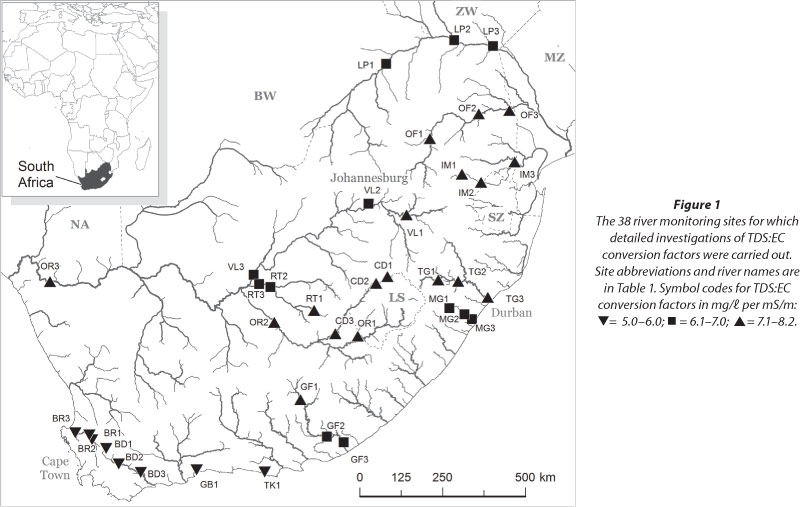
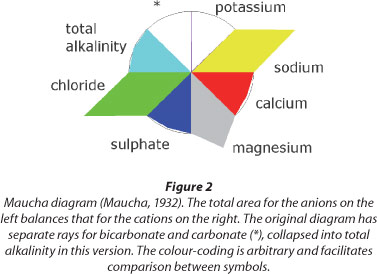
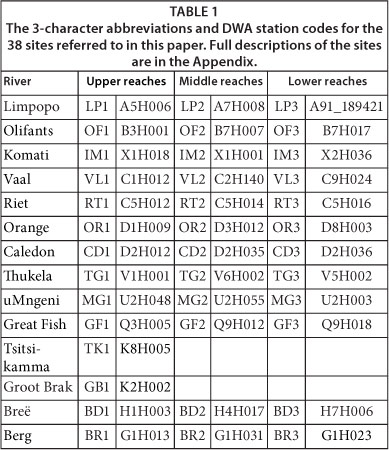
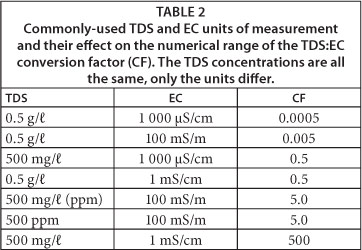
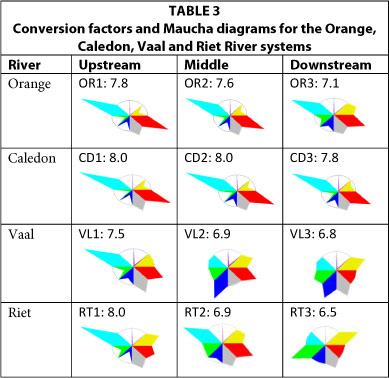
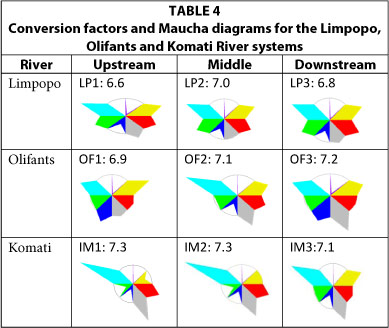
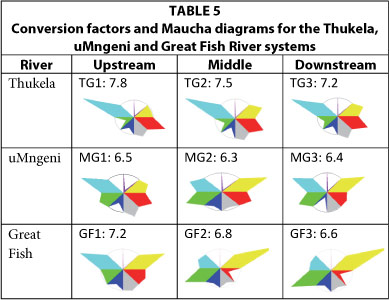
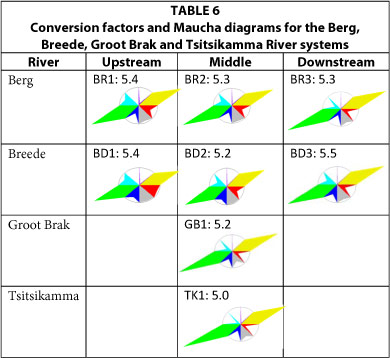
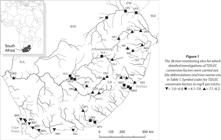
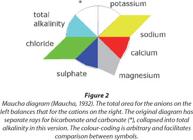
Electrical conductivity (EC) is a useful surrogate for total dissolved solids (TDS). EC is more rapidly and easily measurable with reasonably-priced equipment. However, as an indirect measure EC is subject to uncertainties that are not always apparent to the user. We set out to investigate the relationship between TDS and EC in 144 643 sample results available on the Department of Water Affairs water quality database. TDS is calculated as the sum of the major solutes determined by laboratory analysis and EC is a measurement in a flow cell. The median TDS:EC ratio for 332 high priority sites was 7 mg/ℓ: 1 mS/m. Regional differences ranged from 4.8 to 8.6. Investigation of 38 of these sites using Maucha diagrams suggested that the differences are related to the dominant major ions, with sodium chloride waters having a lower TDS:EC conversion factor than calcium bicarbonate waters. The practical application of these findings is that users of EC meters should not simply apply a blanket conversion factor, but need to select an applicable factor for the river system in which they are measuring.
conversion factors; electrical conductivity; field instruments; rivers; total dissolved solids; water quality
 Thumbnail
 Thumbnail