Postpartum care after hypertensive disorders of pregnancy: a practical clinical review
Abstract
Hypertension in pregnancy, particularly serious forms like pre-eclampsia, is now appreciated as a significant risk factor for future cardiometabolic and kidney disease. Despite this risk, postpartum follow-up is often fragmented, and many women leave maternity services without a structured plan for long-term surveillance. Postpartum care in these women provides a cost-effective opportunity to detect and manage persistent hypertension, albuminuria, kidney dysfunction, abnormal blood glucose levels and other cardiovascular risk factors. This review outlines the bundle of postpartum care that includes blood pressure monitoring, clinical evaluation, kidney assessment, lipid and glucose screening, mental health support, patient education and lifestyle intervention. Implementing a structured postpartum pathway for patients with hypertensive disorder of pregnancy may reduce preventable long-term maternal morbidity and have a long-term impact across many generations.
pre-eclampsia; hypertensive disorders of pregnancy; cardiovascular; CKD; postpartum
INTRODUCTION
Pre-eclampsia is now widely recognised as a condition that extends beyond pregnancy, representing an early marker of future maternal health risk. Women who experience pre-eclampsia face substantially increased long-term risks of cardiovascular, kidney, and metabolic disease.(1-3) These associations likely reflect both an underlying predisposition and persistent vascular injury, initiated during pre-eclampsia. Evidence supports this with genetic studies demonstrating shared risk pathways between hypertensive disorders of pregnancy (HDP) and cardiovascular disease,(4) while clinical data show persistent endothelial dysfunction and vascular damage, long after delivery.(5)
The most common long-term consequence for women with a history of pre-eclampsia is the increased risk of developing sustained hypertension, particularly in the early postpartum period. This risk is highest within the first year after delivery, at 12 - 24 times higher compared to women with normotensive pregnancies.(6) Furthermore, this risk remains elevated for many years thereafter. At 4 years, the risk is 4-10 times higher, and at 20 years, the risk remains doubled.(6) Meta-analyses indicate a several-fold increase in the likelihood of sustained hypertension (ranging from an odds ratio [OR] of 1.9 - 5.8),(7-9) especially among women with early-onset, severe, or recurrent disease. These findings position pre-eclampsia as a strong predictor of future hypertension in women.(9)
Cardiovascular disease represents another major long-term complication. Early detectable changes include endothelial dysfunction, increased arterial stiffness, and structural vascular alterations such as carotid intima-media thickening.(10) Cardiac abnormalities, including left ventricular hypertrophy and impaired diastolic function, are also more prevalent.(11) Women with pre-eclampsia have significantly increased risks of cardiovascular disease, and remain elevated even after adjustment for traditional risk factors.(1) These increased risks include: stroke (relative risk [RR] 1.8), coronary artery disease (RR 2.5), heart failure (RR 4.9), and cardiovascular mortality (RR 2.2).(1) Together, these findings postulate that pre-eclampsia may accelerate vascular ageing and directly contribute to long-term cardiovascular disease (Figure 1).
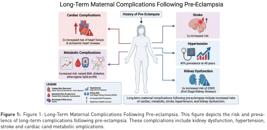
The kidneys are particularly vulnerable to long-term injury following pre-eclampsia. Several mechanisms have been implicated, including endothelial dysfunction, disruption of angiogenic balance, and direct podocyte injury.(12) Podocytes are critical for maintaining the glomerular filtration barrier and angiogenic health. Damage of >20% of the podocytes in pre-eclampsia can result in focal segmental glomerulosclerosis, which is permanent structural damage.(13) An increased risk of chronic kidney disease (CKD) has been shown in meta-analyses, which demonstrate a 3-6.4 increased risk of end-stage kidney disease (ESKD) in women following pre-eclampsia.(3,14) This risk persists after adjusting for hypertension and diabetes, common confounders. Microalbuminuria is an important marker of both progressive kidney dysfunction and increased cardiovascular risk.(15) Women with a history of pre-eclampsia are significantly more likely to develop persistent albuminuria, documented to continue for up to a decade postpartum.(16)
In the African context, the burden of pre-eclampsia is particularly high, yet outcome data remain limited. Understanding long-term kidney outcomes is especially important, given the lack of kidney replacement therapy and the need for CKD preventive strategies. Available studies suggest that kidney complications are common but frequently under-recognised. Existing studies are limited by small sample sizes, short follow-up durations, and variability in outcome definitions, with many relying on less sensitive measures, such as dipstick testing, to identify proteinuria.(17) A recent prospective study from South Africa demonstrated that at 1-year postpartum, incident hypertension was 47%. Furthermore, a substantial proportion (20%) of young women exhibited impaired kidney function (with eGFR<90ml/min/m2) and more than half had persistent albuminuria, suggesting incomplete recovery.(18) Factors associated with these adverse kidney outcomes were pregnancy-related acute kidney injury (PrAKI) and human immunodeficiency virus (HIV).(18) Overall, current evidence suggests a substantial but poorly characterised burden of kidney disease following pre-eclampsia in Africa.
Additionally, there is an increased risk of metabolic syndrome with meta-analyses describing weight gain and adiposity, raised body mass index (BMI), insulin resistance, and dyslipidaemia. Lipid abnormalities are frequent, with an atherogenic profile characterised by elevated triglycerides and small low-density lipoprotein particles.(2) Over time, women who have had pre-eclampsia have a two-fold higher risk of future type 2 diabetes mellitus, compared with women who have had normotensive pregnancies.(19) This risk is further amplified when pre-eclampsia coexists with gestational diabetes, leading to a 15-fold increased risk of future diabetes.(20) These metabolic disturbances likely contribute to the heightened cardiovascular risk observed later in life.
The likelihood and severity of these long-term complications are not uniform, and the pathogenesis is not fully understood. Existing studies have found associations between developing CKD and the severity of the pre-eclampsia (early onset, pre-term delivery and growth restriction), maternal factors (age, obesity and prior hypertension) and recurrent pre-eclampsia.(21-25) These long-term complications underscore the urgent need for well-designed longitudinal studies and improved postpartum surveillance systems.
"THE MISSING WOMEN" ARE LOST IN CURRENT POSTPARTUM CARE
South Africa fragments postpartum care for women. Infant care and vaccinations are provided at baby wellness sites, but maternal care is provided at local health care clinics. This is not an integrated service. Loss to care after discharge is the major limitation in the postpartum management of women with HDP. Although BP surveillance is clinically important in weeks and months after delivery, attendance at postpartum review is frequently incomplete, particularly in low- and middle-income countries (LMIC). In a multilevel analysis of 35 LMICs, completion of the maternal healthcare continuum declined from 55.8% during the antepartum stage to 36.7% when postpartum care was included.(26) Similarly, in 18 sub-Saharan African countries, only 42.9% of women received adequate postnatal care services in the immediate postpartum period.(27) This pattern is also evident internationally. A systematic review of postpartum visit attendance in the United States found wide variation, ranging from 24.9% to 96.5%, with a mean of 72.1%.(28) European data also demonstrate gaps in postnatal follow-up. Across 17 maternity units in England, only 37.2% of women completed the 3-month postnatal follow-up questionnaire. This included 38% in those with HDP.(29)
Current postpartum care is frequently inadequate. Intrapartum and peri-partum counselling on future risk is limited, and many women are discharged with no structured long-term follow-up plan. Given the burden of long-term complications to maternal health, effective postpartum care, early surveillance and preventative strategies are essential.(30) It is important that educational materials should be culturally sensitive, available in local languages, and delivered using multiple formats, including written information, videos, mobile applications, and community healthcare worker engagement.(31) A woman's health should be viewed in the continuum of her journey through life and motherhood. Barriers to continued care include transport costs, distance from healthcare facilities, low health literacy, competing childcare responsibilities, reduced perceived need for care when the mother is asymptomatic, health systems that prioritise the newborn over maternal review and poor integration between obstetric and primary care services.(32)
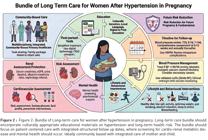
SUGGESTED SOUTH AFRICAN POSTPARTUM CARE PATHWAYA structured postpartum care bundle will improve continuity of care, optimise screening, and reduce preventable long-term complications (Box 1). Ideally, this bundle should be practical, multidisciplinary, adaptable, and integrated into existing primary healthcare systems, aiming to address these gaps through coordinated and standardised care.(33,34)

The key to achieving universal healthcare is ensuring these principles can be implemented in both high- and low-resource settings, as the global burden of HDP falls disproportionately on low- and middle-income countries. Therefore, integrated care models, especially in lower-resourced settings, are paramount for their success. These models should include task sharing; linking maternal follow-up with infant care visits; simplified treatment protocols; decentralised primary health care follow-up, and low-cost educational interventions. Additional tools to consider in the care model include home blood pressure monitoring (HBPM) and digital technology.
To ensure the continuum of care, primary care should receive written communication and clear management plans.(35) A possible solution is standardised documentation, such as the FIGO passport, which allows for written discharge plans from maternity care, medication instructions, emergency warning signs, patient education, and scheduled review appointments.(36) This passport is accessible to both patients and health care providers and serves as an excellent means of communication.
At all visits, women should receive counselling regarding the relationship between HDP, future cardiovascular disease and the need for long-term screening. Many women remain unaware of these risks, limiting engagement with long-term preventive care. Ideally, maternal screening and interventions should be implemented as a family package, as evidence now shows increased long-term health risks to children from pregnancies complicated by HDP. These risks are amplified by poor lifestyle habits within the family and community.(37) Community-based interventions, mobile health technologies, and digital educational platforms may improve engagement and sustainability, particularly in settings with limited access to healthcare.(31,38)
SUGGESTED MANAGEMENT AND SCREENING (FIGURE 2)
Blood Pressure Monitoring and Hypertension Management
In women, the blood pressure may return to normal in the immediate postpartum period, but their risk of developing hypertension in the years following pregnancy remains high, so ongoing screening is necessary.(39) Home blood pressure monitoring is particularly valuable, allowing earlier identification of persistent or worsening hypertension and reducing dependence on facility-based care.(30) However, validated blood pressure devices need to be used with proper education, especially for HBPM.(30,40) This should be supported by clinical oversight and telephonic or digital review, with protocols that standardise treatment and titration.(41) These protocols should ideally be available and accessible to non-physician health care workers.
Blood pressures persistently above 140/90 mmHg should prompt treatment.(42) The transition from antihypertensives used during pregnancy to standard antihypertensives should occur immediately after delivery. Choice of therapy should consider breastfeeding safety, local availability, ethnicity-specific responses (where appropriate), patient preference, and comorbid disease. Commonly used safe postpartum agents include calcium channel blockers and enalapril in breastfeeding.(39,42,43) Women with HDP and persistent hypertension need to be considered young hypertensives, and evaluation for secondary causes of hypertension may be required.
Lifestyle and Behavioural Interventions
Lifestyle modification forms a central pillar of long-term risk reduction.(44) The postpartum period may represent a particularly receptive time for behavioural change, especially when women are informed about future health implications. Lifestyle changes include healthy dietary patterns, such as reduced salt intake; weight optimisation; regular physical activity; smoking cessation; reduced alcohol consumption; sleep hygiene; and stress-reduction strategies. Breastfeeding should be encouraged where possible, as it may provide cardiovascular and metabolic benefits for both mother and infant.(45)
Renal Assessment and Kidney Protection
Due to the exaggerated risk for kidney disease after HDP, screening is essential. This should include serum creatinine and estimated glomerular filtration rate, as well as urine dipstick and urine albumin-to-creatinine ratio testing (where available). Treatment of identified subclinical kidney disease should not be delayed, and usual care is recommended.(46) Integration of kidney surveillance into primary healthcare is especially important in low-resource settings, as kidney preservation is essential through basic primary health care measures (e.g., blood pressure control, enalapril, and patient education), particularly where access to specialist nephrology services may be limited.
Cardiovascular Risk Screening
Hypertension during pregnancy is not included in current risk factor calculations, but has been established as putting women at high cardiovascular risk. Formal cardiovascular risk assessment and prevention should be included in postpartum care. These assessments provide an opportunity to identify early cardiovascular risk factors and establish preventive interventions before overt disease develops.(35,42) Treatment for any identified conditions will be in keeping with standard protocols. However, sodium-glucose cotransporter 2 inhibitors should be avoided during breastfeeding. Spironolactone can be used.(43)
Mental Health and Psychosocial Support
Women recovering from complicated pregnancies may experience anxiety, depression, trauma, or emotional distress. Severe pre-eclampsia, critical care admission, preterm birth, and neonatal complications may further increase psychological burden. A holistic postpartum bundle should incorporate mental health screening and psychosocial support. Addressing mental health may improve long-term healthcare engagement and reduce cardiometabolic risk.(33,35,43) Management should be based on standard protocols and referral pathways.
Suggested Follow-Up Timeline
A standardised follow-up schedule may improve surveillance. Obstetric recommendations include blood pressure review within 72 hours of delivery; at 3-7 days and 7-14 days; and HBPM, along with review of any other intrapartum complications and medications. However, after the initial weeks postpartum, comprehensive counselling and assessment are required at 6-12 weeks, and annually, thereafter.(39,42) These later reviews include cardiovascular, metabolic and kidney assessments; transition to primary care services, lifestyle counselling and mental health screening. These evaluations should include blood pressure evaluation, weight and body mass index assessment, fasting glucose or HbA1c tests, and lipid profile. All abnormalities should be addressed, as with other populations.
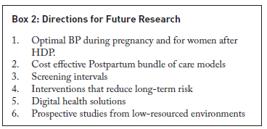
FUTURE DIRECTIONS AND RESEARCH PRIORITIESAlthough increasing evidence supports structured postpartum care following HDP, important knowledge gaps remain and further research is needed (Box 2). Digital health strategies, remote monitoring systems, and artificial intelligence-supported risk prediction tools may further strengthen postpartum care pathways. Given the disproportionate disease burden in low-resourced settings, prospective studies are required from these areas.
CONCLUSION
Hypertensive disorders of pregnancy should no longer be regarded as an isolated obstetric complication that ends at delivery. Rather, they represent important early markers of future cardiovascular, kidney, and metabolic disease, and they identify a group of young women who may benefit substantially from structured long-term prevention. By strengthening postpartum follow-up, healthcare systems may reduce preventable long-term morbidity. A structured postpartum care bundle provides an opportunity to improve maternal outcomes through early detection, ongoing surveillance, patient education, and integrated long-term risk-reduction strategies. In South Africa and other resource-limited settings, integrating maternal follow-up into primary healthcare systems, supported by digital tools and community-based strategies, is essential to ensure sustainability and accessibility.
DISCLOSURESThere are no disclosures from any of the authors
AI USE DISCLOSUREAI was used for the generation of the images in the manuscript
AUTHOR CONTRIBUTIONESWJ (Original draft, writing, and review). AD (review), BD (review). All authors approved the final version
ACKNOWLEDGEMENTS
The work reported herein was made possible through funding by the South African Medical Research Council through its Division of Research Capacity Development under the Bongani Mayosi National Health Scholars Programme from funding received from the Public Health Enhancement Fund / South African National Department of Health. The content hereof is the sole responsibility of the authors and does not necessarily represent the official views of the SAMRC.
REFERENCES
-
1. Wu P, Haththotuwa R, Kwok CS, et al. Preeclampsia and future cardiovascular health: a systematic review and meta-analysis. Circ Cardiovasc Qual Outcomes. 2017; 10:e003497. doi:10.1161/CIRCOUTCOMES.116.003497.
» https://doi.org/10.1161/CIRCOUTCOMES.116.003497 -
2. Alonso-Ventura V, Li Y, Pasupuleti V, et al. Effects of preeclampsia and eclampsia on maternal metabolic and biochemical outcomes in later life: a systematic review and meta-analysis. Metabolism. 2020; 102:154012. doi:10.1016/j.metabol.2019.154012.
» https://doi.org/10.1016/j.metabol.2019.154012 -
3. Covella B, Vinturache AE, Cabiddu G, et al. A systematic review and meta-analysis indicates long-term risk of chronic and end-stage kidney disease after preeclampsia. Kidney Int. 2019; 96:711-727. doi:10.1016/j.kint.2019.03.033.
» https://doi.org/10.1016/j.kint.2019.03.033 -
4. Tschiderer L, van der Schouw YT, Burgess S, et al. Hypertensive disorders of pregnancy and cardiovascular disease risk: a Mendelian randomisation study. Heart. 2024; 110(10):710-717. doi:10.1136/heartjnl-2023-323490.
» https://doi.org/10.1136/heartjnl-2023-323490 -
5. Kirollos S, Skilton M, Patel S, Arnott C. A systematic review of vascular structure and function in pre-eclampsia: non-invasive assessment and mechanistic links. Front Cardiovasc Med. 2019; 6:166. doi:10.3389/fcvm.2019.00166.
» https://doi.org/10.3389/fcvm.2019.00166 -
6. Behrens I, Basit S, Melbye M, et al. Risk of post-pregnancy hypertension in women with a history of hypertensive disorders of pregnancy: nationwide cohort study. BMJ. 2017; 358:j3078. doi:10.1136/bmj.j3078.
» https://doi.org/10.1136/bmj.j3078 -
7. Giorgione V, Ridder A, Kalafat E, Khalil A, Thilaganathan B. Incidence of postpartum hypertension within 2 years of a pregnancy complicated by pre-eclampsia: a systematic review and meta-analysis. BJOG. 2021; 128:495-503. doi:10.1111/1471-0528.16545.
» https://doi.org/10.1111/1471-0528.16545 -
8. Xu J, Barinas-Mitchell E, Kuller LH, et al. The association between hypertensive disorders in pregnancy and the risk of developing chronic hypertension. Front Cardiovasc Med. 2022; 9:897771. doi:10.3389/fcvm.2022.897771.
» https://doi.org/10.3389/fcvm.2022.897771 -
9. Melchiorre K, Thilaganathan B, Giorgione V, et al. Hypertensive disorders of pregnancy and future cardiovascular health. Front Cardiovasc Med. 2020; 7:59. doi:10.3389/fcvm.2020.00059.
» https://doi.org/10.3389/fcvm.2020.00059 -
10. Grand'Maison S, Pilote L, Okano M, Landry T, Dayan N. Markers of vascular dysfunction after hypertensive disorders of pregnancy: a systematic review and meta-analysis. Hypertension. 2016; 68:1447-1458. doi:10.1161/HYPERTENSIONAHA.116.07907.
» https://doi.org/10.1161/HYPERTENSIONAHA.116.07907 -
11. Castleman JS, Ganapathy R, Taki F, et al. Echocardiographic structure and function in hypertensive disorders of pregnancy: a systematic review. Circ Cardiovasc Imaging. 2016; 9:e004888. doi:10.1161/CIRCIMAGING.116.004888.
» https://doi.org/10.1161/CIRCIMAGING.116.004888 -
12. Kattah A. Preeclampsia and kidney disease: deciphering cause and effect. Curr Hypertens Rep. 2020; 22:91. doi:10.1007/s11906-020-01099-1.
» https://doi.org/10.1007/s11906-020-01099-1 -
13. Kwiatkowska E, Kwiatkowski S, Jankowski M, et al. Podocytes: the most vulnerable renal cells in preeclampsia. Int J Mol Sci. 2020; 21:5051. doi:10.3390/ijms21145051.
» https://doi.org/10.3390/ijms21145051 -
14. Ferreira RC, Fragoso MBT, Tenório MB, et al. Pre-eclampsia is associated with later kidney chronic disease and end-stage renal disease: systematic review and meta-analysis of observational studies. Pregnancy Hypertens. 2020; 22:71-85. doi:10.1016/j.preghy.2020.07.012.
» https://doi.org/10.1016/j.preghy.2020.07.012 -
15. McDonald SD, Han Z, Walsh MW, Gerstein HC, Devereaux PJ. Kidney disease after preeclampsia: a systematic review and meta-analysis. Am J Kidney Dis. 2010; 55:1026-1039. doi:10.1053/j.ajkd.2009.12.036.
» https://doi.org/10.1053/j.ajkd.2009.12.036 -
16. Nisell H, Lintu H, Lunell NO, Mollerstrom G, Pettersson E. Blood pressure and renal function seven years after pregnancy complicated by hypertension. Br J Obstet Gynaecol. 1995; 102:876-881. doi:10.1111/j.1471-0528.1995.tb10874.x.
» https://doi.org/10.1111/j.1471-0528.1995.tb10874.x -
17. Davidson B, Rayner B, Wearne N, Barday Z, Jones ESW. Long-term cardio-renal-metabolic complications following pre-eclampsia. Cardiol Clin. 2025; 43:457-467. doi:10.1016/j.ccl.2024.12.005.
» https://doi.org/10.1016/j.ccl.2024.12.005 -
18. Davidson B, Bramham K, Manning K, Osman A, Blumenthal A, Clark K, Beadmore-Gray A, Rayner B, Wearne N, Jones ES. Impact of pre-eclampsia on long-term kidney function in a low resourced setting. Kidney International Reports. 2026; 11:103689. doi:10.1016/j.ekir.2025.11.014.
» https://doi.org/10.1016/j.ekir.2025.11.014 -
19. Stuart JJ, Tanz LJ, Rimm EB, et al. Hypertensive disorders of pregnancy and maternal cardiovascular disease risk factor development: an observational cohort study. Ann Intern Med. 2018; 169:224-232. doi:10.7326/M17-2740.
» https://doi.org/10.7326/M17-2740 -
20. Feig DS, Shah BR, Lipscombe LL, et al. Preeclampsia as a risk factor for diabetes: a population-based cohort study. PLoS Med. 2013; 10:e1001425. doi:10.1371/journal.pmed.1001425.
» https://doi.org/10.1371/journal.pmed.1001425 -
21. Barrett PM, McCarthy FP, Evans M, et al. Hypertensive disorders of pregnancy and the risk of chronic kidney disease: a Swedish registry-based cohort study. PLoS Med. 2020; 17:e1003255. doi:10.1371/journal.pmed.1003255.
» https://doi.org/10.1371/journal.pmed.1003255 -
22. Khashan AS, Evans M, Kublickas M, et al. Preeclampsia and risk of end stage kidney disease: a Swedish nationwide cohort study. PLoS Med. 2019; 16:e1002875. doi:10.1371/journal.pmed.1002875.
» https://doi.org/10.1371/journal.pmed.1002875 -
23. Kristensen JH, Basit S, Wohlfahrt J, Damholt MB, Boyd HA. Pre-eclampsia and risk of later kidney disease: nationwide cohort study. BMJ. 2019; 365:l1516. doi:10.1136/bmj.l1516.
» https://doi.org/10.1136/bmj.l1516 -
24. Vikse BE, Irgens LM, Leivestad T, Skjaerven R, Iversen BM. Preeclampsia and the risk of end-stage renal disease. N Engl J Med. 2008; 359:800-809. doi:10.1056/NEJMoa0706790.
» https://doi.org/10.1056/NEJMoa0706790 -
25. Wu CC, Chen SH, Ho CH, et al. End-stage renal disease after hypertensive disorders in pregnancy. Am J Obstet Gynecol. 2014; 210:147.e1-147.e8. doi:10.1016/j.ajog.2013.09.027.
» https://doi.org/10.1016/j.ajog.2013.09.027 -
26. Baten A, Biswas RK, Kendal E, Bhowmik J. Continuum of maternal healthcare services utilization in low- and middle-income countries: a multi-level analysis. Midwifery. 2025; 149:104549. doi:10.1016/j.midw.2025.104549.
» https://doi.org/10.1016/j.midw.2025.104549 -
27. Habte A, Tamene A, Tesfaye L. Towards a positive postnatal experience in sub-Saharan African countries: the receipt of adequate services during the immediate postpartum period: a multilevel analysis. Front Public Health. 2023; 11:1272888. doi:10.3389/fpubh.2023.1272888.
» https://doi.org/10.3389/fpubh.2023.1272888 -
28. Attanasio LB, Ranchoff BL, Cooper MI, Geissler KH. Postpartum visit attendance in the United States: a systematic review. Womens Health Issues. 2022; 32:369-375. doi:10.1016/j.whi.2022.02.002.
» https://doi.org/10.1016/j.whi.2022.02.002 -
29. Ashworth DC, Bowyer L, Paskins Z, et al. Postnatal health and care following hypertensive disorders in pregnancy: a prospective cohort study. BMC Pregnancy Childbirth. 2022; 22:286. doi:10.1186/s12884-022-04540-2.
» https://doi.org/10.1186/s12884-022-04540-2 -
30. Lui NA, Jeyaram G, Henry A. Postpartum interventions to reduce long-term cardiovascular disease risk in women after hypertensive disorders of pregnancy: a systematic review. Front Cardiovasc Med. 2019; 6:160. doi:10.3389/fcvm.2019.00160.
» https://doi.org/10.3389/fcvm.2019.00160 -
31. Mohamed H, Ismail A, Sutan R, Rahman RA, Juval K. A scoping review of digital technologies in antenatal care: recent progress and applications of digital technologies. BMC Pregnancy Childbirth. 2025; 25:153. doi:10.1186/s12884-025-07209-8.
» https://doi.org/10.1186/s12884-025-07209-8 -
32. Adams JW, Brady KA, Michael YL, Yehia BR, Momplaisir FM. Postpartum engagement in HIV care: an important predictor of long-term retention in care and viral suppression. Clin Infect Dis. 2015; 61:1880-1887. doi:10.1093/cid/civ678.
» https://doi.org/10.1093/cid/civ678 - 33. Countouris, M., Mahmoud, Z., Cohen, J.B., Crousillat, D., Hameed, A.B., Harrington, C.M., Hauspurg, A., Honigberg, M.C., Lewey, J., Lindley, K. and McLaughlin, M.M., 2025. Hypertension in pregnancy and postpartum: current standards and opportunities to improve care. Circulation, 151(7), pp. 490-507.
-
34. Rossiter C, Fowler C, McMahon C, et al. Optimising mothers' health behaviour after hypertensive disorders of pregnancy: a qualitative study of a postnatal intervention. BMC Public Health. 2022; 22:1259. doi:10.1186/s12889-022-13590-2.
» https://doi.org/10.1186/s12889-022-13590-2 -
35. Magee LA, von Dadelszen P, Rey E, et al. The impact of pre-eclampsia definitions on the identification of adverse outcome risk in hypertensive pregnancy: analyses from the CHIPS trial. BJOG. 2021; 128:1373-1382. doi:10.1111/1471-0528.16602.
» https://doi.org/10.1111/1471-0528.16602 -
36. Nguyen-Hoang L, Geelhoed D, Kanhai HHH, et al. FIGO pregnancy passport: a useful tool for women and their healthcare providers on health risks following pregnancy complications. Int J Gynaecol Obstet. 2023; 162:787-791. doi:10.1002/ijgo.15029.
» https://doi.org/10.1002/ijgo.15029 -
37. Rich-Edwards JW, McElrath TF, Karumanchi SA, Seely EW. Breathing life into the lifecourse approach: pregnancy history and cardiovascular disease in women. Hypertension. 2010; 56:331-334. doi:10.1161/HYPERTENSIONAHA.110.156810.
» https://doi.org/10.1161/HYPERTENSIONAHA.110.156810 -
38. Hutchesson MJ, Taylor R, Shrewsbury VA, et al. Be Healthe for your heart: a pilot randomized controlled trial evaluating a web-based behavioral intervention to improve the cardiovascular health of women with a history of preeclampsia. Int J Environ Res Public Health. 2020; 17:5779. doi:10.3390/ijerph17165779.
» https://doi.org/10.3390/ijerph17165779 -
39. Thomopoulos C, Parati G, Zanchetti A, et al. Management of hypertensive disorders in pregnancy: a position statement of the European Society of Hypertension Working Group 'Hypertension in Women'. J Hypertens. 2024; 42:1109-1132. doi:10.1097/HJH.0000000000003739.
» https://doi.org/10.1097/HJH.0000000000003739 -
40. STRIDE BP. Blood pressure monitors [homepage on the Internet]. c2026 [Accessed May 2026]. Available from: https://www.stridebp.org/bp-monitors/
» https://www.stridebp.org/bp-monitors/ - 41. Siedner, M.J., Magula, N., Mazibuko, L., Sithole, N., Castle, A., Nxumalo, S., Manyaapelo, T., Abrahams-Gessel, S., Gareta, D., Orne-Gliemann, J. and Baisley, K., 2025. Home-based care for hypertension in rural South Africa. New England Journal of Medicine, 393(13), pp. 1304-1314.
-
42. Unger T, Borghi C, Charchar F, et al. 2020 International Society of Hypertension global hypertension practice guidelines. J Hypertens. 2020; 38:982-1004. doi:10.1097/HJH.0000000000002453.
» https://doi.org/10.1097/HJH.0000000000002453 - 43. De Backer, J., Haugaa, K.H., Hasselberg, N.E., De Hosson, M., Brida, M., Castelletti, S., Cauldwell, M., Cerbai, E., Crotti, L., de Groot, N.M. and Estensen, M.E., 2025. 2025 ESC Guidelines for the management of cardiovascular disease and pregnancy: Developed by the task force on the management of cardiovascular disease and pregnancy of the European Society of Cardiology (ESC) Endorsed by the European Society of Gynecology (ESG). European heart journal, 46(43), pp. 4462-4568
-
44. Charchar FJ, Prestes PR, Mills C, et al. Lifestyle management of hypertension: International Society of Hypertension position paper endorsed by the World Hypertension League and European Society of Hypertension. J Hypertens. 2024; 42:23-49. doi:10.1097/HJH.0000000000003563.
» https://doi.org/10.1097/HJH.0000000000003563 -
45. Tschiderer L, Willeit P, Peters SAE. The cardiovascular benefits of breastfeeding to mothers. Expert Rev Cardiovasc Ther. 2022; 20:589-592. doi:10.1080/14779072.2022.2100761.
» https://doi.org/10.1080/14779072.2022.2100761 -
46. Levin A, Stevens PE, Bilous RW, et al. Executive summary of the KDIGO 2024 Clinical Practice Guideline for the Evaluation and Management of Chronic Kidney Disease: known knowns and known unknowns. Kidney Int. 2024; 105:684-701. doi:10.1016/j.kint.2023.10.016.
» https://doi.org/10.1016/j.kint.2023.10.016