Association of Anthropometric Measures with Blood Pressure in Young Urban Adolescents in South Africa
Abstract
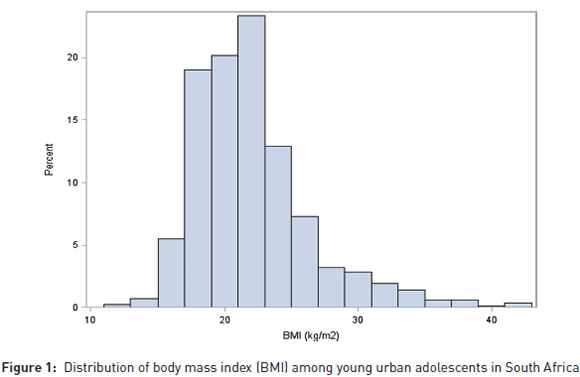
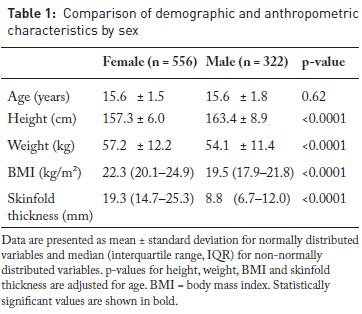
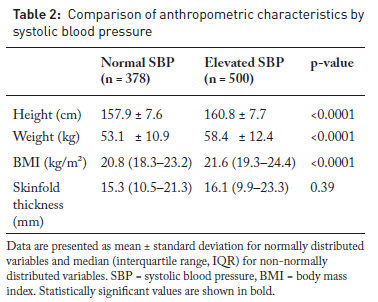
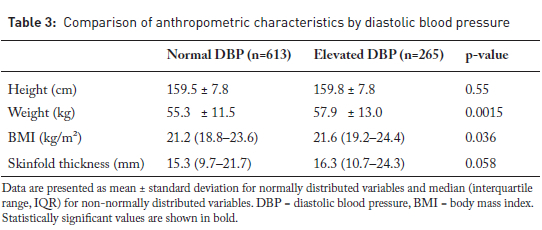
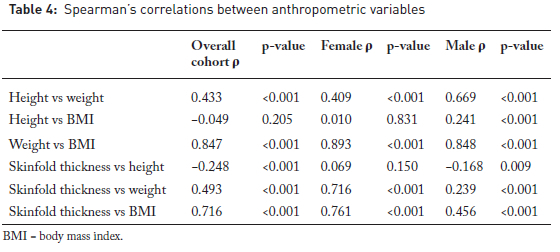
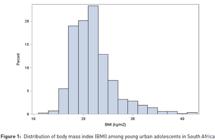
BACKGROUND: Elevated blood pressure in adolescence is an important early marker of future cardiovascular risk. Anthropometric measures such as body mass index (BMI) and skinfold thickness may provide simple, low-cost tools to identify individuals at risk. However, data from urban South African adolescent populations remain limited. METHODS: We conducted a cross-sectional study of 878 adolescents (aged ≥13 years) from a school in Alexandra, Johannesburg. Resting blood pressure, height and weight were measured using standardised methods, and triceps skinfold thickness was assessed using calibrated callipers. RESULTS: The cohort comprised 556 females and 322 males, with a mean age of 15.6 years. Most participants had a normal BMI (61.4%), while 20.5% were underweight, 11.5% overweight, and 6.6% obese. Females had significantly higher BMI and skinfold thickness than males (p<0.0001), while males were taller. Females had a lower likelihood of elevated systolic blood pressure (SBP) compared to males (OR 0.75; 95% CI 0.56-0.99; p=0.042), with no difference in diastolic blood pressure (DBP). Participants with elevated SBP were significantly taller and heavier, and had higher BMI (all p<0.0001), but skinfold thickness was not associated with elevated SBP (p=0.39). Elevated DBP was associated with higher weight (p=0.0015) and BMI (p=0.036), but not with height or skinfold thickness. CONCLUSION: Anthropometric measures, particularly weight and BMI, are associated with elevated blood pressure in urban South African adolescents. These findings support the use of simple anthropometric assessments to support early cardiovascular risk recognition in adolescents.
 Thumbnail