Aldosterone Synthase Inhibitors for Hypertension: A Systematic Review, Meta-Analysis and Meta-Regression
Abstract
BACKGROUND: Aldosterone synthase inhibitors (ASIs) represent a novel therapeutic strategy targeting aldosterone biosynthesis in patients with uncontrolled and/or resistant hypertension. OBJECTIVES: To assess the efficacy and safety of ASIs in the treatment of uncontrolled and/or resistant hypertension and to explore predictors of treatment response. METHODS: PubMed, Embase, Cochrane Central, and ClinicalTrials.gov were systematically searched for randomised controlled trials (RCTs) comparing ASIs with placebo in adults with uncontrolled and/or resistant hypertension from inception to February 2026. The primary outcome was a change in systolic blood pressure (SBP). Secondary outcomes included blood pressure control and safety endpoints. Random-effects models estimated pooled mean differences (MD) and risk ratios (RR) with 95% confidence intervals (CIs). Meta-regression explored treatment-effect modifiers. The protocol was registered with PROSPERO (CRD420251266257). RESULTS: Seven RCTs comprising 2831 patients were included. Compared with placebo, ASIs significantly reduced SBP (MD: -6.91 mmHg; 95% CI: -8.93 to -4.89; p < 0.001) and improved BP control (RR 1.65, 95% CI 1.20-2.26; p = 0.002). ASIs increased the risk of adverse events (RR 1.32, 95% CI 1.21-1.44; p < 0.001), including renal dysfunction (RR 3.00, 95% CI 1.72-5.25), hypotension (RR 2.78, 95% CI 1.54-5.00), hyponatraemia (RR 2.31, 95% CI 1.45-3.67) (all p < 0.001), and hyperkalaemia across all severities (RR 7.25 [mild], 6.04 [moderate], and 4.43 [severe]; all p ≤ 0.002). Mortality, serious adverse events and severe adverse events did not differ significantly. Meta-regression showed baseline SBP predicted BP control, whereas dose, agent type, and follow-up duration did not. CONCLUSION: ASIs significantly reduce SBP and improve BP control in uncontrolled and/or resistant hypertension but increase electrolyte and renal adverse events. Longer-term trials are needed to define optimal dosing, safety, and cardiovascular outcomes.
Aldosterone synthase inhibitors; baxdrostat; lorundrostat; hypertension; meta-analysis; meta-regression
INTRODUCTION
Hypertension affects more than 1 billion people globally and remains one of the leading modifiable risk factors for cardiovascular and renal disease.(1-3) Despite the availability of multiple effective antihypertensive agents, achieving and maintaining blood pressure (BP) control remains a major global challenge and contributes substantially to morbidity and mortality.(1-4) This challenge is particularly important in patients with uncontrolled and/or resistant hypertension, in whom BP remains above target despite background therapy.(1-3,5) This residual therapeutic gap has created a critical need for novel antihypertensive agents and exploration of alternative drug targets.
Aldosterone is a key downstream effector hormone of the renin-angiotensin-aldosterone system (RAAS) and plays a fundamental role in BP regulation.(6,7) Increasing evidence suggests that aldosterone dysregulation is an under-recognised and potentially dominant contributor to uncontrolled and/or resistant hypertension, with up to 30% of patients with resistant hypertension demonstrating overt or subclinical primary aldosteronism.(7,8) Beyond classical primary aldosteronism, autonomous aldosterone production may exist across a spectrum of hypertension phenotypes and contribute to persistent BP elevation despite multidrug antihypertensive therapy.(7,9) Activation of the mineralocorticoid receptor by aldosterone promotes sodium and water reabsorption in the distal nephron, increases potassium and hydrogen excretion, and leads to subsequent volume expansion.(4,5,10) Furthermore, aldosterone has been implicated in vascular remodelling, renal fibrosis and progression to chronic kidney disease.(10,11) Pharmacological inhibition of this pathway is therefore an established strategy for BP reduction.(4,6) Mineralocorticoid receptor antagonists (MRAs), particularly spironolactone, are recommended as fourth-line agents for resistant hypertension and have proven efficacy. However, their use is limited by the associated electrolyte disturbances and endocrine adverse effects, often necessitating discontinuation.(2,4,12)
Aldosterone synthase inhibitors (ASIs) are a novel therapeutic class that directly suppresses aldosterone biosynthesis by inhibiting CYP11B2, the enzyme involved in the terminal steps of aldosterone production.(4,5) Unlike MRAs, which block downstream receptor activation, ASIs inhibit aldosterone production upstream and may therefore attenuate both genomic and non-genomic aldosterone-mediated effects.(7,13) This strategy may additionally address "aldosterone escape" observed during chronic RAAS inhibition and potentially provide a more mechanism-directed approach to resistant hypertension.(7) There are currently four highly effective ASIs under investigation: baxdrostat, lorundrostat, dexfadrostat and vicadrostat.(7) Recent trials of baxdrostat and lorundrostat have demonstrated clinically meaningful reductions in BP comparable to those of some of the most effective currently available antihypertensive drug classes, although concerns remain regarding electrolyte disturbances, renal dysfunction, cost, and long term safety.(7,14-16)
Although previous syntheses and randomised trials have demonstrated BP-lowering signals with ASIs, these studies did not include the HALO trial, and none have conducted extensive meta-regression analyses of factors that determine response to ASIs.(11,14-20) We therefore performed an up-to-date systematic review and meta-analysis of RCTs to evaluate ASIs in adults with uncontrolled and/or resistant hypertension. We further performed meta-regression analyses to explore whether ASI dose, agent type, follow-up duration, and baseline systolic BP modified treatment effects.
MATERIAL AND METHODS
This meta-analysis was prospectively registered with the International Prospective Register of Systematic Reviews (PROSPERO) (Registration number: CRD420251266257). The study was conducted in accordance with the methodological recommendations of the Cochrane Collaboration and reported in accordance with the Preferred Reporting Items for Systematic Reviews and Meta-Analyses (PRISMA) guidelines.(21) Ethics committee approval was not required, as this study utilised aggregated data from previously published studies and did not involve analysis of individual-level patient data.
SEARCH STRATEGYWe conducted a systematic search of PubMed, Embase and Cochrane Central Register of Controlled Trials (CENTRAL) from inception to February 2026 for studies published in English Language with the following medical subject heading terms: ("Resistant hypertension"[Mesh] OR "resistant hypertension" OR "uncontrolled hypertension" OR "treatment-resistant hypertension" OR "refractory hypertension" OR "uncontrolled hypertension" OR "difficult-to-treat hypertension" OR "poorly controlled hypertension") AND ("Aldosterone synthase inhibitor" OR "aldosterone synthesis inhibitor" OR "Aldosterone Synthase Inhibit*" OR "CYP11B2 inhibitor" OR "aldosterone biosynthesis inhibitor" OR "mineralocorticoid synthesis inhibitor" OR ASIs OR "Selective CYP11B2 inhibitor" OR "Aldosterone biosynthesis blocker" OR "baxdrostat" OR "CIN-107" OR "(3S,3aR,6aS)-2-((1R,2R)-2-hydroxycyclohexyl)-N-(1H-imidazol-4-ylmethyl)-hexahydrofuro[3,2-b]pyrrole-3-carboxamide" OR "CID 137347801" OR LCI699 OR osilodrostat OR FAD286 OR LY3045697 OR Dexfadrostat OR "dexfadrostat phosphate" OR lorundrostat OR "(4S,5R)-5-(hydroxymethyl)-1-(4-isopropylphenyl)-3-oxabicyclo[3.1.0]hexane-2,4-diol" OR "CS-3150" OR "1392587-81-7"). Two authors (UGA and MV) manually searched the references of included studies and previous reviews. The search strategies for all electronic databases are provided in Supplementary Table S1.
ELIGIBILITY CRITERIAStudies were included if they met the following eligibility criteria: (1) peer-reviewed randomised controlled trials (RCTs); (2) compared an ASI with a placebo; (3) enrolled adults with uncontrolled and/or resistant hypertension; (4) reported at least one clinical outcome of interest. We excluded studies with (1) no control group; (2) enrolled patients with primary hypertension; (3) did not report any outcomes of interest; (4) editorials, conference abstracts, case reports/ series, and reviews.
OUTCOMES
The primary efficacy outcome was the change in systolic blood pressure (SBP). Secondary outcomes comprised change in diastolic blood pressure (DBP), achievement of BP control, and safety endpoints, including overall and serious adverse events, renal dysfunction (including changes in estimated glomerular filtration rate [eGFR]), electrolyte abnormalities (including hyperkalaemia and hyponatraemia), symptomatic hypotension, and all-cause mortality. Additional exploratory outcomes included mean changes in plasma aldosterone and plasma renin activity.
DATA EXTRACTION AND ENDPOINTSArticle screening was performed using Rayyan.ai software by seven independent reviewers (UGA, MM, MV, AMM, FM, SM, and KR) after removing duplicates, using a standardised form. They were blinded to each other's decisions. The following study characteristics were extracted: (1) author; (2) journal name; (3) year of publication; (4) sample size; (5) patient baseline characteristics; and (6) follow-up period. Any discrepancies were resolved through consensus.
QUALITY ASSESSMENTRisk of bias for individual RCTs was assessed using the Cochrane Risk of Bias tool version 2 (RoB 2).(22) The Cochrane Collaboration's tool for assessing risk of bias in randomised trials judges RCTs as "high risk of bias," "low risk of bias," or "some concerns" based on five domains. Two independent authors (UGA and MM) performed the risk-of-bias assessment, with disagreements resolved by consensus or discussion with other authors. The layout was produced by the RobVis tool.(23) Sensitivity analyses were conducted using a leave-one-out approach for all outcomes, sequentially excluding each study to evaluate the robustness of the pooled estimates and the influence of individual studies on heterogeneity. Funnel-plot analysis of individual study weights against point estimates was used to check for evidence of publication bias.
SUBGROUP ANALYSESPrespecified subgroup analyses were conducted according to ASI type (baxdrostat versus lorundrostat) to explore potential effect modification. Interaction between subgroups was assessed using a χ2p < 0.10 considered indicative of significant interaction, in accordance with Cochrane recommendations.(22)
STATISTICAL ANALYSISTreatment effects were expressed as pooled risk ratios (RRs) for dichotomous outcomes and mean differences (MDs) for continuous outcomes, with 95% confidence intervals (CIs). The DerSimonian and Laird random-effects model was used to assess all outcomes. Heterogeneity was evaluated with Cochran's Q test, Higgins and Thompson's I222
RESULTS
Study selection and baseline characteristics
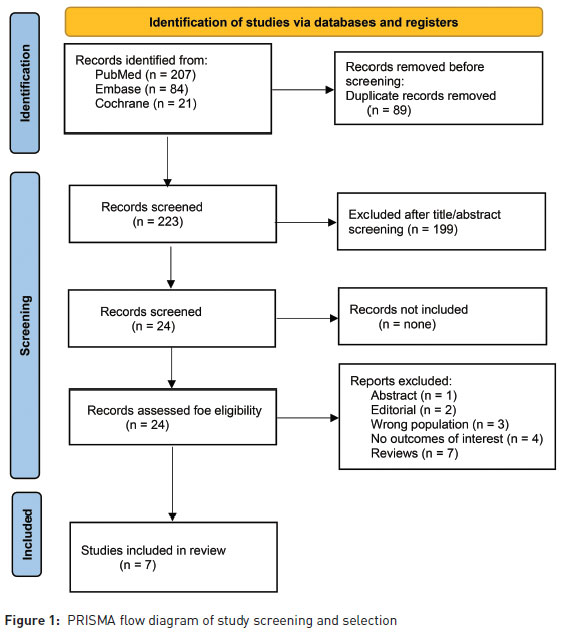
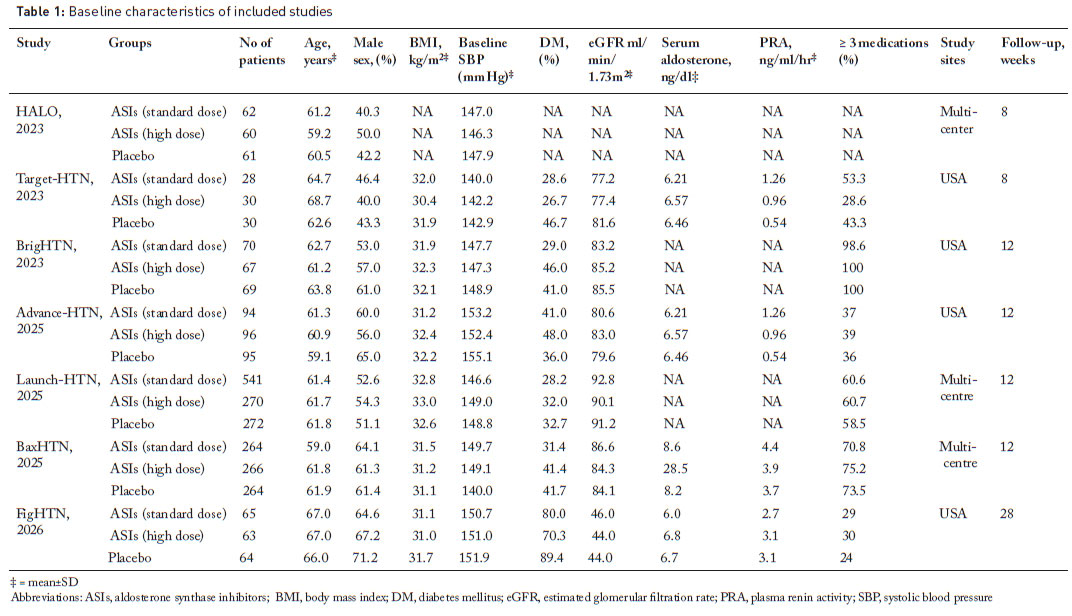
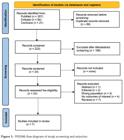
The literature search identified 312 records (Figure 1). After removing duplicates and screening titles and abstracts, 24 studies were deemed eligible for full-text review. Of these, seven RCTs were included in the final analysis, encompassing both early-phase exploratory studies and larger confirmatory trials.(14-20) A total of 2831 patients with uncontrolled and/or resistant hypertension were included, of whom 1124 (39.7%) received standard-dose ASIs, 852 (30.1%) received higher-dose regimens, and 855 (30.2%) received a placebo. The included trials evaluated two ASIs: four studies assessed baxdrostat, while three studies investigated lorundrostat.(14-20) The mean age of participants was 62.5 years, with broadly comparable demographic profiles across studies. Baseline SBP was high and ranged from 140.0 to 153.2 mmHg. Baseline comorbidities varied across studies; notably, the trial by Dwyer et al. included a higher proportion of patients with diabetes mellitus and impaired renal function than other trials.(19) Follow-up duration ranged from 8 weeks in most studies to 28 weeks in the trial by Dwyer et al.(19) Detailed characteristics of the included studies are presented in Table 1, including baseline demographics, comorbidities, and treatment regimens.
POOLED ANALYSIS OF ALL STUDIES
Efficacy outcome
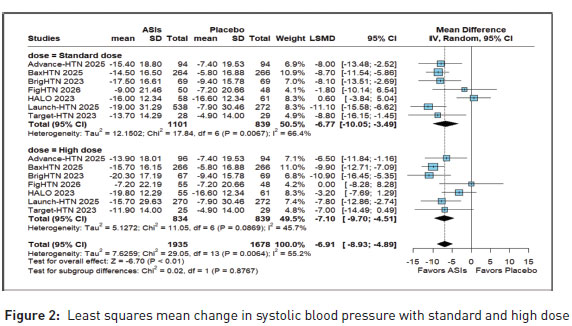
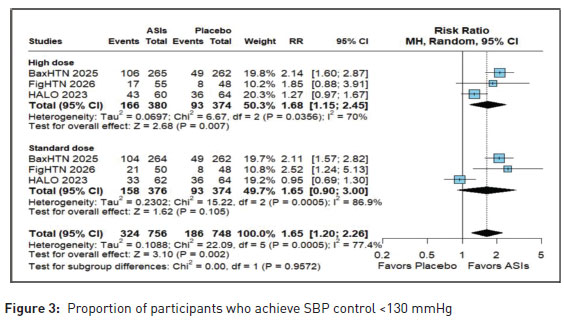
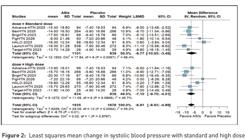
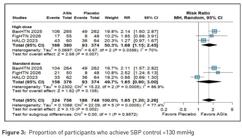
A pooled analysis of all included trials demonstrated that treatment with ASIs was associated with a significant reduction in SBP compared with placebo. The pooled MD in least-squares mean SBP was -6.91 mmHg (95% CI -8.93 to -4.89; p < 0.001), with moderate heterogeneity (I2Figure 2). In addition, patients receiving ASIs were significantly more likely to achieve BP control compared with those receiving placebo (RR 1.65, 95% CI 1.20-2.26; p = 0.002), although this outcome was also associated with moderate between-study heterogeneity (I2Figure 3).
Safety Outcomes
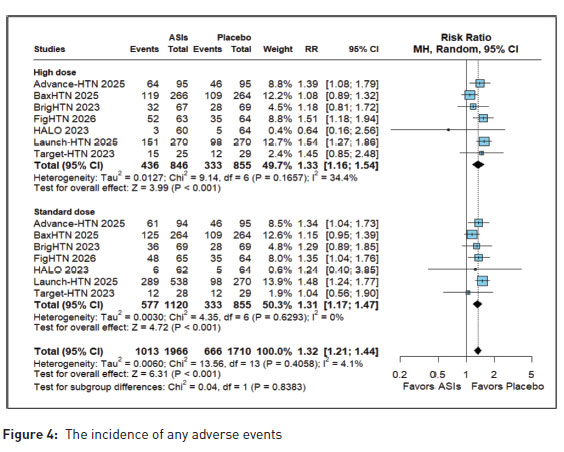
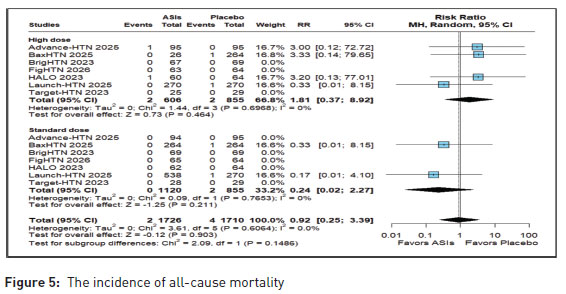
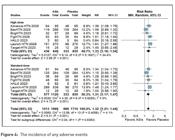
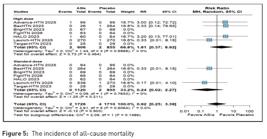
ASIs were associated with a higher incidence of any adverse events compared with placebo (RR 1.32, 95% CI 1.21-1.44; p < 0.001; I2Figure 4). With respect to specific adverse outcomes, ASIs were associated with significantly increased risks of renal dysfunction (RR 3.00, 95% CI 1.72-5.25; p < 0.001; I2222222Figure 5), serious adverse events (RR 1.42, 95% CI 0.86-2.34; p = 0.175; I22
SUB ANALYSES BASED ON THE DOSE OF ASIs
In prespecified subgroup analyses stratified by dose, high dose ASIs were associated with a significantly higher incidence of overall adverse events compared with placebo (RR 1.33, 95% CI 1.16-1.54; p < 0.001; I2Figure 4). In addition, high dose therapy was associated with increased risks of renal dysfunction (RR 3.38, 95% CI 1.55-7.39; p = 0.002; I222Figure 5) or serious adverse events (RR 1.62, 95% CI 0.70-3.77; p = 0.263; I222Figure 5) and severe adverse events (RR 0.92, 95% CI 0.49-1.75; p = 0.811; I2
QUALITY ASSESSMENTThe appraisal of RCTs included in the meta-analysis is reported in Supplementary Figure S9. Overall, all studies were double-blinded, and the outcomes were also adjudicated independently and hence deemed at low risk of bias across domains. Visual inspection of the funnel plot of the mean change in SBP reduction did not demonstrate substantial asymmetry. Egger's regression test did not identify evidence of small-study effects (intercept = 1.63, 95% CI -0.63, 3.89; p = 0.183; Supplementary Figure S10). Similarly, no evidence of publication bias was observed on funnel plot inspection of the proportion of patients that achieved SBP < 130 mmHg or Egger's test (intercept = -1.46, 95% CI -4.77, 1.85; p = 0.436; Supplementary Figure S11). These findings suggest non-statistically significant small-study effects. However, it should be interpreted with caution, given the limited number of included studies. Each point represents an individual study or comparison. The distribution appears symmetrical around the pooled effect estimate, with no evidence of small-study effects. Egger's regression test was not statistically significant
SENSITIVITY ANALYSISA leave-one-out sensitivity analysis plot was performed for all outcomes (least-squares mean change in SBP and proportion of participants that achieve BP control of < 130 mmHg) with I2 > 50% to evaluate the influence of individual studies on the overall effect estimates and heterogeneity. There was no significant reduction in heterogeneity among studies for the mean change in SBP and the proportion of participants that achieved SBP <130 mmHg with the removal of any of the studies (Supplementary Figures S12 and S13). Similarly, the leave-one-out sensitivity analysis for the other outcomes did not show any change with the removal of the studies.
META-REGRESSION ANALYSES
Meta-regression analyses demonstrated that ASI dose (standard vs high), drug type (baxdrostat vs lorundrostat), baseline SBP, and follow-up duration were not significantly associated with the magnitude of mean SBP reduction (all p > 0.05, Supplementary Figure S14). None of these variables explained between-study heterogeneity (R22
In contrast, for the outcome of achieving SBP control (<130 mmHg), meta-regression demonstrated a significant association with baseline SBP (β = 0.18, 95% CI 0.07-0.29; p = 0.002; Supplementary Figure 15). This variable accounted for a substantial proportion of between-study heterogeneity (R22
DISCUSSION
In this systematic review and meta-analysis of seven RCTs including 2831 patients with uncontrolled and/or resistant hypertension, ASIs were associated with significant reductions in SBP and a greater likelihood of achieving target BP compared with placebo. These benefits were accompanied by increased risk of adverse events, particularly electrolyte disturbances and renal effects, although the risks of serious adverse events and mortality were not significantly increased. Meta-regression analyses demonstrated that treatment response was not significantly influenced by ASI dose, treatment duration, or specific agent, suggesting a class effect with a potential plateau in antihypertensive efficacy. In contrast, baseline SBP emerged as the primary determinant of BP control and explained a substantial proportion of between-study heterogeneity. Collectively, these findings support a consistent antihypertensive effect of ASIs, with treatment response appearing to be driven more by baseline disease severity than treatment intensification.
The magnitude of SBP reduction observed in this analysis is clinically relevant because the included populations had high BP despite adequate and appropriate background antihypertensive treatment. In this context, an additional placebo-corrected reduction of approximately 7 mmHg may represent a meaningful incremental benefit and may potentially translate into significant cardiovascular risk reduction.(1,2) This increased likelihood of achieving SBP control further supports the clinical relevance of ASI therapy beyond average BP reduction alone.
The BP reductions observed with ASIs are biologically plausible and consistent with upstream suppression of aldosterone biosynthesis, leading to attenuation of sodium retention, volume expansion, and aldosterone-mediated vascular and renal effects.(4,5,26-28) These findings further reinforce the growing recognition that aldosterone dysregulation represents an underappreciated and potentially dominant mechanism contributing to uncontrolled and/or resistant hypertension.(7) The accompanying electrolyte abnormalities and renal effects observed across trials are similarly consistent with pharmacological aldosterone suppression. Reduced aldosterone activity may promote natriuresis and volume reduction, while compensatory activation of the RAAS may be reflected by increased renin activity.(29)
A key contribution of this analysis is the evaluation of potential treatment-effect modifiers. Contrary to a simple dose-response expectation, ASI dose was not significantly associated with the magnitude of SBP reduction or achievement of BP control. Similarly, drug type and follow-up duration did not significantly modify the treatment effect. In contrast, the SBP at the time of recruitment was significantly associated with achievement of SBP control and explained a substantial proportion of heterogeneity between studies. This suggests that the probability of reaching target BP may be determined less by dose escalation and more by the patient's baseline BP, which may reflect baseline disease severity. Moreover, dose escalation is associated with renal and electrolyte adverse effects.(14-20) An optimal ASI dose may therefore be required to balance incremental BP lowering against tolerability rather than aiming for higher doses.
ASIs were associated with increased risks of adverse events, renal dysfunction, hypotension, hyponatraemia and hyperkalaemia across severity thresholds. Hyperkalaemia and hyponatraemia are mechanistically plausible due to aldosterone suppression, which alters fluid and sodium homeostasis and impairs potassium excretion.(10) The observed reduction in glomerular filtration rate may reflect haemodynamic changes, altered sodium-fluid balance, background RAAS blockade, or the high-risk renal profile of included patients.(5,29) However, the absence of a statistically significant increase in serious adverse events, severe adverse events, or all-cause mortality suggests that, within the controlled environment of randomised trials, these risks are generally manageable. Clinically, this supports a risk-mitigation approach rather than dismissal of the drug class. Careful patient selection, baseline renal and electrolyte assessment, and early potassium/renal monitoring would be essential in patients initiated on these agents.
Our findings are broadly consistent with prior meta-analyses showing that ASIs reduce SBP and DBP compared with placebo while increasing hyperkalaemia risk. Marzano et al. reported significant reductions in office SBP and DBP, with hyperkalaemia as the main safety concern.(30) Dewi et al., using a Bayesian network meta-analysis, suggested differential ranking among ASI dose regimens, while Queiroga et al. focused on second-generation ASIs and found clinically meaningful BP reductions with increased electrolyte-related adverse events.(4,31) The present analysis extends this evidence by focusing on patients with uncontrolled and/or resistant hypertension and by specifically evaluating whether dose, agent type, follow-up duration, and baseline SBP explained variability in treatment response.
From a clinical perspective, ASIs may represent an important future option for patients with uncontrolled and/or resistant hypertension who remain above targets despite optimised background therapy. However, the present findings argue for a measured approach. The lack of a clear dose-response relationship in meta-regression suggests that higher doses should not be assumed to produce proportionally greater benefit, particularly when electrolyte and renal risks are present. Instead, future clinical use may require individualised selection based on baseline BP, kidney function, background RAAS blockade, potassium level and comorbidity burden.
Current clinical practice guidelines for primary aldosteronism emphasise MRAs as the cornerstone of medical therapy and do not yet include ASIs as part of standard treatment algorithms.(32) Spironolactone is recommended as the preferred agent, largely driven by its low cost and widespread availability, although other MRAs demonstrate comparable efficacy when titrated to equivalent potencies. MRAs are also recommended over epithelial sodium channel inhibitors, reflecting their direct targeting of aldosterone-mediated pathophysiology.(32) Similarly, the recent hypertension guideline is yet to recommend the use of ASIs.(1,2)
ASIs may offer a complementary mechanism-based therapeutic strategy, particularly in patients with aldosterone-driven hypertension. Unlike steroidal MRAs, highly selective ASIs may potentially avoid antiandrogenic and progestogenic adverse effects while maintaining substantial BP lowering efficacy.(7) From a pathophysiological perspective, ASIs may be particularly advantageous in conditions characterised by excess aldosterone production, such as primary aldosteronism or aldosterone-driven resistant hypertension. In contrast, MRAs may be more appropriate in states of mineralocorticoid receptor overactivation independent of aldosterone levels, such as heart failure.(13) In clinical scenarios where both aldosterone excess and receptor activation coexist, such as chronic kidney disease and resistant hypertension, a combined or complementary approach may ultimately be required.(13)
From a clinical and health systems perspective, considerations of cost, accessibility, and feasibility are highly relevant. MRAs, particularly spironolactone, are inexpensive and widely available. In contrast, cost-effectiveness data for ASIs are currently lacking, and their uptake into clinical practice will depend not only on efficacy and safety but also on affordability and health system integration.(32) Active comparator trials and cardiovascular outcome data will likely be important determinants of future adoption and reimbursement.(7) This may be particularly important in resource-limited settings where MRAs remain the only practical option. More broadly, ASIs may represent part of a transition from conventional "one-size-fits-all" antihypertensive treatment algorithms toward mechanism-based and phenotype-directed therapy for hypertension.(7) Future studies directly comparing ASIs with MRAs, and evaluating combination strategies across distinct pathophysiological phenotypes, will be essential to define their optimal role in the management of resistant hypertension.(13)
LIMITATIONSWhile this study synthesised evidence exclusively from RCTs, the current body of available data remains limited in size. Consequently, statistical power for subgroup analyses and meta-regression may have been constrained, and rare safety outcomes may not have been fully captured. Second, all the RCTs were still in a relatively early phase, with modest sample sizes and predominantly short follow-up durations. Consequently, long-term cardiovascular, renal, and mortality outcomes, as well as the sustained efficacy and safety of ASIs, cannot yet be established and require confirmation in larger, longer-term phase III trials. Third, moderate between-study heterogeneity was observed for SBP reduction and achievement of BP control, likely reflecting differences in study populations, baseline BP severity, background antihypertensive regimens, ASI dose strategies, and BP management protocols. Although meta-regression identified baseline SBP as an important determinant of BP control, residual heterogeneity remained for several outcomes. In addition, although our meta-analysis included high-quality RCTs that include baxdrostat and lorundrostat, the findings cannot be generalised to newer and evolving ASIs. The meta-regression analyses were conducted using study-level rather than individual patient level data and should therefore be considered exploratory and hypothesis-generating. Finally, although funnel plot inspection and Egger's test did not suggest small-study effects, these methods are often underpowered with a limited number of studies.
CONCLUSION
In this meta-analysis comparing the dose-response efficacy and safety outcomes of ASIs in patients with uncontrolled and/or resistant hypertension, ASIs were associated with a significant reduction in SBP and a higher likelihood of achieving SBP control compared with placebo. These effects were similar across drug type and dosages, and baseline SBP is the main determinant of treatment response. In addition, ASIs were associated with increased risks of side effects, but the rate of serious adverse effects and all-cause mortality was similar. Overall, ASIs appear promising, but longer studies are required to determine patient selection, optimal dosing, safety and cardiovascular outcomes.
AUTHOR CONTRIBUTION STATEMENTF.M., U.G.A., and K.R. contributed to the study conception, literature search, data analysis, interpretation of results, manuscript writing and editing. K.R., U.G.A., S.M, M.V., M.M., A.M.M and F.M. contributed to the literature search, data extraction, statistical analysis, and manuscript drafting and editing. F.M., U.G.A., and K.R. contributed to the study design, manuscript writing, editing, and supervision of the study. M.V. designed the visual abstract. U.G.A. and K.R. contributed equally to this manuscript. All authors reviewed and approved the final version of the manuscript.
FUNDINGThe authors have not declared a specific grant for this research from any funding agency in the public, commercial, or not-for-profit sectors.
COMPETING INTERESTSNone declared
REFERENCES
-
1. McEvoy JW, McCarthy CP, Bruno RM, et al. 2024 ESC Guidelines for the management of elevated blood pressure and hypertension: Developed by the task force on the management of elevated blood pressure and hypertension of the European Society of Cardiology (ESC) and endorsed by the European Society of Endocrinology (ESE) and the European Stroke Organisation (ESO). Eur Heart J. 2024; 45(38):3912-4018. doi:10.1093/eurheartj/ehae178.
» https://doi.org/10.1093/eurheartj/ehae178 -
2. Writing Committee Members*, Jones DW, Ferdinand KC, et al. 2025 AHA/ACC/AANP/AAPA/ABC/ACCP/ACPM/AGS/AMA/ASPC/NMA/PCNA/SGIM guideline for the prevention, detection, evaluation and management of high blood pressure in adults: a report of the American College of Cardiology/American Heart Association Joint Committee on Clinical Practice Guidelines. Circulation. 2025; 152(e212-e316). doi:10.1161/CIR.0000000000001356.
» https://doi.org/10.1161/CIR.0000000000001356 -
3. Ettehad D, Emdin CA, Kiran A, et al. Blood pressure lowering for prevention of cardiovascular disease and death: a systematic review and meta-analysis. The Lancet. 2016; 387(10022):957-967. doi:10.1016/S0140-6736(15)01225-8 PubMed PMID: 26724178.
» https://doi.org/10.1016/S0140-6736(15)01225-8 -
4. Dewi IP, Anggitama AM, Jati EB, Dewi KP. Comparative efficacy and safety of aldosterone synthase inhibitors in hypertension: a Bayesian network meta-analysis of randomised controlled rials. Open Heart. 2025; 12(2):e003535. doi:10.1136/openhrt-2025-003535. PubMed PMID: 41093633; PubMed Central PMCID: PMC12530399.
» https://doi.org/10.1136/openhrt-2025-003535 -
5. Cicero AFG, Tocci G, Avagimyan A, et al. Aldosterone synthase inhibitors for resistant hypertension: pharmacological insights - a systematic review. Drugs. 2025; 85(11):1429-1453. doi:10.1007/s40265-025-02229-2.
» https://doi.org/10.1007/s40265-025-02229-2 -
6. Andersen K. Aldosterone synthase inhibition in hypertension. Curr Hypertens Rep. 2013; 15(5):484-488. doi:10.1007/s11906-013-0379-7.
» https://doi.org/10.1007/s11906-013-0379-7 -
7. Laffin LJ, Nissen SE. Aldosterone synthase inhibitors for hypertension: a breakthrough facing barriers to adoption. PLoS Med. 2026; 23(2):e1004900. doi:10.1371/journal.pmed.1004900.
» https://doi.org/10.1371/journal.pmed.1004900 -
8. Brown MJ, Drake WM. Resistant hypertension is not essential: it is primarily aldosteronism. Hypertension. 2026; 83(5):e26401. doi:10.1161/HYPERTENSIONAHA.125.26401.
» https://doi.org/10.1161/HYPERTENSIONAHA.125.26401 -
9. Hundemer GL, Leung AA, Kline GA, et al. Biomarkers to guide medical therapy in primary aldosteronism. Endocr Rev. 2024; 45(1):69-94. doi:10.1210/endrev/bnad024.
» https://doi.org/10.1210/endrev/bnad024 -
10. Hargovan M, Ferro A. Aldosterone synthase inhibitors in hypertension: current status and future possibilities. JRSM Cardiovasc Dis. 2014; 3:2048004014522440. doi:10.1177/2048004014522440.
» https://doi.org/10.1177/2048004014522440 -
11. Calhoun DA, White WB, Krum H, et al. Effects of a novel aldosterone synthase inhibitor for treatment of primary hypertension. Circulation. 2011; 124(18):1945-1955. doi:10.1161/CIRCULATIONAHA.111.029892.
» https://doi.org/10.1161/CIRCULATIONAHA.111.029892 -
12. Williams B, MacDonald TM, Morant S, et al. Spironolactone versus placebo, bisoprolol, and doxazosin to determine the optimal treatment for drug-resistant hypertension (PATHWAY-2): a randomised, double-blind, crossover trial. The Lancet. 2015; 386(10008):2059-2068. doi:10.1016/S0140-6736(15)00257-3 PubMed PMID: 26414968.
» https://doi.org/10.1016/S0140-6736(15)00257-3 -
13. Pitt B, Williams GH. Aldosterone synthase inhibitors and mineralocorticoid receptor antagonists: competitors or collaborators? Circulation. 2024; 149(6):414-416. doi:10.1161/CIRCULATIONAHA.123.066314.
» https://doi.org/10.1161/CIRCULATIONAHA.123.066314 -
14. Laffin LJ, Rodman D, Luther JM, et al. Aldosterone synthase inhibition with lorundrostat for uncontrolled hypertension: the target-HTN randomized clinical trial. JAMA. 2023; 330(12):1140-1150. doi:10.1001/jama.2023.16029.
» https://doi.org/10.1001/jama.2023.16029 -
15. Saxena M, Laffin L, Borghi C, et al. Lorundrostat in participants with uncontrolled hypertension and treatment-resistant hypertension. JAMA. 2025; 334(5):409-418. doi:10.1001/jama.2025.9413. PubMed PMID: 40587141; PubMed Central PMCID: PMC12210145.
» https://doi.org/10.1001/jama.2025.9413 -
16. Laffin LJ, Kopjar B, Melgaard C, et al. Lorundrostat efficacy and safety in patients with uncontrolled hypertension. N Engl J Med. 2025; 392(18):1813-1823. doi:10.1056/NEJMoa2501440.
» https://doi.org/10.1056/NEJMoa2501440 -
17. Freeman MW, Halvorsen YD, Marshall W, et al. Phase 2 trial of baxdrostat for treatment-resistant hypertension. N Engl J Med. 2023; 388(5):395-405. doi:10.1056/NEJMoa2213169.
» https://doi.org/10.1056/NEJMoa2213169 -
18. Flack JM, Azizi M, Brown JM, et al. Baxdrostat efficacy and safety in uncontrolled and resistant hypertension. N Engl J Med. 2025; 393(14):1363-1374. doi:10.1056/NEJMoa2507109. PubMed PMID: 40888730; PubMed Central PMCID: PMC7618089.
» https://doi.org/10.1056/NEJMoa2507109 -
19. Dwyer JP, Maklad N, Vedin O, et al. Efficacy and safety of baxdrostat in participants with CKD and uncontrolled hypertension: a randomized, double-blind, placebo-controlled trial. J Am Soc Nephrol. 2026; 37(2):299. doi:10.1681/ASN.0000000849.
» https://doi.org/10.1681/ASN.0000000849 - 20. Bhatt DL. Efficacy and safety of baxdrostat in patients with uncontrolled hypertension. Presented at: American College of Cardiology (ACC) Scientific Session/World Congress of Cardiology (WCC); March 4-6, 2023; New Orleans, LA. Available from: American College of Cardiology Clinical Trials.
- 21. Page MJ, McKenzie JE, Bossuyt PM, Boutron I, Hoffmann TC, Mulrow CD, et al. The PRISMA 2020 statement: an updated guideline for reporting systematic reviews. BMJ. 2021;372:n71.
-
22. Higgins JPT, Altman DG, Gotzsche PC, et al. The Cochrane Collaboration's tool for assessing risk of bias in randomised trials. BMJ. 2011; 343(oct18 2):d5928. doi:10.1136/bmj.d5928.
» https://doi.org/10.1136/bmj.d5928 -
23. McGuinness LA, Higgins JPT. Risk-of-bias VISualization (robvis): an R package and Shiny web app for visualizing risk of-bias assessments. Res Synth Methods. 2021; 12(1):55-61. doi:10.1002/jrsm.1411.
» https://doi.org/10.1002/jrsm.1411 -
24. Luo D, Wan X, Liu J, Tong T. Optimally estimating the sample mean from the sample size, median, mid-range, and/or mid-quartile range. Stat Methods Med Res. 2018; 27(6):1785-1805. doi:10.1177/0962280216669183.
» https://doi.org/10.1177/0962280216669183 -
25. Wan X, Wang W, Liu J, Tong T. Estimating the sample mean and standard deviation from the sample size, median, range and/or interquartile range. BMC Med Res Methodol. 2014; 14(1):135. doi:10.1186/1471-2288-14-135.
» https://doi.org/10.1186/1471-2288-14-135 - 26. Dandamudi M, Ahmed A, Abbas MS, et al. Efficacy of Aldosterone synthase inhibitors in uncontrolled and resistant hypertension: A systematic review and updated meta-analysis with grade assessment. Eur J Intern Med. 2026; 106896. doi:10.1016/j.ejim.2026.106896.
-
27. Goh JS, Sohail S, Ayub H, et al. Efficacy and safety of aldosterone synthase inhibitors in hypertension: a systematic review and meta-analysis. Endocrinol Diabetes Metab. 2025; 8(5):e70094. doi:10.1002/edm2.70094.
» https://doi.org/10.1002/edm2.70094 -
28. Gao Y, Mu X, Pang X. Efficacy and safety of aldosterone synthase inhibitors for uncontrolled hypertension: a meta-analysis of randomized controlled trials and systematic review. Front Pharmacol. 2025; 16. doi:10.3389/fphar.2025.1664810.
» https://doi.org/10.3389/fphar.2025.1664810 -
29. Zhang Y, Huang C, Liu L, et al. Efficacy and safety of aldosterone synthase inhibitors for resistant hypertension: a systematic review and meta-analysis. Rev Cardiovasc Med. 2025; 26(8):39555. doi:10.31083/RCM39555. PubMed PMID: 40927087; PubMed Central PMCID: PMC12415759.
» https://doi.org/10.31083/RCM39555 -
30. Marzano L, Merlo M, Martinelli N, Pizzolo F, Friso S. Efficacy and safety of aldosterone synthase inhibitors for hypertension: a meta-analysis of randomized controlled trials and systematic review. Hypertension. 2025; 82(4):e47-e56. doi:10.1161/HYPERTENSIONAHA.124.23962.
» https://doi.org/10.1161/HYPERTENSIONAHA.124.23962 -
31. Queiroga F, Araújo B, Rivera A, et al. Second-generation aldosterone synthase inhibitors for hypertension: a Bayesian meta-analysis of randomized trials. JACC Adv. 2026; 5(3):102621. doi:10.1016/j.jacadv.2026.102621.
» https://doi.org/10.1016/j.jacadv.2026.102621 -
32. Adler GK, Stowasser M, Correa RR, et al. Primary aldosteronism: an endocrine society clinical practice guideline. J Clin Endocrinol Metab. 2025; 110(9):2453-2495. doi:10.1210/clinem/dgaf284.
» https://doi.org/10.1210/clinem/dgaf284