Another proposal to the unknown female identity of אמרת in Psalm 16:2
Abstract
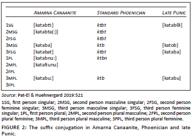
There is a difficulty in determining the subject of ”–—— in Psalm 16:2. This problem arises from the context. Psalm 16:1 reveals that the speaker of the whole Psalm 16 is David himself: –‘•’•’• and the usage of the first person singular of the verb •–• is to denote that David is the speaker. Psalm 16:2, nevertheless, changes the first person singular from verse 1 to the second person feminine singular. In other words, the subject of verse 1 is David himself or a male speaker, whereas the subject of verse 2 shifts to an unknown female speaker. As a result, this shift creates two difficult questions. Firstly, why does David replace the first person singular in Psalm 16:1 to the second person feminine singular in Psalm 16:2? Secondly, who is this second person feminine singular in Psalm 16:2? This research argues for the influence of Phoenician language to Psalm 16:2; therefore, Phoenician language offers solutions to those difficulties. INTRADISCIPLINARY AND/OR INTERDISCIPLINARY IMPLICATIONS: This article is a combination of Biblical Studies and Linguistics. This article attempts to apply a comparative linguistic approach to Psalm 16:2
Psalms; Semitic languages; textual criticism; grammatical analysis; ancient Bible translations; modern English Bible translations
 Thumbnail
 Thumbnail
 Thumbnail