Kaaps and Nathan Trantraal's translation habitus in Lang pad onnetoe
Abstract
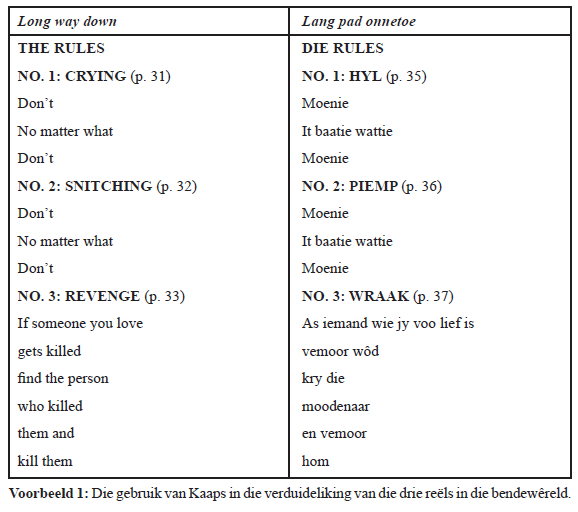
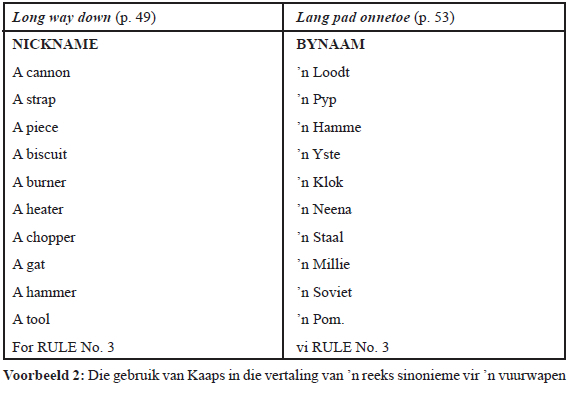
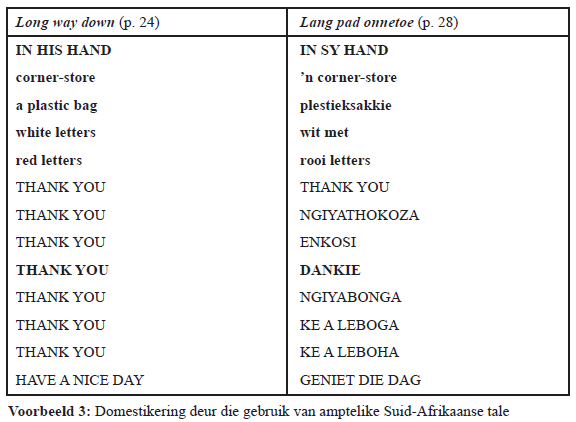
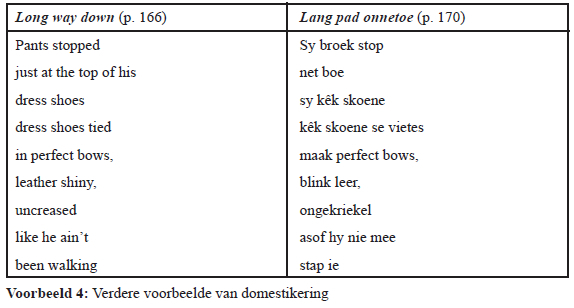
The much acclaimed novel Long way down by Jason Reynolds was published in 2017. In 2018 the translation thereof as Lang pad onnetoe in Kaaps appeared in print. The translation was done by Nathan Trantraal. Trantraal is an award-winning poet, writer and artist. The translation was exceptionally well received and Trantraal was awarded the UJ prize for the translation of a youth text in 2021. Reviewers were unanimous in their praise for the use of Kaaps and not Standard Afrikaans. Kaaps is primarily a spoken variety of Afrikaans and although it has a relatively long written tradition, it is only after 1990 that a notable increase in the number of literary texts in this variety is seen. Kaaps shows internal variation, but it is argued that the various writers who use Kaaps collectively represent the linguistic features of what is viewed as Kaaps. Nathan Trantraal is one of these writers. From a literary approach to translation studies, translated texts form part of the polysystem of a particular literary system. The expectation is that if a translated text finds itself on the periphery of the polysystem of the target language, translators tend to create a text that is acceptable, and that adheres to the linguistic and cultural norms of the target system. Conversely, when a translated text is central, translators may produce adequate translations - meaning they preserve more of the source text's structure and norms. The cultural approach is concerned with issues relating to the visibility of the translator and translation strategies like domestication and foreignization. In the debate on the (in)visibility of the translator, the focus shifts away from the text and the context, and closer to the role of the translator and his/her role in the translation process. In this approach translation is studied from a sociological perspective and is particularly interested in the translator as an individual. Based on the work of Bourdieu (1991), it is argued that the translation norms applied by a translator are internalised and the product of his/her habitus, in other words of his/her personal history, professional training and experience. The concepts of field, illusion and capital are closely related to a translator's habitus. The paper analyses these concepts in relation to Nathan Trantraal and concludes that one of the reasons for the success of the translation lies in the choice of the translator and his translation habitus. Excerpts from the source and target texts are subsequenty compared to one another. It is concluded that Lang pad onnetoe is unique as there is no established translation tradition in Kaaps and there are much less written texts in Kaaps than in Standard Afrikaans. One could therefore have predicted that the translation would have taken up a peripheral position in the polysystem of Kaaps. However, in contrast to the prediction that the translator would consequently create a translation that largely reflects the source language and culture, an acceptable translation that absolutely adheres to the cultural norms of the target system is created. The variety of English in the source text is African American, and Trantraal creates an acceptable translation by using Kaaps and not Standard Afrikaans in the target text.. The translator is highly visible in the text, but at the same time a domesticating translation strategy is used throughout. This finding too, goes against the theory as domesticated translations usually want to create the impression that the translation is an original text and the translator tends to become invisible. In Lang pad onnetoe this is not the case and the reason is two-fold: Nathan Trantraal's translation habitus and the use of Kaaps.
Nathan Trantraal; translation; Kaaps; polysystem theory; visibility of the translator; domestication; foreignization; translation habitus
 Thumbnail
 Thumbnail