Gender-based violence and the visual arts: Selected artworks by the South Aafrican artist Andrea Walters
Abstract
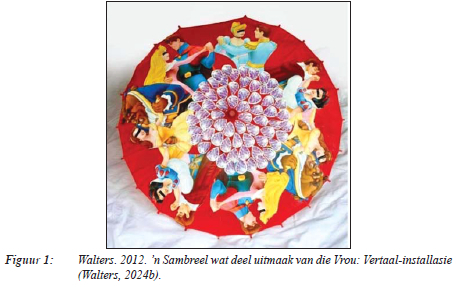
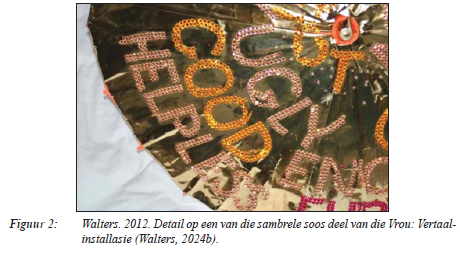
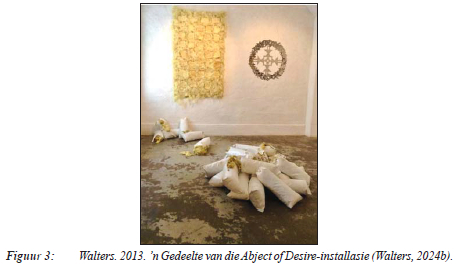
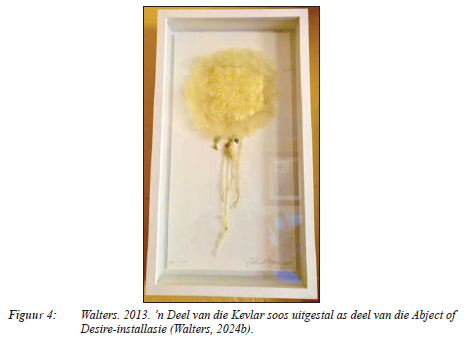
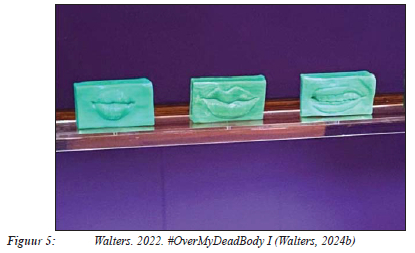
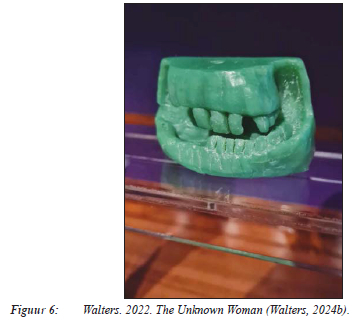
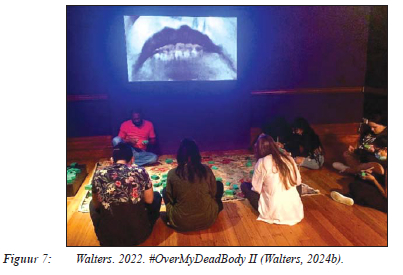
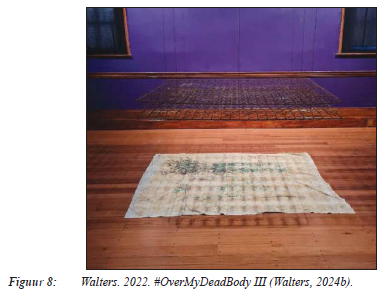
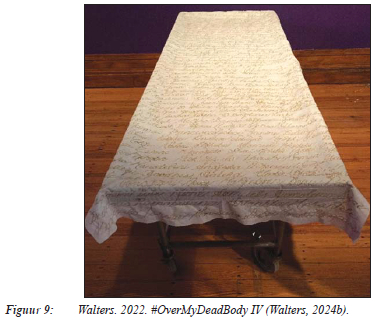
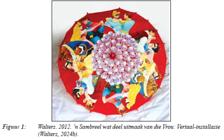
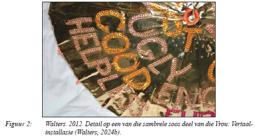
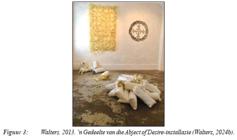
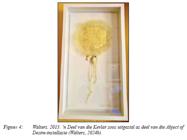
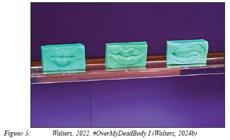
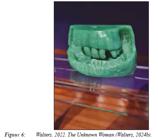
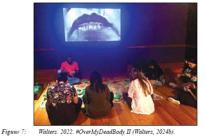
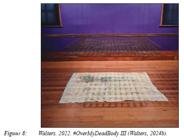
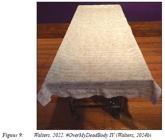
Gender-based violence (GBV) is a serious issue and a cause for concern in South Africa and worldwide. From July 2025 to September 2025, 10 154 women were raped and 1 827 women were sexually assaulted in South Africa (South African Police Service [SAPS], 2025:8). GBV can be described as any form of violence experienced by a person due to their biological gender or their chosen gender identity. Even though any person can experience GBV, women are mostly affected, especially in forms of GBV such as domestic violence and/or intimate partner violence (Djamba & Kimuna, 2015:xi). GBV can occur in many forms and includes financial, physical, psychological, and religious violence (Sanjel, 2013:179). Given the serious impact of GBV on South African society, it is of great importance to closely examine responses to it. In this article, three artworks from the South African artist Andrea Walters' oeuvre, as a survivor of GBV, are examined as responses that contribute to the greater discourse against GBV. These artworks are Vrou:Vertaal [Woman:Translated] (2012), Abject of Desire (2013) and #OverMyDeadBody (2022). :Vertaal is Walters'third-year project completed during her studies at Unisa and focuses on Walters ' own experiences of intimate partner violence (Walters, 2024a). The work consists of various umbrellas in different positions of opening within a club setting. Each umbrella has its own reference to GBV and Walters' personal experiences. Abject of Desire is her fourth-year project and is centred around the death of Reeva Steenkamp at the hands of her own partner, Oscar Pistorius (Walters, 2024b). This exhibition consists ofvarious medallions which reference Pistorius' career and sponsorships. #OverMyDeadBody is Walters' master's exhibition and serves as a commentary on femicide in South Africa - the exhibition comprises various media, including Sunlight soap sculptures of the mouths of the women who were and are being killed in South Africa; a video performance focused on Walters' mouth as she recites the names, ages and causes of death of the women depicted in the soap sculptures, and a rusted bedframe with a stained bedsheet beneath it -referring to the effects of GBV and Walters'own marital bed - the place where she experienced the most violence during her marriage (Walters, 2023:50;64 These artworks are discussed according to a framework derived from Jacques Rancière 's theorisation of the distribution of the sensible (French: le partage du sensible) and related concepts, such as the police/police order (French: la police/l'ordre policier) and politics (French: la politique). The distribution of the sensible can be described as certain predetermined boundaries within the larger society that place certain restrictions on whom can be heard and/or seen within the society (Rockhill, 2004:85). According to Gabriel Rockhill (2004:85), only a redistribution of the sensible can make audible and/or visible those previously excluded. The police order is an organisation of bodies (not to be confused with actual police officers) that maintains the boundaries of the distribution of the sensible (Rancière, 2004:104). Politics, on the other hand, can be described as the noticeable divide within society due to the distribution of the sensible (Rancière, 2011:1). The discussion of the chosen artworks is further informed by information obtained from a semi-structured interview with Walters concerning her perspective on the role that art can play against GBV, her artistic processes and her motivations underlying these artworks. During our research and the write-up of the article we came to the following conclusions, viz. that the three chosen artworks all serve as forms of awareness creation concerning GBV and succeed in making the victims and/or survivors of GBV audible and/or visible once more. Furthermore, we found that the artworks all serve as symbolic reflections on Walters' own experiences as a survivor of intimate partner violence and in this sense her artistic process and its products serve as vehicles towards her own healing and, by implication, as interventions that facilitate healing for other women by bringing these issues into focus.
#OverMyDeadBody (2022); Abject of Desire (2013); Andrea Walters; distribution of the sensible; gender-based violence (GBV) in South Africa; Jacques Rancière; semi-structured interview; tacit knowledge; visual responses; Vrou:Vertaal (2012)
 Thumbnail
 Thumbnail
 Thumbnail
 Thumbnail
 Thumbnail
 Thumbnail
 Thumbnail
 Thumbnail
 Thumbnail