From marble to stained glass: the symbolic function of the medium in Leo Theron's sacred art in glass
Abstract
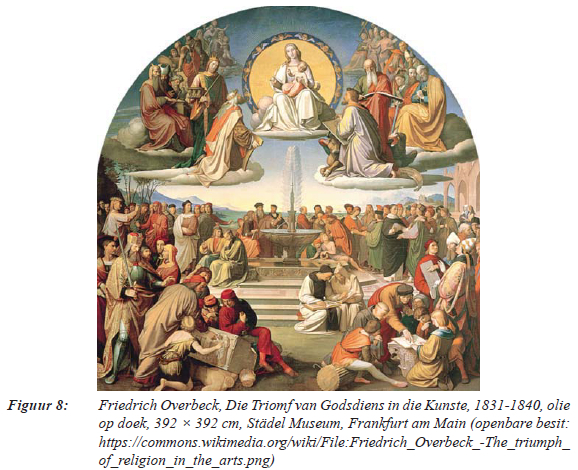
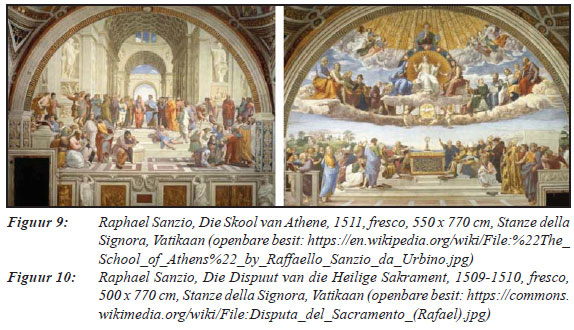
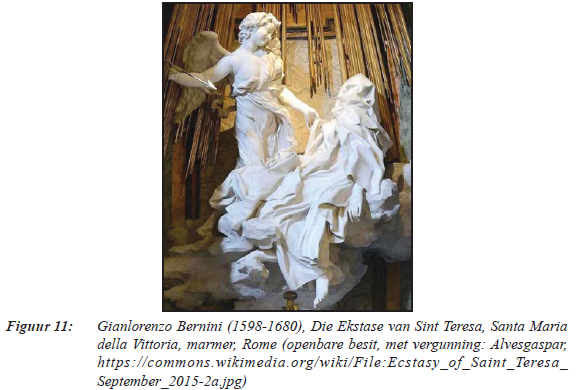
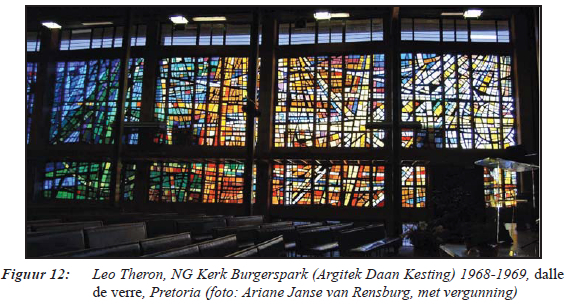
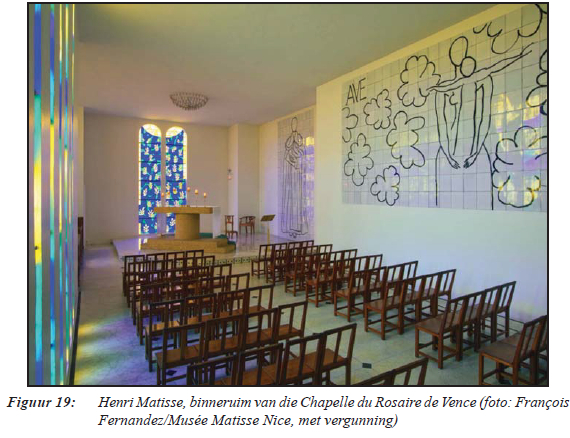
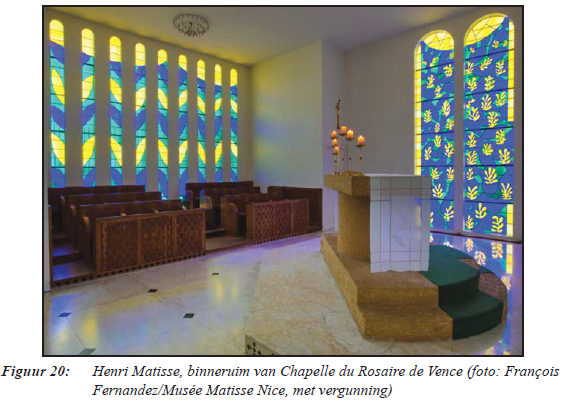
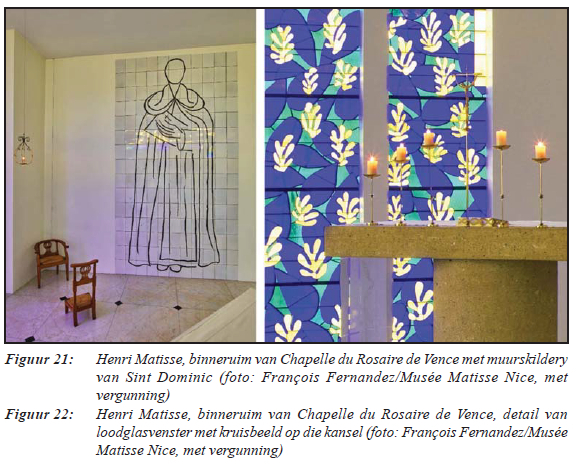
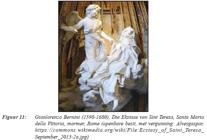
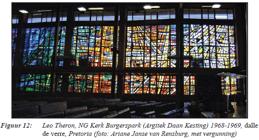
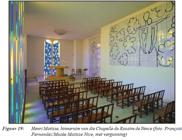
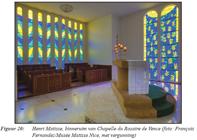
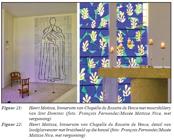
Leo Theron is regarded as one of the leading exponents of stained-glass art in South Africa. Raised as the son of a Dutch Reformed minister, he nevertheless came to embrace, to a marked degree, a predominantly French and more generally Mediterranean cultural outlook as an artist. The Catholic underpinnings of these Mediterranean cultures had a profound effect on his worldview. In spite of this, an important Romantic intellectual tradition with strong Protestant roots, as articulated by Friedrich Hegel and Théophile Gautier respectively, along with the related and widely influential Romantic concept of synaesthesia, can be used to shed light on Theron's symbolic use of the thick, crystalline glass of the dalle de verre medium. While he was apparently not directly influenced by these Romantic ideas, they formed part of a wider intellectual tradition in which thinkers rooted in Protestant thought - most notably Immanuel Kant - addressed the challenges of modernity to religious belief. Theron's own written statements on the use of the dalle de verre medium, its history, and its technical capabilities, specifically to create a wall of glass, indicate his understanding and engagement with this wider tradition. The point made by Hegel and echoed by Gautier is that, in the visual arts, only painting is capable of expressing the inner life of the soul - due to the relative remoteness of the painted illusion from tangible material reality. In this respect it approximates the "ethereal" nature of music, which is pure sound devoid of matter and therefore the ideal medium for expressing the soul. Sculpture, on the other hand, is a solid, three-dimensional material form and, as such, incapable of expressing the modern spirit. Implicit in these statements by Hegel and Gautier is the separation of the spiritual domain from the worldly domain, as brought about by Luther, and even more so, by Calvin. Marble sculpture, on the other hand, was the perfect medium for expressing the Catholic unification of the spiritual and worldly domains - based on the Incarnation of Christ, as articulated most notably by Thomas Aquinas. This concept of the god who became flesh plays a central role in the philosophical theology of Thomas, which is fundamental to Catholic theology. It can also explain, to a considerable degree, the marked insistence on the expression of the spiritual through material, bodily form, as exemplified by the work of Gianlorenzo Bernini. The Protestant fear of idolatry in the use of art that depicts divine personages, as expressed by Calvin, is amplified considerably by such sacred marble sculptures that are perceived to indulge in sensuous material (worldly) reality. Hence the Protestant predilection for unworldly media such as painting and music, as expressed by Hegel and Gautier, which conforms closely to Calvin's insistence that the divine cannot be represented by means of material media - not even paint and canvas. Leo Theron's work for the Dutch Reformed Church effectively takes this Protestant logic to its ultimate conclusion by using coloured glass, which is essentially the visual counterpart of music in its "ethereal" nature - pure light and colour, refracted through glass, as opposed to pure sound. Furthermore, the abstract nature of his symbolic art expresses the divine indirectly, in line with Calvin's approach to the visual aesthetic experience. Finally, his deployment of the crystalline character of the thick glass used in dalle de verre engages significantly with the longstanding tradition of the crystal metaphor to evoke the Biblical concept of the heavenly Jerusalem. Because Protestant thought had addressed the challenges of modernity to religious faith so effectively, and had thereby played a fundamental role in the shaping of modern thought and culture, including the development of modernist abstraction in the visual arts, artists working in a Catholic context and the Catholic Church itself were compelled to embrace modernist aesthetic tendencies that ran directly counter to tradition Catholic aesthetics. Henri Matisse shows his masterly treatment of this dialogue between Catholic and Protestant aesthetic approaches in his Vence Chapel. Matisse was a major influence on the art of Theron, who was greatly impressed by this chapel, which he often spoke about. Matisse's highly sophisticated and ingenious engagement with the Romantic tradition referred to above therefore makes an interesting comparison with Theron own engagement with this tradition.
dalle de verre; Leo Theron; marble; stained glass; Protestantism; Catholicism; Calvin; Hegel; Gautier; sacred art; modernism; abstraction
 Thumbnail
 Thumbnail
 Thumbnail
 Thumbnail
 Thumbnail
 Thumbnail
 Thumbnail
 Thumbnail
 Thumbnail
 Thumbnail
 Thumbnail
 Thumbnail
 Thumbnail
 Thumbnail
 Thumbnail
 Thumbnail