Strategic digital cities: A comparative analysis of municipal digital strategies in four South African metropolitan municipalities
Abstract
The digitalisation of public administration and urban management continues to reshape how municipalities plan, operate, and respond to growing urban pressures. In South Africa, these shifts are guided by national digital governance frameworks that emphasise the importance of technological infrastructure for sustainable development. Despite this policy direction, there is limited comparative analysis on how South African cities incorporate digitalisation into their strategic planning processes. To address this gap, this narrative review examines municipal strategic documents from four South African metropolitan municipalities to assess the extent to which their planning frameworks reflect digital priorities and align with the Strategic Digital City (SDC) concept. Using qualitative document analysis, the review identifies key themes, strategic priorities, and programme distributions across the four cities. The findings show that, while all cities embed digitalisation within their strategic structures, the depth and coherence of this integration vary, with stronger emphasis placed on technological infrastructure than on digital public-service transformation. The review contributes to current urban digitalisation scholarship, by providing a comparative account of how South African municipalities interpret and operationalise national digitalisation directives. It also highlights areas where digital strategies require further strengthening, offering a foundation for future empirical research on the implementation and impact of municipal digital initiatives.
strategic digital city (SDC); municipal strategic planning; urban governance; urban management; smart cities; city innovation; municipal public services; public service delivery
Abstract
Die digitalisering van openbare administrasie en stedelike bestuur hervorm voortdurend hoe munisipaliteite beplan, funksioneer en reageer op toenemende stedelike druk. In Suid-Afrika word hierdie verskuiwings gerig deur nasionale digitale bestuursraamwerke wat die belangrikheid van tegnologiese infrastruktuur vir volhoubare ontwikkeling beklemtoon. Ten spyte van hierdie beleidsrigting is daar beperkte vergelykende ontleding oor hoe Suid-Afrikaanse stede digitalisering in hul strategiese beplanningsprosesse integreer. Om hierdie leemte aan te spreek, ondersoek hierdie narratiewe oorsig munisipale strategiese dokumente van vier Suid-Afrikaanse metropolitaanse munisipaliteite om te bepaal in watter mate hul beplanningsraamwerke digitale prioriteite weerspieël en in lyn is met die Strategiese Digitale Stad (SDS)-konsep. Deur kwalitatiewe dokumentanalise identifiseer die oorsig sleuteltemas, strategiese prioriteite en programverspreidings oor die vier stede. Die bevindings toon dat, hoewel alle stede digitalisering binne hul strategiese strukture insluit, die diepte en samehang van hierdie integrasie verskil, met sterker klem op tegnologiese infrastruktuur as op digitale openbaredienstransformasie. Die oorsig dra by tot die huidige stedelike digitaliseringsliteratuur deur 'n vergelykende uiteensetting te bied van hoe Suid-Afrikaanse munisipaliteite nasionale digitaliseringsriglyne interpreteer en operasionaliseer. Dit beklemtoon ook gebiede waar digitale strategieë verdere versterking benodig, en bied 'n grondslag vir toekomstige empiriese navorsing oor die implementering en impak van munisipale digitale inisiatiewe.
Abstract
Ho fetoha ha tsamaiso ea sechaba le ea litoropo ho ntse ho fetola kamoo bomasepala ba rera le ho sebetsana le mathata a ntseng a eketseha. Afrika Boroa, liphetoho tsena li tataisoa ke meralo ea naha ea puso ea dijithale e totobatsang bohlokoa ba meralo ea motheo ea theknoloji bakeng sa nts'etsopele e tsitsitseng. Leha ho le joalo, ho na le liphuputso tse fokolang tse bapisoang mabapi le kamoo metse ea Afrika Boroa e kenyelletsa dijithale mererong ea bona ea maano. Tlhahlobo ena e sheba litokomane tsa maano tsa bomasepala ba bane ba metse e meholo ho lekola hore na meralo ea bona e bontša lintho tsa bohlokoa tsa dijithale le ho lumellana le mohopolo oa Strategic Digital City (SDC). Ka ho sebelisa tlhahlobo ea litokomane tsa boleng, ho ile ha khetholloa lihlooho tsa bohlokoa, lintho tsa maano le kabo ea mananeo. Liphuputso li bontša hore metse eohle e kenyelletsa dijithale ka har'a meaho ea maano, empa botebo le ho lumellana lia fapana. Ho na le khatiso e matla ho meralo ea motheo ea theknoloji ho feta phetohong ea litšebeletso tsa sechaba. Tlhahlobo ena e fana ka pono e bapisoang ea kamoo bomasepala ba Afrika Boroa ba hlalosang le ho sebelisa litaelo tsa naha, hape e totobatsa libaka tse hlokang ho matlafatsoa bakeng sa lipatlisiso tsa nakong e tlang.
1. INTRODUCTION
The digitising of public administration and urban management reflects an ongoing effort to find more effective ways of responding to the new pressures created by rapid urbanisation and the significant transformations cities are undergoing (Han et al., 2025; Li et al., 2024). To meet these growing demands and support regional development, public administration increasingly relies on information technology, particularly within the current expanding digital environment (López & Beltrán, 2022; Boyle, Harlow & Keeler, 2024). Technology now shapes multiple aspects of urban life, which explains the wide range of academic perspectives on technology-driven urban development. Owing to its innovative potential, technology is reshaping the way in which cities operate and should, therefore, be incorporated strategically into municipal planning (Zhao, Tang & Zou, 2019; Schiavo & Magalhães, 2022; Borriello, 2025). It has the capacity to reconfigure government models, by influencing the social dynamics of cities (Li et al., 2024). As such, technology has become a prerequisite for developing urban strategies that align municipal priorities with digital initiatives and respond effectively to societal needs (Trujillo, 2022). Within this context, cities face the growing challenge of formulating strategies that can address these demands in an effective and sustainable manner (Debela & Marijani, 2023).
Cities must plan their digital strategies so that public services are aligned with citizens' needs, thereby improving service effectiveness, an approach consistent with the strategic digital city concept proposed by Rezende et al. (2025) and Rezende (2023). As a result, city governments are increasingly adopting digital technologies and strategic urban policies to support sustainable economic and social development (Bayro & Jeong, 2025).
Strategic digital cities integrate public service evaluation, city strategies, and municipal information with the effective use of technological resources to enhance urban quality of life. Technology has, therefore, become recognised as an essential municipal strategy for optimising resources and addressing societal demands (Copaja-Alegre & Esponda-Alva, 2019; Alvarado-Lopez, 2020). The expansion of public services based on information technology has also contributed to greater municipal efficiency, creating opportunities through online process automation that help build trust and improve relationships through better governance in municipal management (Tiika et al., 2024).
African governments and organisations continue to face challenges in adopting digital transformation, often struggling both to leverage the opportunities of digitisation and to adapt organisational models to its economic characteristics (Gadjanova, Lynch & Saibu, 2022). Within the strategic digital city context, many cities also find it difficult to align local needs with their digital strategies, limiting the effectiveness of their initiatives (Rezende et al., 2025). The digitising-cities process is frequently influenced by major technology companies, resulting in technology-centric initiatives (Charalabidis & Theocharopoulou, 2019; Akgün et al., 2024) and investments driven mainly by technical considerations rather than strategic priorities (Mora et al., 2025; Narkhede et al., 2025; Vrabie, 2025). This makes it harder for municipalities to prioritise technological initiatives effectively (Hoxha & Pallaska, 2023).
A further issue is the predominance of technocratic perspectives in city-digitisation research, which often overlook broader urban needs (Mora et al., 2025). Urban development depends not only on technical capabilities, but also on socio-economic strategies (Pasquali & De Marchi, 2022; Aurigi & Odendaal, 2022). Without proper planning and implementation of strategies, information systems, and technologies, cities cannot be managed effectively or support a good quality of life (Ribeiro, Rezende & Yao, 2019; Rezende, Almeida & Fumagalli, 2024; From, Rezende & Sequeira, 2025).
South Africa's NDP 2030 highlights technological infrastructure as a prerequisite for the country's economic development (National Planning Commission, 2012). Government digitalisation drives municipal development and improves the quality of life for citizens (Chen & Chan, 2023). In order to assess municipal development within the framework of the nation's established digitalisation guidelines, it was imperative to examine the similarities and differences in the digitalisation strategies of four South African metropolitan municipalities (Cape Town, Johannesburg, Tshwane, and Mangaung). The objective of this review is to compare the city strategies of these municipalities to determine the extent to which they demonstrate coherence between their strategic initiatives and their progress along digitalisation pathways. The findings identify specific areas in which the digitalisation strategies of the four cities require further strengthening and refinement.
2.1 Strategic digital city
In parallel to digital governance, which acts as the fundamental strategic pillar of modern public administration (Tariq et al., 2026), the concept of the Strategic Digital City (SDC) refers to the deliberate and systematic adoption of modern technologies and information management systems within municipal governance. Its primary aim is to improve administrative efficiency and enhance the quality of services delivered to urban residents; therefore, the strategic treatment of information and the modernisation of public services have become a cornerstone of digital governance (Jejeniwa, Mhlongo & Jejeniwa, 2024). Unlike narrowly defined digital-connectivity initiatives, the SDC model is a holistic framework that integrates a wide range of technological, organisational, and governance elements (Rezende et al., 2024; Rezende et al., 2025; Matlala, 2025). An SDC initiative functions as a comprehensive public-sector strategy that brings together information systems, municipal security structures, and direct service-delivery mechanisms (Rezende et al., 2024). Rezende's (2023) conceptualisation includes technologies applied across infrastructure, automation, connectivity, and monitoring systems to improve public services (Fumagalli, 2021; Teixeira & Rezende, 2023). The framework has been applied in diverse municipal contexts, including urban mobility (Fumagalli, 2021), territorial branding, IoT-enabled public services (From et al., 2025), and collaborative financing (Flores & Rezende, 2022).
Effective urban interventions require a strategic understanding of the city as an interconnected system (Ríos-Ocampo & Gary, 2025). Without such alignment, technology deployment risks becoming disconnected from actual municipal challenges and citizen needs (Schiavo & Magalhães, 2022; Li et al., 2024). The digital governance implementation depends on senior management support (Van Der Hoogen et al., 2024) and long-term planning, prioritising the generation of lasting benefits to meet the real needs of the community (Patalon & Wyczisk, 2024; Hanisch et al., 2023).
The SDC model, therefore, provides a structured, strategic roadmap for decision-making, ensuring that technological initiatives are shaped by contextual realities and local needs (Sudrajat, 2023). Grounded in public-service and urban-strategy principles, the SDC model supports municipalities in navigating the complexities of contemporary governance. It encourages collaborative and inclusive planning approaches, enabling sustainable public-policy development aligned with territorial needs and citizen well-being (Rezende et al., 2024; Teixeira & Rezende, 2023; Al Lahham et al., 2026). In the context of digital governance, the SDC requires continuous evaluation and full transparency (Tariq et al., 2026), making it essential for the government to share its vision, plans, and goals with society to ensure a truly participatory and collaborative transformation (Nam & Pardo, 2011).
2.1.1 City strategies
City strategies are collaborative, multi-stakeholder programmes designed to align municipal actions with broader development objectives (Wallin, 2025; Yang, 2020). They consist of structured actions aimed at improving operational efficiency and achieving desired development outcomes (Chiwawa & Wissink, 2024; Mwanza & Dar, 2025). Such strategies support continuity, adaptability, and resilience in the face of urban challenges (Trutkowski et al., 2022).
Preliminary diagnostic assessments form a crucial part of such strategies, improving the likelihood of achieving intended outcomes, ensuring better returns on investment, and contributing to organisational and societal transformation (Yang, 2020; Danu et al., 2023; Chiwawa & Wissink, 2024). Contextual variables, including governance capacity, socio-spatial dynamics, and institutional readiness must be embedded into planning processes to avoid ineffective city management (Vrabie, 2025).
City strategies also serve as procedural mechanisms that link municipal actions with sustainable development priorities in an economically coherent manner (Luhtala, 2024). In practice, they establish timelines, allocate resources, and provide a unified vision for problem-solving within the city (Serra & González, 2023; Taamallah, Khemaja & Faiz, 2019). Beyond organisational efficiency, these strategies contribute to democratic governance, by strengthening transparency and improving outcomes for citizens (George, Walker & Monster, 2019; OECD, 2021; Lee, 2024).
2.1.2 City information
Information has become a critical strategic asset in municipal governance, due to the rise of data-driven applications and digital tools (Ahvenniemi et al., 2017). In urban contexts, information gains value when contextualised, interpreted, and used to support decision-making processes by both municipal officials and citizens (Rezende, 2023).
For information to be operationally useful, it must meet criteria of quality, accuracy, relevance, and timeliness, while incorporating both qualitative and quantitative dimensions (Mariano et al., 2020; Rahim & Shirazi, 2018). Accessible and reliable information empowers citizens to participate meaningfully in public-policy development and implementation (Gallaugher, 2023; Lee, 2024).
2.1.3 Municipal public services
Municipal public services encompass a broad spectrum of functions delivered through direct provision, indirect mechanisms, or partnerships. These services operate within established legislative parameters and aim to meet essential community needs (Sudrajat, 2023). Their overarching purpose is to enhance well-being and increase citizen satisfaction (Aisyah, Latifah & Sofiyana, 2025; Nasifuhan et al., 2024).
Strategic alignment is crucial in the provision of municipal services, as technology-related interventions can become ineffective when not grounded in local conditions (Schiavo & Magalhães, 2022; Li et al., 2024). This strengthens the need for diagnostic assessments and contextual analysis before investments are made, ensuring that service-delivery innovations yield tangible benefits for communities (Danu et al., 2023; Chiwawa & Wissink, 2024). Given their centrality to community life, these services require strategic planning approaches that integrate considerations of social development and collective well-being (Zulmasyhur, 2026). Service-delivery systems should uphold principles of quality, transparency, equity, efficiency, reliability, and legal compliance (Jayus, Ismayli & Boini, 2026). This aligns with broader expectations of democratic governance, where the quality of public services is a key indicator of institutional performance (Bell & Jilke, 2024).
Strategic municipal planning also enhances the alignment of technological investments with service-delivery goals, improving both effectiveness and citizen outcomes (Aldegheishem, 2024; Hoxha & Pallaska, 2023; Rezende, 2023). Digital infrastructure has the potential to optimise administrative processes, respond to growing citizen demands, improve spatial management, and enable interactive platforms that promote transparency and civic engagement (Li et al., 2024). Municipal public services encompass a broad spectrum of functions delivered through direct provision, indirect mechanisms, or partnerships. These services operate within established legislative parameters and aim to meet essential community needs (Sudrajat, 2023). Their overarching purpose is to enhance well-being and increase citizen satisfaction (Aisyah, Latifah & Sofiyana, 2025; Nasifuhan et al., 2024).
2.1.4 Information technology resources
Information technology (IT) in municipal contexts includes hardware, software, communication networks, and data-management systems (Laudon & Laudon, 2024; Stair & Reynolds, 2024). When effectively deployed, IT infrastructure enhances operational, managerial, and strategic performance within cities, enabling governments to address municipal needs more efficiently and improve overall quality of life (Heeks, 2022; Turban, Pollard & Wood, 2021).
3. METHODS AND REVIEW APPROACH
This review examines municipal digital strategies across four South African metropolitan municipalities: Cape Town, Tshwane, Mangaung, and Johannesburg. These cities were selected because they are key drivers of national digital development and have established strategic plans aligned with South Africa's 2020-2025 national strategic planning guidelines.
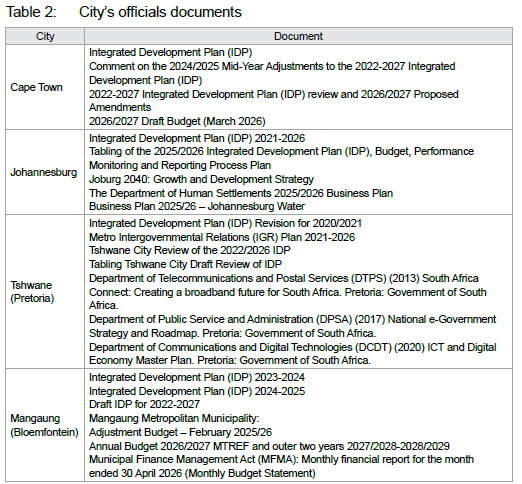
A qualitative research design was employed, drawing on desktop research and narrative review methods (Morin et al., 2021). This approach enables conceptual exploration and thematic synthesis rather than statistical generalisation, making it suitable for analysing evolving technologies and urban governance frameworks (Nichols & Edlund, 2023; Yin, 2017). Between July 2024 and March 2025, information was sourced from publicly available municipal documents, including digital government publications and strategic planning records accessed through official city websites. The Integrated Development Plans (IDPs) formed the central dataset, supplemented by related strategic reports and review documents (see Table 2).
The review first outlines the national digitalisation context in South Africa and identifies key policy instruments shaping municipal digital strategy. Secondly, it introduces the four cities and maps their geographical locations, followed by a summary of the official documents used for analysis. Thirdly, the discussion compares findings across two analytical criteria, namely the distribution of information technology initiatives across different types of municipal strategies, and each city's alignment with the four subprojects (City Strategy, City Information, Municipal Public Services, and Information Technology Resources) of the Strategic Digital City (SDC) model. These findings inform the conclusion, which synthesises the cities' comparative digital-strategic positioning and identifies areas where municipal digitalisation strategies require further strengthening.
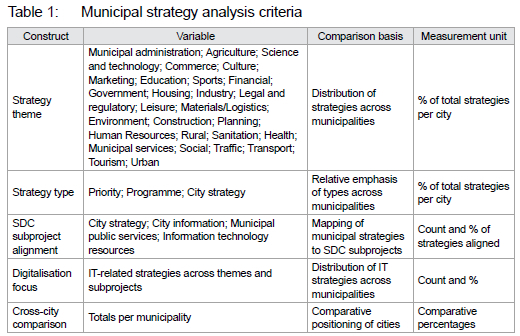
To guide the thematic synthesis, four key analytical areas were identified. Content analysis was applied to identify municipal strategies, defined as actions documented within strategic planning frameworks and captured through terms such as priorities, actions, programmes, or projects (Bardin, 2016; Krippendorff, 2019). Microsoft Excel was used to organise and categorise the strategies identified in each city's documents. Table 1 outlines the analytical criteria used to compare municipal strategies across the four cities. For each municipality, strategies were identified from official planning documents and categorised by theme, type, and alignment with Strategic Digital City (SDC) subprojects. The percentage of strategies in each category was calculated relative to the total number identified per city. This enabled two levels of comparison, namely the distribution of information technology initiatives across different strategic categories, and each city's alignment with the four SDC subprojects. These criteria form the basis for the cross-city synthesis presented in the discussion section.
4. CITY ANALYSIS
4.1 South Africa's digitalisation frameworks/policy instruments
Like many across the Global South, African countries are experiencing rapid urbanisation, which presents both opportunities and challenges. Within this context, technology is increasingly viewed as a driver for enhancing urban services, infrastructure, sustainability, and economic growth (Das, Aiyetan & Mostafa, 2026). For South Africa, digital transformation in the public sector is essential to advancing digital government services. This requires organisational shifts to ensure readiness for adopting information technology (Shibambu, 2024).
South Africa's digitalisation agenda is institutionalised through decentralised governance mechanisms and guided by several national frameworks: the Constitution (Government South Africa, 1996), NDP 2030 (National Planning Commission, 2012), the Roadmap for the Digital Transformation of Government (DCDT) (2024), and the Draft Digital Government Policy Framework (DPSA) (2024). Digital Government is defined as "the use of digital technologies, as an integrated part of governments' modernisation strategies, to create public value" (DPSA, 2024: 6).
The Constitution establishes a governance model that assigns local government a central role in municipal development and planning, particularly through Sections 152 and 153. Municipal managers are responsible for ensuring sustainable service delivery, promoting social and economic development, maintaining safe environments, and facilitating community participation (Government South Africa, 1996).
The NDP 2030 identifies economic infrastructure as the foundation of South Africa's development, emphasising investment in information and communications infrastructure as critical for future progress (National Planning Commission, 2012). This vision is operationalised by the Roadmap for the Digital Transformation of Government, which seeks to enhance quality of life by "bringing world-class services to people by leveraging new digital technologies, capabilities and infrastructure across government" (DCDT, 2024: 8). Aligned with this, the Digital Government Policy Framework (DGPF) is meant for government "to develop policies that will address the challenges and opportunities that digital technologies present, whilst addressing the policy instability identified in the National Development Plan within the digitalisation context" (DPSA, 2024: 3).
In practice, South Africa's digital transformation strategy is implemented through two interconnected initiatives:
South Africa Connect - The national broadband policy, serving as the backbone for e-Government. Its goal is universal access to affordable, quality internet by 2030, structured around four pillars, namely digital readiness, digital development, digital future, and digital opportunity. It seeks to expand infrastructure, especially in underserved areas, reduce communication costs, and support education and the economy (Department of Communications, 2013).
National e-Government Strategy and Roadmap - Guiding innovation in governance, efficiency, and service delivery, by connecting citizens to the State (DCDT, 2022). South Africa Connect provides the physical infrastructure required for this strategy, both being essential to mitigate digital and socio-economic inequality (Democratic Alliance, 2024).
Both initiatives align with the NDP, which envisions the extensive use of information and communication technologies (ICTs) by 2030 to build an inclusive and prosperous information society (National Planning Commission, 2012).
Collectively, these policy instruments provide an overarching strategic framework that guides South African cities through their digitalisation processes. They encourage the development of integrated strategies that move beyond technical solutions, establishing strong linkages between technological innovation, economic development, and citizen quality of life.
4.2 South African metropolitan municipalities digitalisation
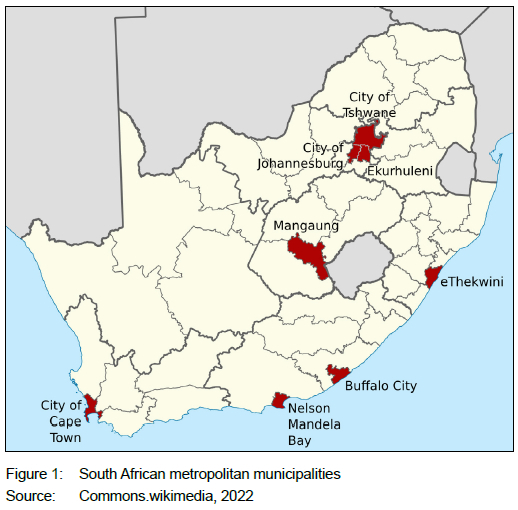
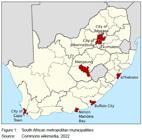
Figure 1 presents the geographical location of the four South African cities selected for this study. Their classification as leading digital cities in South Africa is a fundamental prerequisite to examine digitalisation policy instruments and how these frameworks/documents apply to the four metropolitan municipalities cities. Table 2 summarises the official documents analysed to examine the strategic approaches of South African metropolitan municipalities toward digital technology and the transformation of public services. For the quantitative analysis of the strategies, documents with the latest deadlines were considered to ensure that the data was up to date. The percentage of strategies in each category was calculated based on the total number identified for each municipality.
4.2.1 Cape Town
Cape Town's strategic vision is to be a "City of Hope for all - A prosperous, inclusive and healthy city where people can see their hopes of a better future for themselves, their children and their community become a reality" (City of Cape Town, 2022: 15). This vision guides the city's planning framework as outlined in its Five-Year Integrated Development Plan (IDP) for 2022-2027, the primary document used for this analysis. The accompanying "Comment on the 2024/25 Mid-Year Adjustments to the 2022-27 IDP" introduced only financial amendments and did not materially affect the strategic content.
Cape Town's planning structure centres on six strategic priorities, three primary (economic growth, basic services, and security) and three secondary (housing, public space, the environment and amenities, and transportation). These are supported by three cross-cutting programmes designed to advance all priorities collectively: building a resilient city, promoting a more integrated and inclusive city, and strengthening a capable and collaborative municipal government. This framework informs the formulation of 16 five-year objectives.
A total of 47 programmes were identified within the IDP as directly linked to Cape Town's strategic priorities and objectives. A review of these programmes shows that the highest concentrations occur in the following thematic areas, namely basic services (32.71%), housing (16.82%), and economic growth (14.02%).
When examining how programmes correspond to the city's strategic objectives, emphasis is placed on well-managed and modernised infrastructure to support economic growth (16.55%), a capable and collaborative municipal government (14.39%), and increased employment and investment in the Cape Town economy (10.79%).
An examination of the strategies by thematic category shows the greatest concentrations in environment (13.67%), social development (9.35%), transportation (8.63%), sanitation (8.63%), and planning (8.63%)
Together, these findings indicate that Cape Town's strategic approach places strong emphasis on foundational service delivery, infrastructure modernisation, institutional capability, and long-term economic resilience.
4.2.2 Johannesburg
The City of Johannesburg's Integrated Development Plan (IDP) for 2021-2026 is framed around the vision of building a "worldclass African city of the future": a vibrant and equitable city that offers a high quality of life, sustainability, and resilience for all residents (City of Johannesburg, 2021: 1). This vision is reinforced through the city's strategic commitment to "Rebuilding a resilient Joburg: Our plan, our future!", which underpins Johannesburg's planning approach.
Johannesburg's IDP is structured around four long-term growth and development outcomes to be achieved by 2040, driven by four key focus areas, namely human and social development, environmental protection and services, economic growth, and good governance. These outcomes inform the city's 11 strategic priorities, including good governance, financial sustainability, integrated human settlements, sustainable service delivery, job creation, public safety, active citizen engagement, economic development, sustainable development, smart-city progress, and mitigating the impacts of current and future pandemics.
Based on these priorities, the city identifies 12 strategic objectives and 44 strategic programmes. An examination of how these programmes align with the city's priorities shows the greatest concentrations in sustainable service delivery (24.44%), integrated human settlements (20%), and job opportunities and creation (11.11%).
A review of how the programmes correspond to the strategic objectives indicates a dispersed distribution across objectives, with particular emphasis on promoting integrated human settlements (9.09%), improving living conditions in Johannesburg (6.82%), and enhancing community participation (4.55%).
An analysis of the municipal strategies by thematic area shows the highest concentrations in housing (13.33%), health (11.11%), and municipal services (11.11%).
This assessment draws on the city's most recent strategic planning documents, including the Integrated Development Plan (2021-2026), the Johannesburg IDP Review (2024-2025), and departmental and entity business plans. There is clear continuity between the original 2021 planning cycle and the 2024 review, reflecting a consistent strategic direction.
4.2.3 Tshwane
The City of Tshwane articulates two overarching visions: "A Prosperous Capital City Through Fairness, Freedom, and Opportunity" (Tshwane Metropolitan Municipality, 2020: 37) and "A Spatially Efficient Capital City That Is Sustainable, Competitive, and Resilient" (Tshwane Metropolitan Municipality, 2020: 185). These visions guide the municipality's long-term development direction and frame its strategic planning.
Tshwane develops its plans cumulatively, with each planning cycle building on the preceding one. The documents informing this analysis include the Integrated Development Plan (IDP): Revision for 2020/2021, and subsequent updates contained in the 2024/2025 Tshwane City Review of the 2022/2026 IDP and the 2024/2025 Draft Review of the IDP. There is evident continuity between the original 2021 cycle and the 2024 review, indicating a stable strategic trajectory.
The IDP is structured around five strategic axes, namely service delivery excellence and innovation, economic growth and job creation, promoting a safe and healthy city, social cohesion, inclusion, and diversity, and participation, collaboration, and partnerships.
To operationalise these axes, the city identifies 24 priorities, supported by five macro-objectives and 30 strategic programmes. An examination of how these programmes align with the macro-objectives shows a dispersed pattern, with notable emphasis on spatial restructuring, environmental sustainability, and economic positioning (23.53%), as well as governance and integrated service provisioning (20.59%).
However, unlike the Cape Town and Johannesburg IDPs, Tshwane's strategic documentation does not present a clear, direct alignment between priorities and strategic programmes. This limits the ability to interpret strategic coherence across planning levels as explicitly as in the other cities.
Overall, Tshwane's planning framework reflects a strong focus on restructuring the spatial form of the city, strengthening governance systems, and enhancing economic competitiveness, anchored in a consistently updated and iterative strategic planning process.
4.2.4 Mangaung (Bloemfontein)
Mangaung's vision is to be "globally safe and attractive to live, work, and invest in" (Mangaung Metropolitan Municipality, 2024: 11). This vision guides the municipality's strategic direction and informs the planning processes reflected in its recent Integrated Development Plans (IDPs). The analysis, in this instance, draws on Mangaung's latest formal planning documents: the IDP 2023-2024, the IDP 2024-2025, and the Draft IDP 2022-2027. These documents demonstrate clear continuity between the planning undertaken in 2021 and its review in 2024. Mangaung's planning framework includes seven strategic priorities and five strategic development objectives. From these, 79 strategies were identified as aligned with the strategic priorities and objectives. In the city's terminology, these are framed as strategic programmes.
An examination of how strategic programmes align with the city's priorities reveals notable concentrations in consolidating the social wage through reliable, quality basic services (34.63%), social cohesion and safe communities (33.80%), as well as job opportunities and creation (11.11%).
A review of how the strategic programmes correspond to the development objectives shows an even stronger concentration on improving service delivery (68.42%). This is followed by programmes that address a combination of other objectives, including economic growth, spatial transformation, and the improvement of service delivery.
Overall, Mangaung's strategic planning emphasises strengthening basic service delivery, enhancing community safety and social cohesion, as well as promoting employment creation. The city's programme distribution also reflects an effort to link service delivery improvements with broader development goals, including spatial restructuring and economic advancement.
5. DISCUSSION
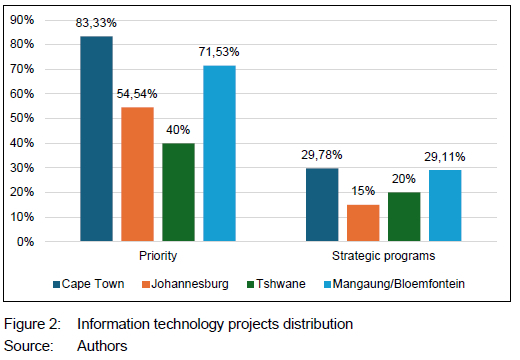
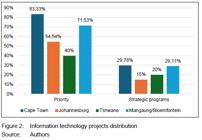
This discussion synthesises findings from the four cities, by comparing two key areas, namely the distribution of information technology across different strategic categories (see Figure 2) and each city's alignment with the Strategic Digital City (SDC) sub-projects (see Figure 3). The analysis is grounded in three aspects of municipal digitalisation: strategic structure, priorities, and programmes. Projects and actions directly related to digitalisation were identified in each city's strategic plan and categorised according to the SDC sub-projects.
5.1 Information technology distribution
Upon analysing the projects and actions listed in the strategic plans, Cape Town has the greatest number of information technology projects that permeate strategic priorities (83.33%), followed by Bloemfontein/Mangaung, Johannesburg, and Tshwane. The programmes in the first three cities cover more than 50% of the priorities, as shown in Figure 2. This chart illustrates the cities' perception of the potential and need for information technology to support their demands.
Across all four cities, this strong presence of ICT initiatives illustrates a shared recognition that technology is central to strengthening municipal management and supporting economic development and quality-of-life improvements. Similarly, the distribution of IT programs across multiple thematic areas, rather than a single concentration, shows that cities view technology as a cross-cutting enabler embedded throughout municipal governance.
Regarding the city's strategic structure, Johannesburg's Integrated Development Plan includes the smart city theme as one of its pillars, directing strategies toward developing a future-oriented city. Bloemfontein-Mangaung's organisational structure also includes a technical services area aiming "to develop, deliver, and sustain key infrastructure for the provision of essential engineering solutions and services" (Mangaung Metropolitan Municipality, 2024). This demonstrates these cities' prioritisation of technology.
Johannesburg's explicit smart-city orientation distinguishes it from the other cities, reflecting a more intentional approach to embedding ICT as a developmental driver. Similarly, Mangaung's holistic emphasis on infrastructure development signals a foundational orientation toward preparing the city for digitalisation.
5.2 SDC alignment
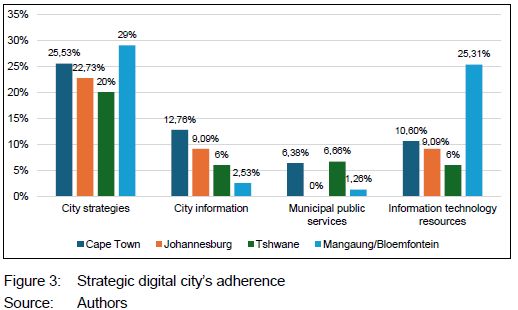
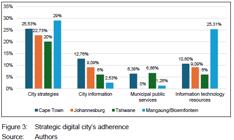
This analysis examined how closely cities followed the strategic digital city concept. It assumed that each city had at least one digital city sub-project. Each city's strategic programmes were grouped into SDC sub-projects (city strategy, city information, municipal public services, and information technology resources). These were measured as percentages to show how well each city fits the SDC framework. Figure 3 shows the overall level of SDC adherence.
All four cities include strategic programmes that are directly or indirectly linked to digitalisation, reflecting a shared commitment to strategic alignment. Each city has an explicit technology-related strategy, with Mangaung showing the highest concentration (29.11%), followed by Cape Town (25.53%), Johannesburg (22.73%), and Tshwane (20%). These strategies are distributed across thematic areas and organisational levels, indicating that digitalisation functions as a cross-cutting component of municipal planning. This broad distribution across organisational domains reinforces that cities understand digitalisation as a systemic, rather than isolated, transformation process.
As for the city information sub-project, all cities focus on strengthening information campaigns and generating strategic information to support decision-making. Projects often involve developing and integrating systems and databases to enable more informed municipal governance based on information about the city. This shared emphasis on data-driven insights reflects a common recognition that effective digital governance relies on improving the municipality's capacity to understand and respond to local conditions.
The municipal public services sub-project has the lowest proportion of actions across all cities. Cape Town (6.38%) and Tshwane (6.66%) stand out. Examples include Cape Town's "Ease of Doing Business Program", which provides e-services, and Johannesburg's "Digitalization" project, which expands access to health and education services. Despite broad digital ambitions, the consistently low emphasis on digital public services suggests an underdeveloped area of digital city transformation, particularly in relation to the social sector.
The information technology resources sub-project has the highest concentration of strategic programmes (49.57%). Mangaung leads this category (25.31%), due to its technical services sector. Programmes are primarily operational, including communication systems (e.g., SMS solutions, websites, and email), connectivity, hardware, software, and telecommunications. Many are linked to broader urban systems such as transportation, waste management, sanitation, and energy. While not intrinsically digital, these systems depend on ICT infrastructure. The emphasis on foundational infrastructure across cities highlights their focus on preparing the technological base needed for more advanced digital services. Infrastructure development thus appears as the most mature and prioritised area of digital planning.
6. CONCLUSION
This narrative review examined how four South African metropolitan municipalities, Cape Town, Johannesburg, Tshwane, and Mangaung, integrate digitalisation within their municipal strategic frameworks. Guided by South Africa's overarching digital-governance instruments, including the Constitution, the NDP 2030, and the Digital Government Policy Framework, the analysis identified how municipal digital priorities are embedded in planning processes across the four cities.
Across all cases, digitalisation emerges as a cross-cutting enabler of municipal governance. The thematic assessments presented in Section 4 show that each city incorporates information technology within multiple strategic domains, reflecting a shared recognition that technology is essential for improving service delivery, institutional capability, spatial transformation, and long-term urban sustainability. However, the findings also indicate that this integration is uneven. While all cities prioritise technological infrastructure and IT-related programmes, significantly fewer initiatives target digitalisation within municipal public services, particularly in socially oriented sectors. This suggests that, although cities understand the strategic value of digitalisation, the translation of this intent into service-level transformation remains limited.
The comparative assessment further shows that the cities differ in how coherently digitalisation is embedded within their strategic structures. Cape Town and Johannesburg demonstrate clearer alignment between priorities, objectives, and digital programmes, while Tshwane's strategic documentation is less explicit in mapping programmes to priorities. Mangaung shows strong emphasis on service-delivery improvement but a more modest integration of digitalisation beyond foundational infrastructure. Collectively, these findings reflect varying degrees of maturity in digital strategic positioning across the four municipalities.
The review contributes to the understanding of urban digitalisation in the Global South, by highlighting that those South African cities, despite contextual constraints, are adopting multidimensional approaches to digital strategy. By categorising municipal strategies according to Strategic Digital City sub-projects and analysing programme distributions, the review provides a comparative reference point for other municipalities seeking to align their digital initiatives with national policy directives. The descriptive, document-based approach also demonstrates the usefulness of strategic planning analysis in identifying gaps between digital ambitions and operational implementation.
Several limitations must be acknowledged. The classification of strategies and programmes requires interpretive judgement, which may influence categorisation outcomes. In addition, reliance on planning documents means that the analysis reflects intended strategies rather than actual implementation or impact.
Future research should extend this work through empirical investigation of municipal digital-service delivery, examine citizen-centred outcomes, and explore how organisational capacity, resource constraints, and governance arrangements shape digital-strategy adoption. Linking strategic intentions with measurable indicators of quality of life and economic development would further deepen understanding of how digitalisation contributes to sustainable urban development.
REFERENCES
2. LITERATURE REVIEW
-
AHVENNIEMI, H., HUOVILA, A., PINTO-SEPPÄ, I. & AIRAKSINEN, M. 2017. What are the differences between sustainable and smart cities? Cities, 60, pp. 234-245. https://doi.org/10.1016/j.cities.2016.09.009
» https://doi.org/10.1016/j.cities.2016.09.009 - AISYAH, N., LATIFAH, S. & SOFIYANA, M. 2025. The concept of public services in Pancasila values. Civic Engagement and Social Education Journal, 2(1), pp. 1-7.
-
AKGÜN, E.Z., GERLI, P., MORA, L. & MCTIGUE, C. 2024. Breaking barriers for breaking ground: A categorisation of public sector challenges to smart city project implementation. Public Policy and Administration 0(0), pp. 1-12. https://doi.org/10.1177/09520767241263233
» https://doi.org/10.1177/09520767241263233 -
ALDEGHEISHEM, A. 2024. Assessing progress towards smart governance in Saudi Arabia. Humanities and Social Sciences Communications, 11(1), pp. 1-9. https://doi.org/10.1057/s41599-024-03235-7
» https://doi.org/10.1057/s41599-024-03235-7 -
AL LAHHAM, N., REZENDE, D.A., ALMEIDA, G.G.F. & OKON, G.U. 2026 Refugee housing access through urban studies and strategic digital city context. Urban Science, 10(1), article 24. https://doi.org/10.3390/urbansci10010024
» https://doi.org/10.3390/urbansci10010024 -
ALVARADO-LOPEZ, R.A. 2020. Ciudades inteligentes y sostenibles: Una medición a cinco ciudades de México. Estudios Sociales - Revista de Alimentación Contemporánea y Desarrollo Regional, 30(55), pp. 2-28. https://doi.org/10.24836/es.v30i55.860
» https://doi.org/10.24836/es.v30i55.860 -
AURIGI, A. & ODENDAAL, N. 2022. From "smart in the box" to "smart in the city": Rethinking the socially sustainable smart city in context. In: De Jong, M. et al. (Eds). Sustainable smart city transitions. Abingdon, UK: Routledge, pp. 16-32. https://doi.org/10.4324/9781003205722-3
» https://doi.org/10.4324/9781003205722-3 - BARDIN, L. 2016. Análise de conteúdo. Lisbon: Edições 70.
-
BAYRO, A. & JEONG, H. 2025. A systematic review of experimental protocols: Towards a uniform framework in virtual reality affective research. IEEE Transactions on Affective Computing, 16(3), pp. 1334-1348. https://doi.org/10.1109/TAFFC.2025.3554496
» https://doi.org/10.1109/TAFFC.2025.3554496 -
BELL, E. & JILKE, S. 2024. Racial discrimination and administrative burden in access to public services. Scientific Reports, 14(1), article 1071. https://doi.org/10.1038/s41598-023-50936-1
» https://doi.org/10.1038/s41598-023-50936-1 -
BORRIELLO, G. 2025. The grand challenge of public administration digitalization: The digital identity policy in Italy. International Review of Administrative Sciences, 92(2), pp. 290-307. https://doi.org/10.1177/00208523251333541
» https://doi.org/10.1177/00208523251333541 -
BOYLE, L., HARLOW, J. & KEELER, L.W. 2024. [D]evolving smartness: Exploring the changing modalities of smart city making in Africa. Urban Geography, 45(4), pp. 586-610. https://doi.org/10.1080/02723638.2023.2213035
» https://doi.org/10.1080/02723638.2023.2213035 -
CHARALABIDIS, Y. & THEOCHAROPOULOU, C. 2019. A participative method for prioritizing smart city interventions in medium-sized municipalities. International Journal of Public Administration in the Digital Age, 6(1), pp. 41-63. https://doi.org/10.4018/IJPADA.2019010103
» https://doi.org/10.4018/IJPADA.2019010103 -
CHEN, Z. & CHAN, I.C.C. 2023. Smart cities and quality of life: A quantitative analysis of citizens support for smart city development. Information Technology & People, 36(1), pp. 263-285. https://doi.org/10.1108/ITP-07-2021-0577
» https://doi.org/10.1108/ITP-07-2021-0577 -
CHIWAWA, N. & WISSINK, H. 2024. Effective strategy execution for enhanced service delivery in South African municipalities. Africa's Public Service Delivery and Performance Review, 12(1), article 741. https://doi.org/10.4102/apsdpr.v12i1.741
» https://doi.org/10.4102/apsdpr.v12i1.741 -
CITY OF CAPE TOWN. 2022. Five-Year Integrated Development Plan, July 2022-June 2027. Cape Town: City of Cape Town. https://resource.capetown.gov.za [Accessed 9 March 2026].
» https://resource.capetown.gov.za -
CITY OF JOHANNESBURG. 2021. Integrated Development Plan (IDP) 2021-2026. Johannesburg: City of Johannesburg. https://joburg.org.za [Accessed 9 March 2025].
» https://joburg.org.za -
COMMONS.WIKIMEDIA. 2022. Maps of South African municipalities. https://commons.wikimedia.org [Accessed 31 May 2026].
» https://commons.wikimedia.org -
COPAJA-ALEGRE, M. & ESPONDA-ALVA, C. 2019. Tecnología e innovación hacia la ciudad inteligente: Avances, perspectivas y desafíos. Bitácora Urbano Territorial, 29(2), pp. 59-70. https://doi.org/10.15446/bitacora.v29n2.68333
» https://doi.org/10.15446/bitacora.v29n2.68333 -
DANU, D.E.A., SETIAWAN, R., SUANDI, A., ARIFFIN, M.S.B.M. & ARISWATI, A.S. 2023. E-services: Implementation of digital-based public services in the 4.0 era. Athena: Journal of Social, Culture and Society, 1(3), pp. 87-92. https://doi.org/10.58905/athena.v1i3.40
» https://doi.org/10.58905/athena.v1i3.40 -
DAS, D.K., AIYETAN, A.O. & MOSTAFA, M.M.H.M. 2026. Advancing smart cities in Africa: Barriers, potentials, and strategic pathways for sustainable urban transformation. Smart Cities, 9(2), article 38. https://doi.org/10.3390/smartcities9020038
» https://doi.org/10.3390/smartcities9020038 -
DCDT (DEPARTMENT OF COMMUNICATIONS AND DIGITAL TECHNOLOGIES). 2022. Communications and digital technologies. In South Africa Yearbook 2021/22. Government of South Africa. https://www.gcis.gov.za [Accessed 2 May 2026].
» https://www.gcis.gov.za -
DCDT (DEPARTMENT OF COMMUNICATIONS AND DIGITAL TECHNOLOGIES). 2024. South Africa's roadmap for the digital transformation of the economy and society. Pretoria: DCDT. https://www.gov.za [Accessed 2 May 2026].
» https://www.gov.za -
DEBELA, B.K. & MARIJANI, R. 2023. Resolving the grand challenges in public administration: A comparative analysis of Ethiopia and Tanzania. Developments in Administration, 5(1), pp. 49-75. https://doi.org/10.46996/dina.v5i1.7493
» https://doi.org/10.46996/dina.v5i1.7493 -
DEMOCRATIC ALLIANCE. 2024. DA policy on information and communication technology: Connecting South Africa for development and growth. Democratic Alliance. https://www.da.org.za [Accessed 2 May 2026].
» https://www.da.org.za -
DEPARTMENT OF COMMUNICATIONS. 2013. South Africa Connect: Creating opportunities, ensuring inclusion: South Africa's broadband policy. Government of South Africa. https://www.dcdt.gov.za [Accessed 2 May 2026].
» https://www.dcdt.gov.za -
DPSA (DEPARTMENT OF PUBLIC SERVICE AND ADMINISTRATION). 2024. Draft digital government policy framework. Pretoria: DPSA. https://www.dpsa.gov.za [Accessed 2 May 2026].
» https://www.dpsa.gov.za -
FLORES, C.C. & REZENDE, D.A. 2022. Crowdsourcing framework applied to strategic digital city projects. Journal of Urban Management, 11(4), pp. 467-478. https://doi.org/10.1016/j.jum.2022.08.004
» https://doi.org/10.1016/j.jum.2022.08.004 -
FROM, D.A., REZENDE, D.A. & SEQUEIRA, D.F.Q. 2025. IoT-based framework for connected municipal public services in a strategic digital city context. IoT, 6(2), article 20. https://doi.org/10.3390/iot6020020
» https://doi.org/10.3390/iot6020020 -
FUMAGALLI, L.A.W. 2021. Challenges for public transportation: Consequences and possible alternatives for the COVID-19 pandemic through strategic digital city application. Journal of Urban Management, 10(2), pp. 97-109. https://doi.org/10.1016/j.jum.2021.04.002
» https://doi.org/10.1016/j.jum.2021.04.002 -
GADJANOVA, E., LYNCH, G. & SAIBU, G. 2022. Misinformation across digital divides: Theory and evidence from Northern Ghana. African Affairs, 121(483), pp. 161-195. https://doi.org/10.1093/afraf/adac009
» https://doi.org/10.1093/afraf/adac009 - GALLAUGHER, J. 2023. Information systems: A manager's guide to harnessing technology. Boston, USA: FlatWorld.
-
GEORGE, B., WALKER, R.M. & MONSTER, J. 2019. Does strategic planning improve organizational performance? A meta-analysis. Public Administration Review, 79(6), pp. 810-819. https://doi.org/10.1111/puar.13104
» https://doi.org/10.1111/puar.13104 - GOVERNMENT SOUTH AFRICA. 1996. Constitution of the Republic of South Africa, Act 108 of 1996. South Africa: Government Printers.
-
HAN, Z., JA'AFAR, N.H., MALEK, I. & LYU, Y. 2025. Trends, obstacles, and opportunities for smart cities in urban space: A systematic literature review. Town and Regional Planning, 86, pp. 12-27. https://doi.org/10.38140/trp.v86i.8581
» https://doi.org/10.38140/trp.v86i.8581 -
HANISCH, M., GOLDSBY, C.M., FABIAN, N.E. & OEHMICHEN, J. 2023. Digital governance: A conceptual framework and research agenda. Journal of Business Research, 162, article 113777. https://doi.org/10.1016/j.jbusres.2023.113777
» https://doi.org/10.1016/j.jbusres.2023.113777 - HEEKS, R. 2022. Information systems and country development: South and North. New York: Routledge.
-
HOXHA, V. & PALLASKA, E. 2023. A study of components predicting smart governance in Prishtina, Kosovo. Urbani Izziv, 34(2), pp. 63-72. https://doi.org/10.5379/urbani-izziv-en-2023-34-02-01
» https://doi.org/10.5379/urbani-izziv-en-2023-34-02-01 -
JAYUS, Z., ISMAYLI, U. & BOINI, U. 2026. Post-flood recovery and development of administration and public services in Pidie Jaya. Journal Informatic, Education and Management, 8(1), pp. 627-635. https://doi.org/10.61992/jiem.v8i1.242
» https://doi.org/10.61992/jiem.v8i1.242 -
JEJENIWA, T.O., MHLONGO, N.Z. & JEJENIWA, T.O. 2024. Conceptualizing e-Government initiatives: Lessons learned from Africa-US collaborations in digital governance. International Journal of Applied Research in Social Sciences, 6(4), pp. 759-769. https://doi.org/10.51594/ijarss.v6i4.1066
» https://doi.org/10.51594/ijarss.v6i4.1066 -
KRIPPENDORFF, K. 2019. Content analysis: An introduction to its methodology. 4th edition. Thousand Oaks, CA: Sage Publications. https://doi.org/10.4135/9781071878781
» https://doi.org/10.4135/9781071878781 - LAUDON, K.C. & LAUDON, J.P. 2024. Management information systems: Managing the digital firm. 18th edition. Global edition. Harlow: Pearson.
-
LEE, H. 2024. Strategic types, implementation, and capabilities: Sustainability policies of local governments. Public Administration, 102(1), pp. 264-284. https://doi.org/10.1111/padm.12917
» https://doi.org/10.1111/padm.12917 -
LI, L., LIN, X., YANG, X., LUO, Z. & WANG, M. 2024. Digital governance and urban government service spaces: Understanding resident interaction and perception in Chinese cities. Land, 13(9), 1403. https://doi.org/10.3390/land13091403
» https://doi.org/10.3390/land13091403 -
LÓPEZ, C.E. & BELTRÁN, M.R. del M. 2022. Un caso de análisis para la planificación urbana en el contexto del COVID-19: El acuerdo por el futuro de Zaragoza (España). Revista de Urbanismo, 46(5), pp. 327-345. https://doi.org/10.5354/0717-5051.2022.61187
» https://doi.org/10.5354/0717-5051.2022.61187 -
LUHTALA, M. 2024. Glocalizing sustainability: How accounting begins for sustainable development goals in city administration. Journal of Public Budgeting, Accounting & Financial Management, 37(2), pp. 196-223. https://doi.org/10.1108/JPBAFM-06-2023-0097
» https://doi.org/10.1108/JPBAFM-06-2023-0097 -
MANGAUNG METROPOLITAN MUNICIPALITY. 2024. City of Mangaung: Integrated Development Plan 2024/2025. https://www.mangaung.co.za [Accessed 3 May 2025].
» https://www.mangaung.co.za -
MARIANO, A.M., MONTEIRO, S.B.S., SANTOS, M.R. & RAMÍREZ-CORREA, P. 2020. Information systems user satisfaction: Application of a model for e-Government. In: 15th Iberian Conference on Information Systems and Technologies (CISTI), Seville, Spain, pp. 1-6. https://doi.org/10.23919/CISTI49556.2020.9140956
» https://doi.org/10.23919/CISTI49556.2020.9140956 -
MATLALA, L.S. 2025. E-governance in South Africa: Barriers and enablers of virtual evaluation in the public sector. Insights into Regional Development, 7(2), pp. 84-108. https://doi.org/10.70132/d9854558432
» https://doi.org/10.70132/d9854558432 -
MORA, L., GERLI, P., BATTY, M. et al. 2025. Confronting the smart city governance challenge. Nature Cities, 2, pp. 110-113. https://doi.org/10.1038/s44284-024-00168-9
» https://doi.org/10.1038/s44284-024-00168-9 -
MORIN, J.F., OLSSON, C. & ATIKCAN, E.Ö. (Eds). 2021. Research methods in the social sciences: An A-Z of key concepts. Oxford: Oxford University Press. https://doi.org/10.1093/hepl/9780198850298.001.0001
» https://doi.org/10.1093/hepl/9780198850298.001.0001 -
MWANZA, P.M. & DAR, J.A. 2025. The role of strategy implementation practices on performance of the public sector organisations. Africa's Public Service Delivery & Performance Review 13(1), pp. 1-14. https://doi.org/10.4102/apsdpr.v13i1.891
» https://doi.org/10.4102/apsdpr.v13i1.891 -
NAM, T. & PARDO, T.A. 2011. Conceptualizing smart city with dimensions of technology, people, and institutions. In Proceedings of the 12th Annual International Digital Government Research Conference: Digital Government Innovation in Challenging Times, pp. 282-291. Association for Computing Machinery. https://doi.org/10.1145/2037556.2037602
» https://doi.org/10.1145/2037556.2037602 -
NARKHEDE, G.B., MAHAJAN, S., KAMBLE, D., KORE, S. et al. 2025. Towards a super smart future: Integrating Industry 5.0 in Society 5.0. International Journal of Innovation and Technology Management, 22(2), article 2550008. https://doi.org/10.1142/S0219877025500087
» https://doi.org/10.1142/S0219877025500087 -
NASIFUHAN, D., YANG, R., WANG, Y., GUO, Y., CHEN, R. et al. 2024. Research on the current situation, influencing factors and governance countermeasures of public participation in citizen post station co-production under the background of "Internet + IoT": An example of urban post station of environmental governance. Polish Journal of Environmental Studies, 33(1), pp. 303-311. https://doi.org/10.15244/pjoes/171653
» https://doi.org/10.15244/pjoes/171653 - NATIONAL PLANNING COMMISSION. 2012. National Development Plan 2030: Our future - Make it work. Pretoria, South Africa: The Presidency.
-
NICHOLS, A.L. & EDLUND, J. 2023. The Cambridge handbook of research methods and statistics for the social and behavioral sciences. Volume 1: Building a program of research. Cambridge, UK: Cambridge University Press. https://doi.org/10.1017/9781009010054
» https://doi.org/10.1017/9781009010054 - OECD. 2021. Digital government review of Slovenia: Leading the digital transformation of the public sector. OECD Digital Government Studies. Paris: OECD Publishing.
-
PASQUALI, G. & DE MARCHI, V. 2022. Public governance and technological capabilities in the Kenyan leather industry. African Affairs, 121(484), pp. 419-441. https://doi.org/10.1093/afraf/adac025
» https://doi.org/10.1093/afraf/adac025 -
PATALON, M. & WYCZISK, A. 2024. Mapping digital transformation of municipalities through the lens of institutional isomorphism. International Journal on Social and Education Sciences, 6(4), pp. 600-635. https://doi.org/10.46328/ijonses.701
» https://doi.org/10.46328/ijonses.701 -
RAHIM, F. & SHIRAZI, N.S. 2018. Fiscal decentralisation and citizens' satisfaction from local public service delivery in Pakistan. International Journal of Ethics and Systems, 34(1), pp. 122-142. https://doi.org/10.1108/IJOES-04-2017-0066
» https://doi.org/10.1108/IJOES-04-2017-0066 -
REZENDE, D.A. 2023. Strategic digital city: Concept, model, and research cases. Journal of Infrastructure, Policy and Development, 7(2), article 2177. https://doi.org/10.24294/jipd.v7i2.2177
» https://doi.org/10.24294/jipd.v7i2.2177 -
REZENDE, D.A., ALMEIDA, G.G.F. & FUMAGALLI, L.A.W. 2024. Strategic digital city: Multiple projects for sustainable urban management. Sustainability, 16(13), article 5450. https://doi.org/10.3390/su16135450
» https://doi.org/10.3390/su16135450 -
REZENDE, D.A., FUMAGALLI, L.A.W., BARTLING, H., OKON, G.U. et al. 2025. Sustainable city strategies for strategic digital city project in the sustainable development goals (SDGs) context. Land, 14(6), 1195. https://doi.org/10.3390/land14061195
» https://doi.org/10.3390/land14061195 -
RIBEIRO, S.S., REZENDE, D.A. & YAO, J. 2019. Toward a model of the municipal evidence-based decision process in the strategic digital city context. Information Polity, 24(3), pp. 305-324. https://doi.org/10.3233/IP-190129
» https://doi.org/10.3233/IP-190129 -
RÍOS-OCAMPO, J.P. & GARY, M.S. 2025. Urban growth strategy in Greater Sydney leads to unintended social and environmental challenges. Nature Cities, 2(3), pp. 1-12. https://doi.org/10.1038/s44284-024-00187-6
» https://doi.org/10.1038/s44284-024-00187-6 -
SCHIAVO, F.T. & MAGALHAES, C.F. 2022. Smart sustainable cities: The essentials for managers and leaders initiatives within the complex context of differing definitions and assessments. Smart Cities, 5, pp. 994-1024. https://doi.org/10.3390/smartcities5030050
» https://doi.org/10.3390/smartcities5030050 -
SERRA, J.C.M. & GONZÁLEZ, E.F.-V. 2023. Management strategies in the comprehensive rehabilitation of the historic centers of Quito and Havana. Urban Science, 7(1), pp. 1-18. https://doi.org/10.3390/urbansci7010004
» https://doi.org/10.3390/urbansci7010004 -
SHIBAMBU, A. 2024. Transformation of digital government services in the public sector in South Africa. Africa's Public Service Delivery and Performance Review, 12(1), article 753. https://doi.org/10.4102/apsdpr.v12i1.753
» https://doi.org/10.4102/apsdpr.v12i1.753 - STAIR, R.M. & REYNOLDS, G.W. 2024. Principles of information systems. 15th edition. Boston: Cengage Learning.
-
SUDRAJAT, A.R. 2023. Analysis of Indonesian public service issues in the new era based on public administration perspective. International Journal of Social Service and Research, 3(1), pp. 22-29. https://doi.org/10.46799/ijssr.v3i1.218
» https://doi.org/10.46799/ijssr.v3i1.218 -
TAAMALLAH, A., KHEMAJA, M. & FAIZ, S. 2019. Building a framework for smart cities: Strategy development. In: Lopes, N. (Ed.). Smart governance for cities: Perspectives and experiences. Cham: Springer International Publishing, pp. 29-53. https://doi.org/10.1007/978-3-030-22070-9_3
» https://doi.org/10.1007/978-3-030-22070-9_3 -
TARIQ, W., CHEN, Y., TARIQ, A. & SUMBAL, M.S. 2026. Digital governance for sustainable development: A holistic review, framework, and roadmap. Technology in Society, 84, article 103135. https://doi.org/10.1016/j.techsoc.2025.103135
» https://doi.org/10.1016/j.techsoc.2025.103135 -
TEIXEIRA, A.V. & REZENDE, D.A. 2023. A multidimensional information management framework for strategic digital cities: A comparative analysis of Canada and Brazil. Global Journal of Flexible Systems Management, 24, pp. 107-121. https://doi.org/10.1007/s40171-022-00325-w
» https://doi.org/10.1007/s40171-022-00325-w -
TIIKA, B.J., TANG Z., AZAARE J., DAGADU, J.C. & OTOO, S.N-A. 2024. Evaluating e-government development among Africa Union member states: An analysis of the impact of e-government on public administration and governance in Ghana. Sustainability, 16(3), article 1333. https://doi.org/10.3390/su16031333
» https://doi.org/10.3390/su16031333 - TRUJILLO, M.L. 2022. Ciudades inteligentes: Experiencias y lecciones aprendidas. Manizales: Universidad de Caldas.
- TRUTKOWSKI, C., POP, D., PETERI, G. & SHAPOVALOVA, N. 2022. Strategic municipal planning: Toolkit. Strasbourg: Centre of Expertise for Good Governance, Council of Europe.
- TSHWANE METROPOLITAN MUNICIPALITY. 2020. City of Tshwane integrated development plan: Revision for 2020/21 and service delivery and budget implementation (SDBIP) scorecard. Tshwane: Tshwane Metropolitan Municipality.
- TURBAN, E., POLLARD, C. & WOOD, G. 2021. Information technology for management: On-demand strategies for digital transformation. 12th edition. Hoboken: Wiley.
-
VAN DER HOOGEN, A., FASHORO, I., CALITZ, A.P. & LUKE, L. 2024. A digital transformation framework for smart municipalities. Sustainability, 16(3), article 1320. https://doi.org/10.3390/su16031320
» https://doi.org/10.3390/su16031320 -
VRABIE, C. 2025. From presence to performance: Mapping the digital maturity of Romanian municipalities. Administrative Sciences, 15(4), article 147. https://doi.org/10.3390/admsci15040147
» https://doi.org/10.3390/admsci15040147 -
WALLIN, A. 2025. Austerity and sustainability: Common-sense neoliberalism in a Finnish city. Geografiska Annaler: Series B, Human Geography, 107(3), pp. 328-342. https://doi.org/10.1080/04353684.2025.2452650
» https://doi.org/10.1080/04353684.2025.2452650 -
YANG, C. 2020. Historizing smart cities: Genealogy as a method of critique for smart urbanism. Telematics and Informatics, 55, article 101438. https://doi.org/10.1016/j.tele.2020.101438
» https://doi.org/10.1016/j.tele.2020.101438 - YIN, R.K. 2017. Case study research and applications: Design and methods. Thousand Oaks, CA: Sage Publications.
-
ZHAO, L., TANG, Z.-Y. & ZOU, X. 2019. Mapping the knowledge domain of smart-city research: A bibliometric and scientometric analysis. Sustainability, 11(23), article 6648. http://dx.doi.org/10.3390/su11236648
» http://dx.doi.org/10.3390/su11236648 -
ZULMASYHUR, Z. 2026. The public services transformation in enhancing communities welfare in Bandung City. Public Works Management and Policy, 31(1), pp. 102-127. https://doi.org/10.1177/1087724X251329076
» https://doi.org/10.1177/1087724X251329076
Peer reviewed and revised: May 2026
Published: June 2026