Differential urbanisation for settlement planning - A Western Cape case study
Abstract
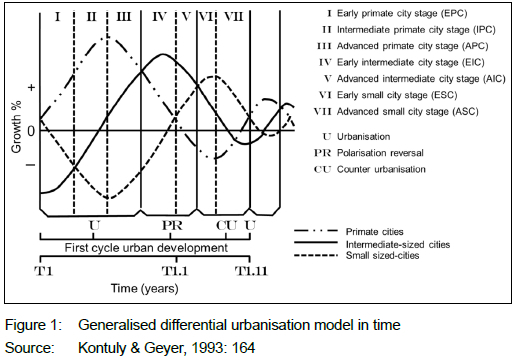
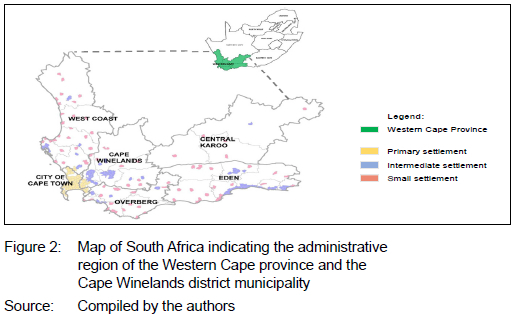
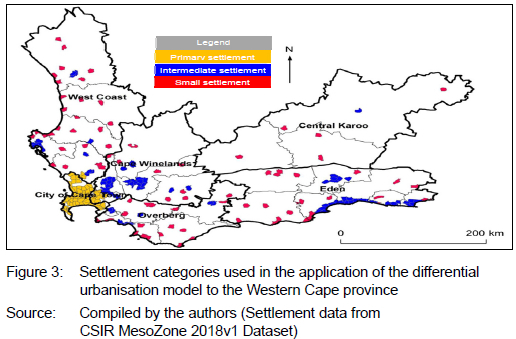
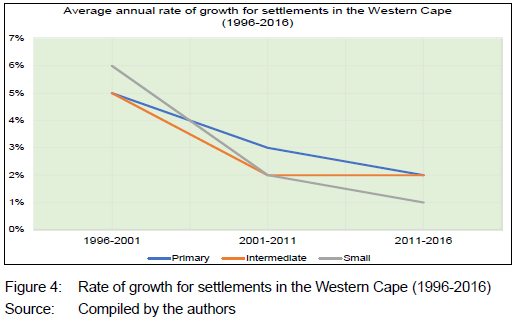
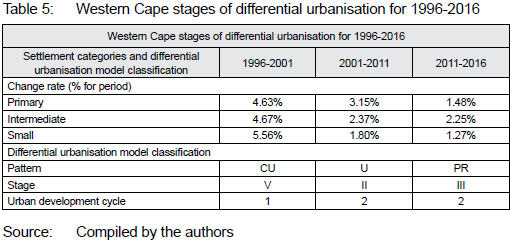
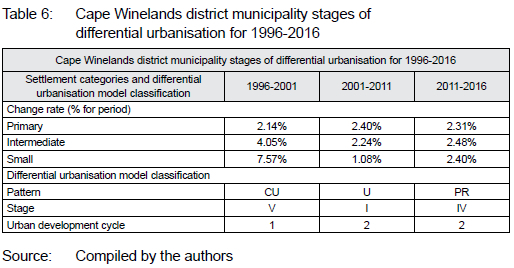
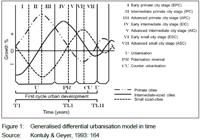
The differential urbanisation model is a means to assess settlement growth rates. While the model has been tested primarily at a national level, including in South Africa, this study seeks to apply the analysis to the sub-national scale in the Western Cape province and Cape Winelands district municipality. The study found that the model is applicable to both the province and the district municipality. Settlements of differing size and economic importance grew at varying rates relative to each other in a predictable sequence, which realised the urban hierarchy, over a 20-year period. This finding was unexpected, given that the urban differential model assumes economic growth as well as labour and socio-economic homogeneity - factors that have not been realised evenly sub-nationally. The applicability of the model to these locations may assist in the public division of resources, particularly in small towns, where meaningful urbanisation occurs, yet capital allocations are limited. The applicability of the study is in keeping with national, provincial, and municipal trends in planning that emphasise the interrelationship between settlements of different size and function over time, and the importance of spatial planning in guiding public infrastructure expenditure.
Differential urbanisation; infrastructure planning; settlement growth rates; settlement planning; spatial planning; urban hierarchy
 Thumbnail
 Thumbnail
 Thumbnail
 Thumbnail
 Thumbnail