Turning land into property: Caste, speculation, and social inequality in India's peri-urban areas
Abstract
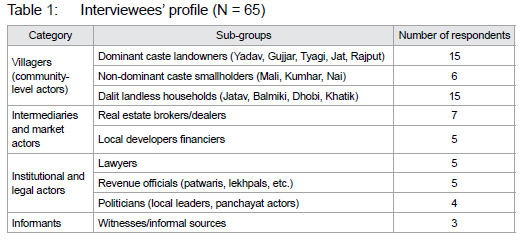
Speculative urbanism has become a defining feature of contemporary city-making in India, yet the role of local actors in shaping speculative landscapes remains underexplored. This article examines the transformation of land into property in Delhi's peri-urban frontier, with a focus on Noida Extension. Drawing on 65 semi-structured interviews and field observations, it examines how dominant caste landowners leverage political ties, financial capital, and social networks to convert agrarian land into rental housing and speculative ventures. Territorial practices such as informal development, partnerships with builders, and symbolic constructions illustrate how speculation is simultaneously a material, social, and political process that produces new hierarchies while reproducing older ones. For marginalised groups, particularly Dalits, these transformations result in exclusion from emergent property regimes and limited access to urban accumulation. By situating grassroots speculation within wider state-capital assemblages, the article argues that peri-urban transformation is not only about dispossession but also about differentiated accumulation. In doing so, it contributes to the existing literature on speculative urbanism and territorialisation, by highlighting how peri-urban development in India is a process of property-making that reshapes social inequality and reconfigures caste politics.
Speculative urbanism; caste; land speculation; exclusion; peri-urban; territorialisation
 Thumbnail
 Thumbnail