A review of land-use planning laws in Kenya: Challenges and opportunities for urban landscape identity and memory in new developments and renewals
Abstract
Land use plays a crucial role in delivering the diverse goods and services essential to urban life, encompassing housing, transportation, recreation, and other amenities. Effective land-use planning is facilitated by comprehensive laws and policy regulations that coordinate various urban projects. These regulations must adequately address critical elements of urban landscape identity and memory, particularly in the context of new developments and renewal initiatives. However, such elements are often inadequately considered, jeopardising continuity and coherence within urban environments. Existing literature has noted the significance of urban landscape identity and memory but has insufficiently emphasised their integration into the legal and policy frameworks governing urban development and renewal, which is vital for sustaining rapidly evolving urban landscapes. This review article focuses on land-use laws and policies in Kenya, employing qualitative research methods that include a content analysis of secondary data sourced from government documents and official repositories. The findings reveal that key aspects of urbanism and sustainable development related to urban landscape identity and memory are not adequately reflected in current legislation. Consequently, this article urges the incorporation of these aspects into existing land-use laws. The insights generated by this study are particularly relevant for policymakers and authorities responsible for overseeing urban development and renewal, ensuring adherence to comprehensive land-use regulations.
land-use laws; land-use planning; urban renewal; new developments; urban landscape identity; urban memory; policy regulation; urban development
Abstract
Grondgebruik speel 'n deurslaggewende rol in die lewering van diverse goedere en dienste wat noodsaaklik is vir stedelike lewe, insluitend, behuising, vervoer, ontspanning en ander geriewe. Doeltreffende grondgebruikbeplanning word gefasiliteer deur omvattende wette en beleidsregula-sies wat verskeie stedelike projekte koördineer. Hierdie regulasies moet kri-tiese elemente van stedelike landskap identiteit en geheue voldoende aanspreek, veral in die konteks van nuwe ontwikkelings en hernuwingsinisiatiewe. Sulke elemente word egter dikwels onvoldoende oorweeg, wat kontinuïteit en samehang binne stedelike omgewings in gevaar stel. Bestaande literatuur het kennis geneem van die belangrikheid van stedelike landskap identiteit en ge-heue, maar het onvoldoende klem gelê op die integrasie daarvan in die wetlike en beleidsraamwerke wat stedelike ontwikkeling en hernuwing beheer, wat noodsaaklik is vir die handhawing van vinnig ontwikkelende stedelike land-skappe. Hierdie oorsigartikel fokus op grondgebruikwette en -beleide in Kenia, deur gebruik te maak van kwalitatiewe navorsingsmetodes wat 'n inhoudontled-ing van sekondêre data insluit wat uit regeringsdokumente en amptelike do-kumentbewaarplekke verkry is. Die bev-indinge toon aan dat sleutelaspekte van verstedeliking en volhoubare ontwikkeling wat verband hou met stedelike land-skap identiteit en geheue nie voldoende in huidige wetgewing weerspieël word nie. Gevolglik dring hierdie artikel aan op die inkorporering van hierdie aspekte in bestaande grondgebruikwette. Die in-sigte wat deur hierdie studie gegenereer word, is veral relevant vir beleidmakers en owerhede wat verantwoordelik is vir toesig oor stedelike ontwikkeling en ver-nuwing, om te verseker dat aan omvattende grondgebruikregulasies voldoen word.
1. INTRODUCTION
Land use plays a crucial role in improving productivity, liveability, and sustainability of developing cities. This is especially critical in the wake of urban challenges of rapid urbanisation and informal development that are unavoidable (Behl & Kaur, 2024; Nzakamwita & Tuyishime, 2022; Collier et al., 2020; Mangi et al., 2017; Owei, Obinna & Ede, 2010; Aribigbola, 2008). Land-use planning, according to Collier et al. (2020), refers to the process of designing and implementing regulation that affects how land is used in cities. This planning is both for development in green field 'new area' as well as redevelopment of existing urban areas (Collier et al., 2020). According to Chao and Hsu (2018), urban renewal policies are used to achieve urban development goals with the benefits that include regeneration of blighted areas and improvements to quality of life. The existing problem is that aspects of urban landscape identity and memory that are important during new developments and renewal projects are often overlooked or not given the consideration they deserve to ensure continuity and coherence within urban realms. Aboelnaga, Toth & Neszmelyi (2019) state that there is a need for more urban regeneration approaches to deal with development issues in the existing lands. These include urban corridors. This should be through land management that has an effect on urban regeneration. This creates a high demand for changing land use in the previously developed land in urban areas. This considers focus on brownfleld redevelopment to achieve mixed use (Aboelnaga et al., 2019).
Numerous authors (Behl & Kaur, 2024; Kaymaz, 2013; Okesli & Gurcinar, 2012; Ujang, 2012; Belanger, 2002) emphasise that urban environments and identities are continually changing. According to Okesli and Gurcinar (2012), it is essential to monitor and manage these changes, in order to preserve urban identity. Ujang (2012) suggests that new developments can alter the character of a city, affecting residents' meanings and attachments to various locations. Kaymaz (2013) argues that urban renewal projects can significantly impact on urban identity if insufficient attention is paid to its preservation and enhancement. Seidl et al. (2021) propose that landscape identity is neither fixed nor permanent; it evolves in response to human actions and interactions with the environment. Shao et al. (2020) assert that it is both challenging and vital to protect, enhance, and even create landscape identity amid the rapid urban development of contemporary cities, as this reflects the uniqueness of each city and distinguishes them from one another.
Asur, Kulekci and Perihan (2022) argue that protecting the microknowledge of cities necessitates the sharing of collective memory. Without proactive measures to preserve this information, it may be irretrievably lost. The significance of urban memory is further emphasised by Cheshmehzangi (2021) and by Othamn, Nishimura and Kubota (2013), who advocate for its integration into place-making strategies and decision-making processes. This article highlights that these studies show the critical role of urban landscape identity and memory in shaping new developments and urban renewals, as they profoundly influence the meanings and memories associated with urban spaces.
The declining infrastructure in many cities, as highlighted by the United Nations (2018), underscores the urgent need for urban renewal initiatives. Aliyev, Lepage and Huseynov (2022) and Antesevic (2013) note that, in recent decades, numerous cities worldwide have experienced transformations driven by urban renewal and new urban projects. In Kisumu City, Kenya, K'oyoo (2023b) describes urban renewal efforts focused on enhancing market facilities, providing affordable housing, improving urban open spaces, and promoting safer, cleaner, and more orderly streets through non-motorized transport (NMT). The County Government of Kisumu (CGK) aims to protect and conserve open spaces through these renewal projects, which include the development of roundabouts, parks, and green streets (K'oyoo, 2023b). These initiatives were initiated following the preparation of development plans funded by the French Development Agency (AFD) in 2019 (COK, KUP, 2019).
This study addresses a critical gap in the existing literature, which has insufficiently emphasised the importance of urban landscape identity and memory in the policies and regulations guiding new developments and renewals. This oversight is crucial for ensuring the sustainability of rapidly evolving urban environments. The author aligns with Kaymaz (2013), who contends that urban identity often receives inadequate attention in current sustainability studies regarding urban settings.
Kenya's governance structure comprises a national government and 47 county governments, as established by the 2010 Constitution. Since its promulgation, several Acts of Parliament have been enacted to support the devolution framework associated with county governance. Kenya has actively engaged with the sustainable development goals (SDGs), culminating in a comprehensive development strategy known as Vision 2030 (GOK, 2007). This framework emphasises critical infrastructure development, which is shaped by Kenya's land-use planning legislation. The Physical and Land-Use Planning Act of 2019 designates the Cabinet Secretary for Lands and Physical Planning with the authority to formulate regulations governing physical land use and planning, particularly concerning classification and inter-county projects. Various laws in Kenya related to land and land-use planning significantly influence urban development and renewal, which are examined in detail in the following sections of this review article.
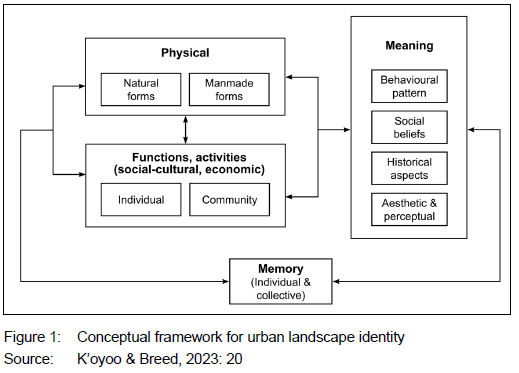
This study is motivated by the need to explore Kenya's legal framework governing land-use planning, with a specific focus on urban development and renewal projects. The article addresses the pressing challenges posed by existing land-use laws concerning urban landscape identity and memory, particularly in the context of ongoing development initiatives at both national and county levels. It aims to identify opportunities for integrating urban landscape identity and memory considerations into land-use planning for new developments and renewals. By examining current legislation, the review seeks to determine the extent to which aspects of urban landscape identity and associated memory are acknowledged, given their significant impact on urban environments. Urban landscape identity, as illustrated in Figure 1, refers to residents' perceptions of distinctive features that support their attachment to a place. This concept encompasses physical forms, functional activities, and sociocultural dimensions that collectively contribute to residents' memories (K'oyoo & Breed, 2024). In this study, urban memory is understood as a synthesis of individual and collective memories of residents (K'oyoo & Breed, 2024; Hmoud & Almodhafar, 2022; Aliyev et al., 2022).
The suggested opportunities within the challenges highlight the necessity to include aspects of urban landscape identity and memory within the reviewed laws that affect development and renewal through land-use spatial development plans. The findings of this review are important to policymakers and implementing authorities of new developments and renewals within urban realms that need compliance with various land-use laws and regulations.
2. METHODS AND REVIEW APPROACH
The review provides background on the Kenyan legislative framework that affects urban development and urban renewal through land laws and land-use planning laws. It discusses the provisions and points out the problems that occur in the legislations, making them ineffective. The review also covers relevant secondary data from already published journal articles that discuss how regulations impact on urban development. Qualitative research methods were employed for this study, primarily through the application of desktop research. Relevant materials used in this review were mainly from government repositories and official government websites. The main search for information on the status of the legislation that affects urban development and renewal in terms of land laws and land-use planning laws was carried out from June to July 2024 through the official websites of the Kenya Government. The official website was searched, using keywords such as "land laws", "land use", "land-use planning", "land-use planning laws", "planning law", "urban development", "urban renewal", and "Kenya". The provisions of each law and regulation was analysed for content in terms of inclusion of any aspects that affect and address urban identity, urban landscape identity, and associated urban memory.
First, the review shows Kenya's laws that directly affect land and land use in the built environment in terms of effects on spatial plans and development control, including laws directly affecting urban development and renewal at national and county levels in terms of spatial plans and approval of new developments. The Kenya Constitution 2010 has been reviewed because all the national and county government laws emanate from it as the supreme law of the land. The Kenya Vision 2030 has been included because it is a national policy that was passed to guide national development in the country until 2030. Other relevant laws are selectively reviewed for their direct impact on physical planning, particularly in relation to new developments and renewals. These laws guide and regulate the preparation and implementation of spatial development plans at both levels of government, as well as the control of new developments through specific provisions. At the county level, the selected laws facilitate private development by establishing the criteria for plan approvals that enable various land uses and zoning regulations. The review is confined to currently enforceable laws, including their amendments, and excludes any repealed legislation, focusing on the core content provisions of the laws examined.
In the discussion, urban land-use challenges are highlighted to stress the importance of effective land-use planning. It also highlights the challenges of existing laws and policies in addressing the inclusion and preservation of landscape identity and memory aspects. Finally, it suggests opportunities for the laws and policies that guide urban development and renewal to include and consider landscape identity and memory as important aspects of sustainability within the fast-changing urban realms.
3. KEY ISSUES
This section reviews the various Acts of Parliament that establish the regulatory framework governing urban development in Kenya at both national and county levels. The laws examined are applicable across all county governments and are mandated for implementation at both tiers of government. The review focuses specifically on the provisions of these laws and regulations that pertain to land development, highlighting their implications for urban planning and management.
3.1 The constitution of Kenya, 2010
The Constitution of Kenya 2010 serves as the supreme legal framework for the Government of Kenya (LOK, 2010), establishing a devolved system of governance that has resulted in the creation of 47 county governments. Chapter 11 delineates the establishment of devolved governments, mandating the existence of a county government for each respective county. In Chapter 5, which addresses land and environment, the Constitution articulates fundamental principles of land policy, stipulating that land in Kenya must be held, used, and managed in a manner that is equitable, efficient, productive, and sustainable. Section 61 classifies land into three categories: public, community, and private.
Chapter 5, Section 66 empowers the Government of Kenya to regulate land use and property rights, asserting that "the state may regulate the use of any land, or any interest in or right over land, in the interest of defense, public safety, public order, public morality, public health or land use planning". Section 68 mandates the formulation of legislation governing land, including the establishment of minimum and maximum landholding acreages for private land and the regulation of land categorisation in which any land may be converted from one category to another.
The fourth schedule, part II, mandates the county governments to plan, develop, and maintain the county roads in terms of lighting, traffic control, and provision of parking. National government is tasked with the construction and operation of roads designated as national trunk routes. Article 42 guarantees the right to a clean and healthy environment. Other legislative frameworks in Kenya derive their authority from the Constitution of Kenya 2010, highlighting its foundational role in the legal and regulatory landscape of the nation.
3.2 Kenya Vision 2030
Kenya Vision 2030 serves as the country's strategic development blueprint, spanning from 2008 to 2030, and is structured around three foundational pillars: economic, social, and political development (GoK, 2007). A critical component of this framework is the recognition of land as an essential resource for socio-economic advancement. Vision 2030 emphasises the importance of respecting property rights, whether public, private, or community-owned, as a key driver of rapid economic transformation. To facilitate this transformation, the completion of a national land-use policy is deemed urgent. In addition, the blueprint outlines significant infrastructure improvements, including the enhancement of road networks, railway systems, port facilities, airport infrastructure, as well as access to water and sanitation. It aims to ensure that housing and urbanisation are both adequate and sustainable, with a focus on increasing the annual production of housing units. The plan also calls for high-quality urban planning in cities and towns that currently face challenges due to inadequate planning (GoK, 2007).
Content analysis reveals that while this national policy document in Kenya addresses various aspects of planning and development, it notably omits considerations of landscape identity and urban memory.
3.3
The Land Act, 2012The Land Act of 2012 in Kenya defines 'development' as encompassing any building operations, engineering activities, agricultural practices, or mining operations conducted on, under, or over land, as well as any substantial change in land use (LOK, 2012b). Section 3 of the Act classifies land into three categories: public, private, and community. It further delineates land tenure types as freehold, leasehold, and customary land rights (Section 5). The Act assigns various responsibilities for land management and administration to the Cabinet Secretary (Section 6). Land title acquisition methods include allocation, land adjudication, compulsory acquisition, prescription, settlement programmes, transmissions, transfers, and long-term leases (Section 7).
Content analysis shows that, although this Act addresses development at county government level and national level, there is no inclusion of aspects of landscape identity and associated urban memory. These elements are frequently affected by new developments and urban renewal initiatives related to the infrastructure improvements outlined in the Act.
3.4
Urban Areas and Cities Act No. 13 of 2011, Urban Areas and Cities (Amendment) Act 2019The Urban Areas and Cities Act, No. 13 of 2011, along with its 2019 amendment, operationalises Article 184 of the Constitution of Kenya. This legislation provides the authority to classify, govern, and manage urban areas and cities, establishing a framework for their classification (Section 3). It outlines the criteria for defining urban areas, emphasising the principles of governance and resident participation. Key factors considered in designating an area as a city include the capacity to deliver essential services, which encompass urban planning and development control, economic development strategies, water and sanitation provision, street lighting, organised public transport, stormwater management, waste management, preservation of historical monuments, recreational parks, as well as information and communication technology services. An area can be classified as a city only if it possesses an integrated urban development plan that complies with the Act. Furthermore, Section 12 stipulates that the management of cities and municipalities is to be entrusted to the county government.
Act No. 13 of 2011 gives guidelines on the preparation of various plans that include environmental, economic, and land-use plans. The county governments are mandated to initiate, prepare, approve, and implement these plans. Part 37 states that a city or urban area integrated development plan shall be aligned to the development plans and strategies of the county governments (LOK, 2011).
Based on this review, this Act is important in controlling development within urban areas and cities. However, there is no inclusion of aspects of landscape identity and associated urban memory that are often impacted by new development and urban renewals that this Act affects in terms of infrastructure development.
3.5 Physical and Land Use Planning Act (2019)
The Act establishes a comprehensive framework for the planning, regulation, and development of land, serving as the national legal foundation for planning and development control. According to the Act, 'development control' refers to the process of managing and regulating activities related to land, including any construction or significant changes in the use of land or structures. This process ensures compliance with spatial development plans, as well as with policy guidelines, regulations, and standards issued by the planning authority, thereby promoting the purposeful utilisation of land for the public good. The Act facilitates the creation of physical development plans, which encompass both regional and local physical development plans aimed at supporting urban renewal and redevelopment initiatives.
Part II, Sections 21 and 22 of this Act delineate the procedures for the preparation of the National Physical and Land Use Development Plan. This plan is intended to establish strategic policies that will guide the overarching direction and trends of physical and sectoral development in Kenya, providing a framework for the utilisation and development of land. Section 37 mandates the creation of County Physical and Land Use Development Plans, which offer a comprehensive framework for land use and development at the county level. According to Section 45, a local physical and land-use development plan may address long-term and short-term development needs, as well as urba renewal or redevelopment initiatives.
Section 44 stipulates that county governments are required to prepare local physical and land-use development plans. These plans facilitate zoning, urban renewal, and other development projects, while guiding and coordinating infrastructure development and regulating land-use and land-development activities.
The Act also provides a framework to guide construction activities within urban areas. Subject to the provisions of this Act, along with the Urban Areas and Cities Act of 2011 and the County Governments Act of 2012, county governments possess the authority to operate within their jurisdictions. This framework ensures the effective execution and implementation of approved development plans for physical and land use.
This Act facilitates urban renewal initiatives aimed at addressing urban decay, particularly in central business districts and residential neighbourhoods, with the goal of providing affordable housing. The local physical development plans (LPDPs) within the context of urban renewal and redevelopment serve several key purposes: they establish a land-use framework that reflects an integrated renewal policy, guides both public and private redevelopment projects, and outlines a comprehensive road and traffic network. The design of these plans should enhance vehicular access, ensure adequate parking, and create safe separations between vehicles and pedestrians. The Second Schedule, Part C of this Act, details the required components of renewal and redevelopment plans, which include land-use pattern analysis, proposals, and local approvals.
3.5.1 Development control provisions in this Act
Part IV, Section 56 of this Act establishes a framework for development control mechanisms. The processes and procedures for development control encompass changes in land use, extensions of existing uses, lease extensions, subdivision schemes, amalgamation proposals, and the approval of building plans. In accordance with this Act, the Urban Areas and Cities Act (2011), and the County Governments Act (2012), county governments are empowered to:
a. Prohibit or control the use and development of land and buildings in the interests of proper and orderly development of its area;
b. Control or prohibit the subdivision of land;
c. Consider and approve all development applications and grant all development permissions;
d. Ensure the proper execution and implementation of approved physical and land-use development plans;
e. Formulate by-laws to regulate zoning in respect of use and density of development;
f. Reserve and maintain all the land planned for open spaces, parks, urban forests and green belts in accordance with the approved physical and land-use development plans, and
g. Consider and determine development planning applications made in respect of land adjoining or within reasonable vicinity of safeguarding areas.
This review highlights that the Act significantly influences various aspects of infrastructure development at both national and county levels in Kenya. However, it notably lacks provisions addressing landscape identity and urban memory, which are often affected by new developments and urban renewal projects within the context of infrastructure development.
3.6 Environment Management and Coordination Act 1999; (Amendment) 2015
This Act is designed to protect and conserve the environment and is enforced by the National Environment Management Authority of Kenya (NEMA), led by a Director General. It establishes guidelines for sustainable development that necessitate the incorporation of environmental conservation measures in development plans. The Act specifies various projects for which an environmental impact assessment (EIA) study report must be submitted. According to the Second Schedule of this Act, these projects include land-use changes, large resettlement programmes, urban developments, involving the establishment of new townships, industrial estates, housing developments exceeding 30 units, shopping centres, and various transportation projects.
The EIA process is mandated for all development projects, enabling the identification of potential environmental challenges and the formulation of recommended mitigation measures. Furthermore, the Act stipulates that comprehensive environmental audits must be conducted annually for completed projects, ensuring that adequate mitigation measures are implemented (LOK, 1999; LOK, 2015).
This review indicates that, while the Act addresses several environmental aspects, it notably omits considerations of landscape identity and urban memory -elements that are often significantly affected by new developments and urban renewal initiatives related to infrastructure development.
3.7 County Governments Act 2012
The County Governments Act of 2012 is a legislative framework that operationalises Chapter Eleven of the Kenyan Constitution. It delineates the powers, functions, and responsibilities of county governments, enabling them to effectively deliver services (LOK, 2012a). Part XI, Section 102 outlines the principles of planning and development pertinent to county governance. The primary objectives of county planning are to promote a balanced system of settlements and to ensure the preservation of viable open spaces. Section 107 specifies various planning instruments designed to harmonise, guide, and facilitate development, including the County Integrated Development Plan, County Sectoral Plans, County Spatial Plans, and Cities and Urban Areas Plans, as outlined in the Urban Areas and Cities Act. Furthermore, Section 111 mandates that each city or municipality develop comprehensive land-use and zoning plans. These municipal plans are required to articulate the functions and principles of land use, specify the locations of various types of infrastructure, and establish development control mechanisms within the respective jurisdictions.
Part V (37) (a-d) delineates the responsibilities of executive committees in urban areas regarding planning. Their roles encompass monitoring the planning process, assisting in the formulation, adoption, and review of plans, and coordinating integrated development plans with national government strategies.
The Act outlines several objectives for county government planning, including ensuring coherence among national, county, and sub-county spatial planning requirements; maintaining a viable system of green and open spaces, and harmonising the development of county communication systems, infrastructure, and related services. Notably, the significance of providing and managing green spaces in urban areas is emphasised. Part XI (104) (2) stipulates that the county planning framework must integrate economic, physical, social, environmental, and spatial considerations. These elements should be incorporated into County Integrated Development Plans.
The author contends that the preparation of these development plans should be informed by considerations of urban landscape identity and memory. However, this emphasis is currently lacking, despite ongoing development and renewal projects in Kenyan cities.
Content analysis indicates that, while the Act addresses various dimensions of planning and development at the county government level, it fails to incorporate considerations of landscape identity and urban memory. These aspects are often significantly affected by new development and urban renewal initiatives, which the Act addresses primarily in terms of infrastructure development.
4. DISCUSSION
4.1 Urban challenges and the importance of land use planning
The UN (2018) sustainable development goals (SDGs), specifically Goal 11, advocate for creating prosperity in urban areas without overexploiting land and resources. Targets 11.1 and 11.7 aim to ensure that, by 2030, all individuals have access to adequate, safe, and affordable housing and basic services, while also upgrading slums and enhancing access to safe, inclusive, and accessible green and public spaces. The economic growth and prosperity of cities are intrinsically linked to urban land use, particularly in terms of the provision and accessibility of essential infrastructure (Collier et al., 2020). According to Collier et al. (2020), effective land-use planning is crucial for coordinating and directing both private investments and governmental provision of public infrastructure. This planning enables city residents to access vital goods and services, including housing, public spaces, transportation, water, and sanitation, which are essential for a quality life. Furthermore, it plays a significant role in safeguarding natural resources and managing vulnerable land areas, both of which are critical for sustainable development (Muller & Munroe, 2014).
Inconsistent and poorly planned land-use changes can have detrimental economic and social consequences for communities (Behl & Kaur, 2024). The author of this paper highlights the often-overlooked aspects of landscape identity and memory, which tend to be neglected in many new development and renewal projects, extending beyond the negative social and economic impacts identified by Behl and Kaur (2024).
According to the Kisumu Integrated Sustainable Urban Development (ISUD) Plan Part 1 (AFD, 2013),1Kisumu City is the third-largest urban area in Kenya and serves as the administrative centre of Kisumu County, located 265km northwest of Nairobi. As a flagship city within Kenya's Vision 2030 initiative, Kisumu plays a significant role in the country's strategic national development framework. The Situational Analysis Report, prepared by the City of Kisumu under the Kisumu Urban Project (COK, KUP, 2019),2 highlights the constitutional and policy context that includes the Kenya Constitution (2010), Vision 2030, the National Spatial Plan, the County Spatial Plan, and the Kisumu ISUD Plan. The legal framework is comprised of several key legislations, including the Physical and Land-Use Planning Act (2019), the Urban Areas and Cities (Amendment) Act (2019), the County Government Act (2012), and the Environmental Management and Coordination Act (1999, amended 2015) (K'oyoo, 2023b). These statutes are essential for guiding the preparation of local physical development plans (LPDPs) for Kisumu City, as outlined in the KUP report (2019). The planning vision for the Kisumu Urban Project prioritises Vision 2030 as the overarching blueprint for developing and implementing strategic investment plans. The necessity to adhere to various laws and regulations prior to the initiation of infrastructure projects highlights the complexity of urban renewal in Kisumu City. Consequently, the city is required to formulate several spatial plans and ensure public participation in accordance with the Kisumu County Public Participation Act (2015) (COK, KUP, 2019).
4.2 The importance of urban landscape identity and memory in urban renewals and new developments
Kaymaz (2013) argues that rapid changes in urban environments, due to urbanisation and globalisation, have brought the concept of identity to the forefront of planning and design discussions, with a primary focus on sustainability. The author posits that sustainability should encompass not only natural resources, but also urban identity as a vital component of cultural heritage. This perspective is grounded in the understanding that urban identity is both flexible and subject to evolution amid the inevitable transformations occurring in many cities. Consequently, there is a pressing need to explore strategies for managing these changes and preserving urban identity in contemporary urban settings (Kaymaz, 2013).
According to Aliyev et al. (2022) and Belanger (2002), individuals develop their memories of a city based on their experiences with specific places, which are influenced by the prevailing social and historical contexts. These authors, supported by Antesevic (2013), further assert that urban renewal initiatives and new development projects can disrupt communal memory, highlighting the necessity of preserving urban memory amidst rapidly changing urban landscapes. Antesevic (2013) posits that every city, even its smallest components such as streets and squares, possesses unique memories and meanings that distinguish it from other urban areas.
Behl and Kaur (2024) investigated the impact of land-use changes on place identity, with specific focus on perceptions of aesthetic value. Their study examined the transformation of a public space, highlighting how changes in purpose and function can alter place identity. The authors found that these transformations influence place identity through shifts in user activities and accessibility.
Othman et al. (2013) identify three components that shape an individual's memory and perception of his/her environment: the role of events, historical context, and the remembrance of monuments. These authors support the significance of integrating memory considerations into place-making efforts within urban environments.
Ramos et al. (2016) advocate for a cohesive definition of landscape identity and its associated components. Their research examines how a deeper understanding of landscape identity can inform policymaking. They argue for the integration of landscape identity into planning policies at various levels of governance, both national and regional. They raise questions about how to identify the elements of landscape identity and the extent of change necessary to influence it. The European Landscape Convention, established by the Council of Europe (2000), emphasises the need to incorporate the concept of landscape into existing policy frameworks. Current policy decisions have simultaneously accelerated landscape transformation and promoted the conservation of its heritage value (CoE, 2000). Hmoud and Almodhafar (2022) explore urban memory in a historically significant square in Baghdad, Iraq, which has undergone considerable transformations, due to urban renewal and development policies. Their findings reveal that changes in the square have altered the meanings associated with collective memories among residents, leading to a dilution of social identity. The study shows the importance residents attribute to this public space, as evidenced by their recontextualisation of urban memories through an analysis of place, history, events, user activities, and individual values (Hmoud & Almodhafar, 2022).
K'oyoo and Breed (2023) established a significant connection between the urban landscape identity and the perceptions of residents in Kisumu City, Kenya, particularly in relation to their contextual environment. Conducted in the context of urban renewal projects, which upgraded various aspects of urban infrastructure between 2019 and 2022, the study highlighted that Lake Victoria is perceived as the most influential and aesthetically significant feature of Kisumu, embodying a symbolic element that evokes both individual and collective memories among residents. The research also identified built and human-made features that have played a crucial role in shaping these memories over time. This study contributes substantially to understanding the factors that constitute Kisumu's urban landscape identity, particularly in light of ongoing and completed urban renewal efforts. Furthermore, it revealed that existing legal frameworks governing urban development and renewal in Kenya, at both national and county levels, often overlook critical aspects of landscape identity and associated memory, a point further supported by findings in K'oyoo (2024).
4.3 Opportunities for inclusion of urban landscape identity and memory in laws and policies
Cheshmehzangi (2021) posits that, as cities undergo transitional phases encompassing growth, development, and decline, it is essential to integrate the concept of urban memory into place-making strategies and decision-making processes. The author asserts that urban memory plays a pivotal role in shaping the future of humanistic urbanism. Kaymaz (2013) argues that the most detrimental impacts on the urban identity of Turkish cities have been determined and executed by governmental organisations and local municipalities through urban renewal and transformation initiatives.
Asur et al. (2022) emphasise that cities serve not only as physical spaces where communal memories are constructed, but also as loci of past events and experiences. Mosler (2019), supported by Asur et al. (2022), contends that there is a profound relationship among urban landscapes, the urban memories forged through shared experiences, and urban identity. Kaymaz (2013) further supports the necessity of developing plans and policies that respond to the changes affecting urban identity and memory, driven by processes of urbanisation and globalisation.
This study's review reveals that, while numerous investigations have recognised the significance of urban landscape identity and memory within urban contexts, few emphasise the imperative for these aspects to be incorporated into the laws and policies governing new developments and urban renewal in jurisdictions affected by rapidly changing urban environments.
Urban development and renewal significantly alter urban environments, influencing both the landscape identity and the collective memories of residents. Antesevic (2013) argues that a city's memory encapsulates numerous meanings integral to its identity, and that ongoing transformations can compromise this memory, thereby distorting the city's identity over time. In K'oyoo's (2023a) study utilising photo elicitation interviews (PEI), a substantial majority of participants reported that recent upgrades had imparted a new image and landscape identity to Kisumu City. Respondents noted improvements in the aesthetics and safety of the streets, attributing varying significance to features such as Lake Victoria, the central square, public green spaces in the central business district (CBD), and various public buildings. These elements were identified as key physical, sociocultural, and symbolic components contributing to Kisumu City's evolving urban landscape identity. The findings highlighted significant gaps in landscape identity and memory within the legislative frameworks that guided the spatial planning processes underlying these renewal projects, which have notably impacted on urban spaces and landmarks, including the Clock Tower (K'oyoo, 2023a).
K'oyoo (2024) emphasises the importance of integrating landscape identity into legislative frameworks and public participation processes guiding urban renewal and development in Kisumu. The study advocates for amendments to current planning regulations to better preserve landscape identity, citing specific examples such as the Clock Tower. Recommendations include formally recognising the Clock Tower as a significant element of Kisumu's landscape identity, raising public awareness about its historical context, and enacting bylaws to protect it as a landmark amid urban changes. Similarly, Lake Victoria is identified as a vital natural asset contributing to the city's urban landscape identity. K'oyoo highlights the need to acknowledge the lake's symbolic significance and the collective memories it evokes among local residents. Policies should facilitate improved connectivity between Lake Victoria and the surrounding green spaces, such as Kisumu Impala Park Sanctuary and Dunga Beach, to enhance tourism and promote recreational use. The study also suggests implementing financial incentives through public-private partnerships (PPP) for effective conservation of the lake's shoreline and wetlands, establishing community forums for conservation awareness, and ensuring regular clean-up initiatives. Moreover, the proposed lakefront development should be implemented because it aims to maximise the utilisation of Lake Victoria as a natural resource, while also recommending capacity-building for local governments to promote and monitor urban landscape identity across various built forms, including streets, parks, and historic sites (K'oyoo, 2024).
5. CONCLUSION
From the review, it is evident that Kenyan laws that regulate and guide land-use planning in new developments and renewals do not include aspects of urban landscape identity and associated memory that are often affected. The author recommends that the regulatory framework, in terms of policies and Acts of parliament, should clearly state the inclusion and consideration of urban landscape identity and memory when planning and implementing new development and renewal projects.
6. FUTURE DIRECTIONS
Numerous scholars have highlighted the significant roles of urban landscape identity and collective memory in the place-making processes within urban environments (K'oyoo, 2023a; K'oyoo & Breed, 2023; Seidl et al., 2021; Asur, 2022; Hmoud & Almodhafar, 2022; Cheshmehzangi, 2021; Aliyev et al., 2022; Antesevic, 2013; Kaymaz, 2013; Othman et al., 2013; Belanger, 2002). However, K'oyoo (2024), Ramos et al. (2016), and Kaymaz (2013) emphasised that there is a pressing need to incorporate these critical elements into the legal frameworks and policies governing new development projects and urban renewal initiatives across various jurisdictions. There is a notable gap in the literature regarding the legislative and policy documents that specifically address the integration of landscape identity and memory in shaping guidelines for new developments and urban revitalisations. At the time of this study, relatively few researchers had explored the imperative of embedding urban landscape identity and memory within the legal and policy frameworks that govern these processes. Consequently, this review advocates for a revision of Kenyan land-use planning laws to incorporate landscape identity and memory as essential components that inform development decisions, thereby promoting sustainable urbanism from the residents' perspective.
The author suggests that policymakers should consider the integration of urban landscape identity and memory into the legislation that informs the preparation of development plans at both national and county levels. Key statutes in the Kenyan context that should be revised to include these elements are the Urban Areas and Cities (Amendment) Act 2019 and the Physical and Land-Use Planning Act (2019) at the national level, as well as the County Spatial Plans and Local Physical Development Plans (LPDPs) that govern renewal and development at the county level. Incorporating these aspects into land-use planning legislation is essential for sustaining urban identity and memory, particularly in the face of rapid urban transformations. This approach should be considered in other jurisdictions undergoing similar urban changes.
The author proposes several recommendations aimed at preserving and enhancing landscape identity and memory:
• Establishing a unified operational definition: There is a pressing need for a common operational definition of landscape identity and memory that can be applied consistently across various national and regional contexts. This should be coupled with educational initiatives to raise public awareness about the significance of safeguarding and reinforcing landscape identity and memory in the pursuit of sustainable urbanism.
• Promoting public participation: Engaging the public in the identification of key landscape elements within urban areas is essential. This participatory approach will help recognise and preserve those elements that contribute to the urban landscape's identity and hold collective memory.
• Incorporating landscape identity and memory into legislation: It is crucial to integrate considerations of urban landscape identity and memory into relevant laws governing urban development and renewal. This will help ensure that new developments are aligned with principles of sustainable urbanism and contribute positively to the preservation of landscape identity.
REFERENCES
-
ABOELNAGA, S., TOTH, T. & NESZMELYI, G.I. 2019. Land use management along urban development axis as one of urban regeneration principles. Engineering for Rural Development, 22(24), pp. 944-953. https://doi.org/10.22616/ERDev2019.18.N382
» https://doi.org/10.22616/ERDev2019.18.N382 - AFD (Agence Française de Dévelopement). 2013. Kisumu: ISUD Plan: Part 1. Integrated Strategic Urban Development Plan: Understanding Kisumu. Kisumu: AFD.
-
ALIYEV, T., LEPAGE, A.L. & HUSEYNOV, E. 2022. Urban memory and heritage: The issue of city heritage in the reconstruction of the centre of Baku. International Scientific Journal of Urban Planning and Sustainable Development, 27, pp. 1-12. https://doi.org/10.58225/urbanizm.2022-27-1-12
» https://doi.org/10.58225/urbanizm.2022-27-1-12 - ANTESEVIC, N. 2013. The city memory as a reflection of its identity. The city's role in contemporary society. In: Proceedings of International Scientific Conference, Balcan Architectural Bienale, 26-27 May, pp. 123-138.
-
ARIBIGBOLA, A. 2008. Improving urban land use planning and management in Nigeria: The case of Akure. Cercetàri practice si teoretice în Managementul Urban, 3(9), pp. 1-14. [Online]. Available at: <https://www.jstororg/stable/10.2307/24865913> [Accessed: 24 August 2024].
» https://www.jstororg/stable/10.2307/24865913 -
ASUR, F., KULEKCI, E.A. & PERIHAN, M. 2022. The role of urban landscapes in the formation of urban identity and urban memory relations: The case of Van/Turkey. Planning Perspectives, 37(4), pp. 841-857. https://doi.org/10.1080/02665433.2022.2090418
» https://doi.org/10.1080/02665433.2022.2090418 -
BEHL, S. & KAUR, P. 2024. Exploring the influence of change of land use on place identity. In: Proceedings of the 2nd International Conference on Trends in Architecture and Construction, ICTAC-2024, 9 April, Chandigarh, India. https://doi:.org/10.1007/978-981-97-4988-1_17
» https://doi:.org/10.1007/978-981-97-4988-1_17 - BELANGER, A. 2002. Urban space and collective memory: Analysing the various dimensions of the production of memory. Canadian Journal of Urban Research, 11(1), pp. 69-92.
-
CHAO, J.C. & HSU, K.W. 2018. The impact of Taiwan's urban-renewal policies, laws and decrees on urban redevelopment and urban disaster prevention. IOP Conference Series: Earth and Environmental Science 164, pp. 1-8. https://doi.org/10.1088/1755-1315/164/1/012034
» https://doi.org/10.1088/1755-1315/164/1/012034 -
CHESHMEHZANGI, A. 2021. Urban memory in city transitions: The significance of place in mind. Switzerland: Springer. https://doi.org/10.1007/978-981-16-1003-5
» https://doi.org/10.1007/978-981-16-1003-5 - COK, KUP (CITY OF KISUMU, KISUMU URBAN PROJECT). 2019. Situational Analysis Report. Preparation of Local Physical Development Plans for Kisumu City.
-
CoE (COUNCIL OF EUROPE). 2000. European Landscape Convention and Explanatory Report. Document by the Secretary General established by the General Directorate of Education, Culture, Sport and Youth, and Environment. [Online]. Available at: <http://www.coe.int/t/dg4/cultureheritage/Conventions/Landscape/default.en.asp> [Accessed: 24 August 2024].
» http://www.coe.int/t/dg4/cultureheritage/Conventions/Landscape/default.en.asp - COLLIER, P., GLAESER, E., VENABLES, A. & MANWARING, P. 2020. Urban land use planning as an enabler of economic growth. IGC Cities that Work Policy Framing Paper.
-
GOK (GOVERNMENT OF THE REPUBLIC OF KENYA). 2007. Kenya Vision 2030. [Online]. Available at: https://vision2030.go.ke [Accessed: 2 August 2024].
» https://vision2030.go.ke -
HMOUD, S.M. & ALMODHAFAR, S.S. 2022. Recasting the urban memory of Al-Tahir Square, Baghdad, Iraq. Alam Cipta, 15(2), pp. 12-23. https://doi.org/10.47836/AC.15.2.PAPER02
» https://doi.org/10.47836/AC.15.2.PAPER02 -
KAYMAZ, I. 2013. Urban landscapes and identity. In: Özyavuz, M. (Ed.). Advances in landscape architecture. Rijeka, Croatia: InTechOpen, pp. 739-760. https://doi.org/10.5772/55754
» https://doi.org/10.5772/55754 -
K'OYOO, E.O. 2023a. Use of photo-elicitation interviews to explore urban landscape identity in the context of urban renewal changes, a case of Kisumu City, Kenya. Acta Structilia, 30(2), pp. 35-60. https://doi.org/10.38140/as.v30i2.7477
» https://doi.org/10.38140/as.v30i2.7477 -
K'OYOO, E.O. 2023b. Impact of urban renewal changes on urban landscape identity: Case study of Kisumu City, Kenya. Acta Structilia, 30(1), pp. 156-185. https://doi.org/10.38140/as.v30i1.7036
» https://doi.org/10.38140/as.v30i1.7036 -
K'OYOO, E.O. 2024. Strategies for promoting and preserving urban landscape identity through public participation amidst urban renewal changes: The case of Kisumu City, Kenya. Town and Regional Planning, 84, pp. 29-47. https://doi.org/10.38140/trp.v84i.7855
» https://doi.org/10.38140/trp.v84i.7855 -
K'OYOO, E.O. & BREED, C.A. 2023. Capturing landscape identity in the context of urban renewal: The case of Kisumu City, Kenya. Town and Regional Planning, 83, pp. 18-32. https://doi.org/10.38140/trp.v83i.7469
» https://doi.org/10.38140/trp.v83i.7469 -
K'OYOO, E.O. & BREED, C.A. 2024. Urban memory and identity weighed against economic investment in urban renewal projects: A case of Kisumu City, Kenya. Acta Structilia, 31(1), pp. 84-119. https://doi.org/10.38140/as.v31i1.7930
» https://doi.org/10.38140/as.v31i1.7930 -
LOK (LAWS OF KENYA).1999. Environmental Management and Coordination Act, 8 of 1999. [Online]. Available at: www.kenyalaw.org [14 August 2024].
» www.kenyalaw.org -
LOK (LAWS OF KENYA). 2010. The Constitution of Kenya. [Online]. Available at: www.kenyalaw.org [14 August 2024].
» www.kenyalaw.org -
LOK (LAWS OF KENYA). 2011. The Urban Areas and Cities, Act 13 of 2011. [Online]. Available at: www.kenyalaw.org [14 August 2024].
» www.kenyalaw.org -
LOK (LAWS OF KENYA). 2012a. The County Governments Act No. 17 of 2012. [Online]. Available at: www.kenyalaw.org [14 August 2024].
» www.kenyalaw.org -
LOK (LAWS OF KENYA). 2012b. The Land Act, 2012, No. 6 of 2012. [Online]. Available at: www.kenyalaw.org [14 August 2024].
» www.kenyalaw.org -
LOK (LAWS OF KENYA). 2013. The Physical and Land Use Planning Act No. 13 of 2013. [Online]. Available at: www.kenyalaw.org [16 August 2024].
» www.kenyalaw.org -
LOK (LAWS OF KENYA). 2015. The Environment Management and Coordination (Amendment) Act, No. 5 of 2015. [Online]. Available at: www.kenyalaw.org [14 August 2024].
» www.kenyalaw.org -
LOK (LAWS OF KENYA). 2019. The Urban Areas and Cities, 2012 (Amendment) no. 3 of 2019. [Online]. Available at: www.kenyalaw.org [14 August 2024].
» www.kenyalaw.org -
MANGI, M.Y., CHANDIO, I.A., TALPUR, M.H. & SHAIKH, F.A. 2017. Urban land use planning trend and sustainable challenges in socio-economic development. Mehran University Research Journal of Engineering & Technology, 37(2), pp. 397-404. https://doi.org/10.22581/muet1982.1802.15
» https://doi.org/10.22581/muet1982.1802.15 -
MOSLER, S. 2019. Everyday heritage concept as an approach to place-making process in the urban landscape. Journal of Urban Design, 24(5), pp. 778-793. https://doi.org/10.1080/13574809.2019.1568187
» https://doi.org/10.1080/13574809.2019.1568187 -
MÜLLER, D. & MUNROE, D.K. 2014. Current and future challenges in land-use science. Journal of Land Use Science, 9(2), pp. 133-142. https://doi.org/10.1080/1747423X.2014.883731
» https://doi.org/10.1080/1747423X.2014.883731 - NZAKAMWITA, J.M.V. & TUYISHIME, S. 2022. Impact of urban growth on land management in Rwanda. East African Journal of Science and Technology, 12(1), pp. 139-149.
- OKESLI, D.S. & GURCINAR, Y. 2012. An Investigation of urban image and identity findings from Adana. Çukurova Üniversitesi Sosyal Bilimler Enstitüsü Dergisi, 21(1), pp. 37-52.
-
OTHMAN, S., NISHIMURA, Y. & KUBOTA, A. 2013. Memory association in place making: A review. Procedia -Social and Behavioral Sciences, 85, pp. 554-563. https://doi.org/10.1016/j.sbspro.2013.08.384
» https://doi.org/10.1016/j.sbspro.2013.08.384 - OWEI, O.B., OBINNA, V.C. & EDE, P.N. 2010. The challenges of sustainable land use planning in Nigerian cities: The case of Port Harcourt. 46th ISOCARP Congress, Nairobi, Kenya, 19-23 September, pp. 1-10.
-
RAMOS, I.L., BERNADO, F., RIBEIRO, S.C. & EETVELDE, E.E. 2016. Landscape identity: Implications for policymaking. Land Use Policy 53, pp. 36-43. https://doi.org/10.1016/j.landusepol.2015.01.030
» https://doi.org/10.1016/j.landusepol.2015.01.030 -
SEIDL, N.P., HRIBAR, M.S., HUDOKLIN, J., PIPAN, T. & GOLOBIC, M. 2021. Defining landscapes and their importance for national identity - A case study from Slovenia. Sustainability, 13, article 6475. https://doi.org/10.3390/su13116475
» https://doi.org/10.3390/su13116475 -
SHAO, Y., LANGE, E., THWAITES, K., XUE, Z. & XU, X. 2020. Understanding landscape identity in the context of rapid urban change in China. Land, 9(298), pp. 1-18. https://doi.org/10.3390/land9090298
» https://doi.org/10.3390/land9090298 -
UJANG, N. 2012. Place attachment and continuity of urban place identity. Procedia - Social and Behavioral Sciences, 49, pp. 156-167. https://doi.org/10.1016/j.sbspro.2012.07.014
» https://doi.org/10.1016/j.sbspro.2012.07.014 -
UNITED NATIONS. 2018. Sustainable development goals. [Online]. Available at: <www.un.org/sustainabledevelopment> [Accessed: 16 August 2024].
» www.un.org/sustainabledevelopment
Peer reviewed and revised: October 2024
Published: December 2024
1 This source is not available online but can be requested from the author.
2 This source is not available online but can be requested from the author.