Modelling resilience to extreme climate events: A household-based study of flood disaster in Nigeria
Abstract
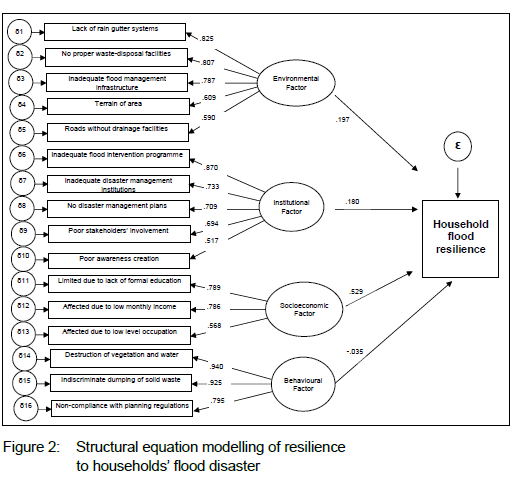
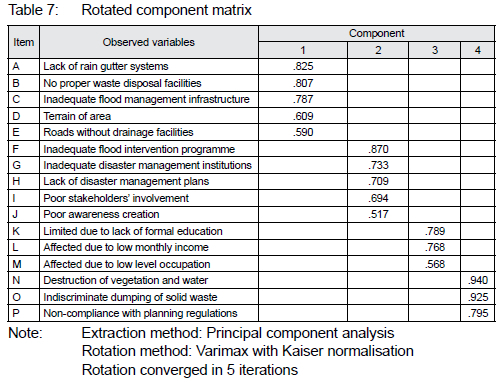
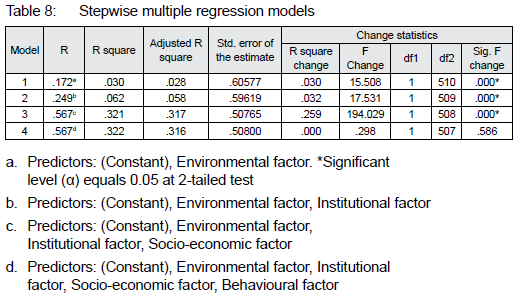
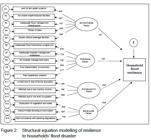
This article examines the relationship between households' flood resilience and predictors of their resilience in Nigeria, with a view to improving their flood risk management capacities. This study utilises a quantitative research design whereby a cross-sectional survey method is used to randomly select 512 households for questionnaire administration through a multistage sampling procedure. Data was analysed using Structural Equation Modelling (SEM). The study shows that environmental (β1 = 0.197, p < 0.05), institutional (β2 = 0.180, p < 0.05), and socio-economic (β3 = 0.529, p < 0.05) factors have statistically significant positive effects on household flood resilience, while the behavioural (β4 = -0.035, p < 0.05) factor has a negative effect. The highest predictor of households' resilience to flood disaster is the socio-economic factor. The implication is that low socio-economic status indicates a high level of poverty that worsens households' flood resilience. This suggests that the poor do not have the needed economic resources and social nets to prevent, adapt to, and/or transform from the impact of flood disaster.
Climate adaptation; flood adaptation; flood resilience; socio-economic resilience; natural disaster
 Thumbnail
 Thumbnail