Land management and real estate dynamics for urban growth in Nigeria: Towards a conceptual framework
Abstract
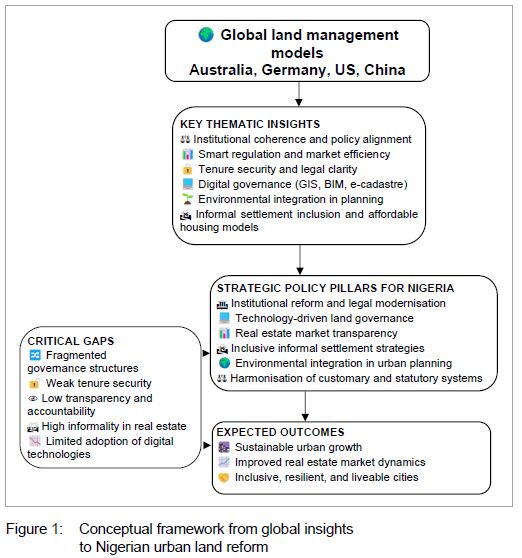
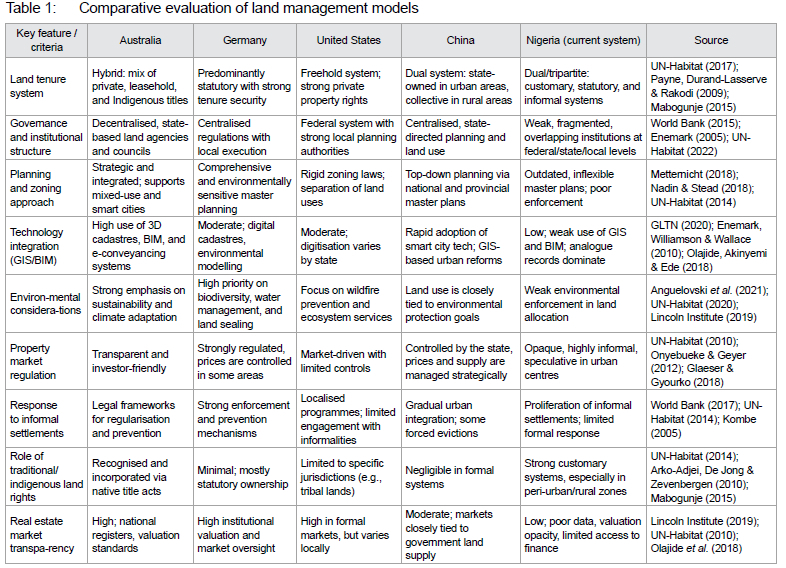
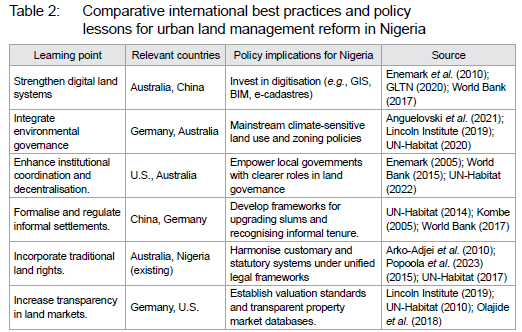
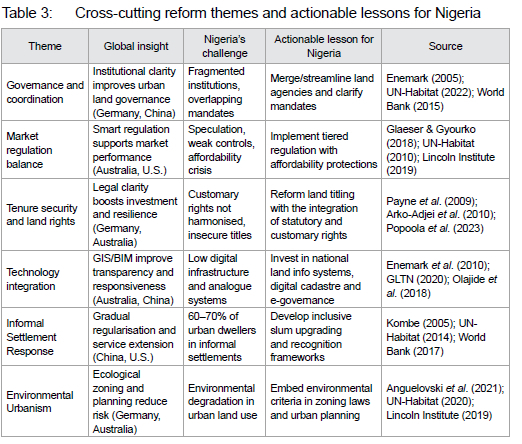
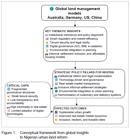
Rapid urbanisation in Nigeria has exposed significant weaknesses in land-management and real estate systems, including fragmented institutions, insecure land rights, limited technology use, and weak legal enforcement. These issues contribute to volatile property markets, rising informality, and unsustainable urban growth. Despite these challenges, efforts to adapt international best practices to Nigeria remain minimal. This study addresses the research gap, by examining land management models in Australia, Germany, the United States, and China to identify lessons for Nigeria. Using a comparative qualitative approach, the research integrates evidence from 28 peer-reviewed articles, policy documents, and international reports through systematic review and thematic analysis. Guided by the Land Governance Framework, Institutional Economics, and Urban Growth theories, the findings reveal consistent patterns in governance structures, tenure systems, technology integration, and environmental considerations. Three critical pillars for effective land governance emerge, namely secure and efficient tenure regimes, digitised land administration, and environmentally sensitive planning. These elements strengthen property markets, improve housing affordability, and enhance urban resilience. The article proposes a Nigeria-specific policy roadmap emphasising institutional reform, digital transformation, and inclusive strategies for informal settlements to promote sustainable land governance.
Urban governance; land administration systems; informal settlements; tenure security; comparative urban policy
 Thumbnail