Exploring some of the complexities of planning on 'communal land' in the former Transkei
Abstract
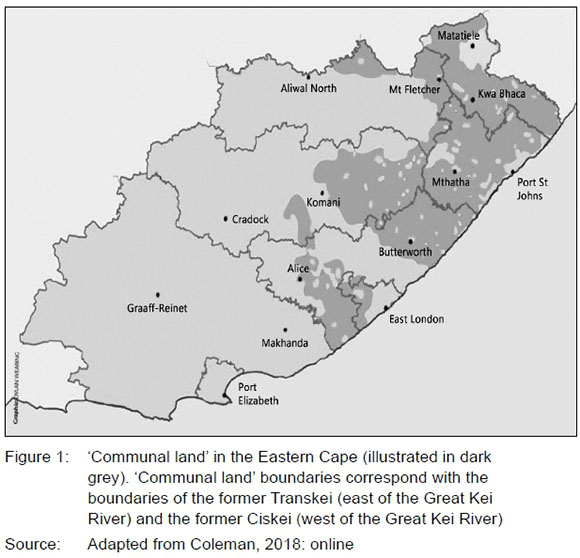
'The land question' in South African national politics continues to dominate party-political battles. However, most of these battles refrain from engaging with 'communal' landholdings that are under the custodianship of traditional leaders. Of further concern, the legislation not only remains ambiguous about traditional leaders' land administration functions and powers, but it is also conceptualised within Western frameworks. Ambiguity and Western centricity, in turn, hinder planning efforts and municipal service delivery in South Africa's rural regions, while residents continue to live without tenure security and enhanced socio-economic prospects. By focusing on 'communal land', this article revisits African indigenous land laws, in order to gain a deeper understanding of contemporary tenure practices on 'communal' landholdings. The article identifies some of the planning complexities found in former Transkei. Possible recommendations include following an area-based approach to planning where community property associations (or similar structures) are explored with residents of some 'communal' landholdings, while traditional leadership structures are explored in other contexts. All role players should thus have equal decision-making powers over local land administration and development.
Communal land'; traditional leaders; rural planning; tenure insecurity
 Thumbnail
 Thumbnail