Cultural challenges of young black widows in Mangaung in the Free State, South Africa
Abstract
Young black widows in Mangaung, in the Free State Province of South Africa, experience particular cultural challenges once their partners pass away. The aim of this article was to explore and describe these cultural challenges and identify strategies for the empowerment of widows within their communities. Utilising a qualitative approach, 16 widows (ages 24-40) were sampled using both purposive and snowball sampling. Focus groups, individual in-depth interviews and workshops within a participant action research design were employed for data collection. A thematic data analysis was performed. The credibility of the findings was enhanced by triangulating the data. The Ethics Committee of the University (HS 17/5/1) approved the study and all ethics considerations were taken into account. The main theme of the article highlights how young widows experienced marginalisation and isolation, which included being blamed for the death of their husbands, stigmatisation from the community and financial vulnerability. The second theme describes how participants identified support groups, counselling and community education as empowerment strategies to deal with patriarchal cultural practices. It is recommended that social workers and non-governmental organisations engage with the government to address the discrimination that young black widows face.
cultural practices; empowerment; participatory action research (PAR); young black widows
INTRODUCTION
There is minimal research on the experiences of young black widows (YBWs) in Africa and specifically South Africa. However, a recent study by Shoko and Matlabe-Danke (2024) highlighted the myriad of challenges that young widows face in South Africa on the death of their partners. A young widow is defined as a woman who has lost her husband through death and has not married again. Widows in Africa are faced with discrimination and unjust treatment (Amoo et al., 2022, p5). This article has been drawn from a doctoral thesis that aimed to reflect on challenging widowhood experiences of YBWs in Mangaung in the Free State province of South Africa. The article also aims to identify strategies to ensure that YBWs are empowered to deal with the aftermath of being widowed. Changes of policy are also flagged to ensure that YBWs are not discriminated against.
BACKGROUND
Most of the research on widows focuses on widows in general and does not identify young widows as a particular concern (Yang & Gu, 2021). However, Shoko and Matlabe-Danke (2024) have further identified that there are about 259 million widows in the world, with a significant number being young widows. Also, 16% of adult women in South Africa become widows at a younger age, which implies that they may need greater protection for their human rights than an elderly widow, since they are more likely to be abused, neglected and socially excluded, particularly by their in-laws (Shoko & Matlabe-Danke, 2024). Younger widows (in the study, aged between 24 and 40 years) are in their reproductive age, starting their lives and some become single parents while going through the mourning process. It also means the loss of a companion and, occasionally, his income, a lower social standing and a reduced way of life. All widows are expected to grieve for twelve months. The rights to equality, dignity, privacy, freedom of movement and religion tend to be negated while going through the mourning rituals of ukuzila known as ho ila in SeSotho, wearing black or navy for twelve or six months, according to the family practice, isolation and no relationship with another man during that period until cleansed. Khosa-Nkatini et al. (2020) notes that young black widows are also not allowed to attend religious services and are isolated from support. This is also the case for older widows. Importantly, the older widows do not have the burden of tending to their children but are constrained by the isolation process from accessing help and support.
Rituals are meant to prevent further bad luck for the young and older widows and avoid being accused in the community of causing bad luck by limiting her movement until she completes the mourning period (Mabunda & Ross, 2023). Platzer (2018) points out that widows whose children have died have been suspected of using witchcraft to kill their husbands and children. This applies even for a bad harvest because of drought or any misfortune which is sometimes blamed on both young and older widows. This is one reason that the mourning rituals include isolating the widows to protect them from such accusations. Ramphele (1996) further indicates that even in the case of the widows of the deceased politicians there is added pressure on the widow in that she is not allowed the space to grieve properly. The widow is expected to represent the deceased in the political sphere and is controlled to align with the plans of that political party. This adds more pressure to the grieving widow who must accommodate the politics of her late husband while grieving.
According to the Statistics South Africa, census 2022 revealed that the highest number of widowed people was found in Free State at 6.1%, followed by Eastern Cape at 5.8% (Statistics South Africa, 2022). Mabunda and Ross (2023) noted that, even though widows in the study were aware of the violation of their rights, they still participated in the ukuzila mourning ritual and felt obliged to follow the ritual in order to please the ancestors. The study by Motsoeneng and Modise (2020) in South Africa established that widows are regarded as a social burden on the extended family; they experience social isolation, lack of support from in-laws and face humiliating cultural stereotypes.
According to Moore and Himonga (2018), customary law in South Africa is based on social practices that the community accepts as obligatory. Recent developments in customary law by the Constitutional Court and the legislature include the abolition of the male primogeniture rule, removing all forms of discrimination against women. The primogeniture rule excluded widows from inheriting from their husbands and the abolition of the rule meant that widows could now inherit from their late husbands. Even though there is reform in terms of the law, the challenge is that it is not implemented in practice. Some widows have inherited from their deceased spouses, but there are still cases where widows and daughters are denied what is due to them. The families denying widows their inheritance claim that the house was inherited from parents and therefore is a family home that cannot be inherited by the widow. Although the Bill of Rights of the South African Constitution stipulates that all persons are equal before the law, the African patriarchal system regards women as inferior and tends to differentiate between widowed men and women (e.g. in the way they are expected to dress and conduct themselves) (Mabunda & Ross, 2023).
The literature review will identify the literature on widowhood internationally and in Africa before focusing on South Africa. As stated earlier, there is a limited amount of literature on YBWs in particular.
Global cultural challenges and experiences of widows
There are a number of cultural challenges identified in the literature. Fasanmi and Ayivor (2021) state that widowhood is actually an intersection of cultural marginalisation, where gender discrimination and economic exclusion converge, having an oppressive impact and disadvantaging the widows. According to Priyadarshini and Pande (2021), in India widowhood is a concept driven by patriarchy, which entails marginalising the widow who assumes her identity through a male figure, a father, brother or husband. In India widows occupy the lowest position in the society, isolated for losing a husband as that is regarded as bad luck. In losing these social ties and support, widows long for support from other widows, who understand what they are going through to affirm that they are not alone.
A second cultural challenge is the impact of young widowhood on mental health. Social support from their family, friends and community as early as possible is recommended by the widows who participated in the study to prevent depression. Eftoda (2021) argue that young widows experience loss and grief after the death of their spouses, and if this is not managed properly it can lead to mental health issues. A lack of support for young widows is found to be contributing to mental illnesses, as identified in the study of young widows in South Korea by Kim and Kim (2016). The study further emphasised that depression is one of the most common mental illnesses among widows immediately after the death of their husbands.
The third cultural challenge is the stigma that most widows, especially young widows, experience. This also makes it difficult for widows to access help and get support. According to Dube (2022.p2), research in Zimbabwe has found that even though widows may be in different geographical areas and settings, the experience of social isolation or stigma is severe as widows are regarded as "socially dead", a term used to describe the extremes of loss of social ties and networks as well as shame over the status of widowhood. The isolation takes different forms, such as social isolation, where the widow is left disengaged in social interactions and excluded from village events because of stigma, almost regarded as "non-existent". The widow is believed to be carrying the spirit of the dead, hence is isolated by family and friends or community (Dube, 2022).
Another cultural challenge is the rituals that are enforced on the widows. The study of Ghanaian widows by Doris (2018) revealed that widows go through painful rituals that leave them sick, emotionally drained and isolated, while their human rights are violated in the process. The human rights of widows, like right to dignity and privacy, are disregarded and the focus is just on widowhood rituals that are oppressive to the widows. In rural Guinea Bissau (Davidson, 2020) a widow even loses her home and land. After the death of the spouse, as part of the cultural practices the family house is destroyed after a year as it is believed to belong to the man as head of the family and hence his assets, including land, are shared amongst his family. The widow has to find land to build a new home single-handedly without support from in-laws or community members (Davidson, 2020). As stated by Shoko and Matlabe-Danke (2024) many countries deny widows the ability to inherit or claim land and compel them to submit to rituals that can be abusive.
In the Eastern Cape province of South Africa, the mourning process according to amaXhosa rituals include a widow sitting behind the door in her home and being excluded from the people and community on the announcement of the death of the husband. During the mourning practices, widows can be isolated with limited movement, making it difficult for them to look for jobs or get support from other people, which may leave them more vulnerable. Shoko and Matlabe-Danke (2024) state that these practices can lead to marginalisation, ostracism, subordination and oppression.
Another impact of rituals is how the way that they impact on a widow's human rights. The process of widowhood rituals in South Africa tends to undermine the human rights of black South African women as widows, since it infringes on their rights to dignity and equality (Mabunda & Ross, 2023). In a policy statement from the Commission for Gender Equality in South Africa, Magudu and Mohlakoana-Matopi (2013) reported on an investigation into effects of widowhood on women from all nine provinces of South Africa; they are of the opinion that, in some rural communities of South Africa, a drop in social status has implications for women's livelihood, economic status and quality of life. The majority of the widows in the study were accused of witchcraft that led to the killing of their husbands.
The final cultural challenge is financial, as young widows can be left with crippling debts and may have to seek employment while managing children. Shoko and Matlabe-Danke (2024) interviewed five widows in their study in South Africa. One of the participants spoke of financial concerns after the passing of her spouse:
I received his pension. However, because the brother is a beneficiary, I haven't been able to access his policy money until now. He claims he cannot be in the same room as me ... I am having trouble paying a sizable bill for water and municipal rates that I received, since the policy money is not being released (Shoko & Matlabe-Danke, 2024, p 3).
These are some of the frustrations experienced by widows. The next section outlines the theoretical framework that guided the study.
THEORETICAL FRAMEWORKAccording to Thompson et al. (2017), feminism as a political movement aims to rectify gender inequalities, although strategies for social change vary enormously. However, feminism in Africa needs to be reinvented as feminists are not united yet. It can be noted that African feminism has failed to achieve a gender consensus as a result of the different views on feminism. In the 20th century African feminists were engaged in shaping and directing the course of their struggle and correcting what white Western feminism had brought to women's narratives. Coetzee (2017) notes that African feminists are also dedicated to the fight for empowerment of African women and the fight for decolonising African societies. It becomes necessary to assess to what extent feminism is able to utilise the law to advance African feminism, such as the CEDAW agreements, the Promotion of Equality and Prevention of Unfair Discrimination Amendment Act of 2000 (PEPUDA), and the Constitution of the country (Republic of South Africa, 1996). The enforcement of these laws by the Commission on Gender Equality would also benefit widows, whose human rights are ignored during mourning rituals, although they are entrenched in the Constitution, supported by PEPUDA. Accountability will ensure that such laws are successfully implemented for the benefit of widows. Chibba (2015) underlines that the empowerment of widows therefore becomes critical to prevent violation of their rights, rather than just rescuing them from each challenge they experience, but rather working towards their total liberation from oppression as women.
RESEARCH METHODOLOGYTo explore the challenges and experiences of young widows, a qualitative research approach was utilised. According to Rahman (2016), a qualitative research approach focuses on the description of the participants' feelings, opinions and experiences as narrated by the participants. This study employed a participatory action research (PAR) design, which aligns strongly with feminist theory. Morales (2016) argues that the aim of PAR is to produce knowledge and action directly useful to a group of people through research, adult education or socio-political action. The roots of PAR can also be traced to the work of Paulo Freire, who believed that critical reflection was crucial for personal and social change. The intention of using PAR was to get YBWs to identify the challenges that they face in their community through creative exercises such as the problem tree, a tool for analysing a problem to establish the root cause and the effects of the problem. The analysis leads to mapping out the solution, addressing the cause and effect of the problem. Using PAR ensured that young widows were actively participating in the study and also making decisions about their situation rather than just being mere participants.
The population initially consisted of all widows in the database of young black widows received from the Provincial Department of Social Development in the Free State. The focus on young widows was a response to the paucity of research on the experiences of young widows globally. Purposive sample was implemented with the following criteria. Black widows aged between 24 and 40 years of age, from Mangaung in the Free State, who were accessing services from the Department of Social Development. Widows had to be from all five districts of the Free State province. However, there were challenges in finding participants, so snowball sampling was introduced to access young widows from the non-governmental sector. All ethical principles were taken into account in the study.
The first author accessed 16 YBWs in both rural and urban settings, so that data saturation could be reached. Eight were from Thaba Nchu (rural) and eight (8) from Bloemfontein (urban) in the Free State province. Data were collected through focus groups, individual interviews and workshops. Focus groups were held with participants to begin discussions on the topic and PAR tools such as circles, the problem tree and mapping were utilised. There were follow-up interviews with participants to gather more specific information on experiences and challenges experienced by the young widows, followed by workshops with a range of stakeholders to identify strategies to take the process forward in the communities. A semi-structured guide was utilised for focus groups and interviews and themes were then workshopped with stakeholders to develop strategies to assist the YBWs. Focus group and individual sessions were audio recorded with the permission of the widows. Stakeholders at the workshops were mandated to take the decisions to their organisations. The sessions with the YBWs were conducted in SeSotho and translated into English for effective data analysis.
In terms of data analysis, the interviews and focus groups were transcribed and thematically analysed (Creswell & Creswell, 2018). During the data analysis, data were translated from isiXhosa and SeSotho into English by the researcher, who is conversant in the three languages, with the assistance of a SeSotho-speaking person for confirmation of accuracy. Data analysis was conducted according to six steps. Stage one included the data from focus groups, interviews and workshops being organised in preparation for data analysis. During the second stage of generating codes, terms that recurred from the data collected were identified. They were then organised into codes. The third phase was searching for themes and sub-themes from the data. Once these were established, they were taken back to the widows to check and confirm the themes and sub-themes for trustworthiness before quotations from participants that would be apt were identified. The final phase was the writing up for the report.
The study received ethical clearance from the Humanities and Social Sciences Research Committee (HSSREC, HS 17/5/1) of the University of the Western Cape. Ethics considerations were observed for the study, including informed consent, voluntary participation and confidentiality. Participants signed an informed consent form, which stated that they could withdraw from the research at any time; pseudonyms were given to participants to ensure anonymity and confidentiality was discussed at all meetings. As the experience of widowhood was a challenging topic, a counsellor was available if any of the participants needed debriefing, but nobody needed this.
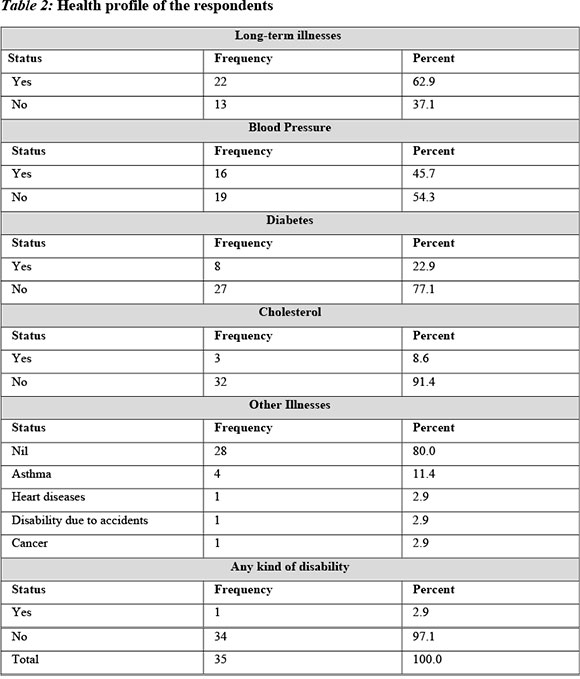
The tables below show the demographic details of the participants.
FINDINGS
Theme 1: Challenges and experiences that make widows vulnerable
In this theme the focus is on the description of the challenges and experiences that make widows vulnerable. The challenges have been described by some widows as creating difficulties for them to move on with their lives. This is linked to superstition and witchcraft, where women are accused by the in-laws of 'murdering' their husbands. This theme also has sub-themes to describe the challenges and the experiences, namely, being blamed for the death of the husband, stigmatisation by community members and financial vulnerability. The sub-themes will be discussed to illustrate the various ways widows experienced being vulnerable.
Sub-theme 1.1: Being blamed for the death of their husbands
In this sub-theme widows shared their experiences of being blamed for the death of their husbands. More than half of the widows who participated in the study reported that they were blamed for the death of their husbands according to cultural beliefs. This applied even in cases where the husband was ill with a chronic illness. The widows reported that they found the accusations very hurtful. They reported that in-laws accused them of killing their husbands, thereby influencing the community to view them as "killers". Platzer (2018) also indicated that widows are sometimes accused of using witchcraft to "kill" their husbands. In contrast with widows, widowers are largely exempted from more demanding mourning rituals (Mabunda & Ross, 2023). The widows could see the rituals more of a punishment than being cultural practice, that are enforced on them because they are being blamed of causing the death of their husbands.
According to the widows, being blamed for the death of their husbands became the source of continuous fights with the in-laws. The current study found that 10 of the 16 widows were blamed for the death of their husbands. This was the case, even in instances where the husband was sick prior to their death, as illustrated below.
A widow described her experience as follows:
I was forced by my in-laws to take a lie detector test with the hope that I will confess to killing my husband. (Widow DT)
The in-laws thought she would eventually confess by forcing her to take a lie detector test. The widow reported that she felt humiliated and realised the extent of the hatred of her in-laws. Another widow also described this accusation:
Every time we met with my mother in-law it would end up in a big fight as I was referred to as a killer. They really believed that I killed my own husband. I could see that they hated me and there will never be peace again; hence I changed my surname to cut the ties with them. (Widow AT)
The widow reported being disappointed at being accused of killing her own husband. The continuous fights with the in-laws forced her to decide to change back to her maiden name to cut ties with the in-laws. Shoko and Matlabe-Danke (2024) argue that young widows can face eviction from their homes, physical abuse or even death at the hands of the in-laws.
The findings in this sub-theme are similar to those of previous researchers who describe where cultural dynamics have come into play. Davidson (2020) highlighted that women had to deal with the ordeal of being accused of killing their husbands while still dealing with the loss of their husbands. Ndlovu (2024) points out that widowhood is a unique site of intersectional oppression, where gender discrimination, economic exclusion and cultural marginalisation intersect. Widowers may experience all or none of these intersections depending on how empowered they are. Saeed and Naz (2019) emphasise that as a male, the widower faces no difficulties at all and widowers in fact enjoy the right to remarry.
In terms of age, because they are young widows, they are unable to stand up for themselves when mourning rituals are forced on them by elderly in-laws, without consulting them or involving them in decision making about the rituals. In terms of ethical practices, young widows are expected to perform mourning rituals as a cultural norm (Garcini et al., 2019), which restricts their movement, preventing them from reaching out to others outside the circle of the family, whereas widowers are free of such constraints and not subjected to the same rituals as widows. Gender inequality is even projected by families encouraging widowers to remarry soon after the death of the wife. This inequality shows that culture, gender and social norms act as major sources of oppression for widows, causing trauma (Saeed & Naz, 2019). Even though cultural rituals can be affirming. The discarding of the harmful aspect of the cultural rituals is important if rights of the widows are to be upheld.
Sub-theme 1.2: Stigmatisation by community members
The sub-theme stigmatisation by community members is part of the theme dealing with cultural challenges and experiences that lead to vulnerability of widows. Stigmatisation by community members was reported by some widows as one of their most serious challenges. According to the widows, their mourning clothes which identify them as widows contributed to stigmatisation:
People look at you funny with pity. Community members start treating you like you are sick or mad or infectious. Even when you pass people, they always remind you that you are different because you are a widow. Some don't even want to be seen talking to a widow. As a widow its painful. You are not even invited to social gatherings. (Widow GB)
It is difficult to clear your name because you do not have an opportunity to explain to everybody that you did not kill your husband. This leaves you with stigma forever, hence we need to prevent it through awareness. (Widow FB)
The focus group discussion reported the challenge of being stigmatised by other women:
They treat you like you are 'smelly ' or infectious. Also not being allowed by other married women in the family to participate in cultural issues because you are a widow who will cause bad luck. People should stop the stigma against widows and believe all the accusations. They must also stop the negative comments when we pass them because they hurt us. (Member in the Bloemfontein Focus Group)
In this study it was observed that stigma was greater from other women than men. Parker and Creese (2016) also indicated in the study of stigmatisation of widows and divorcees in Indonesia that widows are routinely stigmatised in everyday Indonesian social life. Cultural norms, including the stigma of being a widow, can affect their ability to find another partner. Manyedi et al. (2003), in their study of Batswana widows in North West province of South Africa, found that widows are expected to wear black mourning clothes for the duration of the mourning period, which can last up to a year. The mourning clothes are to be distinguishable to prevent men approaching other widows for sexual relationships. This may be a cultural belief that is intended to indicate respect for young widows, but these black mourning clothes could also lead to the women being isolated. For widowers, however, there are no mourning trousers or clothes.
Sub-theme 1.3: Financial vulnerability
The majority of widows raised the issue of financial vulnerability after losing their husbands. It was also found that most widows worried about financial challenges, as they had children to raise whilst being unemployed. According to the widows, it was difficult for them to make ends meet, aggravated by their isolation by the in-laws. It was also found that if their husbands had not left a will, widows tended to struggle even more.
According to Parker and Creese (2016), the loss of a husband meant some widows losing the breadwinner in the family and a need to eke out a livelihood for themselves and their children for the first time, while for other widows, the loss of a husband is not felt as an economic loss. According to the widows, some in-laws made their financial challenges worse instead of assisting them. The in-laws reportedly 'grabbed' property and household contents from the widows, who were mostly unemployed and with children to take care of. According to Dube (2022), the culture has the effect of oppressing the women and silencing them from claiming their inheritance rights. Widows stated that because of the mourning restrictions and the in-laws teaming up against them, they found it difficult to get help. Some were not aware of their husbands' debts, as they were unemployed and the husbands as breadwinners had been handling their finances. They only realised after the loss of the husband that they had to settle the debts. Widows shared their frustration:
I was so frustrated even when I go to town people would look at me funny as if there was something wrong with me. I struggled financially to make ends meet. It was very bad. Actually, I was excluded from the funeral arrangements but told to pay for the funeral. I did not even wear mourning clothes as I was told that they wanted nothing to do with me. I was told that from now on I am no longer part of that family. (Widow BT)
The problem is while you are trying to deal with the loss of your husband so many other challenges crop up. You suddenly have debts with no income. Your in-laws isolate you even though they know you are not working. They don't even offer you a cent. (Widow IT)
The Loomba Foundation (2015) found that loss of income from the death of the male head of the household, which drives widows and their children into extreme poverty, is often compounded by disinheritance. It is not clear from the study whether this is driven by cultural norms. However, disinheritance can consist of the widow being dispossessed by her late husband's family, as highlighted by Tebby's and Mary's stories in the study by Shoko and Matlebe-Danke (2024). Tebby explained that "my sisters-in-law took cars and properties away from me. They put their names on one of the houses and car". Mary said that "our car was taken by one of the cousins". The widows become homeless, sometimes with their children, other times on their own as the children can also be 'kidnapped' by in-laws.
Manala (2015) found that many women around the world, especially those in developing nations, lose their rights to own, inherit and manage property following the deaths of their husbands. Patriarchy in combination with other cultural beliefs are contributing to this oppression.
Theme 2: Strategies needed to empower young black widows in Mangaung
During the study of the YBWs in Mangaung, the participants suggested strategies to reduce their vulnerability. The widows as participants suggested support groups, counselling and community education. In terms of support groups, the majority of participants argued for support groups, based on their experiences of the support from church women and local women's savings clubs (societies). They viewed support groups as critical even for peer counselling. During the focus group discussions, the widows indicated the need for support when they have been accused of causing the death of the spouse. The widows reported that this 'accusation' leads to the onset of the conflict with the in-laws, which destabilises the life of the widow as in-laws withdraw their support of her. The accusation by in-laws influences the community to view the widow in a negative way. The study by Cebekhulu (2015), reported that young Zulu widows indicated a need for social workers to assist young widows to initiate income-generating projects to reduce poverty. Peer support was reported to be essential, especially from those who have experienced the same situation. According to Sekgobela et al. (2018), widows need support in their experience and need to be cared for. This was echoed by the widows:
I also think widows should form a group to support each other because you can end up killing yourself when you are depressed and always alone. (Widow BT)
We need a widows ' support group. This is where widows can support each other, because when in-laws accuse you of killing your husband, it is very painful and difficult. That also affects you emotionally; at that time, you are alone and have no one to talk to or share your frustrations with. So, for me the support group would help to share our frustrations and get advice and support from each other. (Widow HT)
Counselling was also suggested by widows who felt the need to deal with the loss of the spouse, trying to adjust to the new status of widowhood and facing new challenges that come with widowhood. Psychosocial support was seen as necessary for widows, who were dealing with social and environmental challenges. This support addresses psychosocial problems in the form of stress, anxiety, fear and post-traumatic stress disorder, while related social problems include poor family relations, isolation, stigma and lack of family support. Churches should pay attention to widows during the morning period (Khosa-Nkatini et al., 2020). A widow gave an example of such support:
I decided to go to the social workers for help because no one was supporting or protecting me. The social workers told my mother in-law to pay the school fees and pay for all the welfare needs of my child until Ifinish school. (Widow CB)
Community education was also identified by the widows as necessary to reduce their vulnerability. Education would entail learning to respect widows' rights as human beings, understanding the impact of isolation on the widow, and the function of wills. For example:
We need to change the perceptions of the public; we need to create awareness to the public that widows are normal people who have just lost their spouses and that they are hurting because of the loss but are still normal. People should stop isolating widows and treating them in a negative way and avoiding them. (Widow IT)
The workshops with stakeholders identified that community leaders need to take responsibility for educating the community on the rights of widows. Education could be in the form of meetings, workshops or online education, if community members have access to the internet to access important information like policies and Sustainable Development Goals (United Nations, 2015). These goals include No poverty (goal 1); Gender Equality (goal 5); Decent Work and Economic Growth (goal 8), and finally Reduced Inequalities (goal 10). These goals could contribute to addressing young widow's problems in South Africa. Furthermore, these goals are relevant for protection and empowerment of the widows as well as to hold the government accountable.
DISCUSSION
The study findings indicated that widows experienced significant challenges during widowhood, which made it difficult for them to move on with their lives and adjust to widowhood after the loss of a husband. Widowhood rituals were intended to assist the widow to adjust to her new status. But as widows are also believed to have bad luck, they are isolated by their in-laws from other people in order not to be blamed or accused of spreading their bad luck to others during their mourning period. Widowhood rituals are being implemented without any consideration of the needs of the widow and disregarding the widows' rights, such as being prevented from going to church for spiritual sustenance during the difficult time in her life. YBWs made it clear that widowhood had a negative impact on their lives. This was addressed through the main theme of the article, namely the challenges and experiences that led to vulnerability among widows. The three sub-themes outline how the widows are impacted. They were being blamed for the death of the husband, they faced stigmatisation by community members and endured financial vulnerability.
Some widows spoke about their disappointment and despair when they realised that their in-laws blamed them for the death of their partners. There are cultural elements at play here, as witchcraft and ancestor belief in Mangaung and other parts of South Africa influenced the way that the young widows were treated. The in-laws also played a role in undermining and discriminating against the widows (Amoo et al., 2022). It became evident that it was the women in the community who were the main architects of this seemed to be perpetuating what was done to most of them before.
The second sub-theme highlighted what led to their increased vulnerability, which was stigmatisation by the community. This aspect is linked to the previous sub-theme in that blaming the women for the death of their husbands meant that they would be stigmatised by the community. One dynamic of the stigmatization is that the widow would be isolated from the rest of the community. This includes being confined to sit on her mattress during the day and staying there for long periods. The widow has to also wear widow's clothes for a period of three to twelve months (Mabunda & Ross, 2023). Some of the widows described how they were observed and treated with contempt and their rights were not respected. Even though there is acceptance that some cultural beliefs need to be adhered to, in this case they are discriminatory and contribute to the oppression of YBWs.
The final sub-theme is financial vulnerability. Young widows are sometimes left with no income but with debts to pay. Widows in the study reported that they had been hounded out of their homes, including the children. The question of disinheritance is complex and discriminatory, where customary law appears to side with the family of the husband rather than the wife. In South Africa Singh and Naidoo (2017) established that there are societal demands and cultural barriers that have placed unrealistic demands on women and these need to be changed with progressive legislation in support of women's development and empowerment. It is in this regard that feminist theory advocates for the enhancement of women's emancipation in a predominantly patriarchal world.
Furthermore, feminism is also a movement that is committed to empowering women, but at the same time is required to critically analyse and engage with a society, culture and ideology that could be more resistant to feminist programmes. During the data-collection phase women participated as equal partners (promoting their empowerment) and contributed to devising strategies to enhance their empowerment. This leads to the second theme, which is that widows are motivated to get support within their communities, whether it is identifying a support group, seeking counselling or promoting community education to help them reduce their vulnerability. These strategies can be implemented by the Department of Social Development in the area or by other organisations.
In addition, YBWs themselves need to be educated on the legislation that protects them and the resources available to them as widows. All widows should be protected by the rights enshrined in the Convention on the Elimination of All Forms of Discrimination Against Women (CEDAW), adopted in 1979 by the UN General Assembly as well as by other international human rights treaties and legislation.
In addition, the Commission on Gender Equality in South Africa should monitor the implementation of the laws that protect widows, such as the Promotion of Equality and Prevention of Unfair Discrimination Act 2000 in South Africa. The stakeholders who attended the workshops in the project should also take responsibility to ensure that communities in Mangaung are aware of the plight of YBWs and that patriarchal cultural rituals and beliefs are challenged and modernised.
RECOMMENDATIONS AND IMPLICATIONS FOR PRACTICEIt is recommended that interventions be provided by social workers and non-governmental organisations (NGOs) to ensure that YBWs' rights are respected and that patriarchal cultural rituals are adapted in South Africa to ensure gender equality. Interventions should assist the widows to adapt to widowhood and rebuild their new lives. The government, especially the Department of Social Development, should include widows in the policies meant for vulnerable groups in society, as widows are a group of vulnerable women in need of empowerment. Community development practitioners need to identify vulnerable widows in need of psychosocial support and work with social workers to support them.
CONCLUSION
This study explored how widows experienced widowhood in Mangaung in the Free State. The study makes a significant contribution to the literature on gender inequality. The article sheds light on the way that young widows experience cultural practices and how these impacts on them on various levels. There are challenges that are particularly related to Sotho and African culture. The YBWs experience was one of discrimination and oppression. This requires interventions by social workers and NGOs to ensure that YBWs' rights are respected and that patriarchal cultural rituals in South Africa are adapted to the norms of gender equality.
REFERENCES
LITERATURE REVIEW
-
Amoo, E. O., Adekola, P. O., Adesina, E., Adekeye, O. A., Onayemi, O. O., & Gberevbie, M. A. (2022). Single widows, dynamics of in-laws interference and coping mechanisms: Simplicity-parsimony approach. International Journal of Environmental Research and Public Health, 19(10117), 1-15. https://doi.org/10.3390/ijerph191610117
» https://doi.org/10.3390/ijerph191610117 - Cebekhulu, L. M. (2015). Understanding the experiences of young widows in Rural KwaZulu-Natal. (Doctoral thesis). University of KwaZulu-Natal, South Africa.
- Chibba, S. (2015). South African feminist a global voice for women. Media Club South Africa.
- Coetzee, A. A. (2017). African feminism as decolonizing force: A philosophical exploration of the work of Oyeronke Oyewumi. (Doctoral thesis). University of Stellenbosch, South Africa.
- Creswell, J. W., & Creswell, J. W. (2018). Research design: Qualitative, quantitative and mixed methods approaches. Sage.
-
Davidson, J. (2020). The problem of widows. American Ethnologist, 47(1), 43-57. https://doi.org/10.1111/AMET.12869
» https://doi.org/10.1111/AMET.12869 - Doris, F. A. (2018). Widowhood rite: An infringement on the rights of widows in Bongo. International Journal of Developing Societies, 7(2), 1-8.
-
Dube, M. (2022). Isolation and its impact on widows: Insights from low-resourced communities in Binga District, Zimbabwe, Social Sciences, 11(298), 1-16. https://doi.org/10.3390/sosci11070298/socsci11070298
» https://doi.org/10.3390/sosci11070298/socsci11070298 - Eftoda, K. (2021). Addressing grief in the classroom: A complicated equalizer. BU Journal of Graduate Studies in Education, 13(4), 1-10.
- Fasanmi, A., & Ayivor, S. (2021). Widows, widowhood, and society in Africa. In O. Yacob-Haliso, & T. Falola (Eds), The Palgrave Handbook of African women's studies. (pp. 2269-2286). Springer International Publishing.
- Garcini, L. M., Brown, R. L., Chen, M. A., Saucedo, L., Fite, A. M., Ye, P., Ziauddin, K., & Fagundes, C. P. (2019). Bereavement among widowed Latinos in the United States: A systematic review of methodology and findings. Death Studies, 45(5), 342-353.
- Khosa-Nkatini, H. P., Wepener, C. J., & Meyer, E. E. (2020). Tsonga widow's mourning rituals practices in the Evangelical Presbyterian Church in South Africa: A ritual-liturgical exploration. Theologia Viatorum, 44(1), 1-8.
- Kim, Y., & Kim, C. S. (2016). Will the pain of losing a husband last forever? The effect of transition to widowhood on mental health. Development and Society, 45(1), 165 -187.
-
Loomba Foundation. (2015). A global overview of deprivation faced by widows and their children. The Global Widows Report 2015. https://www.euromedwomen.foundation/pg/en/documents/view/8065/the-global-widows-report-2015
» https://www.euromedwomen.foundation/pg/en/documents/view/8065/the-global-widows-report-2015 - Mabunda, Y. P., & Ross, E. (2023). Experiences of Black South African widows regarding mourning rituals following the death of their spouses: Upholding cultural practices or violating human rights? Death Studies, 47(3), 328-338.
- Magudu, B., & Mohlakoana-Matopi, L. (2013). Widowhood & vulnerability. Policy Brief 3: Commission for Gender Equality, South Africa.
- Manala, M. (2015). African traditional widowhood rites and their benefits and/or detrimental effects on widows in a context of African Christianity. HTS Teologiese Studies-theological Studies, 72, 1-8.
-
Manyedi, M. E., Koen, M. P., & Greef, M. (2003). Experiences of widowhood and beliefs about the mourning process of the Batswana people. Health SA Gesondheid, 8(4). https://doi.org/10.4102/hsag.v8i4.146
» https://doi.org/10.4102/hsag.v8i4.146 - Moore, E., & Himonga, C. (2018). Living Customary Law and Families in South Africa. In K. Hall, L. Richter, Z. Mokomane, & L. Lake (Eds), South African Child Gauge 2018. (pp 65-69). University of Cape Town.
- Morales, M. P. E. (2016). Participatory action research in teacher professional development: A literature review. International Journal of Research in Education and Science, 2(1), 156-165.
- Motsoeneng, M., & Modise, M. A. (2020). Grieving widows' lived experiences in a rural South African setting. Journal of Psychology in Africa, 30(3), 264-267.
-
Ndlovu, T. (2024). Standing their ground while seated: Narratives of widowhood activism against the ritual of widow dispossession in South Africa. OMEGA-Journal of Death and Dying, 0(0), 1-22. https://doi.org/10.1177/00302228241305652
» https://doi.org/10.1177/00302228241305652 -
Parker, L., & Creese, H. (2016). The stigmatization of widows and divorcees (janda) in Indonesian society. Indonesia and the Malay World. 44(128), 1-6. https://doi:10.1080/13639811.2015.1111647
» https://doi:10.1080/13639811.2015.1111647 - Platzer, M. (2018). Victimization of elderly women, "witches," and widows. In P. T. Kratcoski, & M. Edelbacher (Eds.), Perspectives on elderly crime and victimization (pp181-193). Springer.
- Priyadarshini, U., & Pande, R. (2021). Exploring the politics of widowhood in Vrindavan: An analysis of life narratives of Vrindanvan widows. Advances in Applied Sociology, 11, 158-176.
- Rahman, S. M. (2016). The advantages and disadvantages of using qualitative and quantitative approaches and methods in language "testing and assessment" research: A literature review, Journal of Education and Learning, 6(1), 69-71.
- Ramphele, M. (1996). Political widowhood in South Africa: The embodiment of ambiguity. Daedalus, 125(1), 99-117
- Republic of South Africa. (2000). Promotion of Equality and Prevention of Unfair Discrimination Act No. 4 of2000. Government Gazette, Vol. 416, No. 20876. (9 February 2000) Pretoria: Government Printer
- Republic of South Africa. (1996). Constitution of the Republic of South Africa. Government Gazette, Vol. 378, No. 17678 (8 May 1996) Pretoria: Government Printer.
- Saeed, A., & Naz, N. (2019). Cultural and religious perspectives on gender based notions of widowhood in South Asian literature. HamdardIslamicus, 42(4), 51-63.
-
Sekgobela, G. L., Peu, D. M., & van der Wath, A. E. (2018). Health-support needs of widows in South Africa: A phenomenological inquiry. OMEGA-Journal of Death and Dying, 81(3), 507-522. https://doi.org/10.1177/0030222818786416
» https://doi.org/10.1177/0030222818786416 -
Shoko, R., & Matlabe-Danke, S. (2024). Beyond the veil: Voices of young widows in South Africa. Social Sciences 13(12), 677. https://doi.10.3390/socsci13120677
» https://doi.10.3390/socsci13120677 - Singh, T., & Naidoo, L. D. (2017). Assessing gender inequality in South Africa: A case study of women in sports management. Journal of Research in Business, Economics and Management, 8(2), 1407-1428.
-
Statistics South Africa. (2022). Census 2022 Population Count Results. https://www.statssa.gov.za
» https://www.statssa.gov.za -
Thompson, L., Rickett, B., & Day, K. (2017). Feminist relational discourse analysis: Putting the personal in the political in feminist research. Qualitative Research in Psychology, 15(1), 93-115. https://doi.org/10.1080/14780887.2017.1393586
» https://doi.org/10.1080/14780887.2017.1393586 - United Nations. (2015). Sustainable development goals. Department of Economic and Social Affairs. Geneva: United Nations.
-
Yang, F., & Gu, D. (2021). Widowhood, widowhood duration, and loneliness among older adults in China. Social Science & Medicine, 283, 114179. https://doi.org/10.1016/j.socscimed.2021.114179
» https://doi.org/10.1016/j.socscimed.2021.114179
Article accepted: 25/07/2025
Article published: 20/03/2026