Preparing for a bibliometric study of environmental social work
Abstract
This research note describes the processes undertaken in preparation for a bibliometric study of environmental social work and the decisions made in selecting the literature that is relevant to this domain of study. Given the conceptual breadth of the field, the first step involved the clarification of epistemic boundaries as a prerequisite for meaningful cumulative knowledge production in this area of research. The research note, therefore, outlines the search strategy, scope of interest, rigorous inclusion guidelines, consequent exclusions and the main conceptual categories in this broad, fragmented field of study.
bibliometric analysis; environmental social work; knowledge development; research
INTRODUCTION
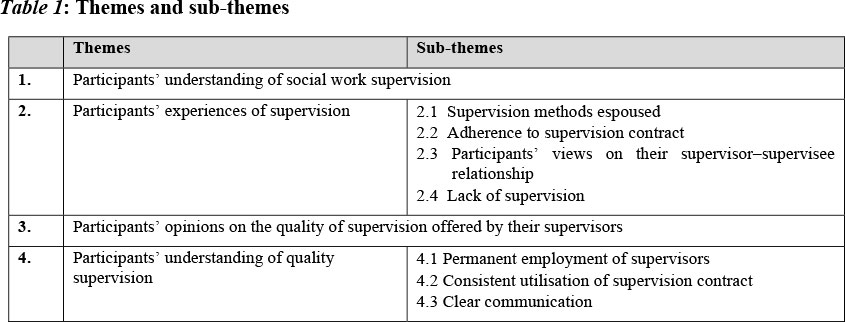
This research note reports on the preparatory work undertaken for a bibliometric study of environmental social work literature. It focuses on the processes undertaken to determine inclusion and exclusion criteria to inform clear decisions on which articles legitimately belong to this field. The first decision related to the keywords or search terms, given the expansive range of topics relating to social work and the environment, shown in Table 1.
Conceptual breadth and epistemic dilution
Environmental social work has expanded semantically to enable it to encompass a broad range of ecological, developmental, humanitarian and justice-related concerns. This reflects what Rosenberg (1988) describes as ecologies of knowledge - fields in which conceptual boundaries are fluid and mapping is necessary to impose analytical clarity (Taylor, 1990). While intellectually productive, this expansion risks epistemic dilution, where the field becomes so broad that its environmental core is weakened. Table 1 shows this conceptual broadening, highlighting the diverse themes that have come to sit under the environmental social work umbrella. This research note, therefore, clarifies what should legitimately count as environmental social work in a systematic search: at a minimum, included articles needed to explicitly engage with environmental conditions, benefits, risks, ecological justice or environmental goals, rather than treat the environment merely as a social backdrop.
Epistemic dilution, as the term is used here, does not denote interdisciplinarity or thematic plurality, but rather a loss of analytical coherence that occurs when a field's core objects, normative commitments and explanatory frameworks become insufficiently specified. As concepts are extended to encompass an ever-wider range of phenomena, they risk what has been described as conceptual stretching, reducing their explanatory power and theoretical utility. In bibliometric research, such dilution has concrete methodological implications: inflated corpora populated by conceptually adjacent but analytically irrelevant material can obscure thematic structures, distort topic modelling outputs and, ultimately, undermine the validity of field-mapping exercises. Clarifying epistemic boundaries is, therefore, not a narrowing of the field, but a prerequisite for meaningful cumulative knowledge production.
SEARCH STRATEGYGiven the broad and fragmented nature of scholarship relating to social work and the natural environment, an extensive mapping of potentially relevant environmental themes was first undertaken. These themes ranged from climate change, ecology, disasters, environmental justice, biodiversity, ecosystems and sustainability to community-based interventions and environmental policy. From this broad thematic spectrum, the following search string was developed:
'Social work' AND ('natural environment' OR 'environmental justice' OR 'ecological justice' OR 'ecosocial' OR 'climate change' OR 'environmental sustainability' OR 'sustainable development' OR 'SDGs' OR 'disaster' OR 'indigenous knowledge' AND ('environment*' OR 'ecology' OR 'sustainab*') OR 'traditional knowledge' AND ('environment*' OR 'ecology' OR 'sustainab*') OR 'ecological social work' OR 'green social work' OR 'environmental social work' OR 'environmental hazards'
The bibliometric analysis was conducted using the R Bibliometrix package, which automatically retrieves records indexed in the Web of Science (WoS) and Scopus.
Scope of interest
Only peer-reviewed journal articles published in English were included if they addressed at least one of the following:
1. Benefits of biodiversity and the need for environmental conservation and protection;
2. Impacts of, and interventions following, climate change-related events and disasters on animals and humans;
3. Sustainability, sustainable development and sustainable development goals (SDGs) pertaining to the environment.
Inclusion guidelines
Additional screening guidelines were:
Social work journals and environmental relevance: The study included full articles published in social work journals that clearly addressed environmental aspects, even if they were not explicitly framed as social work, as the journal context provided professional grounding;
Non-natural disasters: Though the environmental social work literature tended to include all articles related to disasters, this study excluded research on non-natural disasters such as air and train crashes and 9/11;
Sustainability and the SDGs: The study included articles on sustainability and the SDGs with a clear link to environmental issues, such as climate change, ecological justice and environmental degradation. However, articles on poverty alleviation or general social development did not fit the study's environmental scope;
Person-in-environment with no natural environment focus: The study excluded articles without an explicit connection to the natural environment;
Conflict and peace: The study excluded articles on peace and conflict that did not connect directly to environmental dimensions, such as resource conflicts and climate-related displacement;
Ecospirituality and ecosocial work: The study automatically included articles on ecospirituality and ecosocial work tied clearly to social work practice.
Exclusions
These inclusion guidelines led to the following exclusions:
1. Editorials, practice forum, letters to the editor, brief notes, teaching notes, book reviews, and invited commentaries;
2. Articles on:
COVID unrelated to environmental issues;
Indigenous knowledge unrelated to the environment, e.g. Chilvers (2022);
The person in the social environment, e.g.; Lei et al. (2021); human-animal interactions within the social environment (e.g. Arkow, 2020);
Sustainable social development and sustainable livelihoods related to poverty and its social consequences unrelated to environmental concerns (Skhosana & Nel, 2024);
Social work interventions unrelated to environmental SDGs, e.g. Addo et al. (2022);
Aligning the SDGs and Global Agenda that mainly concerned policy and added nothing to advance understanding of sustainable development vis-à-vis the environment;
Sustainability used semantically in ways unrelated to the environment, e.g. the sustainable development of social work (Colnar et al., 2019) and the sustainability of field education (Neden et al., 2018);
Individual therapeutic benefits of animals and nature, as this was a specialist field using animal-assisted and nature-based interventions without discussion of environmental concerns.
PRISMA flow summary
A total of 1,120 records were retrieved from the WoS, Scopus and Google Scholar. Titles and abstracts were screened to assess relevance to environmental social work. During this stage, 359 records were excluded for lacking an explicit environmental focus. The remaining 761 records were assessed for full-text eligibility. This screening process, shown in Figure 1, produced the final bibliometric corpus covering the years 1966-2025.
Further processing then followed for the subsequent structural topic modelling (STM) analysis using optical character recognition (OCR), the technology that converts scanned documents into editable, searchable, machine-readable data. This OCR screening process enabled the retention of a full-text corpus of 716 articles published between 1972 and 2025 for the full-text STM analysis, as shown in Figure 2. Since the OCR process was conducted only after the completion of bibliometric corpus selection, it was, therefore, not part of the PRISMA screening process.
CONCEPTUAL CATEGORIES
In making decisions on inclusion/exclusion criteria, the researchers were mindful of three broad categories in the environmental social work literature:
1. General empirical and theoretical literature on environmental and eco-theories;
2. Disasters and climate change;
3. Environmental sustainability, sustainable development and the SDGs.
Two areas, in particular, exemplify the selection dilemmas the researchers faced. First, though the environmental social work literature includes the SDGs and sustainable development, especially in copious discussions on the Global Agenda, many of the articles in this category did not address environmental issues, but rather focused on poverty alleviation. While it was possible to link poverty and the environment, as Dominelli (2012) did, by construing poverty as a social disaster requiring urgent attention, environmental social work implies interventions that directly address environmental issues within poverty-alleviation efforts. The researchers, therefore, excluded articles that addressed social consequences but did not mention environmental implications.
A fitting example in relation to sustainable development was food security, where much of the literature discussed this topic mainly as a social issue relating to poverty and pressures to transition to industrial agriculture (Ku & Kan, 2020). Few articles discussed food security in relation to environmental transformation, e.g. deforestation, desertification and overfishing, especially industrial fishing that not only robbed local people of their livelihoods, but was also extremely damaging to marine life (Jönsson, 2019; Rambaree, 2020). The researchers consequently excluded articles on food security that did not mention environmental issues, but related it to poverty, including low-income households' use of food banks or receipt of food relief. Articles that discussed food security in relation to Indigenous peoples and food sovereignty, and those that dealt with food insecurity following disasters or in relation to climate change, fitted the inclusion criteria, since they related directly to environmental issues. Articles on the availability and accessibility of food security, consumption and nutritional wellbeing also fitted the environmental sustainability mould. For example, "the long-term sustainable management of natural resources and elimination of unsustainable modes of food production and consumption ... [such as the] decreased viability of the agricultural sector, due to the disappearance of farming areas" (Arkert & Jacobs, 2023, p. 131) was a sustainability issue.
Secondly, there was also a substantial amount of literature on human-animal and human-nature interaction for therapeutic purposes that largely centred on individuals in their familial and social environment, and concerned the value of animal companionship, outdoor adventure activities and wilderness exploration for human health and wellbeing (Duvnjak & Dent, 2024). These articles did not, however, discuss the natural environment but rather focused on what many termed veterinary social work and animal-assisted interventions that used trained therapy animals to provide therapeutic comfort. The researchers, instead, included articles in this category that focused, for example, on the interconnectedness between human-animal relations in the web of life (Faver, 2009); animal-assisted activity focused on sustainability (Eaton-Stull, 2024); and companion animals (pets), farmed animals (livestock), and free-living animals (wildlife) as oppressed populations (Fraser et al., 2021).
CONCLUSION
The carefully defined search strategy, combined with rigorous inclusion and exclusion guidelines discussed in this research note, ensured that the dataset authentically represented environmental social work scholarship rather than adjacent, tangentially related social development literature. This clarity strengthened the validity of subsequent bibliometric and structural modelling analyses and contributed to the establishment of more precise conceptual boundaries within the environmental social work field. Thus, this research note provides a transparent methodological foundation for future bibliometric and conceptual work on environmental social work.
REFERENCES
-
Addo, R., Koers, G., & Timpson, W. T. (2022). Teaching sustainable development goals and social development: A case study teaching method. Social Work Education, 41(7), 1478-1488. https://doi.org/10.1080/02615479.2022.2112168
» https://doi.org/10.1080/02615479.2022.2112168 -
Arkert, L., & Jacobs, I. (2023). Social work educators' perceptions of the importance and relevance of environmental social work. Social Work/Maatskaplike Werk, 59(1), 129-151. http://doi.org/10.15270/59-1-1097
» http://doi.org/10.15270/59-1-1097 - Arkow, P. (2020). Human-animal relationships and social work: opportunities beyond the veterinary environment. Child and Adolescent Social Work Journal, 37(6), 573-588.
-
Chilvers, D. (2022). Indigenous knowledge in field education - expanding praxis. Social Work Education, 41(5), 1047-1062. https://doi.org/10.1080/02615479.2021.1910653
» https://doi.org/10.1080/02615479.2021.1910653 -
Colnar, S., Dimovski, V., & Bogataj, D. (2019). Knowledge management and the sustainable development of social work. Sustainability, 11(22), 6374. https://doi.org/10.3390/su11226374
» https://doi.org/10.3390/su11226374 - Dominelli, L. (2012). Green social work. Polity Press.
-
Duvnjak, A., & Dent, A. (2024). The consideration of animals within Australian social work curriculum. Australian Social Work, 77(3), 397-409. https://doi.org/10.1080/0312407X.2023.2238697
» https://doi.org/10.1080/0312407X.2023.2238697 -
Eaton-Stull, Y. M. (2024). Social work education: Projects to enhance student knowledge and application of the interaction of environmental sustainability, animal welfare and human well-being. Social Work in Mental Health, 22(6), 855-863. https://doi.org/10.1080/15332985.2024.2331508
» https://doi.org/10.1080/15332985.2024.2331508 -
Faver, C. A. (2009). Seeking our place in the web of life: Animals and human spirituality. Journal of Religion & Spirituality in Social Work: Social Thought, 28(4), 362-378. https://doi.org/10.1080/15426430903263161
» https://doi.org/10.1080/15426430903263161 -
Fraser, H., Taylor, N., & Riggs, D. W. (2021). Animals in disaster social work: An intersectional green perspective inclusive of species. British Journal of Social Work, 51(5), 1739-1758, https://doi.org/10.1093/bjsw/bcab143
» https://doi.org/10.1093/bjsw/bcab143 -
Jönsson, J. H. (2019). Overfishing, social problems, and ecosocial sustainability in Senegalese fishing communities. Journal of Community Practice, 27(3-4), 213-230. https://doi.org/10.1080/10705422.2019.1660290
» https://doi.org/10.1080/10705422.2019.1660290 - Ku, H. B., & Kan, K. (2020). Social work and sustainable rural development: The practice of social economy in China. International Journal of Social Welfare, 29(4), 346-355.
-
Lei, K., Cui, Y., & Li, X. (2021). Examining the person-in-environment perspective among social work students in China: Individual - or society-orientation? Australian Social Work, 74(3), 325-337. https://doi.org/10.1080/0312407X.2021.1922728
» https://doi.org/10.1080/0312407X.2021.1922728 -
Neden, J., Townsend, R., & Zuchowski, I. (2018). Towards sustainability in Australian social work field education. Australian Social Work, 71(3), 345-357. https://doi.org/10.1080/0312407X.2018.1465576
» https://doi.org/10.1080/0312407X.2018.1465576 -
Rambaree, K. (2020). Environmental justice in the case of the Chagos Marine protected area: Implications for international social work. Sustainability, 12(20), 8349. https://doi.org/10.3390/su12208349
» https://doi.org/10.3390/su12208349 -
Rosenberg, C. E. (1988). Woods or trees: Ideas and actors in the history of science. Isis, 79(4), 565-570. https://www.journals.uchicago.edu/doi/10.1086/354844
» https://www.journals.uchicago.edu/doi/10.1086/354844 -
Skhosana, R. M., & Nel, H. (2024). Focus on communities and not projects: Challenges faced by development centres in attaining sustainable livelihoods in Tshwane, South Africa. Social Work/Maatskaplike Werk, 60(1), 61-79. https://doi.org/10.15270/60-1-1251
» https://doi.org/10.15270/60-1-1251 -
Taylor, P. J. (1990). Mapping ecologists' ecologies of knowledge. PSA: Proceedings of the Biennial Meeting of the Philosophy of Science Association, Vol. 1990, Volume Two: Symposia and Invited Papers (pp. 95-109). Cambridge University Press. https://www.jstor.org/stable/193061
» https://www.jstor.org/stable/193061