Barriers to the implementation of a gender-sensitive, child-centred and conflict-sensitive approach in the identification, documentation, tracing, rehabilitation and reintegration (IDTRR) of child sexual exploitation survivors in Zimbabwe
Abstract
Despite the existence of a formal identification, documentation, tracing, rehabilitation and reintegration (IDTRR) framework for addressing child abuse cases, implementation in Zimbabwe remains fraught with systemic and structural barriers. This study explored the lived experiences of social workers engaged in IDTRR to understand the obstacles to implementing a gender-centred, child-centred and conflict-sensitive approach towards child exploitation survivors. Using a descriptive phenomenological design grounded in Husserlian philosophy, the study relied on semi-structured interviews with 13 purposively selected social workers from both government and non-governmental organisations operating in Caledonia, Epworth and Hopley in Zimbabwe. Data were analysed in two phases: initial theme identification using MAXQDA Analytics Pro 2022, followed by collaborative meaning construction using Giorgi's phenomenological method. Four core themes emerged: (1) systemic workforce deficits and the absence of gendered, child-centred and conflict-aware practice; (2) exclusion of children from decision-making; (3) fragmented inter-agency coordination in fragile political contexts; and (4) stigma and social rejection as barriers to reintegration. These findings reveal deep-rooted structural violence and institutional mistrust that compromise child protection efforts. The study recommends five targeted reforms: mandatory training in gender-sensitive and trauma-informed care, institutionalised child participation protocols, establishment of district-level coordination hubs, community-based stigma reduction initiatives, and a national IDTRR monitoring dashboard.
child-sensitive approach; child sexual exploitation; conflict-sensitive implementation; gender-sensitive; IDTRR
INTRODUCTION
Child sexual exploitation (CSE) remains a pervasive global violation of children's rights, affecting an estimated 4.8 million children annually across both development and crisis settings (ECPAT International & We Protect Global Alliance, 2022). While girls bear the brunt of exploitation, emerging data highlight increasing vulnerabilities among boys and gender-diverse children - exposing gender-blind protection systems as insufficiently responsive (O'Gorman et al., 2024). In many low- and middle-income contexts, particularly in sub-Saharan Africa, child protection mechanisms struggle to operationalise comprehensive responses that address and transform harmful gender norms, while remaining child-centred and conflict-sensitive (Gatuguta et al., 2021; Muzingili, 2025). Structural and institutional weaknesses - exacerbated by poverty, displacement and political instability - continue to hinder effective identification, documentation, tracing, rehabilitation and reintegration (IDTRR) of survivors (Habib et al., 2024; Muzingili, 2025). Zimbabwe reflects this broader regional crisis. Despite Zimbabwe's commendable initiatives such as the National Case Management System and the Victim Friendly System, the IDTRR continuum is compromised by systemic loopholes in coordination, survivor engagement and long-term reintegration planning (Shaw et al., 2021). Existing interventions often adopt a rescue-oriented approach, neglecting the lived experiences, developmental needs and agency of child survivors (Habib et al., 2024; Taruvinga et al., 2025). Moreover, limited attention to intra-household power dynamics and broader socio-political conflict conditions undermines both accountability and sustainability of care (Muridzo, 2017).
Child sexual exploitation (CSE), as defined in this study, refers to situations where a child is used for sexual purposes in exchange for money, goods, services or favours, often facilitated through coercion, deception or abuse of power (Moirangthem et al., 2015). In Zimbabwe, the legal responsibility for responding to CSE lies primarily with the Department of Social Development under the Ministry of Public Service, Labour and Social Welfare (MPSLSW), in coordination with the Zimbabwe Republic Police (Victim Friendly Unit), Ministry of Health and Child Care, and accredited NGOs. These actors are mandated to follow the 2012 Multi-Sectoral Protocol on the Management of Sexual Abuse, which outlines a standardised child protection procedure (Government of Zimbabwe, 2012). In this protocol the identification, documentation, tracing, rehabilitation and reintegration (IDTRR) framework forms a core operational pathway under the National Case Management System. It is an expectation from the National Department that IDTRR be followed in all CSE cases. The process involves promptly identifying survivors, documenting their experiences, tracing family or safe placements, offering psychosocial rehabilitation and supporting long-term reintegration. This is based on Section 47 of the Zimbabwe Children's Act and the 2012 Multi-sectoral Protocol on the Management of Sexual Abuse, which assign social workers a central role in survivor case management (Government of Zimbabwe, 2016). Despite these legal provisions, implementation remains fragmented. Zimbabwe continues to record high rates of CSE, with urban settlements such as Epworth, Caledonia and Hopley reporting 30-45% of Harare's child abuse cases (Tsikai et al., 2023). This study locates itself at the intersection of these challenges. It seeks to interrogate how Zimbabwe's IDTRR processes account for the differentiated realities of CSE survivors in their contexts by way of gender-centred, child-centred and conflict-sensitive perspectives.
CONCEPTUAL REFLECTION: LOCATING GENDER-CENTRED, CHILD-CENTRED AND CONFLICT-SENSITIVE PERSPECTIVES IN THE IDTRR OF CSE SURVIVORS
This section provides the conceptual definitions and tenets of gender-centred, child-centred and conflict perspectives on IDTRR process in the context of survivors of child sexual exploitation.
A gender-sensitive framework foregrounds the role of gender norms, roles and relations in shaping children's vulnerability to CSE and their access to protection mechanisms. As Leach (2016) argues, "gender is not just a variable but a structural force that mediates risk, access to justice, and resilience" (p. 14). In many African contexts, including Zimbabwe, patriarchal norms normalise male dominance and female subservience, creating a fertile ground for the exploitation of girls, while simultaneously silencing the abuse of boys because of stigma and gendered expectations of masculinity (Muridzo, 2017; O'Gorman et al., 2024). The gender-sensitive approach also challenges the binary framing of victimhood. As Moirangthem et al. (2015, p. 2) notes, "boys are often excluded from protection discourse, not because they are not abused, but because the frameworks fail to see them as vulnerable". Thus, gender-sensitive interventions must move beyond token inclusion to reconfigure institutional cultures and practices in child protection systems. This involves gender-disaggregated data collection, gender-responsive training and survivor-led rehabilitation models that recognise the differentiated needs of all genders across the IDTRR continuum.
The child-centred perspective insists on placing the child's voice, rights and wellbeing at the heart of protective interventions. Grounded in the United Nations Convention on the Rights of the Child (UN, 1989), this approach emphasises participation, protection and provision. It reframes children not merely as passive recipients of care, but as active agents with evolving capacities and lived experiences. As Lansdown (2005, p. 4) asserts, "respect for children's views is not optional but a legal and moral obligation". In the IDTRR process, failure to adopt a child-centred lens often results in generic, top-down interventions that overlook the psychosocial realities of survivors. For instance, documentation processes may retraumatise children through repetitive interviews, while reintegration strategies may ignore children's preferences or safety concerns. Research in post-crisis settings shows that when children are meaningfully involved in decision-making, the outcomes are more sustainable and empowering (DeLaney et al., 2024). Furthermore, child-centredness necessitates sensitivity to developmental stages, ensuring that rehabilitation services - such as counselling, education and family mediation - are age-appropriate and attuned to children's cognitive and emotional maturity. In Zimbabwe reintegration programmes often neglect continuity of care, leading to high rates of re-victimisation, a clear indicator of the absence of child-centred planning (Ndhlovu & Mfoafo-M'Carthy, 2022). In the context of the IDTRR framework within Zimbabwe's legal and policy framework, integration refers to the coordinated, multi-sectoral collaboration among mandated state and non-state actors - such as social services, police, health, education and child-protection NGOs - working through shared protocols outlined in the 2012 Multi-Sectoral Protocol to ensure a continuous, child-centred response across all stages of identification, documentation, tracing, rehabilitation and reintegration.
A conflict-sensitive perspective in child protection foregrounds the structural and relational dimensions of violence, inequality and power that shape both vulnerability to exploitation and the efficacy of protection systems (Popovych, 2021). It draws from critical social work and structural violence theory, which posit that child welfare responses often mirror the social hierarchies and exclusions they are meant to challenge (Dominelli, 2017). In this view, child sexual exploitation is not merely an individual violation, but a symptom of deeper systemic fractures - economic inequality, political instability and institutional distrust - that disproportionately affect marginalised children. In Zimbabwe, chronic economic crises, contested governance and mass migration have destabilised child protection infrastructure and contributed to the erosion of community safety nets (Dumba, 2023; Muzingili, 2025). These macro-level dynamics intersect with localised conflicts within families, where poverty, displacement and gendered expectations frequently produce environments of control, silence and secondary victimisation. As Meintjes and Giese (2006, p. 415) argue, "structural violence within households ... can be as damaging to children's well-being as external conflict". Reintegration, in such contexts, is fraught: children returning from exploitative situations may be met with blame, rejection or further abuse, especially where families perceive them as having brought shame or a financial burden. Moreover, institutional interventions often fail to engage with these intra-family dynamics, focusing on procedural efficiency over relational repair. As Featherstone et al. (2018, p. 213) highlight, "without recognising the family's internal power struggles, social work risks compounding harm rather than alleviating it". A conflict-sensitive IDTRR model must therefore interrogate both macro-structural forces and micro-level tensions, ensuring that reintegration strategies are context-responsive, trauma-informed and sensitive to the complex relational ecologies in which children live.
These three perspectives are not isolated silos but interdependent conceptual tools. Gender shapes how children experience conflict and protection; child-centredness ensures that interventions are rooted in individual realities rather than abstract categories; and conflict sensitivity grounds protection work in the structural contexts that produce and perpetuate vulnerability. As Spyrou (2017, p. 33) argues, "critical child protection work must embrace complexity - recognising children as gendered, situated beings navigating layered social worlds". In the Zimbabwean context, integrating these perspectives is essential to addressing the systemic loopholes that undermine the IDTRR process, such as the exclusion of children from case planning, weak inter-agency coordination, lack of trauma-informed and gender-responsive training for frontline workers, and the persistence of stigma and mistrust at community and institutional levels. Gender-blind, adult-centric and politically detached interventions risk not only ineffectiveness but also harm. A transformative framework must therefore balance individual rights with structural critique, grounding intervention in the lived realities of survivors (Huda et al., 2022; Muzingili, 2025).
BARRIERS TO EFFECTIVE IDTRR OF CHILD SEXUAL EXPLOITATION SURVIVORSUnderstanding the systemic and structural barriers to effective identification, documentation, tracing, rehabilitation and reintegration (IDTRR) of child sexual exploitation (CSE) survivors requires a critical interrogation not only of procedural gaps but also of conceptual weaknesses in child protection frameworks. Globally, consistent barriers emerge across the IDTRR continuum, yet they manifest differently depending on institutional culture, resource availability and sociocultural norms. In high-income countries such as the United Kingdom, despite robust legal frameworks and mandatory reporting systems, the identification of sexually exploited children remains inconsistent as a result of practitioner biases and poor training. According to Brayley and Cockbain (2014), law enforcement officers often misidentify exploited youths as "child prostitutes" rather than victims, particularly when they are girls from racialised or economically disadvantaged backgrounds. This echoes similar findings in the United States, where Mitchell et al. (2011) observed that African American girls are disproportionately criminalised during identification processes because of racial and gendered stereotypes. These studies expose how gender and racial biases function as systemic barriers, reinforcing the need for gender-sensitive training and policies that challenge institutionalised stereotypes.
In contrast, countries such as Sweden and the Netherlands have adopted child-centred approaches that prioritise early intervention through school-based detection systems and trauma-informed care. Lindholm et al. (2024) report that integrating child-friendly interview protocols and multi-agency support units has significantly improved documentation and referral outcomes. These systems emphasise the agency of the child, recognising them not merely as passive recipients but as rights-bearing individuals with evolving capacities. However, despite these strengths, even in these progressive systems, challenges persist in tracing and reintegrating children with complex migration backgrounds, where transnational jurisdictional issues and language barriers complicate follow-up processes (Johansson, 2022).
In the Global South, particularly across sub-Saharan Africa, IDTRR systems are often under-resourced, fragmented and heavily reliant on external donors. In Kenya, Gatuguta et al. (2021) found that identification is typically reactive rather than proactive, often initiated only after a crisis, because of limited community-based surveillance and weak social welfare infrastructure. Their study shows that frontline child protection social workers lack both the training and tools to identify hidden forms of exploitation, especially among boys and LGBTQ+ youths. This invisibility is compounded by gender-normative frameworks that fail to conceptualise boys as victims, a gap also identified in South African studies (Capaldi et al., 2024), highlighting a shared structural barrier across contexts-that of gender-narrow systems that exclude non-normative victims.
Documentation processes, too, are fraught with systemic inefficiencies, even in well-regulated systems. In the United States of America, Williamson and Prior (2009) noted that lack of inter-agency data sharing leads to duplicated efforts, delays and incomplete case histories, severely impacting the continuity of care. This is mirrored in Ghana, where Cannon et al. (2020) found that data-protection laws intended to safeguard children's privacy unintentionally obstructed efficient documentation, as frontline workers were unclear on legal mandates. These examples demonstrate how structural barriers in policy design - even when well-intentioned - can become operational barriers when not aligned with frontline realities.
Tracing and reintegration remain the most neglected stages in the IDTRR continuum across nearly all geographies. In Bangladesh, Huda et al. (2022) reported that while NGOs play a substantial role in rescuing and sheltering CSE survivors, tracing family members or safe alternative caregivers is rarely prioritised as a result of financial constraints. Reintegration is often rushed, unplanned and devoid of follow-up, leading to high rates of re-victimisation. Similarly, in Brazil, Williams and D'Affonseca (2022) noted that reintegration programmes rarely address underlying family conflicts, especially in patriarchal households where survivors are blamed or stigmatised. This underscores the importance of conflict-sensitive approaches that recognise power dynamics within families and communities, a point also emphasised by Gatuguta et al. (2021) in their call for social models of child protection that move beyond proceduralism. However, some countries have developed promising models that could inform Zimbabwe's response. Australia's Multi-Agency Protection Service (MAPS), as studied by Pichler et al. (2021), integrates law enforcement, social work and mental health professionals under one roof, allowing for real-time information sharing and coordinated intervention. This model not only improves efficiency, but also creates a trauma-informed, child-centred environment where the child's voice is central to decision-making. However, even in this context, Pichler et al. (2021) caution that gender sensitivity is often lacking in practice, with services implicitly tailored toward female survivors and little specialised support for boys and gender-diverse children.
Across contexts, the intersection of gender, age and socio-political instability emerges as a critical explanatory factor for the failure of IDTRR systems. For example, in conflict-affected regions of the Middle East, including Lebanon and Syria, child-protection systems are overwhelmed by displacement, and hence documentation of CSE is often deprioritised because of political sensitivities (Habib et al., 2024). In such contexts, tracing is nearly impossible and reintegration is limited to placing children in overburdened shelters. This reflects a broader conflict-sensitive challenge: when state institutions are fragmented or politicised, child protection becomes a secondary concern, and survivors fall through the cracks. Applied to Zimbabwe, these comparative insights expose both mirrored and context-specific barriers. As Mugabe (2021) argues, Zimbabwe's IDTRR system is plagued by institutional silos, gender-blind reintegration programmes and limited engagement with children's voices - challenges echoed across both Global North and South systems. However, what distinguishes Zimbabwe is the acute dependency on donor-funded NGO interventions, which limits sustainability and weakens government accountability. Unlike Sweden or Australia, where reintegration is embedded in national child welfare systems, Zimbabwe's fragmented approach results in inconsistent follow-up, undocumented outcomes and high rates of relapse into exploitation (Muridzo, 2017).
Simultaneously, lessons can be drawn from strengths in other systems. The multi-agency hubs in South Africa and Australia, the child-friendly documentation protocols in Sweden, and the family conflict mediation components in Brazil all offer adaptable models that could inform a more integrated Zimbabwean framework (Lindholm et al., 2024). Yet adaptation requires not just procedural mimicry, but a fundamental reorientation toward gender-transformative, child-centred and conflict-sensitive values - a shift that would recast survivors not as passive recipients but as rights-holders within a holistic, inclusive system. Ultimately, the literature reflects that while barriers to effective IDTRR are pervasive, they are not immutable. Across contexts, the most effective responses are those that integrate children's voices, confront structural inequality and acknowledge the relational complexity of survivors' lives. Addressing these dimensions - gender, child agency and conflict - must therefore be at the heart of any meaningful reform.
THE PROBLEM, STUDY OBJECTIVE, RESEARCH QUESTIONS AND CONTRIBUTION
Despite the existence of Zimbabwe's formal identification, documentation, tracing, rehabilitation and reintegration (IDTRR) framework for managing child sexual exploitation (CSE) cases, implementation remains weak and fragmented. Research indicates that gender-insensitive practices, exclusion of child voices, poor inter-agency coordination and community-level stigma continue to undermine the effectiveness of the IDTRR process (Muridzo, 2017; Muzingili, 2025; Shaw et al., 2021). However, little is known about how frontline social workers, who are the key implementers, experience and navigate these systemic barriers in everyday practice. Understanding their perspectives is essential to improving policy and practice within Zimbabwe's child-protection systems. Based on this, the objective of the study was to examine the systemic and structural barriers experienced by social workers in implementing a gender-sensitive, child-centred and conflict-sensitive approach within Zimbabwe's IDTRR process for dealing with child sexual exploitation survivors. To fulfil this objective, the research questions were as follows:
1. What systemic and structural barriers do social workers experience in implementing the IDTRR process for CSE survivors in Zimbabwe?
2. How do these barriers affect the integration of gender-sensitive, child-centred and conflict-sensitive approaches within the IDTRR framework?
Responding to these questions makes a vital contribution to the fields of child protection, policy and social work by offering context-specific, practice-informed insights into the implementation of Zimbabwe's IDTRR framework. This informs programmatic redesign by emphasising the importance of survivor-centred, participatory and context-responsive approaches. At the policy level, it provides evidence to support the development of national standards, coordination mechanisms and monitoring tools. For social work, it deepens understanding of ethical practice, professional resilience and the application of gender-sensitive and child-centred models. Overall, the study strengthens the knowledge base required to build inclusive, accountable and sustainable child-protection systems.
RESEARCH METHODOLOGYStudy design
This study adopted a descriptive phenomenological design, grounded in the philosophical tradition of Edmund Husserl, to explore and describe individuals' lived experiences as they perceive them, free from preconceptions (Giorgi, 2009). The central research question sought to understand how social workers experience and interpret systemic and structural barriers in the implementation of the identification, documentation, tracing, rehabilitation and reintegration (IDTRR) process for child survivors of sexual exploitation in Zimbabwe. Given this objective, descriptive phenomenology was selected over interpretative phenomenological analysis (IPA), as the latter is better suited to studies exploring individual meaning-making rather than shared professional experiences (Smith, 2017). Moreover, the study focused exclusively on social workers' perspectives and did not include child participants, further ruling out an interpretive phenomenological approach, which requires idiographic exploration of personal experiences. Descriptive phenomenology was particularly well-suited to capturing the professional life worlds of social workers, as demonstrated in similar studies examining child-protection practice (Monteiro et al., 2025; O'Leary, 2020).
Study setting and participant selection
The study was conducted in Harare Province, with a focus on three high-risk urban settlements: Caledonia, Epworth and Hopley. These areas have recorded a significant rise in cases of child sexual exploitation, driven by intersecting factors such as urban poverty, informal housing and economic precarity (MPSLSW, 2023). Since 2019, these communities have been targeted by the Department of Social Development for IDTRR-based interventions. The sites were selected based on their high prevalence of exploitation cases, their ongoing involvement in IDTRR programming, and the presence of both state and non-state child protection actors. In 2023, findings revealed that 30% to 45% cases of child abuse in Harare were from Epworth, Hopley and Caledonia (Tsikai et al., 2023).
Participants were selected through purposive sampling, following two consultative meetings with the Department of Social Development (DSD). Researchers submitted a formal request for collaboration and the DSD provided an initial list of eligible social workers. The inclusion criteria were: (1) a minimum of two years of professional experience working directly with survivors of child sexual exploitation; (2) current or previous involvement in the IDTRR process in one of the three priority communities; and (3) employment either in the DSD (where social workers are referred to as Probation Officers), or in a non-governmental organisation with a formal mandate in child protection.
Participants were formally invited through their respective institutions, and written informed consent was obtained prior to data collection in accordance with approved ethical guidelines.
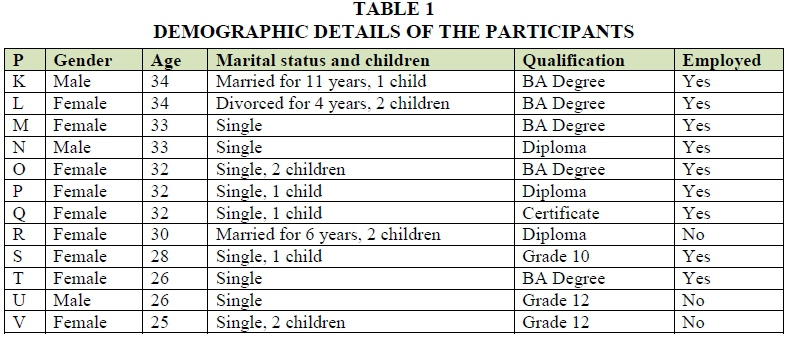
Thirteen participants (n = 13) out of the 15 invited agreed to take part. While the sample size may appear small and represent an urban-bias - because the programme leaves out rural experiences which may add depth to this topic - it aligns with best practices in descriptive phenomenology, which emphasise depth and richness of data over breadth (Giorgi, 2009). The final sample included eight government-employed Probation Officers and five NGO-affiliated social workers, ensuring a balance of perspectives across sectors.
Data collection
Data were collected using a semi-structured interview guide, developed by the research team and refined through expert peer review. Consistent with recommendations for descriptive phenomenological studies (Englander, 2012), the guide focused on eliciting detailed narratives about participants' experiences in each phase of IDTRR. Questions were aligned with the study's conceptual framework, exploring how gender-centredness, child-centredness and conflict sensitivity were understood and applied in practice. The guide was flexible and iterative, allowing researchers to probe emerging themes while maintaining consistency across interviews.
Data were collected between June and August 2024, in private meeting spaces within participants' workplaces to ensure comfort and confidentiality. Each interview lasted between 56 and 71 minutes and was conducted in English, which is the professional language of social work in Zimbabwe. All interviews were audio-recorded with participant consent and transcribed verbatim. In line with Husserlian phenomenology, the research team practised epoché, or bracketing, by engaging in pre-interview reflexivity and peer debriefing to minimise researcher bias (Giorgi, 2009). All three researchers participated in data collection: Researcher 1 conducted 5 interviews, Researcher 2 conducted 4, and Researcher 3 conducted 4. This collaborative approach enhanced inter-rater consistency and allowed for collective meaning-making, as recommended in phenomenological research (Larkin et al., 2019).
To mitigate response bias and avoid any perception of undue inducement, participants were explicitly informed prior to the interviews that the study carried no direct financial benefits. However, to respectfully acknowledge the professional time contributed - an honorarium of $30 USD was offered after the interviews were completed. The decision to provide this token of appreciation was made at the discretion of the research team and transparently communicated to the Directorate of the Department of Social Development (DSD), in the absence of formalised national ethical guidelines on participant compensation in Zimbabwe.
Data analysis and trustworthiness
Data analysis was conducted in two structured phases, combining the use of computer-assisted qualitative data analysis software with collaborative meaning construction, in line with the principles of descriptive phenomenology (Giorgi, 2009). This dual-phase approach enhanced both analytical rigour and methodological transparency.
Phase One: Preliminary thematic identification using MAXQDA: Following transcription and initial data familiarisation, the research team used MAXQDA Analytics Pro 2022 to manage and analyse the data. This software facilitated the automated identification of preliminary thematic clusters using built-in tools such as: (1) Word frequency analysis to determine high-use terms and concepts, (2) Word cloud generation to visualise prominent discursive patterns, (3) Semantic similarity mapping to explore relatedness of codes using Boolean logic (e.g. OR, AND, NEAR operators), and (4) Code co-occurrence models to identify overlapping ideas across transcripts. This phase generated a set of preliminary codes and thematic clusters, which were exported into a working codebook. These initial themes were not treated as final interpretations, but as starting points for deeper phenomenological engagement, in line with the iterative nature of phenomenological analysis (Vagle, 2018).
Phase Two: Collaborative meaning construction and thematic refinement: The second phase followed a collaborative analytical process consistent with Giorgi's descriptive phenomenological method, which requires researchers to engage directly with participants' accounts to identify the essential structures of lived experience (Giorgi, 2009). This approach discourages the outsourcing of analysis to external coders, arguing instead for researcher immersion to protect phenomenological fidelity (Praveena & Sasikumar, 2021). All three researchers independently reviewed the preliminary codes and then convened for three analysis meetings. During these sessions, the team: (1) merged related themes into broader, more abstract categories based on conceptual resonance and redundancy; (2) selected significant verbatim excerpts (i.e. "meaning-rich units") that best illustrated the lived experience of each thematic area; and (3) engaged in collective interpretation of these key excerpts, constructing shared meaning through reflective dialogue. Such joint meaning construction is a recommended practice in multi-author phenomenological studies, as it enhances analytical depth, reflexivity, and ethical accountability (Van Manen, 2017). This phase produced four final themes that reflected the shared experiential essence of participants' narratives.
To enhance inter-coder reliability, these discussions included comparative reviews of independently coded segments and consensus-building around theme boundaries. Divergent interpretations were discussed until an analytic consensus was reached, thereby reinforcing credibility and consistency among coders. Such joint meaning construction is a recommended practice in multi-author phenomenological studies, as it enhances analytical depth, reflexivity, and ethical accountability (Larkin et al., 2019). The research team also engaged in bracketing (epoché) throughout the data-analysis process. Prior to coding, each researcher prepared a positionality statement outlining their professional background, assumptions and prior exposure to child protection work, including two researchers with prior experience in social work NGOs. These statements were discussed openly to surface potential biases and create a shared awareness of how positionality could shape interpretation. This reflexive practice helped the team to suspend preconceptions and remain attuned to participant meanings, in alignment with descriptive phenomenological standards (Giorgi, 2009).
While descriptive phenomenological research does not claim epistemic neutrality, it demands methodological transparency and interpretive integrity (Van Manen, 2017). As such, several measures were taken to enhance the credibility, dependability, and confirmability of this study. Firstly, the researchers acknowledged their positionality. Two of the three researchers are trained social workers, although none had previously worked directly with child survivors of sexual exploitation. To reduce interpretive bias, the team engaged in reflexive journaling throughout the study and incorporated peer debriefing sessions after each round of analysis. Secondly, as recommended by Birt et al. (2016), member checking was conducted with 11 of the 13 participants, who reviewed the preliminary findings and confirmed their accuracy and resonance. This process allowed participants to validate the authenticity of the researchers' interpretations and offer clarifications where necessary. Thirdly, the research team conducted expert debriefings with three senior professionals - two from the Department of Social Development and one from a leading child-protection NGO - who were not participants in the study. These experts reviewed the thematic structures and affirmed their coherence and relevance based on professional practice. Finally, auditability was ensured through meticulous documentation of all procedural steps, from transcription to theme development. MAXQDA audit trails, reflexive notes, and analytic memos are available upon request, enabling external validation of the findings.
Ethical approvals and informed consent statements
Ethical approval was granted by the Midlands State University Research Ethics Committee (Ref: MSURC/EC/2024/17). Further permission to access participants was obtained from the Department of Social Development and the respective NGOs. Written informed consent was obtained from all participants prior to data collection. Participants were informed of their right to withdraw at any time without consequence. All data were anonymised and stored on encrypted, password-protected devices, accessible only to the research team. Pseudonyms were used in transcripts and reporting to protect confidentiality.
RESULTS
In this section we discuss four critical, interlocking barriers to the effective implementation of the IDTRR process for child survivors of sexual exploitation in Zimbabwe. These include the absence of gender-sensitive, child-centred and conflict-sensitive practice; the exclusion of children from participation in case decision-making; the lack of conflict-sensitive coordination across fragmented systems; and the pervasiveness of community-level stigma that undermines reintegration.
Systemic workforce deficits and the absence of gendered, child-centred, and conflict-aware practice in IDTRR
A central theme emerging from the data is the systemic workforce deficit and the institutional failure to embed gender-centred, child-centred and conflict-aware practices throughout the IDTRR process. While staffing shortages are a surface-level symptom, participants described deeper structural gaps - including the absence of specialised training in trauma- and gender-informed as well as participatory care. These deficits are not merely technical; they reflected a failure to institutionalise ethical, inclusive and context-sensitive practice models. From a child-centred perspective, social workers articulated the emotional and ethical tension of working in systems that lack the tools to uphold children's rights and voices. Lastly, the conflict-sensitive dimension was evident as participants also indicated how institutional instability, resource scarcity and weak inter-sectoral linkages create disjointed, reactive responses to child sexual exploitation. One of the social workers shared that:
We are severely short-staffed. At our Makombe office, from a team of fifteen, only four of us are left. We are handling cases we are not prepared for, emotionally or professionally. Each day, I go home knowing I couldn't give enough to all the children I saw, especially those who have been sexually exploited. They need more than we can offer. (Probation Officer, 3 years in IDTRR)
This vivid account captured the emotional toll of structural failure, highlighting how understaffing becomes an ethical crisis when applied to cases of child sexual exploitation. The worker's sense of guilt and inadequacy reflects a child-centred concern - not only about service delivery, but about the wellbeing and dignity of each survivor. The reference to "not being prepared emotionally or professionally" underscores the absence of trauma-informed, gender-aware training, and reveals a disconnect between policy mandates and practice realities. The experience was echoed by another social worker who noted:
Most of us were trained as generalists. We didn't learn specifically about child sexual exploitation. We do our best, but sometimes we are afraid of causing more harm. It's a very sensitive issue, and without proper training, even the questions we ask during documentation can re-traumatise the child. (NGO Social Worker, 5 years in IDTRR)
This reflection reveals the disciplinary and ethical vulnerability of frontline workers. The fear of "causing more harm" illustrates a child-centred ethical awareness - a recognition that poorly handled interventions can undermine recovery. The mention of documentation reflects systemic gaps in gender-sensitive interviewing and trauma-informed engagement, suggesting that the absence of proper tools and guidance not only stalls the process but may also reproduce harm. The above interpretation is exemplified in another social worker's experience, who stated that:
Even if we identify a survivor, we don't have specialists who can do trauma counselling or gender-sensitive assessments. Sometimes, we must refer them to community health workers who are not trained in these issues. This weakens the whole IDTRR process because the child's needs are not fully addressed. (Probation Officer, 3 years in IDTRR)
This account exposes the collapse of care continuity within the IDTRR framework. The lack of referral pathways to gender-specialised or trauma-informed services points to a systemic failure in coordination, and the reliance on untrained personnel reflects the absence of a conflict-sensitive institutional ecosystem. The worker's emphasis on the child's needs "not being fully addressed" illustrates the erosion of core social work values, including the need for holism, participation and empowerment. This theme reveals that the absence of a gendered, child-centred and conflict-aware workforce undermines the entire IDTRR continuum.
Child survivors without a voice - Exclusion from decision-making in IDTRR
A significant theme that emerged from the data is the systematic exclusion of child survivors from meaningful participation in the IDTRR process. While children are the core subjects of the intervention, participants admitted that the child's voice often goes unheard in decisions about their placement, rehabilitation or reintegration. This revealed a critical gap in the child-centred perspective, which calls for children to be recognised as active agents with evolving capacities, rather than passive recipients of protection. Although Zimbabwe's 2012 Multi-Sectoral Protocol on the Management of Sexual Abuse mandates that reintegration should be guided by the best interests of the child (Government of Zimbabwe, 2012), including eliciting their views where possible, participants observed that survivors are frequently moved between institutions, placed in unfamiliar schools or homes, and subjected to reintegration timelines that are driven by organisational convenience rather than the child's emotional readiness or preferences. One of the social workers shared that:
We often must make quick decisions about where to place the children. Sometimes we don't even have time to ask them what they want. We assume that any place is better than where they came from. But I've seen girls run away from shelters because they didn't feel safe or comfortable. (Probation Officer, 4 years in IDTRR)
This reflection reveals a critical assumption of adult superiority in decision-making. While the intention may be protective, the practice contradicts Zimbabwe's child-protection protocol, which under Section 3 of the Children's Act (Chapter 5:06) and the 2012 Protocol, requires that children's opinions be considered in care planning, especially during placement and reintegration (Government of Zimbabwe, 2012, 2016). The social worker's acknowledgment that girls "run away" from supposedly safe spaces suggests a mismatch between institutional logic and lived experience and highlights the need for child-survivors to participate in shaping their care plans. The experience was echoed by another social worker who noted:
One of the girls we worked with wanted to go back to her aunt, but we insisted on placing her in a training centre. She stayed for a few weeks and then started acting out. Eventually, she disappeared. I still wonder if things would've been different if we had listened to her. (NGO Social Worker, 2 years in IDTRR)
Under Zimbabwe's Multi-Sectoral Protocol and the National Case Management System, family reunification is preferred if assessed to be safe - yet, as this participant's reflection shows, children's preferences are often overridden, even when family-based care aligns with policy guidelines. This account points to the long-term consequences of non-participatory practice. The worker's self-reflection - "I still wonder if things would've been different" - exposes a moral discomfort rooted in the neglect of children's voices. It suggests that interventions imposed without consent may not only fail, but may also deepen the child's sense of alienation and mistrust toward the system. The above interpretation is exemplified in another social worker's experience:
Sometimes we think we are protecting them by making decisions 'for their own good.' But many of these children have been through so much already. Not asking them about their opinion is like continuing the same cycle of control. They need to feel heard, not just moved around. (Probation Officer, 5 years in IDTRR)
This reflection powerfully links the denial of voice to the trauma of exploitation itself. By not involving children in decisions, the system risks replicating the very dynamics of domination and voicelessness that defined their earlier abuse. From a child-centred and trauma-informed perspective, inclusion is not optional; it is fundamental to healing. This theme reveals that the child-centred lens is critically absent in the operationalisation of IDTRR, particularly in relation to survivor participation and voice. The failure to engage children meaningfully in their own recovery processes eroded trust, reduces effectiveness and risks retraumatisation.
Fragmented systems in fragile contexts - The absence of conflict-sensitive approaches in IDTRR
The findings reveal a system characterised by inter-agency mistrust, political influence, donor-driven fragmentation and reactive responses to crises. Participants repeatedly expressed frustration with the lack of collaboration among key actors - government ministries, NGOs, police, and community leaders - often resulting in duplicated efforts, delayed responses, or institutional paralysis. The IDTRR process appears ill-equipped to navigate the complex power dynamics, historical mistrust and political sensitivities that shape local realities. Through their experience, social workers described feelings of disempowerment and frustration while working in an environment where attempts at providing institutional protection are undermined by bureaucratic competition, territorialism and politicisation. Findings revealed how systemic fragility and weak coordination not only delay service delivery, but also jeopardise children's safety and dignity. One of the social workers shared that:
During the rescue operation in Epworth, we had to act urgently, but there was no clear communication between us and the police. Some officers were arresting children instead of protecting them. We were trying to follow the IDTRR steps, but we kept getting conflicting instructions from different ministries. It was chaotic, and there was no reference back to the Multi-Sectoral Protocol or who was supposed to lead. (NGO Social Worker, 5 years in IDTRR)
This account powerfully illustrates how institutional fragmentation can lead to role confusion and even harm. The fact that children were being arrested instead of protected reflects a failure to develop shared understandings and protocols among actors. This breakdown is emblematic of a non-conflict-sensitive approach, where the absence of coordination magnifies existing vulnerabilities, especially during responses to crisis. The experience was shared by another social worker:
Sometimes, the Ministry of Public Service wants to take the lead, but then the Ministry of Home Affairs also steps in. NGOs are then caught in between. There's no coordination framework in practice, even though the Protocol outlines roles. Everyone wants to be seen doing something, but the child is the one who suffers the most in all this confusion. (Probation Officer, 2 years in IDTRR)
This reflection highlights the power struggles and institutional rivalries that often characterise responses to child protection. The emphasis on visibility - "everyone wants to be seen doing something" - shows how political performance can supersede child welfare. From a conflict-sensitive perspective, such dynamics indicate a lack of trust and shared accountability, which undermines the systemic resilience of IDTRR interventions. The above interpretation can be exemplified in another social worker's experience:
We've worked in communities where local leaders don't trust government officials. So, when we try to do tracing or reintegration, they block us or withhold information. There's a history of broken promises, and political interference makes it worse. According to the Protocol, community engagement is supposed to be part of reintegration, but if we don't involve them early or explain properly, they think we're pushing political agendas. (NGO Social Worker, 2 years in IDTRR)
This statement underscores the importance of local legitimacy and relationship-building in IDTRR. The mistrust between communities and state actors reflects a legacy of political exclusion and unmet expectations. Without conflict-sensitive engagement - grounded in transparency, neutrality and community participation - implementation efforts are seen as intrusive or manipulative, further marginalising survivors and deterring disclosure. This theme reveals that the IDTRR process operates in a fragmented landscape, where institutional mistrust, politicisation and poor coordination undermine child-protection efforts. There was no evidence of a conflict-sensitive approach that could build trust among stakeholders, respect local political contexts and foster collaborative, transparent decision-making.
Stigma, silence and social rejection - Community-level structural barriers to reintegration
Participants described how community-level stigma, moral judgment and social exclusion often significantly hindered the reintegration of children who have survived sexual exploitation. Despite the formal completion of the identification, documentation, tracing, rehabilitation and reintegration (IDTRR) steps, survivors often return to hostile environments where they are labelled, shamed and rejected by schools, families and neighbours. Participants described how survivors were treated as social outcasts, blamed for their own exploitation, or viewed as morally dangerous to other children. Feedback from social workers identified deep-rooted cultural taboos, gendered blame and a lack of community preparedness to receive and support survivors. Social workers shared their observations of children being retraumatised by community reactions, often choosing to isolate themselves or withdraw from school. One of the social workers shared that:
At one school, the headmaster refused to accept a survivor, saying she would teach others prostitution. We tried to explain, but he insisted the girl would 'spoil the others'. She was only 13. The child cried the whole day and asked us to take her back to the shelter. (Probation Officer, 3 years in IDTRR)
This account reflects gendered moralism and institutionalised stigma. The survivor is not only denied access to education - a fundamental right - but is also dehumanised through stereotypes that erase her victimhood. The child's emotional response and withdrawal from school demonstrate how reintegration fails when community actors reproduce harm, even unwittingly. Another social worker described a similar experience:
Some families don't want to take the children back. They feel ashamed or believe the child is cursed. One uncle told us, 'I can't have a prostitute under my roof.' This child was only rescued a few weeks earlier. We had no choice but to keep her in a temporary place for months. (NGO Social Worker, 2 years in IDTRR)
This account exposes how family rejection is not merely emotional, but structural. Survivors are left in limbo - neither reintegrated nor rehabilitated - because of cultural beliefs that interpret abuse by others as a moral failing of the victim. The phrase "no choice but to keep her" also highlights the limited options available when communities reject responsibility, placing additional pressure on already overwhelmed systems. The above interpretation is exemplified in another social worker's experience:
Even after we return them to school, some children ask to be transferred. They say other students call them names, or that teachers treat them differently. It's like they are being punished for what happened to them. Some end up dropping out again because it's too much. (Probation Officer, 5 years in IDTRR)
This account illustrates the long-term psychosocial effects of stigma, particularly among peers and educators. The school, which should be a site of healing and normalcy, becomes instead a space of surveillance and judgment. The survivor's decision to drop out reflects not just personal distress but a systemic failure to create inclusive and protective learning environments. This theme reveals that community stigma is a structural barrier to successful reintegration, rooted in gendered blame, cultural silence and institutional complicity.
DISCUSSION
The first theme highlighted the systemic deficit of trained personnel and the lack of institutionalised practice models that embed gender-responsive, child-centred and conflict-sensitive approaches within the IDTRR continuum. While Zimbabwean social workers are largely committed to their roles, they are placed in environments that deprive them of the tools, resources and support needed to respond ethically and effectively to cases of sexual exploitation. Similar workforce limitations have been observed in other low- and middle-income contexts. In Kenya, for instance, Cannon et al. (2020) found that social workers frequently rely on intuition rather than structured protocols because of a lack of training in trauma-informed and gender-aware care. In South Africa, DeLaney et al. (2024) noted that frontline professionals often fail to identify male survivors of sexual exploitation because victimhood is feminised in both professional discourse and training.
However, these challenges are not limited to under-resourced settings. In high-income countries such as the United States and the UK, Brayley and Cockbain (2014) and Mitchell et al. (2011) found that law enforcement and social service professionals often criminalise exploited youth, especially girls of colour, because of institutionalised stereotypes and a lack of gender-sensitive frameworks. What distinguishes the situation in Zimbabwe is the compounded impact of economic fragility, donor dependency and high professional attrition, which strip the IDTRR system of its ethical and technical foundations. From a critical social work perspective, as outlined by Dominelli (2017), this reflects institutionalised structural violence, where systems meant to serve survivors instead reinforce harm through neglect, exclusion and procedural rigidity. Drawing on Galtung's (1990) theory of structural violence, this form of harm is not direct but embedded in the unequal distribution of resources, knowledge and institutional responsiveness that renders survivors' needs invisible. Similarly, Farmer (2004) argues that structural violence manifests through institutional arrangements that appear neutral but systematically disadvantage marginalised groups - here, sexually exploited children. In this case, the absence of gender-responsive and trauma-informed training is not just a technical failure, but a harm-producing mechanism that disproportionately affects survivors based on gender, age, and social location.
The second theme revealed a stark absence of child participation in decisions that shape their recovery and reintegration. Despite international conventions such as the UNCRC (UN, 1989) affirming the right of children to be heard and involved in matters affecting them, the study found that survivors were frequently moved between institutions or placed in unfamiliar environments without their input. However, participants noted that children's input was often constrained not only by adult-centric decision-making, but also by limited placement options and the practical demands of the 2012 Multi-Sectoral Protocol, which prioritises immediate safety and institutional availability over preference. This exclusion is not merely procedural - it reflects deeper structural silencing that mirrors the dynamics of exploitation itself. In Bangladesh Huda et al. (2022) observed that survivors of trafficking were often placed in shelters without any consultation, leading to high rates of escape and re-victimisation. In Brazil Williams and D'Affonseca (2022) found that even well-funded reintegration programmes failed to include survivors in safety planning, often resulting in placements in abusive family settings. Conversely, countries such as Sweden and Australia have made strides in operationalising child-centred practice. Lindholm et al. (2024) document the success of child-friendly protocols that allow survivors to shape their recovery journeys through structured participation. Similarly, Pichler et al. (2021) describe Australia's Multi-Agency Protection Service (MAPS), where children's preferences are central to placement decisions. The contrast reinforces that participation is not contingent on resources alone, but on a normative commitment to viewing children as rights-holders rather than passive recipients. However, it is likely that this normative commitment is most effective when supported by adequate resources, sufficient human capacity and well-developed protocols, factors that are often more accessible in high-income contexts and remain limited in many low- and middle-income settings such as Zimbabwe.
From a child-centred perspective, as Lansdown (2005) argues, excluding children from decisions affecting them not only undermines their agency, but contributes to their sustained victimisation. Drawing from anti-oppressive social work theory, Thyberg (2023) adds that such exclusions deny children epistemic authority - the right to define and narrate their experiences - which is essential for healing and empowerment. The findings reveal how an adultist orientation within Zimbabwe's child protection system systematically silences survivors, effectively replicating the dynamics of control and voicelessness that characterise their exploitation. Furthermore, this absence of participatory practice is compounded by conflict-insensitive assumptions that view children's families and communities as neutral or safe, without interrogating the relational tensions or histories of trauma that may exist.
The third theme exposed how weak institutional coordination and political interference undermine the conflict-sensitive implementation of IDTRR processes. The testimonies revealed a landscape of fragmented mandates, inter-ministerial competition and community mistrust, which often result in contradictory actions and delayed responses. These dynamics are not unique to Zimbabwe. In Lebanon, Najjarnejad and Bromfield (2022) found that child protection interventions are frequently compromised by donor agendas and political sensitivities, especially in refugee contexts. Similarly, in Ghana Cannon et al. (2020) reported that unclear mandates between social services and law enforcement often result in duplicated efforts and missed opportunities for timely intervention.
However, the Zimbabwean context adds a specific layer of fragility. As Muridzo (2017) argues, the legacy of political volatility and public mistrust in state institutions makes cross-sectoral coordination particularly tenuous. From a conflict-sensitive point of view, this lack of trust is both a cause and consequence of fractured implementation. The country's post-colonial institutional architecture - characterised by centralised governance, high donor dependency and politicised service delivery - has produced what Galtung (1969) would describe as an "unjust structure," where the absence of collaboration becomes a form of violence in itself. As Jackson and Sadler (2022) point out, the theory of structural violence helps us understand how institutional mistrust and administrative chaos become invisible yet potent forms of harm, disproportionately affecting vulnerable children, especially in the context of survivors of sexual abuse. Although the 2012 Multi-Sectoral Protocol on the Management of Sexual Abuse clearly defines child sexual exploitation (CSE) as both a criminal offense and a child protection issue, the study revealed widespread confusion among frontline responders - especially law enforcement - about the appropriate procedural response. This signals a critical implementation gap: while the protocol mandates that all cases of CSE be referred to the Department of Social Development for case management and psychosocial support, enforcement agencies often act outside this framework, driven by punitive logic rather than protective intent. Non-conflict-sensitive approaches - such as top-down ministry directives issued without field coordination - have, in some cases, led to children being arrested during rescue operations or denied access to psychosocial care because of inter-agency stalemates. Such harms are not incidental; they are structurally produced through institutional dysfunction.
The final theme illuminated how community stigma, gendered moralism and social exclusion undermine reintegration efforts, even when institutional processes are formally completed. Survivors who return to communities often face blame, shame and rejection - from schools, families and peers. These experiences are echoed across diverse settings. In South Africa Mathews and Berry (2024) documented that survivors of CSE often drop out of school as a result of peer bullying and teacher discrimination. In Brazil Williams and D'Affonseca (2022) found that patriarchal family structures often reject girls who have been exploited, viewing them as having brought dishonour to the family. However, what is particularly striking in the Zimbabwean case is how stigma operates not merely as a cultural norm, but as a systemic and structural force embedded in institutional practices. The refusal of schools to admit survivors, or families to accept them back, reveals a deeper societal incapacity to engage with trauma in a healing and inclusive way. From a gender-sensitive perspective, stigma is deeply intertwined with moralistic narratives that blame girls for their exploitation, while rendering boys invisible. The child-centred approach highlights the psychological toll of such exclusion, particularly when children internalise blame and withdraw from school or services. From a conflict-sensitive perspective, these reintegration failures are not just a matter of social attitudes, but reflect unresolved tensions between communities and state actors. In areas with a history of political exclusion or state mistrust, reintegration can be viewed with suspicion - perceived as external imposition rather than community-led care. As Meintjes and Giese (2006) argue, reintegration is not a technical act, but a relational process shaped by intra-family and community dynamics. Without conflict-sensitive engagement that addresses these relational ecologies, reintegration risks becoming a revolving door - where children return to exploitative environments or are pushed into isolation and secondary trauma.
LIMITATIONSThis study is limited by its qualitative design and small, purposive sample of 13 social workers, which, while appropriate for in-depth phenomenological inquiry, restricts the generalisability of the findings. The study did not employ quantitative methods such as binary logistic regression, survival analysis, or Cox regression, which could have provided statistically inferential insights into the relationships between specific variables, such as survivor outcomes and institutional responses. Additionally, variables such as length of service, caseload ratios or reintegration success rates were not quantified or analysed using descriptive statistics. However, the sample size was anticipated rather than avoided, reflecting the practical constraints of working within a limited pool of IDTRR-experienced professionals in Zimbabwe. Importantly, the study also excluded the voices of survivors themselves, a methodological decision grounded in ethical and developmental considerations; however, this exclusion limits direct insight into the perspectives of survivors. Future research should prioritise participatory methodologies that ethically engage survivors - particularly adolescents - to co-produce knowledge and inform more inclusive, survivor-led IDTRR models. Future research could adopt a mixed-methods approach, incorporating quantitative cohort tracking and inferential statistical modelling across a larger sample to triangulate findings and test associations between workforce capacity, survivor participation and reintegration outcomes.
CONCLUSIONS AND RECOMMENDATIONS
This study concludes that the IDTRR process for survivors of child sexual exploitation in Zimbabwe is undermined by four interrelated systemic failures: (1) the absence of institutionalised gender-sensitive, child-centred and conflict-aware practice; (2) the exclusion of children's voices in decision-making; (3) fragmented inter-agency coordination in fragile political contexts; and (4) structural stigma within communities that obstructs reintegration. These failures are not isolated but reflect deeper patterns of structural violence, institutional inertia and ethical neglect. To address these challenges, five concrete and targeted reforms are recommended.
1. Mandate gender-sensitive and trauma-informed training for all IDTRR personnel - led by the Ministry of Public Service, Labour and Social Welfare in partnership with the Zimbabwe Gender Commission. This should include modules on LGBTQ+ inclusion, child-friendly communication and participatory planning.
2. Institutionalise survivor participation protocols within all IDTRR case management tools - developed by the Department of Social Development, in collaboration with UNICEF Zimbabwe, using age-appropriate participatory frameworks - by 2030.
3. Establish cross-sectoral coordination hubs at district level - led by the Ministry of Home Affairs and Cultural Heritage, integrating police, social workers, education officers and NGOs with shared case databases and referral pathways. Each hub will function as a single-window entry point for managing CSE cases, reducing duplication, clarifying roles and ensuring that no child falls through the cracks of fragmented service delivery.
4. Implement a community-based stigma-reduction programme - spearheaded by the Ministry of Primary and Secondary Education and National AIDS Council, using school-based clubs, parent dialogues and local media to reshape harmful narratives around CSE.
5. Develop a national IDTRR - administered by the Zimbabwe National Statistics Agency (ZIMSTAT), to track survivor outcomes, institutional response times and reintegration success rates disaggregated by gender, region and case type. Key indicators should include response time, duration of placement, recurrence of exploitation and access to psychosocial services. To ensure survivor confidentiality, the dashboard must use anonymised data entry, secure storage protocols and restricted access mechanisms overseen by a multi-sectoral committee comprised of ZIMSTAT, the Department of Social Development, the Ministry of Public Service, Labour and Social Welfare, and child-protection NGOs to ensure ethical oversight, transparency and accountability.
REFERENCES
-
Birt, L., Scott, S., Cavers, D., Campbell, C., & Walter, F. (2016). Member checking: A tool to enhance trustworthiness or merely a nod to validation? Qualitative Health Research, 26(13), 1802-1811. https://doi.org/10.1177/1049732316654870
» https://doi.org/10.1177/1049732316654870 -
Brayley, H., & Cockbain, E. (2014). British children can be trafficked too: Towards an inclusive definition of internal child sex trafficking. Child Abuse Review, 23(3), 171-184. https://doi.org/10.1002/car.2307
» https://doi.org/10.1002/car.2307 -
Cannon, L. M., Sheridan-Fulton, E. C., Dankyi, R., Seidu, A. A., Compton, S. D., Odoi, A., Darteh, E. K. M., & Munro-Kramer, M. L. (2020). Understanding the healthcare provider response to sexual violence in Ghana: a situational analysis. PLoS One, 15(4), e0231644. https://doi.org/10.1371/journal.pone.0231644
» https://doi.org/10.1371/journal.pone.0231644 -
Capaldi, M., Schatz, J., & Kavenagh, M. (2024). Child sexual abuse/exploitation and LGBTQI+ children: Context, links, vulnerabilities, gaps, challenges and priorities. Child Protection and Practice, 1, 100001. https://doi.org/10.1016/j.chipro.2024.100001
» https://doi.org/10.1016/j.chipro.2024.100001 -
DeLaney, E. N., Williams, C. D., Jones, S. C., Hood, K. B., Cage, J., Coston, B. E., Hawn, S. E., Santana, A., & Dick, D. M. (2024). Sexual victimization and mental health among LGBQ+ college students: Examining social support and trauma-related drinking as mediators. International Journal of Mental Health and Addiction, 22(4), 2456-2471. https://doi.org/10.1007/s11469-022-00997-6
» https://doi.org/10.1007/s11469-022-00997-6 - Dominelli, L. (2017). Feminist social work theory and practice. Bloomsbury.
- Dumba, N. (2023). Towards a working model for the effective participation of women in national politics in Zimbabwe. (Master's thesis). University of Bergen, Norway.
-
ECPAT International & We Protect Global Alliance. (2022). Child sexual abuse and exploitation online: Survivors Perspectives. WeProtect Global Alliance. https://www.weprotect.org/wp-content/uploads/05-01-2022_Project_Report_EN_FINAL.pdf
» https://www.weprotect.org/wp-content/uploads/05-01-2022_Project_Report_EN_FINAL.pdf -
Englander, M. (2012). The interview: Data collection in descriptive phenomenological human scientific research. Journal of Phenomenological Psychology, 43(1), 13-35. https://doi.org/10.1163/156916212X632943
» https://doi.org/10.1163/156916212X632943 -
Farmer, P. (2004). An anthropology of structural violence. Current Anthropology, 45(3), 305-325. https://gsdrc.org/document-library/an-anthropology-of-structural-violence/
» https://gsdrc.org/document-library/an-anthropology-of-structural-violence/ -
Featherstone, B., Gupta, A., Morris, K., & Warner, J. (2018). Let's stop feeding the risk monster: Towards a social model of 'child protection'. Families, Relationships and Societies, 7(1), 07-22. https://doi.org/10.1332/204674316X14552878034622
» https://doi.org/10.1332/204674316X14552878034622 -
Galtung, J. (1990). Cultural violence. Journal of Peace Research, 27(3), 291-305. https://doi.org/10.1177/0022343390027003005
» https://doi.org/10.1177/0022343390027003005 - Gatuguta, A., Colombini, M., Seeley, J., Soremekun, S., & Devries, K. (2021). Supporting children and adolescents who have experienced sexual abuse to access services: Community health workers' experiences in Kenya. Child Abuse & Neglect, 116, 104244. https://doi.org/10.1016/j.chiabu.2019.104244
- Giorgi, A. (2009). The descriptive phenomenological method in psychology: A modified Husserlian approach. Duquesne University Press.
-
Government of Zimbabwe. (2012). Multi-Sectoral Protocol on the Management of Sexual Abuse and Violence in Zimbabwe. Ministry of Labour and Social Services. https://cdn.togetherforgirls.org/assets/files/Multi_Sectoral_Protocol_2012-Zimbabwe.pdf
» https://cdn.togetherforgirls.org/assets/files/Multi_Sectoral_Protocol_2012-Zimbabwe.pdf -
Government of Zimbabwe. (2016). Children's Act [Chapter 5:06]. https://zimlii.org/akn/zw/act/1971/22/eng@2016-12-31/source?yag
» https://zimlii.org/akn/zw/act/1971/22/eng@2016-12-31/source?yag -
Habib, N., Naveed, S., & Akhtar, C. S. (2024). "Can't fight with my fate": Reasons explaining violence-accepting behavior of women in Pakistan. SAGE Open, 14(3). https://doi.org/10.1177/21582440241268358
» https://doi.org/10.1177/21582440241268358 -
Huda, M. N., Hossain, S. Z., Dune, T. M., Amanullah, A. S. M., & Renzaho, A. M. (2022). The involvement of Bangladeshi girls and women in sex work: Sex trafficking, victimhood, and agency. International Journal of Environmental Research and Public Health, 19(12), 7458. https://doi.org/10.3390/ijerph19127458
» https://doi.org/10.3390/ijerph19127458 -
Jackson, B., & Sadler, L. S. (2022). Structural violence: An evolutionary concept analysis. Journal of Advanced Nursing, 78(11), 3495-3516. https://doi.org/10.1111/jan.15341
» https://doi.org/10.1111/jan.15341 -
Johansson, S. (2022). From policy to practice: Measures against sexual abuse by Swedish sports federations. Frontiers in Sports and Active Living, 4, 841653. https://doi.org/10.3389/fspor.2022.841653
» https://doi.org/10.3389/fspor.2022.841653 - Lansdown, G. (2005). Children's welfare and children's rights. In P. Foley, J. Roche, & S. Tucker (Eds.), Child welfare and social policy (pp. 117-126). Policy Press.
-
Larkin, M., Shaw, R., & Flowers, P. (2019). Multiperspectival designs and processes in interpretative phenomenological analysis research. Qualitative Research in Psychology, 16(2), 182-198. https://doi.org/10.1080/14780887.2018.1540655
» https://doi.org/10.1080/14780887.2018.1540655 - Leach, M. (2016). Gender equality and sustainable development. London: Routledge.
-
Lindholm, A., Rantatalo, O., Lindberg, O., & Lundmark, R. (2024). The investigation of online child sexual abuse cases in Sweden: Organizational challenges and the need for collaboration. Nordic Journal of Studies in Policing, 11(1), 1-15. https://doi.org/10.18261/njsp.11.1.7
» https://doi.org/10.18261/njsp.11.1.7 -
Mathews, S., & Berry, L. M. (2024). Developing an understanding of complex trauma among child sexual assault survivors in South Africa: Implications for practice. Child Abuse Review, 33(6), e70012. https://doi.org/10.1002/car.70012
» https://doi.org/10.1002/car.70012 -
Meintjes, H., & Giese, S. (2006). Spinning the epidemic: The making of mythologies of orphanhood in the context of AIDS. Childhood, 13(3), 407-430. https://psycnet.apa.org/doi/10.1177/0907568206066359
» https://psycnet.apa.org/doi/10.1177/0907568206066359 -
Mitchell, K. J., Jones, L. M., Finkelhor, D., & Wolak, J. (2011). Internet-facilitated commercial sexual exploitation of children: Findings from a nationally representative sample of law enforcement agencies in the United States. Sexual Abuse, 23(1), 43-71. https://doi.org/10.1177/1079063210374347
» https://doi.org/10.1177/1079063210374347 -
Moirangthem, S., Kumar, N. C., & Math, S. B. (2015). Child sexual abuse: Issues & concerns. Indian Journal of Medical Research, 142(1), 1-3. https://doi.org/10.4103/0971-5916.162084
» https://doi.org/10.4103/0971-5916.162084 -
Monteiro, A., Ali, A. M., & Laranjeira, C. (2025). Lived experiences of physiotherapists in caring for people with advanced amyotrophic lateral sclerosis in Portugal: A Phenomenological Study. Behavioral Sciences, 15(4), 510. https://doi.org/10.3390/bs15040510
» https://doi.org/10.3390/bs15040510 - Mugabe, M. (2021). Psychosocial effects of child sexual abuse on the holistic development of the girl child in Zimbabwe. (Doctoral thesis). University of the Free State, South Africa.
-
Muridzo, N. (2017). Child sexual abuse in Zimbabwe: An agenda for social work. The Indian Journal of Social Work, 75(1), 49-68. https://journals.tiss.edu/ijsw/index.php/ijsw/article/view/12
» https://journals.tiss.edu/ijsw/index.php/ijsw/article/view/12 -
Muzingili, T. (2025). The brain drain of social workers in Zimbabwe: A threat to the provision of quality child protection services. Journal of Human Rights and Social Work, 1-15. http://dx.doi.org/10.1007/s41134-024-00367-3
» http://dx.doi.org/10.1007/s41134-024-00367-3 -
Muzingili, T. (2025). Factors predicting the resilience of school re-integrated teenage mothers in Zimbabwe. Cogent Education, 12(1). https://doi.org/10.1080/2331186X.2025.2540592
» https://doi.org/10.1080/2331186X.2025.2540592 -
Najjarnejad, N., & Bromfield, N. (2022). Professional stakeholders' perceptions of child marriage in Lebanon among Syrian refugees. Children and Youth Services Review, 140, 106592. https://doi.org/10.1016/j.childyouth.2022.106592
» https://doi.org/10.1016/j.childyouth.2022.106592 -
Ndhlovu, G. N., & Mfoafo-M'Carthy, M. (2022). Exploring the culture of silence on child sexual abuse within the family in Zimbabwe: A review of the literature. African Journal of Social Work, 12(5), 239-248. https://www.ajol.info/index.php/ajsw/article/view/255347
» https://www.ajol.info/index.php/ajsw/article/view/255347 -
O'Gorman, K., Pilkington, V., Seidler, Z., Oliffe, J. L., Peters, W., Bendall, S., & Rice, S. M. (2024). Childhood sexual abuse in boys and men: The case for gender-sensitive interventions. Psychological Trauma: Theory, Research, Practice, and Policy, 16(S1), S181. https://doi.org/10.1037/tra0001520
» https://doi.org/10.1037/tra0001520 - O'Leary, C. (2020). The experiences of community college STEM Instructors toward online college STEM with-laboratory courses: A qualitative phenomenological study. (Doctoral thesis). Northcentral University, United States of America.
-
Pichler, A. S., Powell, M., Sharman, S. J., Westera, N., & Goodman-Delahunty, J. (2021). Discussions about child witness interviews during Australian trials of child sexual abuse. Police Practice and Research, 22(1), 938-952. https://psycnet.apa.org/doi/10.1080/15614263.2019.1689133
» https://psycnet.apa.org/doi/10.1080/15614263.2019.1689133 - Popovych, S. (2021). The concept of "conflict sensitivity" and its application by country and field office staff during implementation of humanitarian programmes: Case study of Save the Children Canada. (Master's thesis). Fordham University, United States of America.
-
Praveena, K. R., & Sasikumar, S. (2021). Application of Colaizzi's method of data analysis in phenomenological research. Med Leg Updat, 21(2), 914-918. http://dx.doi.org/10.37506/mlu.v21i2.2800
» http://dx.doi.org/10.37506/mlu.v21i2.2800 -
Shaw, S., Cham, H. J., Galloway, E., Winskell, K., Mupambireyi, Z., Kasese, C., Bangani, Z., & Miller, K. (2021). Engaging parents in Zimbabwe to prevent and respond to child sexual abuse: A pilot evaluation. Journal of Child and Family Studies, 30, 1314-1326. https://doi.org/10.1007/s10826-021-01938-y
» https://doi.org/10.1007/s10826-021-01938-y -
Smith, J. A. (2017). Interpretative phenomenological analysis: Getting at lived experience. The Journal of Positive Psychology, 12(3), 303-304. https://doi.org/10.1080/17439760.2016.1262622
» https://doi.org/10.1080/17439760.2016.1262622 -
Spyrou, S. (2017). Time to decenter childhood? Childhood, 24(4), 433-437. https://doi.org/10.1177/0907568217725936
» https://doi.org/10.1177/0907568217725936 -
Taruvinga, R., Muzingili, T., Chiweda, J., & Cheema, G. K. (2025). The nascent roles and challenges of school social work in enhancing well-being for high school students in Zimbabwe. Southern African Journal of Social Work and Social Development, 37(2), 19-pages. https://doi.org/10.25159/2708-9355/17935
» https://doi.org/10.25159/2708-9355/17935 -
Thyberg, C. T. (2023). Preparing social workers for anti-oppressive practice: Evaluating the role of critical social work education. Journal of Social Work Education, 59(2), 407-422. http://dx.doi.org/10.1080/10437797.2022.2119060
» http://dx.doi.org/10.1080/10437797.2022.2119060 -
Tsikai, R., Chingarande, S. D., & Chaminuka, L. (2023). Developed inclusive Eurocentric and Afrocentric perspectives to curb sexual violence against women, adolescents and children: Case-study of Epworth District, in Harare South Province of Zimbabwe. Open Journal of Social Sciences, 11(10), 587-604. https://doi.org/10.4236/jss.2023.1110033
» https://doi.org/10.4236/jss.2023.1110033 - United Nations (UN). (1989). United Nations Convention on the Rights of the Child. New York: UN Department of Public Information.
- Vagle, M. D. (2018). Crafting phenomenological research. Routledge.
-
Van Manen, M. (2017). But is it phenomenology?. Qualitative Health Research, 27(6), 775-779. https://doi.org/10.1177/1049732317699570
» https://doi.org/10.1177/1049732317699570 - Williams, L. C., & D'Affonseca, S. M. (2022). Child sexual abuse in Brazil: Awareness, legal aspects, and examples of prevention strategies. In S. Deb (Ed.), Child safety, welfare and well-being: Issues and challenges (pp. 523-531). Singapore: Springer Singapore.
-
Williamson, C., & Prior, M. (2009). Domestic minor sex trafficking: A network of underground players in the Midwest. Journal of Child & Adolescent Trauma, 2, 46-61. https://doi.org/10.1080/19361520802702191
» https://doi.org/10.1080/19361520802702191
Article accepted: 10/12/2025
Article published: 20/06/2026