Association between coping strategies and secondary traumatic stress among forensic social workers in South Africa
Abstract
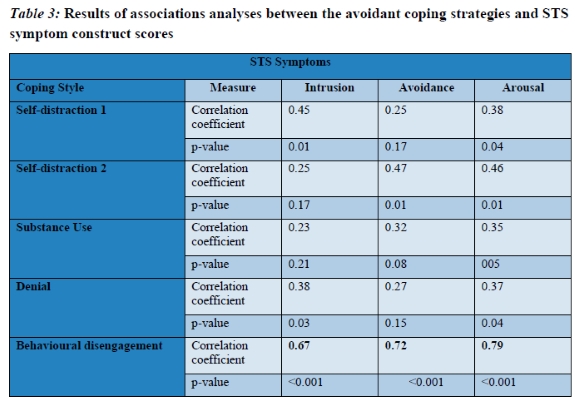
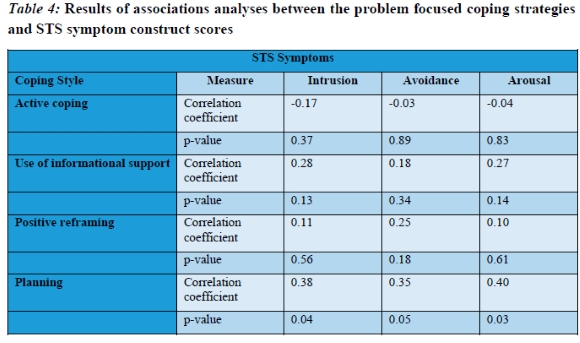
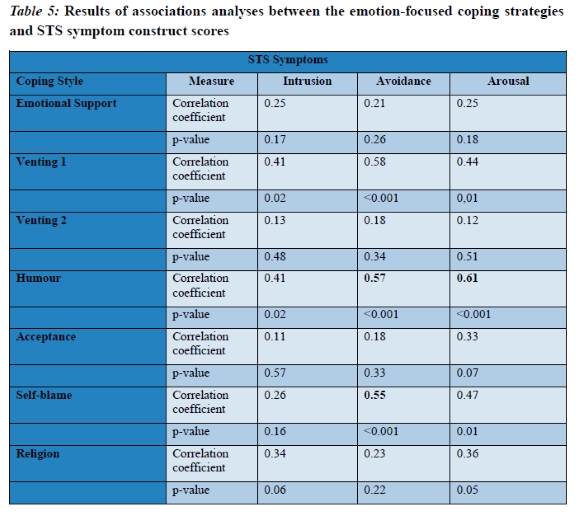
Forensic social work in South Africa is challenging, increasing the likelihood of secondary traumatic stress among its practitioners. Proactive coping strategies are necessary to reduce the impact of secondary traumatic stress on forensic social workers. The aim of this study was to describe the association between the frequency of different coping strategies and the frequency of secondary traumatic stress symptoms in forensic social workers. The study applied a quantitative approach with a cross-sectional descriptive design. An all-inclusive willing participation sampling method was used, focusing on all qualified forensic social workers who graduated from a South African university. The study found that avoidant and emotion-focused coping strategies were linked to an increase in secondary traumatic stress symptoms. Employers and therapists can support forensic social workers by offering techniques that encourage the use of problem-focused coping strategies, aiming to alleviate symptoms of perceived secondary traumatic stress.
Coping; forensic social work; secondary traumatic stress; symptoms