Exploring the knowledge and needs of parents with young persons misusing substances
Abstract
Substance misuse amongst young people continues to increase alarmingly. Sadly, parents are expected to rescue the situation and provide support to the young person. This article seeks to explore the knowledge and needs of parents with young persons misusing substances. The study was conducted at the 10 service points of the Gauteng Department of Social Development (DSD), in the City of Tshwane Metropolitan Municipality (CTMM). A qualitative research approach with non-probability purposive sampling was used to select 10 parents of young persons misusing substances. Face-to-face individual semi-structured interviews based on an interview guide were employed to collect the data. The data were analysed by using Tesch's eight-step process of analysing factual data. Two themes with associated sub-themes emerged. A need was identified for parents to be better equipped and informed about substance misuse and how to deal with it to enable them to provide appropriate support to young persons.
knowledge; parents; needs; substance; substance misuse; young persons
INTRODUCTION
According to the 2023 World Drug Report of the United Nations Office on Drugs and Crime (UNODC), young people are globally more prone to substance misuse than adults are (UNODC, 2023). In addition, this report revealed that in South America more than half of those currently undergoing substance misuse treatment are under the age of 25 years, while in Africa 70% are under the age 35 (UNODC, 2023). In South Africa, it is estimated that 15% of the young people are prone to misuse substances (Fernandes & Mokwena, 2016). It is worth noting that in South Africa young people are increasingly misusing substances, to the extent that almost 50% and 12.7 % of South African school-going young people have been reported to have misused alcohol or cannabis, respectively, at least once in their lives (Groenewald, 2018).
Globally, cannabis is the most misused substance, with an estimated total of 219 million incidents of misuse in 2021 (UNODC, 2023). In South Africa, according to the National Drug Master Plan, the most widely misused psychoactive substance is alcohol (Department of Social Development [DSD], 2019). In addition, according to the latter report, the most misused illicit substance amongst South African young people is cannabis. Apart from cannabis, young people in South Africa misuse nyaope/whoonga and methamphetamine (tik) despite its effects on the users and their families (DSD, 2019). Likewise, data from the 2022 South African Community Epidemiology Network on Drug Use (SACENDU) report indicate that cannabis was the most common primary substance misused across all South African regions during the period July to December 2021 (SACENDU, 2022).
Regrettably, the misuse of substances has a major impact on the individual as well as the family and community, and it affects people financially and physically (Mathibela & Skhosana, 2019). Braaf, Roman and Pharaoh (2022) noted that there is undisputed evidence about the negative effects of substance misuse on family members, especially on the parents of young persons. Despite the negative impact of substance misuse in the family, Motsoeneng (2018) is of the view that there is often little concern about the immense impact of substance misuse on the family members, even though the misuser is not living in isolation but with significant others. In a related study, Nkosi (2017) pointed out that parents are more likely to be stigmatised by the community and their family name being tarnished because of the behaviour of the young person misusing substances.
According to Masombuka (2021), it is traumatic for parents to learn that a young person is misusing substances. Thus, some of the feelings highlighted by parents include self-blame, feeling responsible for the young person's misuse of substances and shame (Nkosi 2017). In a related study, parents felt that social workers and other professionals had become allied with the young person misusing a substance, because they refused to disclose information (Masombuka & Qalinge, 2019). In addition, parents described the confidentiality principle that governs the professional relationship between the young person and the social worker as enabling secrets to be kept, thus making it impossible for parents to understand what the issues are and how to help. This is an aspect of the finding that families need information to enable them to effectively support a member with a substance misuse problem (Subekti, Rahmat & Wilopo, 2021). Essentially, many parents often do not realise that the young person is misusing a substance, hence they assume that the behavioural changes that occur are the result of a natural developmental stage, where the young person often lies and speaks disrespectfully (Subekti et al., 2021). In a related study, Mathibela and Skhosana (2019) pointed out that parents living with a young person misusing substances require information on the dangers of misusing substances, as well as the ability to identify the signs and symptoms of substance misuse and knowing where to seek help upon realising that a young person is misusing substances.
Groenewald and Bhana (2016) pointed out that families should not only be viewed as units, but also as an inclusive collection of members (for example, parents, grandparents and siblings) who may have separate support needs. Thus, interventions should not focus only on a young person misusing substances, but must ensure that the whole family structure is prioritised and that the needs of each member are considered. In a related study, Waini (2015) called up social workers to ensure that services were readily available and accessible for parents with young persons misusing substances. Furthermore, social service organisations are urged to ensure that parents with young persons misusing substances are capacitated and given information packages which should include information on substances, treatment processes and the impact of substances on the parents and family (Waini, 2015).
Since the study is concerned with the relationships within the family, the family systems approach was deemed appropriate as a theoretical framework for the study. In terms of the family systems approach, substance misuse by an individual family member might be the result of a dysfunctional family system. Nonetheless, family members within the system need each other throughout the family life cycle. Therefore, this also includes happy moments or challenging times (Kalam & Mthembu, 2018). In terms of the family systems approach, it is essential to perceive the family as a dynamic system with the actions of any one of its parts affecting and being affected by the interactions with the others and the environment (Shulman, 2016). The behaviour of a young person misusing substances within the family system might mean that the whole system is threatened or on the verge of collapsing. As the backbone of the family system, parents will do anything in their power to prevent the collapse of the entire system. 'Parent' in the context of this study refers to a mother, father, foster parent or adoptive parent living with a young person misusing substance, whereas 'young person' in the context of the study refers to a person between the ages of 14 and 35 misusing substances and living with their parent/s.
It is worth noting that in South Africa the majority of young people still reside with their parents, thus compelling parents to remain guardians of the young persons beyond the age of majority (Masombuka, 2021). Parents as the pillars of the family system and the guardians endure many negative consequences that arise as a result of a young person misusing substances. But the contribution of socio-economic factors such as unemployment, inequality and poverty cannot be excluded when dealing with the misuse of substances (DSD, 2019). The problem is compounded by a dearth of scientific evidence on the knowledge and needs of parents with young persons misusing substances (Choate, 2015; Dykes & Casker, 2021; Masombuka & Qalinge, 2019; Radebe, 2017). Furthermore, it is evident that parents experience stress because of the stigma attached to the young persons misusing substances (Hlungwani, Ntshingila, Poggenpoel & Myburgh, 2020). Against this background, this study explores the knowledge and needs of parents with young persons misusing substances. The outcomes of this research are intended to contribute to the development of appropriate support interventions for parents of young persons misusing substances (Groenewald, 2018).
RESEARCH APPROACH AND DESIGNSIn line with the study purpose, a qualitative research approach with an explorative, descriptive and contextual research design was employed. Creswell and Poth (2018) pointed out that a qualitative research approach is appropriate when there is a problem or issue that needs to be explored. Thus, an explorative research design was employed in this research to explore the knowledge and needs of parents with young persons misusing substances. In addition, a descriptive research design was used to describe the parents in relation to the phenomenon being studied. A contextual research design was adopted to gain an in-depth understanding of the parents within their immediate context. As qualitative research takes place in natural settings, where human behaviour and events occur, the interviews with the parents took place in the natural setting of the parents in venues of their choice where they felt comfortable about sharing their experiences. All parents chose to be interviewed at their respective homes, within the City of Tshwane Metropolitan Municipality (CTMM) in Gauteng province. It is worth noting that CTMM is known to have a high prevalence of the substance misuse problem amongst young people living there (Madiga & Mokwena, 2022; Masombuka, 2021). Mulaudzi (2018) cautioned that in fact substance misuse amongst young people in the CTMM has reached epidemic proportions.
Ideally, all parents in the CTMM with a substance misusing young person should have been included; however, time and cost constraints prevented the researcher from studying everybody in the targeted research population. Hence it was necessary to obtain data from a sample, a subset of the population that a researcher wants to learn about (Chambliss & Schutt, 2013). This study's sample consisted of ten parents. It is worth noting that in qualitative research the sample size is not normally pre-determined and that the principle of data saturation was applied to determine the sample size. Data saturation was reached after the tenth interview, when the information became repetitive, and this determined the number of participants in the sample. To draw the sample from the entire population, purposive sampling was employed to recruit participants from the caseloads of social workers at the DSD in the CTMM. In addition, social workers were mobilised for support to telephonically inform the identified participants about the study. Face-to-face meetings were then scheduled to officially explain the purpose of the study to the parents who showed an interest in participating. To avoid coercion or undue influence and ensure adherence to the principle of informed consent, the services of a professional independent person were obtained to facilitate the process of selecting the prospective participants, who were required to sign the informed consent forms. Afterwards, all signed informed consent forms were handed over to the researcher to start the data-collection process. Individual face-to-face semi-structured interviews using an interview guide were conducted with participants as the data-collection method.
To ensure that participants provided the most relevant insight into the phenomenon under investigation, the research population consisted of parents living with a young person misusing substance, residing within the CTMM, who had reached out for help at any of the 10 service points of DSD within the CTMM and were conversant in English, Setswana and/or IsiZulu. Accordingly, parents who did not meet these requirements, and accordingly did not provide informed consent, were excluded from participating in the study. This ensured that both inclusion and exclusion criteria for the research participants were met, as required when designing high-quality research protocols (Patino & Ferreira, 2018).
During data collection each interview was audio-recorded with the participants' consent. Both the researcher and the independent coder were independently guided by Tesch's framework for the process of qualitative data analysis (Creswell, 2014). In addition, a consensus discussion on the development of themes and subthemes was held in support of the research findings. To adhere to the principle of trustworthiness in qualitative research, Guba's model was adopted (Creswell, 2014) to ensure credibility, transferability, dependability and conformability.
ETHICAL CONSIDERATIONSThe Health Research Ethics Committee (HREC) at North-West University granted the necessary ethics permission for undertaking the study and the the ethics number NWU-00025-18-S1 was allocated. In addition, to gain entry and cooperation from the study setting at the 10 service points of the DSD within the CTMM in Gauteng province, formal approval was sought and obtained from the provincial office of the DSD in Gauteng. All participants willingly participated in the study after granting their written consent prior to the commencement of the study. Anonymity and confidentiality were maintained by ensuring that pseudonyms instead of participants' real names were used in writing up the research findings, so that the data collected could not be linked to any specific participant. In addition, participants were thoroughly informed about the purpose of the study from the outset. Because of the sensitive nature of the study, pre-arrangements were made for participants who might have needed debriefing following their participation in the study. Nonetheless, none of the participants needed to utilise the cost-free service.
RESEARCH FINDINGS AND DISCUSSION
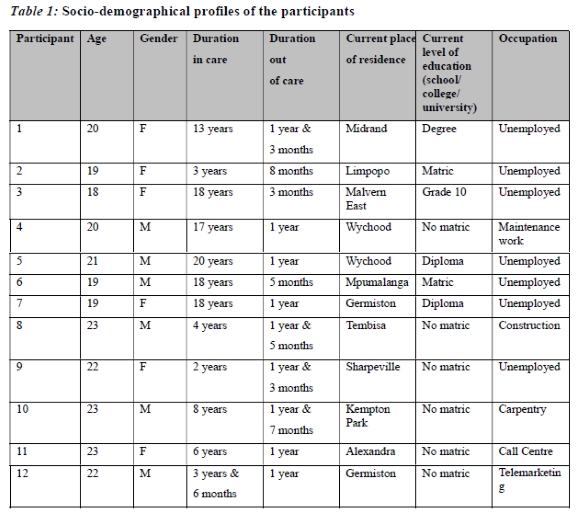
The research findings presented below emerged from the analysis of data collected from the parents of young persons misusing substances. The biographical profile of participants is listed in Table 1.
As indicated in Table 1, two of the ten participants obtained post-school diploma qualifications, two completed Grade 12 and another two completed Grade 8. One participant each completed Grade 11, Grade 10 and Grade 5, while another one had no formal education. Yet it needs to be noted that the substance misuse affects all parents, despite their educational profile. Regarding participants' marital status, most of them (five) were widows, three were married, one was single and another one was divorced. Regarding participants' race, they were all black Africans. The racial constitution can be explained by noting that, according to the statistical report by Statistics South Africa for 2022 (Statistics South Africa, 2022), Black Africans accounted for 81% of the South African population.
DISCUSSING OF THEMES AND SUB-THEMES
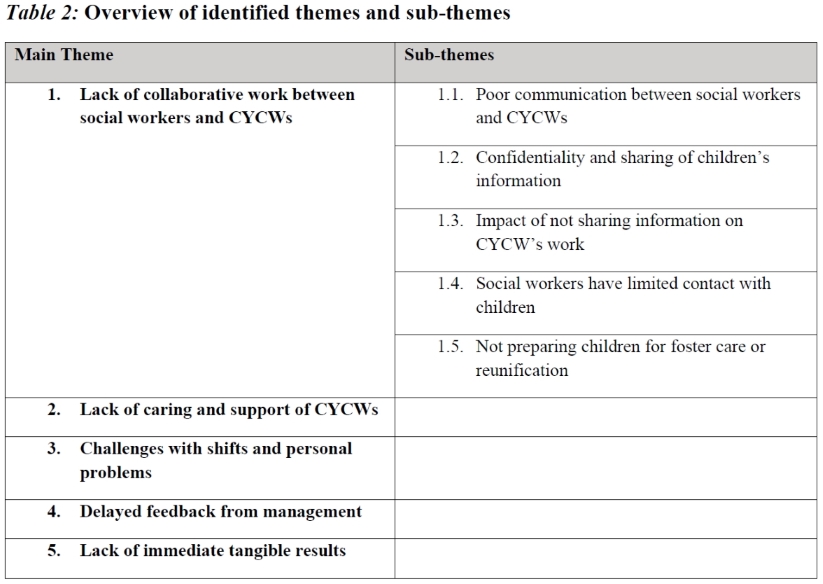
The purpose of the study was to explore the knowledge and needs of parents with young persons misusing substances. Table 2 indicates the themes and their associated sub-themes generated from the data obtained in the individual face-to-face semi-structured interviews with the 10 participants who willingly took part in the study.
Theme 1: Knowledge of parents about substance misuse
Participants were requested to share their knowledge about substance misuse. Two sub-themes were generated under the theme.
Sub-theme 1.1: Limited knowledge about substance misuse
Some participants confirmed that they have a limited understanding and knowledge about substance misuse. Their limited understanding ranged from knowledge about the effect of peer pressure, the impact of young persons' misuse of substances on parents, and the information acquired through internet searches. The following responses captured the essence of parents' limited knowledge about substance misuse.
What I only know is that the influence of negative friends can play a major role for one to indulge in substances. (Participant 10)
I only understand that my health is taking a worse turn since the news about substance misuse broke out. (Participant 2)
My understanding is only limited to the basic information that I managed to acquire through Google. (Participant 7)
According to Dykes and Casker (2021), it is a complex task for any parent to deal with the substance misuse of their children. Ngantweni (2018) found that parents of the young persons have little knowledge about the phenomenon of substance misuse. Waini (2015) noted that there is extremely limited information available to capacitate parents to deal with the young person misusing substances. Hence a call is made for organisations rendering substance misuse services to develop information packages for parents of young persons misusing substances. Nkosi (2017) confirmed the lack of knowledge in terms of resources to support parents to deal with substance misuse of a young person. It was also found that because of their limited knowledge, parents struggled to understand what was happening, as they were clueless about causes and effects of the misuse of substances by the young person (Mathibela, 2017).
Sub-theme 1.2: Understanding of substance misuse
Other participants acknowledged they had some understanding of substance misuse. This knowledge ranged from understanding the signs of substance misuse to the steps to be taken to address the problem. The following are participants' description of their understanding in relation to substance misuse.
Even though I am self-taught, I can recognise physical signs of a person misusing substance. Physical signs as neglected personal hygiene, red eyes and loss of weight, I know that they are associated with substance misuse (Participant 9)
I know that despite the duration and type of substance a person is misusing, it is possible to live a substance-free life with a commitment to such a decision. (Participant 5)
I understand that once a person is misusing substances, there is an obligation to take them on daily basis, otherwise severe withdrawals such as stomach cramps and vomit will result. Notwithstanding, the fact that professional assistance is important in treating the problem. (Participant 3)
Consistent with these findings, it is common for parents to experience a sudden realization that their child was using substances (Flensburg, Johnson, Nordgren, Richert & Svensson, 2022). Essentially, it can take several years before parents fully understand that their child has a severe substance problem. Ngwanteni (2018) highlighted that parents from communities where substance misuse is rife have an understanding about the phenomenon. This is supported by the fact that the study was conducted in the City of Tshwane, the capital city and an economic hub of South Africa, with its economy attracting local and international drug dealers (Masombuka 2021). It is also worth noting that the City of Tshwane is the third most populous Metropolitan Municipality in Gauteng province (Masombuka, 2021) and there is an apparently high concentration of young people in the city because of the concentration of institutions of higher learning, including the University of South Africa, the University of Pretoria and the Tshwane University of Technology.
Theme 2: Parents' needs with regard to the young person misusing substances
The second theme that emerged from the individual face-to-face semi-structured interviews relates to parents' needs with regard to young persons misusing substances. This ranged from the need to find employment opportunities for young persons, the need for them to be educated, and the need for support from all parts of society.
Sub-theme 2. 1: Needfor employment opportunities for young persons
Participants believe that a job provides an income and a sense of purpose in life for a young person. Without a job, the young person is left idle and consequently becomes a victim of substance misuse more easily. Therefore, participants expressed the need for employment opportunities for young person to mitigate the risk of them engaging in substance misuse. The comments that follow captures the essence of parents' need for employment opportunities for the young persons
As a parent, I believe lack of employment opportunity is the main reason behind the young person's substance misuse. Therefore, the availability of employment opportunity will ease young people indulgence in substance misuse. (Participant 4)
I appeal for the job market to absorb young people so that they can be kept busy and stop idling aimless in our streets. (Participant 2)
Jobs for young people will give them a sense of purpose and keep them away from substance. Currently they are just roaming around the street with nothing (Participant 6)
Consistent with these findings, Madiga and Mokwena (2022) also found that unemployment is a risk factor for substance misuse. Many young people are in the critical age where they are completing school and should be attracted to the job market. Consequently, substance misuse puts young people at a disadvantage when it comes to finding employment. In line with these findings and to deal with this situation, the Department of Employment and Labour, as stakeholder in the development of the National Drug Master Plan in South Africa, was mandated with the responsibility of ensuring a reduction of unemployment particularly among young people who misuse substances (DSD, 2019).
Sub-theme 2.2: Need to be educated about substance misuse
Participants expressed a need to be educated about substance misuse. They stated that such information will empower them to be proactive in detecting substance misuse symptoms in their young persons. They emphasised that education will assist them with the information on how to support a young person misusing substances.
The following sentiments were expressed by participants about their need to be educated about substance misuse.
I am appealing to authorities to educate us about the substance misuse, so that we can be able to see early signs of the problem and take necessary actions. (Participant 10)
I think proper education will assist us to have knowledge about the problem and we will be able to give them proper support. (Participant 7)
I will appreciate if they can share some light regarding the problem, so that I can stay abreast and have mechanism to mitigate the situation. (Participant 5)
Consisted with these findings, Section 9, sub-section 2 of the Prevention of and Treatment for Substance Abuse Act 2008 (Republic of South Africa [RSA], 2008), requires that prevention programmes be instituted for substance misuse to educate parents to recognise the early warning signs and equip them with information on appropriate responses and available services. It states that prevention programmes for substance misuse should ensure the creation of a suitable parenting skills for at-risk families.
Sub-theme 2.3: The needfor support from all parts of society
In their desperate attempt to deal with the young person's substance misuse, participating parents appealed for support from all parts of society. In essence, participants are helpless and miserable about the situation. Hence they are calling for support from all parts of society. The following comments from participants capture their need for support from all parts of society.
At the moment, my efforts to assist have been unsuccessful and thus, I am open to support from all areas of society to assist with the situation. (Participant 4)
Support from all spheres of society will be appreciated. (Participant 9)
The situation is overwhelming, therefore, an unrestricted support from across the society will go a long way in easing the burden. (Participant 3)
Choate (2015) found that dealing with the chaos that emanated from the young person's substance misuse behaviour was beyond the capabilities of parents. Parents therefore reach out to different departments in an attempt to get assistance with handling the behaviour of the young person getting out of control. Accordingly, Mathibela (2017) pointed out that parents expressed feelings of helplessness and were concerned that most of the support is given to the young persons misusing substances, with little being done to address the needs of their parents. Thus, support structures for parents are needed and an opportunity should be created to address the needs of parents of young persons misusing substances.
DISCUSSION
This study aimed to obtain an in-depth understanding of the knowledge and needs of the parents of young persons misusing substance. The results of this empirical study showed that some parents living with these young persons have limited knowledge of substance misuse. The current study also confirmed that some parents have a limited understanding about substance misuse. Motsoeneng (2018) confirmed that family members are not knowledgeable about substance misuse. Family members of the substance misuser lacked information about the social policy interventions that could help them manage the situation. It was also found that family members of the substance misuser did not understand, or were not aware of, the Protection Orders and the application and aim of Section 33 of the Prevention of and Treatment for Substance Abuse Act 70 of 2008 (RSA, 2008), which allow the family to commit a substance misuser involuntarily for treatment.
Yet it was also evident that a number of parents have knowledge about substance misuse. These parents' knowledge ranged from their ability to identify symptoms of substance misuse to the steps to be taken to address the problem. Consistent with these findings, Masombuka (2013) found that parents managed to identify the onset of adolescents' misuse of substance, resulting in the young persons' changing friends regularly and increasingly spending time on the streets. Parents indicated that they also understand that the individual motivation of the young persons and professional assistance are central in the recovery process of young person misusing substances. Waini (2015) found that even though many South African families living with substance misusers are educated about it through programmes such as Al-Anon and Nar-Anon Family Groups, a recommendation is made for evidence-based training and educational development relating to intervention strategies for parents living with a young person misusing substances.
Regarding parents' needs with regard to their child misusing substances, participating parents expressed a need for finding employment for persons concerned. For parents, there is a close connection between the young person's substance misuse and their lack of employment. The feeling is that the availability of job opportunities for young people will go a long way toward keeping them away from the temptation to misuse substances. A related study conducted in three provinces of South Africa - namely, Gauteng, Mpumalanga and North-West - revealed that in all the areas where the study was undertaken, the environment of the substance misusers was characterised by poor socio-economic conditions, a high unemployment rate and substance misuse (Mokwena, 2016). Motsoeneng (2018) pointed out that, amongst other things, the beginnings of substance misuse amongst young people are propelled by a lack of opportunities for recreation and employment, which leads to boredom and curiosity about experimenting with substances for their alleged positive effects.
The study revealed that parents need to be educated about substances misuse. Parents have expressed the desire to be empowered with knowledge to be able to deal effectively with the situation. Masombuka and Qalinge (2019) found that parents do not have sufficient skills and capacity to manage young persons misusing substances. Parents struggled to understand what was happening to the young persons misusing substances. Therefore, they needed to be empowered with knowledge (Mathibela & Skhosana 2019). For parents, knowledge is a 'tool' that will enable them to deal with the substance misuse. Equipped with the relevant knowledge, parents will be able to be proactive, deal with the situation and take the necessary steps to mitigate the situation.
In their quest to deal with the situation, parents call for support from all parts of the society. For parents, the situation is overwhelming; hence they urgently require any form of support available. Parents of substance misusers expressed the need for support and understanding from their families and the community (Mathibela & Skhosana, 2019). Support in the form of support groups established for parents of substance misusers is recommended to capacitate them with an understanding of substance misuse, prevention, early detection and available treatments. The need for social workers to develop parental skills was also identified as a tool to mend relationship between parents and substance misusers.
CONCLUSION
The study showed that parents' knowledge about their young persons' substance misuse is variable. Nevertheless, parents are eager to be informed about substance misuse and the matters pertaining to it. The conclusion is that interventions in this regard should focus on imparting information on substance misuse to parents of young persons misusing substances. The parents' responses also indicated that there is a connection between the lack of employment of young persons and substance misuse. Unemployment and substance misuse of a young person should therefore be addressed concurrently. Parents of young persons misusing substances feel helpless in this situation and desperately require assistance from all forms of society to deal with it.
RECOMMENDATIONSGiven the lack of parents' knowledge about the substance misuse of young persons, the following recommendations are made.
• Standardised information and education about substance misuse must be provided to parents of young persons misusing substances.
• This education should include
o providing an understanding of substance misuse with specific reference to its misuse by young persons and how to deal with the situation with them;
o the aim, contents and application of the Prevention of and Treatment for Substance Abuse Act 2008 (RSA, 2008);
o the ability to detect the onset of substance misuse by young persons; and
o the importance of reaching out to and using available resources within the community in dealing with it.
• Measures must be put in place to ensure that all relevant sectors of society cooperate to bring an end to the unemployment of young people, which so often leads to their substance misuse.
• A collective effort must be launched to ensure that sufficient support is provided to parents of young persons misusing substances through awareness campaigns, therapeutic facilities and parenting skills workshops as well as empowering them about their rights and responsibilities as parents in this regard.
REFERENCES
- Braaf, E., Roman, N. & Pharaoh, H. 2022. The perceptions and experiences of families dealing with substance use disorders: Implications for holistic employee wellness programmes. Social Work/Maatskaplike Werk, 58(3): 349-365.
- Chambliss, D. F. & Schutt, R. 2013. Making sense of the social world: Methods of investigation. 4th ed. London: Sage.
- Choate, P. W. 2015. Adolescent alcoholism and drug addiction: The experience of parents. Behavioral Sciences, 5(4): 461-476.
- Creswell, J. W. 2014. Research design: Qualitative & quantitative mixed methods approach. 4th ed. Thousand Oaks, CA: Sage.
- Creswell J. W. & Poth C. N. 2018. Qualitative inquiry and research design: Choosing among five approaches. Thousand Oaks, CA: Sage.
- Department of Social Development (DSD). 2019. National Drug Master Plan (NDMP). South Africa Free of Substance Abuse. 4th ed. Department of Social Development, South Africa.
- Dykes, G. & Casker, R. 2021. Adolescents and substance abuse: The effects of substance abuse on parents and siblings. International Journal of Adolescence and Youth, 26(1): 224-237.
- Fernandes, L. & Mokwena, K. E. 2016. The role of locus of control in nyaope addiction treatment. South African Family Practice, 58(4): 153-157.
- Flensburg, O. L, Johnson, B. Nordgren, J. Richert, B. & Svensson, T. 2022. "Something wasn't right": Parents of children with drug problems looking back at how the troubles first began. Drugs: Education, Prevention and Policy, 29(3): 255-264.
- Groenewald, C. 2018. '"It was riotous behaviour!"': Mothers' experiences of adolescents' conduct while abusing drugs. International Journal of Mental Health Nursing, 27(5): 1564-1573.
- Groenewald, C. & Bhana, A. 2016. "It was bad to see my [child] doing this": Mothers' experiences of living with adolescents with substance abuse problems. International Journal of Mental Health and Addiction, 14(5): 646-661.
- Hlungwani, E. N., Ntshingila, N., Poggenpoel, M. & Myburgh, C. P. H. 2020. Experiences of parents with an adolescent abusing substances admitted at a mental health institution in Giyani, South Africa. Curations, 43(1): 1-9.
- Kalam, A. & Mthembu, T. G. 2018. Parents' experiences of parenting an adolescent abusing substances. Social Work/Maatskaplike Werk, 54(4): 468-480.
- Madiga, M. C. & Mokwena, K. 2022. Depression Symptoms among family members of Nyaope users in the City of Tshwane, South Africa. International Journal of Environmental Research and Public Health, 19: 4097.
- Masombuka J. 2013. Children's addiction to the drug "nyaope" in Soshanguve township: Parents' experiences and support needs. Master's thesis. University of South Africa, South Africa.
- Masombuka, J. 2021. Parents as an under-utilised resource for the substance dependency service to their youth. Developing a model for social work practitioners. Doctoral thesis. North-West University, South Africa.
- Masombuka, J. & Qalinge, L. 2019. Outcry and call for relief: Experiences and support needs of parents with nyaope users. Social Work/Maatskaplike Werk, 56(1): 51-62.
- Mathibela, F. 2017. Experiences, challenges and coping strategies of parents living with teenagers abusing chemical substances in Ramotse. Master's thesis. University of South Africa, South Africa.
- Mathibela, F. & Skhosana, R. 2019. Challenges faced by parents raising adolescents abusing substances: Parents' voices. Social Work/Maatskaplike Werk, 55(1): 87-107.
- Mokwena, K. 2016. '"Consider our plight": A cry for help from nyaope misusers'. Health SA Gesondheid, 21(1): 137-142.
- Motsoeneng, L. 2018. The experiences of family members of nyaope users and their knowledge on the available social policy interventions; a case of east of Johannesburg. Honours thesis. University of Witwatersrand, South Africa.
- Mulaudzi, H. 2018. Factors contributing to substance abuse among the youth in Atteridgeville, Tshwane Metropolitan Municipality, South Africa. Master's thesis. University of Venda, South Africa.
- Ngantweni, A. 2018. Adolescent substance abuse: Parents' experiences. Master's thesis. University of Pretoria, South Africa.
- Nkosi, H. S. 2017. Effects of nyaope on families with a family member that is addicted to thedrug nyaope. Honours thesis. University of Witwatersrand, South Africa.
- Patino, C. M. & Ferreira, J. C. 2018. Inclusion and exclusion criteria in research studies: Definitions and why they matter. Jornal Brasileiro de pneumologia, 44(2): 84-84.
- Radebe, V. C. 2017. Parental experiences of nyaope misusers in Temba township, Pretoria (Gauteng). Master's thesis. Sefako Makgatho Health Sciences University, South Africa.
- Republic of South Africa (RSA). 2008. Prevention of and Treatment for Substance Abuse Act 70 of 2008. Government Gazette, Vol. 526, No. 32150. (21 April 2009). Cape Town: Government Printer.
- Shulman, L. 2016. The skills of helping individuals, families, groups, and communities. Boston: Cengage Learning.
-
South African Community Epidemiology Network on Drug Use (SACENDU). 2022. SACENDUresearch update (December 2022). South African Community Epidemiology Network on Drug Use (SACENDU) [Online] Available: https://www.samrc.ac.za/sites/default/files/attachments/202302/SACENDUresearchUpdatephase%2051.pdf [Accessed: 17/07/2023].
» https://www.samrc.ac.za/sites/default/files/attachments/202302/SACENDUresearchUpdatephase%2051.pdf -
Statistics South Africa. 2022. Mid-year population estimate. (Statistical realease P0302).[Online] Available: https://www.statssa.gov.za/publications/P0302/P03022022.pdf [Accessed: 22/07/2023]
» https://www.statssa.gov.za/publications/P0302/P03022022.pdf - Subekti, H., Rahmat, I. & Wilopo, S. 2021. Stress- adaptation among family of adolescent with substance misuse: Systematic literature review. Open Access Macedonian Journal of Medical Sciences, 9(F): 474-480.
-
UNODC. 2023 World Drug Report booklet 1. United Nations Office on Drugs and Crime. [Online] Available: unodc.org/res/WDR-2023/WDR23_Exsum_fin_SP.pdf [Accessed: 17/07/2023].
» unodc.org/res/WDR-2023/WDR23_Exsum_fin_SP.pdf - Waini, A. 2015. The challenges and coping resources of parents whose children are addicted to chemical substances. Master's thesis. University of South Africa, South Africa.
Article accepted: 01/12/2023
Article published: 11/12/2024
AUTHOR BIOGRAPHY
Jan Masombuka was a PhD student at the North-West University, South Africa, and is currently a senior lecturer at the University of South Africa, South Africa. His field of specialisation is substance abuse. The article resulted from his PhD, conducted from January 2019 to December 2020, and he wrote the initial draft of the article.
Rebecca Mmamoagi Skhosana is a senior lecturer at the University of South Africa, South Africa. Her field of specialisation is community work and substance abuse. She assisted with the conceptualisation of the article.