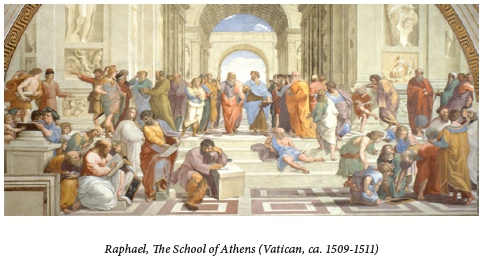
Towards a Platonic critique of ideology: On method and metaphysics
Plato is accused by some of being a totalitarian, "top-down" thinker, a claim that is linked not just to his politics but to his philosophical proclivities more generally. This essay will argue that Plato's method and metaphysics collectively provide a few avenues for questioning this outcome. I think Plato's Socratic-style provides resistance to a hegemonic and carapaced metaphysics, and moreover I would argue that there is a greater coherence between Plato's method and his positive teaching than is allowed for by some. Through an engagement with central Platonic doctrines, namely his account of philosophical dialogue, the transcendental Good, as well as participation, and recollection, it is argued that Plato's relational metaphysics does not fit seamlessly into an "ideological" or "naïve" rendering of intellectual intuition, an exclusionary dualism of material and spiritual substance, or an uncritical evocation of "innate ideas," and, moreover, that it allows for a greater plurality of perspectives, all ordered towards a deeper realism and unity within the Good Beyond Being.
Plato; metaphysics; ideology; dialogue; participation; recollection
 Thumbnail