Do prior motion serial verbs (go) morphologize? Insights into diachrony from typology
Abstract
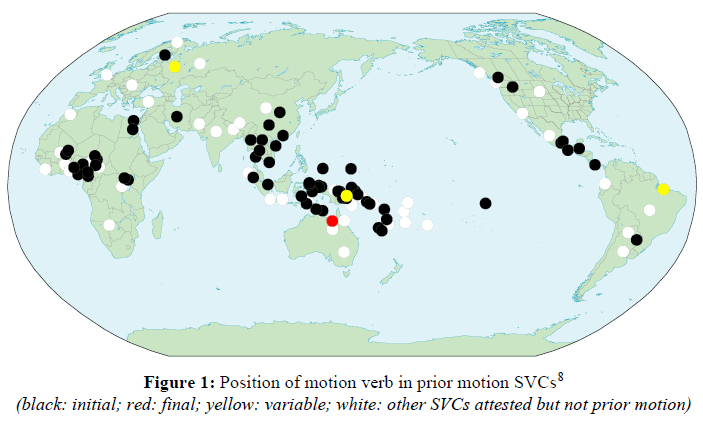
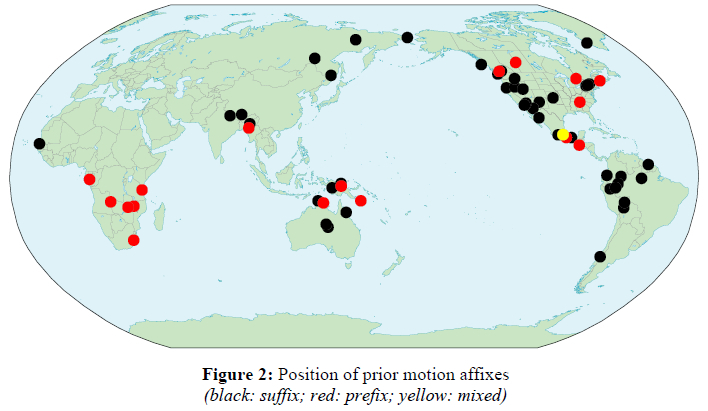
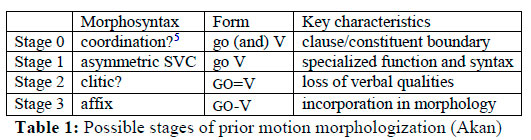
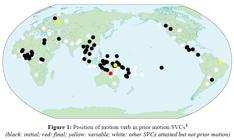
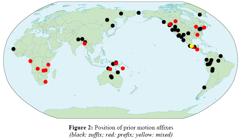
Associated motion is a grammatical category which modifies a verbal predicate by adding a motion component such as indicating that motion took place prior to the event predicated by the verb. Many languages express prior associated motion ('go and V') in the form of a serial verb construction, while in other languages the same meaning is expressed morphologically. This suggests a possible diachronic link between serial verbs and affixes, but a comparison of the synchronic distributions of prior associated motion in serial verb constructions and verbal morphology reveal that such a path of grammaticalization is remarkably rare. This can be at least partially explained by temporal iconicity and a cross-linguistic suffixing bias. We conclude that prior motion serial verb constructions are relatively stable diachronically. The source of prior motion morphology is more likely other multiverb constructions, especially those with non-finite verbs where an overt morpheme marking dependency is lost to allow for a more efficient expression of this grammatical category, ultimately leading to univerbation.
Serial verb constructions; associated motion; grammaticalization; typology
 Thumbnail
 Thumbnail