The lexical semantics and syntax interface of anticausative alternations in Kiwoso
Abstract
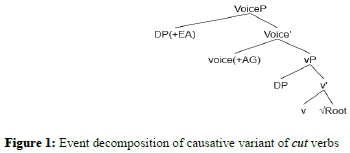
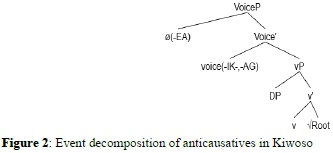
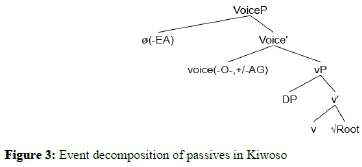
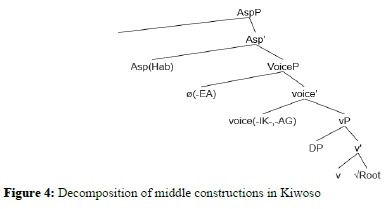
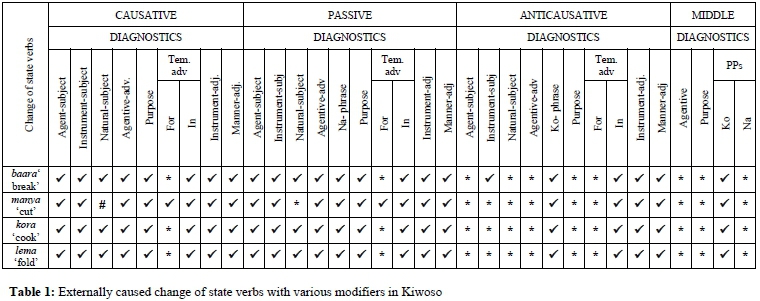
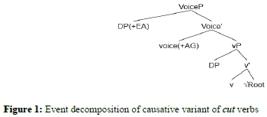
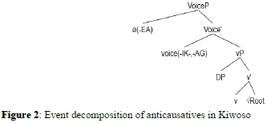
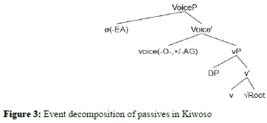
This paper examines argument alternation constructions in the Bantu language, Kiwoso. The data demonstrates that alternation is constrained by selectional properties of a root and its combination with different functional heads, which is language specific. The findings establish that external arguments of anticausative, passive and middle alternations are distinct in terms of syntax and semantics. The data indicates that external arguments appear as DPs in causative alternates but in anticausative, passive and middle sentences they surface as PPs, albeit with different interpretations. In passives, the PPs are introduced by a «α-phrase and express event participants, while in anticausatives and middles they are introduced by a ko-phrase which denotes event modifiers. It is also established that anticausative, passive and middle verb constructions are related in that their sole subject argument is the object argument of their causative (transitive) variants.
Anticausative; causative; middle; Kiwoso; Bantu
 Thumbnail
 Thumbnail
 Thumbnail
 Thumbnail