Strategic Dependency and Isolation: South Africa, Israel, and the Limits of Defence Autarky in the 1970s and 1980s
Abstract
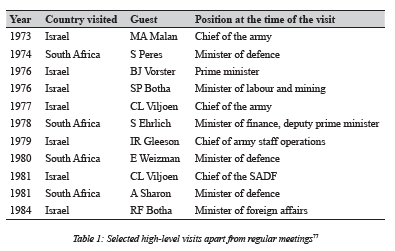
South African military-technical co-operation with Israel continued and intensified throughout the 1970s and 1980s, despite the goal of achieving defence industrial autarky as stated by South Africa. During this period of increasing international isolation -marked by the United Nations arms embargo, regional destabilisation, and the loss of key allies - South Africa faced critical capability gaps, particularly in its air force and navy. Collaboration with Israel provided not only weapon systems but also the technological know-how to strengthen domestic production. Israeli support enabled the development of drones, ballistic missiles, and upgrades to tanks, aircraft, and naval platforms, aligning with the South African autarky ambitions. Employing RL Schweller's neoclassical realist framework, the study on which article is based explored how domestic limitations and international pressures influenced South African arms procurement strategies. The current study found that states do not pursue defence industrial autarky at all costs; rather, co-operation is evaluated based on the urgency of defence needs, external exclusivity of offered technology, and relative military advantage gained over regional and international competitors. States with limited mobilisation capacity may rely on selective external partnerships to counterbalance structural constraints. The article therefore also highlights the limits of international sanctions when enforcement mechanisms are undermined by geopolitical alliances, such as Israeli backing from the United States as a United Nations Security Council veto power.
Israel; South Africa; Cold War; SADF; Defence Autarky