The Theatre of Action: An Approach to Storytelling in the Children's Ministry of the Methodist Church
Abstract
One of the fundamental doctrines of the Methodist Church is the concept of the priesthood of all believers, as articulated by John Wesley. This principle laid the foundation for lay ministry, which primarily involves adults who are not ordained clergy and therefore do not have the authority to oversee all ecclesiastical activities. Within this context, children's ministry encompasses individuals devoted to providing spiritual guidance to children in a manner appropriate to their level of understanding. Two effective methods utilised in this ministry are theatrical storytelling and the musical element. This article aims to offer some insights into how women involved in children's ministry can effectively narrate scriptural stories, as well as how children can engage with Scripture through action-based dramas and music. The information is thus very limited, and the article is presented as a means of preserving the history of this unique movement of children from its inception to its current state.
ministry; oral; story; children's church; action; singing; Manyano and theatre
Introduction
In the context of Church History, storytelling can be understood as the narration of events in various forms, one of which is theatrical action. This article will concentrate on theatre as a method of storytelling employed by children in Sunday Schools and other spiritual movements across different church denominations. I will specifically examine how the Methodist Church of Southern Africa (MCSA) has facilitated children's Christian spirituality. Theatre action in storytelling is defined as children and youth dramatising scriptural texts by bringing to life the stories they encounter in the Bible. There is, however, very limited information as not much is written or captured about this children' s movement (children' s ministry). This includes people, especially the older generation, who may have some knowledge about its origin and the aims for which it was formed. In carrying out this research, I was only able to come across two very old people who are still alive with few memories of the origin of this movement. The irony about this children's movement in the MCSA is that it was found only among the black membership of this Christian denomination, and not the white church. This is irrespective of the MCSA declaring itself "One and undivided church." Despite all this, they had vivid memories of what it did for them, how it contributed to their growth in the Christian faith, and how it shaped their lives as they transitioned into adulthood. The same people, in turn, had to ensure that this ministry continues, of course, one as an ordained minister in the church, while the other was a member of the Women's Manyano in the MCSA.
Background
The origins of Children and Youth Ministry can be traced back to Britain in the 19th century. Beginning in the 1870s, Sunday Schools in Protestant churches were referred to as the "nursery of the church." Twenty years after Sunday Schools were established in 1890, approximately 80% of the membership in mainline denominations comprised individuals who had been nurtured within these educational programmes (Seymour 1982). This ministry aimed to encourage and teach the children to follow the path of Jesus to be loyal disciples through this movement and remain religious. The rules for the children in Bana ba Lebese were to ensure that they respect their parents, including elders in their communities and the church. These aims and teachings, further, were to ensure that the children learn to pray daily and understand God within their spaces. The most important thing was to ensure that children's names are also registered in the books of the church and remind them about the meaning of the church's register with their names in it. The registration records with the names of the children were usually in the records of the Junior Class. These children must also be registered in the Sunday School and attend the session of the latter. The basic teachings offered to the children include the Lord's Prayer, Psalm 23, and Exodus 20: 12-15, which are the Ten Commandments (The Methodist Church of Southern Africa: Membership card).
Several significant initiatives related to the establishment of children's ministry can be traced back to the 1800s. In 1863, a notable effort began when Adelia Patten authored a two-year series of lessons designed for children. From 1864 to 1888, these lessons were published in the Youth Instructor, primarily focusing on Biblical history and narrative Bible stories (www.children's Adventist/our-history). This tradition continues to thrive in contemporary churches. Some mainline congregations, such as the Methodist, Congregational, Presbyterian, and Anglican, still actively engage in this practice.
Methodology
The methodology adopted is qualitative, primarily drawing on notes gathered from various circuits within the MCSA, along with desktop research that includes both primary and secondary sources. While the oral method will also be utilised, it is important to note that some aspects may be extrapolated rather than empirically verified, resulting in limited direct human participation, except in one or two instances involving interviews.
Types of Theatre Actions
When presenting a story to the congregation, three primary formats can be utilised: monologues, short scenes, or full-scale productions, as they are often seen each week when the pastor stands before the congregation to deliver a prepared piece of writing, primarily for instructional purposes. However, this format can also effectively convey fresh themes or ideas.
In addition, monologues may inspire creative writing within the congregation. If a member possesses talent in this area, they could craft and perform a monologue on a specific topic that aligns with the pastor's teachings during that time. This approach can be particularly advantageous for smaller churches that may have fewer volunteers available to undertake larger-scale presentations.
A drama often features a small ensemble of individuals adept at presenting brief stage scenes or skits. Traditionally, churches have utilised these short performances in which characters enact scenes that shed light on a significant theme or event. Such presentations serve as an effective tool that can be performed before, during, or after a sermon, helping to emphasise key aspects of the pastor's message. Sometimes these small-scale dramas or skits can be performed outside the normal church services. These productions could be either original works or adaptations of existing material. This approach also opens opportunities for a wider range of participants. In addition to actors, individuals with expertise in stage production, technical theatre (including lighting, sound, and visual media), or design can also share their talents.
Children's Ministry or Movement in the Methodist Church
The storytelling style draws on traditional oral storytelling techniques, allowing the narrator to recount tales from memory and actively engage the audience by inviting their participation, whether through interactive play or responsive dialogue (https://wendshearer.co.uk). This method proves particularly effective when working with children, as it encourages them to assume character roles as the story unfolds. Some preachers and church ministers adopt this approach to convey messages within their sermons. However, in the MCSA, this practice is not commonly integrated into formal worship settings, where monologues are more prevalent and primarily performed by adults rather than children.
While this may hold in a worship service, some preachers employ this technique to engage children and facilitate their understanding of the message. An additional aspect of storytelling is its theatrical presentation, often orchestrated by Sunday school teachers or leaders of children's ministries and youth programmes within the church. Children may choose a scripture text as a theme for a presentation. They will be given a time frame to practise engaging in this theme through drama.
The origins of children's ministry in many Christian denominations, particularly within mainline churches, remain somewhat ambiguous. Not much is known about the origin of the children's ministry in a broader context, except for the Sunday Schools. The most notable initiative is the establishment of Sunday Schools, as previously mentioned. There is an assumption, however, that the Catholic Church in South Africa initiated what was known as the Little Flower Mission School in Pretoria, located near Lady Selbourne, around 1927 (Ramagaga cited in Lebeloane 2006, 106). This institution aimed to deliver a curriculum focused on domestic science, home nursing, childcare, and general education, primarily for female students, while boys were taught handicrafts and woodwork.
In the MCSA, a children's movement known as "Bana ba Lebese" or "Abantwana bobisi" was established (Madise 2006, 141). Unlike the Little Flower School, this initiative was centred around the church and focused on nurturing children in the Christian faith. It aimed to educate children on living as Christians while simultaneously incorporating catechesis to introduce them to the faith. Many parents enrolled their children in Manyano to actively participate in confirmation classes and the Junior Manyano, encouraging them to grow under Christian values and principles that deepened their understanding of God. Children were often welcomed as catechumens, participating in smaller groups that were typically easier to manage compared to larger assemblies, which could be more challenging (Madise 2006, 141).
The Setswana name Bana ba Lebese, meaning "Children of the Word" in English, emerged within the MCSA. The aim of this movement was mainly to bring children together for worship, scripture learning, and Christian values, with a history rooted in the desire of a group of women to nurture the faith of young people.
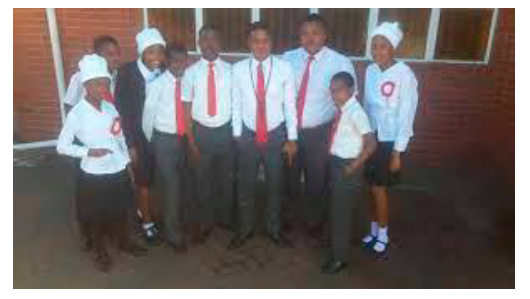
The origins and history of "Bana ba Lebese" or Junior Manyano within the Methodist Church remain somewhat ambiguous, including the identity of its founder. According to Rev. Isaac Moloabi, a retired Methodist minister, "Bana ba Lebese" is an old movement of which he was a member during his youth (Interview with Rev. Isaac Moloabi, 11/03/2025). In his account, Moloabi notes that "Bana ba Lebese" has existed for many years, yet there is no recorded history regarding its founder or the reasons for its establishment. This Junior Manyano ("Bana ba Lebese") is characterised by a specific uniform: girls wear black dungarees, a white shirt, and a red ribbon on the left side of their chest, while boys wear black shorts and a white shirt with a red tie. In recent years, there have been some minor adjustments to the uniform. Girls no longer wear black dungarees; instead, they have adopted black skirts. The boys have transitioned from black short pants to grey long pants, while the remainder of the uniform remains unchanged in terms of design and colour. Mrs. Dikeledi Moremi, who has been a member of Women's Manyano for many years, supports this assertion, noting that the movement is quite old, and it shaped many members, with their Christian faith and values nurtured by senior Manyano Women (Dikeledi Moremi, 12/03/2025). The graphic below illustrates the uniform and colours of "Bana ba Lebese:"
The Women's Manyano were responsible for "Bana ba Lebese" and tended to them even though they were regarded as part of the Youth Department Unit of the MCSA. Like other groups within the MCSA, they have a designated meeting day-Wednesday afternoons-when schools are closed (Madise 2008, 121). The primary aim of this group is to gather children for worship while simultaneously educating them. Unlike traditional methods where knowledge dissemination is solely the responsibility of adults, this approach encourages children to take a more active role in their learning.
One innovative teaching method includes engaging in theatrical skits, dramas, and musicals (Madise 2008, 120).
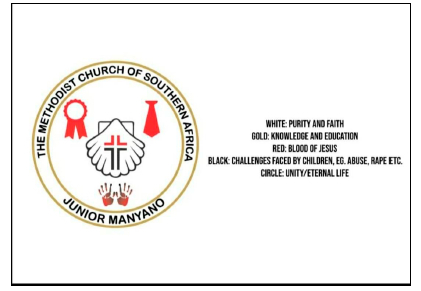
Like other movements or Manyanos within the MCSA, "Bana ba Lebese" possesses an emblem that identifies them as a group of children primarily nurtured by the Women's Manyano. However, this emblem does not indicate the date of the establishment of Junior Manyano, highlighting a gap in the documentation of its formation dates. Furthermore, the emblem itself is a relatively recent creation, unlike the longstanding history of the group. Below is an image of the logo that represents Junior Manyano.
Theatrical Storytelling by "Bana ba Lebese"
The theatrical storytelling initiative by "Bana ba Lebese" was designed to enrich biblical learning by engaging children in an active, rather than passive, learning process. The women leading this effort would select biblical texts and create scripts for dramas performed by "Bana ba Lebese." This approach sparked the children's enthusiasm for participating in dramas every Wednesday, significantly contributing to their later career development (Madise 2008, 121). An intriguing aspect of this initiative was its ability to draw young children to church on Wednesdays. The rehearsals prepared them not only for performances but also for competitions with other groups from surrounding communities within the MCSA framework. The women in charge of this children's organisation or movement would plan a convention for children to converge in September. In the Methodist Church's calendar, September is designated as Youth Month. During this month, a range of activities will be available for children aged five to 12, belonging to "Bana ba Lebese," and the senior youth group, aged 13 to 15. It is the convention that different congregations of the Methodist Church in a specific circuit would have prepared and rehearsed the drama to demonstrate which group of children displayed the best performance, demonstrating an understanding and interpretation of the text through theatre and storytelling.
Our focus is mainly on the small children. In this context, theatre encompassed not just drama but also music as a powerful form of expression. These performances attracted audiences eager to watch and listen to the stories and music delivered by the children. Additionally, being part of the audience meant engaging with a sermon presented as a dramatic performance through theatrical storytelling. This approach also offered an opportunity for the children to actively participate in preaching and narrating the scriptural text to an adult audience. The mothers supervising these activities served both as producers and directors, guiding the cast throughout the entire process. Additionally, being part of the audience meant engaging with a sermon presented as a dramatic performance through theatrical storytelling.
Musical Theatre as a Form of Storytelling by "Bana ba Lebese."
The storytelling activities led by "Bana ba Lebese" extended beyond mere drama or skits. For the MCSA, engaging children in church activities meant captivating their minds at an early stage with elements of theatre that resonate with them. At the same time, they have the energy to play and easily absorb Christian teachings in a way that suits their understanding. Music also emerged as another form of storytelling, complementing the drama through carefully selected scriptural texts. Additionally, hymns or songs from the church would be incorporated into the theatrical performances, with the children' s choir delivering a rendition. Typically, these songs were aligned with the theme that was performed in a drama or skit, allowing the audience to witness and listen as the children creatively interpreted their biblical texts through both song and performance. These songs, along with the drama, would be contextualised to both the environment and the understanding of the age group that appeals to children of their age.
The musical element of storytelling is deeply intertwined with the culture and traditions of the Methodist Church, a denomination that arose from the power of song. The songs they created were contextually relevant and played a crucial role in converting many individuals to Christianity. Similarly, the music presented by "Bana ba Lebese" resonates with the origins of the Methodist movement in the 17th century. In this context, what mattered most was the creativity involved in encouraging children to engage with the scriptural texts and historical events that contributed to the growth of Christianity.
In recent years, it appears that the tradition of theatrical storytelling by "Bana ba Lebese" within the MCSA is either diminishing or evolving, as not all circuits are adapting to these changes. Many urban and some suburban areas no longer encourage participation from "Bana ba Lebese" or the Junior Manyano in theatrical storytelling and musicals, whereas rural areas have managed to maintain these traditions.
Consequently, the attendance of young children from "Bana ba Lebese" at Wednesday services has also declined. What remains of this movement is a situation where these children wear their uniforms on Sundays, yet have little active involvement in church activities that involve them. The responsibilities and involvement of Women's Manyano with Junior Manyano have now been transferred to the Young Women's Manyano. This organisation primarily consists of unmarried young women. As Mrs Moremi mentioned, it appears that the younger women overseeing "Bana ba Lebese" show little interest in engaging in additional nurturing activities, focusing solely on their care during worship services on Sundays.
With this shift of "Bana ba Lebese" from the care of Women's Manyano originally to Young Women's Manyano, the basics of Christian Care in nurturing these children, their visibility has dwindled a lot as opposed to the past when they were actively involved in church activities (Own opinion and observation).
"Bana ba Lebese" in the Digital Age
In a constantly evolving world, each generation of children has come and gone, yet the church appears to be slow in adapting to these changes. The COVID-19 pandemic has profoundly transformed society, including the church itself. This pandemic has ushered in a shift towards a new world order, often referred to as digitisation. As a result of this evolution, many children have become digitally literate and increasingly rely on easily accessible electronic devices. This is the environment in which the current generation of "Bana ba Lebese" is growing up. For the church to effectively engage with youth and children's ministry, it must embrace digitisation, whether by adopting new technologies or adapting its existing practices. To continue the tradition of theatrical storytelling for children, the church must present these stories in a manner that resonates with kids raised in the digital age. By doing so, the art of theatrical storytelling can transition from the stage to a digital platform, allowing children to enjoy their roles in narrating biblical texts and musicals, even when the audience is not physically present but rather engaging virtually. The potential to retain a significant number of children and youth can lead to an increase in the church's active membership.
Impact
The movement has positively impacted many children, with some going on to become ministers, lay preachers, evangelists, and professionals in various fields. Additionally, it has created a space for children to express their religious beliefs during their formative years.
Conclusion
Theatre and storytelling have significantly influenced children' s religious lives and have nurtured their faith development as they transition into adulthood. Through theatrical storytelling-whether in drama, skits, or music-many individuals have enhanced their understanding of religion, its interpretations, and the scriptural context surrounding matters of faith and spirituality. This foundational experience has inspired some children to explore diverse pathways within the church, pursuing various ministries
The transition from the theatrical storytelling of the Junior Manyano in urban and suburban areas may be impacted by various factors beyond the church, especially in recent times. These factors include the shifting political and economic landscape, which has prompted many individuals to migrate from rural villages to urban centres. Additionally, there has been a movement away from the white church circuit into geographic circuits that no longer enforce racial exclusion.
As communication methods increasingly shift towards electronic platforms, the Methodist Church, along with other congregations, will be compelled to embrace the future of technology to engage and retain its youth and children's ministries. This initiative will not only target the younger demographics but also aim to ensure the broader church' s future by expanding its presence in the digital realm.
References
-
GC. Children's Ministry. https://www.children'sAdventist/our-history. (accessed on 02/06/2025).
» https://www.children'sAdventist/our-history - Lebeloane, L. 2006. "Missionaries and Mission Schools: Experience of the Children" (former learners). Studia Historiae Ecclesiasticae XXXII (1).
- Madise, M. 2006. "The Christian Families' Participation in Baptism as a Basis for Including Children in Holy Communion." Studia Historiae Ecclesiasticae. XXXII (1).
- Madise, M. 2008. "The Manyano Movements within the Methodist Church of Southern Africa: An Expression of Freedom of Worship (1844-1944)." Studia Historiae Ecclesiasticae. XXXIV (2).
- Moloabi, I. Telephone Interview, 11 March 2025.
- Moremi, D. Telephone Interview, 12 March 2025.
- Seymour, J.L. 1982. From Sunday School to Church School: Continuities in Church Education, 1860-1929. Lanham, MD: University Press.
-
Shearer, W. 2016. "The Theatre of Storytelling." https://wendyshearer.co.uk/2016/04/the-theatre-of-storytelling (accessed on 19 December 2024).
» https://wendyshearer.co.uk/2016/04/the-theatre-of-storytelling - The Methodist Church of Southern Africa: Membership card.