Die gelykenis van die verlore seun: eerste-eeuse ekonomie en die hoorders van Jesus / The parable of the prodigal son: First-century econmy and the hearers of Jesus
Abstract
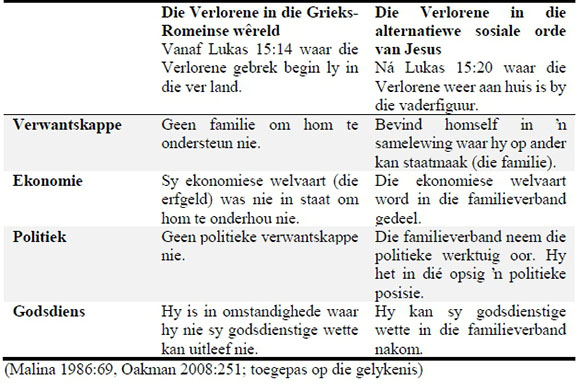
Jesus preached the kingdom of God, with the principle of general reciprocity as a cardinal aspect. For Jesus, this kingdom was an alternative social world to the oppressive and exploitative social system of the Greco-Roman world. This article seeks to analyse the parable of the Lost Son (Luke 15:11-32), focusing on Luke 15:11-13, against the socio-economic background of first century Palestine. Special attention is given to the youngest son's decision to leave the house and his possible motive for doing so. The view is that texts are the products of the specific social systems in which they originated, and therefore the social scientific approach is used to analyse this text. The conclusion reached is that the political and tax systems of the Greco-Roman world were extremely exploitative, while the kingdom of God, as an alternative social order, advocated the principle of general reciprocity and the sharing of resources.
Parables; Parable of the Lost Son; Luke 15; Sustainability; General reciprocity; Ancient economy
 Thumbnail