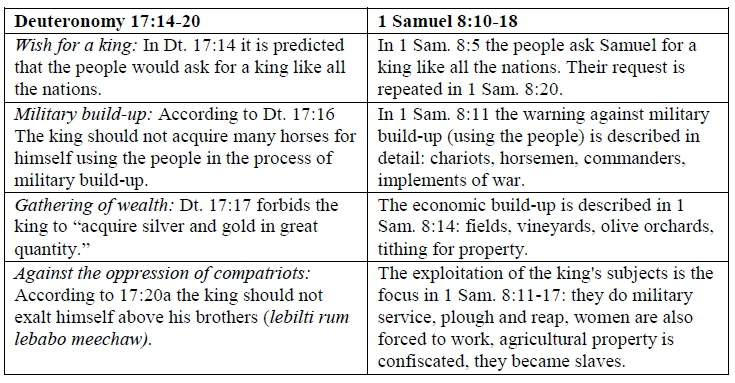
Royal care for the poor in Israel's first history: the royal law Deuteronomian 17:14-20), Hannah's song (1 Samuel 2:1-10), Samuel's warning (1 Samuel 8:10-18), David's attitude (2 Samuel 24:10-24) and Ahab and Naboth (1 Kings 21) in intertext
Abstract
It has been widely recognised in scholarship that the Deuteronomistic History (Deuteronomy to 2 Kings 25) was written to explain why the states of Israel and Judah both failed, attributing the reasons for the failure to their kings' disobedience regarding the demand of cult centralisation (Dt. 12) and keeping idolatry at bay (Dt. 13). This article argues that material questions (e.g. land and economic existence) are integral to the history and that the monarchy' s failure to care properly for the poor can be added as a further reason for the demise of Israel (north and south). As such the history not merely narrates the political history of (early) Israel, but also conveys a socio-ethical message.
Deuteronomistic History; Poverty; Politics; Deuteronomic Code; Hannah's Song; Ahab and Naboth; David; Solomon; Idolatry; Economics; Oppression