The combined use of titanium elastic intramedullary nails and postoperative skin traction in unstable femoral diaphyseal fractures in children
Abstract
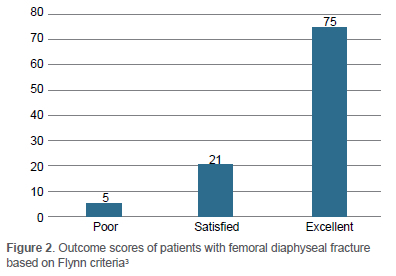
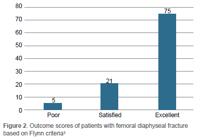
BACKGROUND: Paediatric diaphyseal femoral fractures account for less than 2% of all paediatric fractures. Studies suggest that children aged 5-11 years who weigh < 49 kg with femoral diaphyseal fractures may be the best candidates for titanium elastic nails. Elastic flexible nailing has gained wide use because it offers good results with minimal complications in stable femoral diaphyseal fractures. However, the effectiveness of titanium elastic nails for the management of unstable paediatric femoral fractures remains debatable. This study aimed to elicit the effectiveness of titanium elastic nails in unstable paediatric femoral diaphyseal fractures when combined with postoperative immobilisation with skin traction METHODS: This retrospective review included paediatric patients aged 3-11 years with unstable femoral shaft fractures treated with titanium elastic nails who were admitted to the paediatric orthopaedic department at a tertiary academic hospital between January 2017 and December 2020, and had a minimum follow-up of six months. The unstable fractures were spiral, comminuted, or long oblique fracture patterns RESULTS: A total of 67 patients were reviewed, with a mean age of 6 (4-7) years. Fracture union was noted at eight (8-9) weeks. Fifty patients (75%) had excellent overall outcomes according to the Flynn score CONCLUSION: Retrograde titanium elastic nailing may be indicated for the management of unstable paediatric femoral fractures when supplemented by postoperative immobilisation with skin traction in the initial two weeks LEVEL OF EVIDENCE: 4
epidemiology; children; unstable; titanium elastic nails; femoral shaft fractures; skin traction
 Thumbnail
 Thumbnail