Arthroscopic and radiographic findings at the time of Latarjet screw removal
Abstract
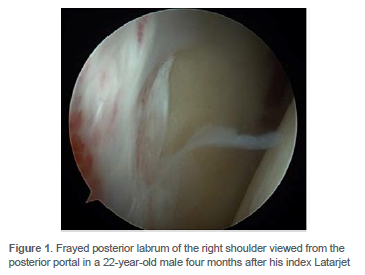
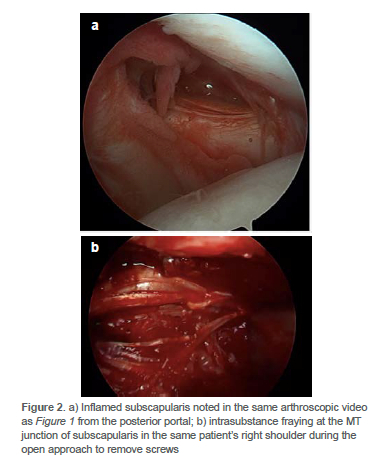
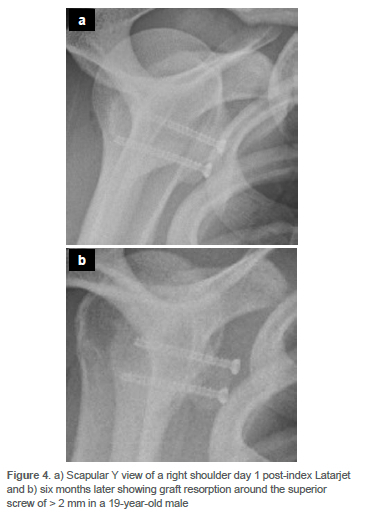
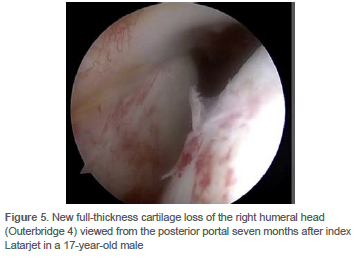
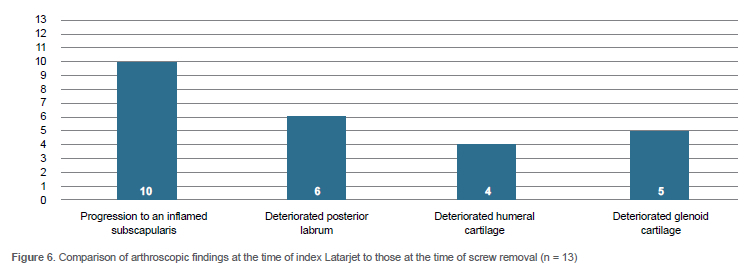
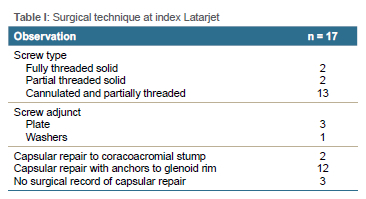
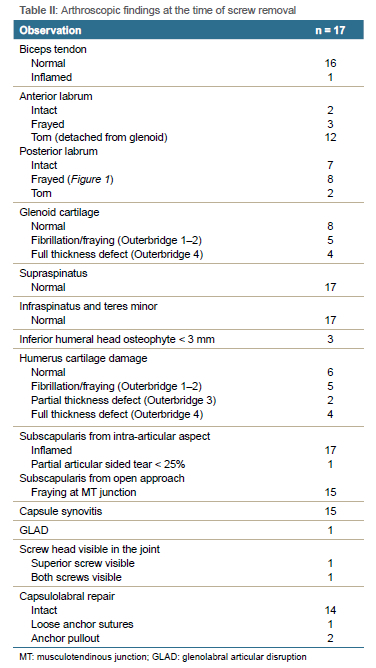
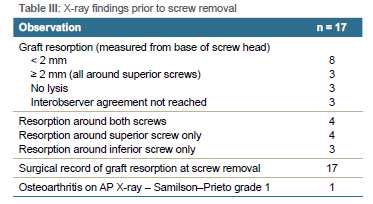
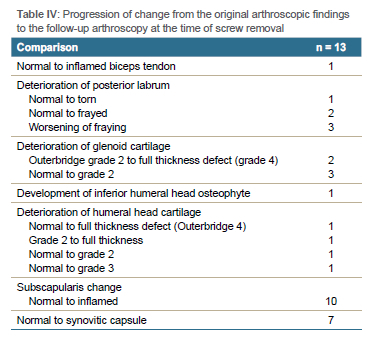
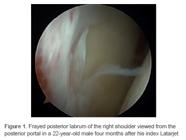
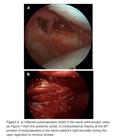
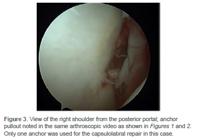
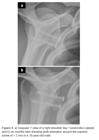
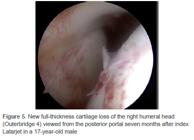
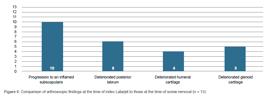
BACKGROUND: The Latarjet procedure is a well-described method to stabilise anterior shoulder instability. There are concerns of high complication rates, one of these being a painful shoulder without instability due to screw irritation. The arthroscopic changes in the shoulder at screw removal compared to those at index Latarjet have not been described in the literature. METHODS: We conducted a retrospective review of arthroscopic videos between 2015 and 2022 of 17 patients at the time of their Latarjet screw removal, and, where available (n = 13), compared them to arthroscopic findings at the time of index Latarjet. The operative notes were reviewed. Postoperative instability was an exclusion criterion. X-rays prior to screw removal were assessed independently by two observers blinded to patient details for resorption of the graft. Arthroscopic assessment of the anatomy and pathological changes were made by two shoulder surgeons via mutual consensus. An intraclass correlation coefficient (ICC) was analysed as a measure of the interobserver reliability of the radiographs. RESULTS: Our cohort had a mean age of 21.5 ± 7.7 years, and a mean period of 16.2 ± 13.1 months between Latarjet and screw removal. At screw removal, all patients had an inflamed subscapularis muscle, and 15 had intrasubstance fraying at the musculotendinous junction. Abnormal humeral (n = 11) and glenoid cartilage (n = 9) was noted. Ten had an abnormal posterior labrum. Thirteen patients had comparisons made to their pre-Latarjet arthroscopes which showed worsening in the condition of the subscapularis muscle (n = 10), glenoid (n = 5), humeral cartilage (n = 4), and posterior labrum (n = 6). Graft resorption was documented in all patients after reviewing X-rays and operative notes. Excellent inter-rater reliability was observed with an ICC value of 0.82. CONCLUSION: This study shows a high rate of subscapularis change in patients undergoing screw removal for pain following a previous Latarjet. Progression of damage and new pathological changes were also noted in the labrum and cartilage on both sides of the joint. This study highlights possible shoulder pathological changes that may be the origin of the pain in the patient with a stable shoulder following a Latarjet procedure. Level of evidence: 4
Latarjet; complications; pain; screw removal
 Thumbnail
 Thumbnail
 Thumbnail
 Thumbnail
 Thumbnail
 Thumbnail