Ultra-low velocity knee dislocation in obese and morbidly obese patients: a current concepts review
Abstract
As the prevalence of obesity continues to rise, there has been an increase in the number of ultra-low velocity knee dislocations within the obese population reported in the literature. These injuries are often referred to as 'ultra-low velocity knee dislocation' since they commonly occur during activities of daily living (e.g., same-level fall, stepped off curb, tripped on carpet). As a result, these injuries are often underappreciated and initially misdiagnosed. Even though these injuries are regarded as low velocity, a high magnitude of force is still transferred through the knee joint to dislocate the knee. Knee dislocation in obese and morbidly obese patients is associated with a particularly high rate of neurovascular injury. A low velocity knee dislocation is an orthopaedic emergency; therefore, evaluating physicians should maintain a high index of suspicion for a knee dislocation in any obese or morbidly obese patients who present with knee pain following a seemingly innocuous injury. Vascular injuries must be managed by a vascular team. Orthopaedic management of these injuries is still controversial. There is currently no consensus on the ideal orthopaedic treatment of the knee dislocations in the obese and morbidly obese patient. Operative management may be associated with more complications, such as a higher rate of neurovascular injury, increased surgical complications, and poor subjective patient outcome scores compared with non-obese patients sustaining a high velocity knee dislocation. Level of evidence: 5
knee dislocation; low velocity; obese; diagnosis; ultra-low velocity; neurovascular injury; management; outcomes; complications; multi-ligament knee injury
Introduction
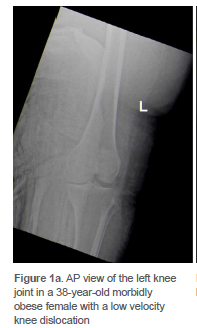
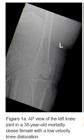
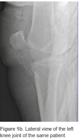
Knee dislocation is defined as the disruption of the integrity of the tibiofemoral joint, while a multi-ligamentous injured knee (MLIK) is defined as the rupture of at least two of the main four knee ligament stabiliser group.1,2 Historically, knee dislocations have been classified as high velocity or low velocity injuries.34566-8 A BMI of less than 25 is considered normal, 25-29 is considered overweight, over 30 is considered obesity, and 40 or more is considered extreme obesity. This has also been called class 3 obesity, 'severe' or 'extreme' obesity, and 'morbidly' obese. Obesity definitions continue to expand and now a BMI of more than 50 is known as 'super obese'.8,9 These injuries may have devastating neurovascular complications due to the proximity of crucial anatomical structures, and the significant magnitude of trauma required to dislocate a knee joint. As a result, physicians must maintain a high index of suspicion for concomitant limb-threatening injuries when evaluating a patient with a possible knee dislocation. The aim of this article is to review the existing literature on low velocity knee dislocations in obese and morbidly obese population groups, inclusive of diagnosis, management and outcomes (Figures 1a and b).
Epidemiology
Knee dislocation is a rare injury, comprising less than 1% of all orthopaedic injuries.101112,13 Bilateral knee dislocations are rare, occurring in approximately 5% of patients. Isolated open knee dislocations have been reported as 5-17%, while 14-44% of cases are recorded in polytrauma patients.10,12,13
Mechanism of injury
Despite the increase in case reports published, no consistent definition for different mechanisms has emerged, and overlapping terminology has added to the confusion. Spontaneous, spontaneous non-traumatic, pathological, low velocity and ULV have all been used to describe knee dislocations in obese and morbidly obese patients.5,14
Even though ULV knee dislocations occur after a common daily activity, a large amount of force is still transferred through the knee joint to dislocate the knee.324,15,16 Therefore, a simple fall that results in a hyperextension moment can be sufficient to generate a large force vector to cause an anterior knee dislocation in an obese or morbidly obese patient. Stewart et al. 2014, demonstrated in their study that obese individuals are significantly more likely to sustain knee dislocations caused by a low energy mechanism, and with an associated increased complication rate of 9.2% for every one unit increment in BMI.17 11,18
Classification
Kennedy classification
An anatomical classification was proposed by Kennedy in 1963, based on the direction of tibial dislocation in relation to the femur, as follows:19
• anterior
• posterior
• lateral
• medial
• rotatory - anteromedial, posteromedial, anterolateral, and posterolateral
Although well established and attractive by virtue of its simplicity, this is an unreliable guide to specific patterns of injury and provides no guidance in terms of management.20
Anterior knee dislocations are the most common type of knee dislocation from this classification, with an incidence of around 40%, and are due to a forced hyperextension. Kennedy's cadaveric research demonstrated that at least 30° of forced hyperextension was required before an anterior dislocation occurred, with the mechanism being capsular rupture followed by rupture of the anterior cruciate ligament.19,21 Anterior dislocations are associated with a higher likelihood of an intimal tear to the popliteal artery and subsequent arterial thrombus.
Schenck classification
Schenck proposed an alternative classification in 1994, which focused on the pattern of ligament injury with the presence or absence of an associated fracture.2223 2423-25
Pattern of injury
The most common directions for a knee dislocations are anterior, posterior, medial and lateral.2,26 Other rotatory combinations are less common and include anteromedial, anterolateral, posteromedial and posterolateral dislocations.22,26 Posterior dislocations (33%) are caused by application of a posterior force to the tibia as in a 'dashboard' type injury. Varus or valgus loads may produce medial (4%) and lateral (18%) dislocations.2711
Associated injuries
Vascular injury
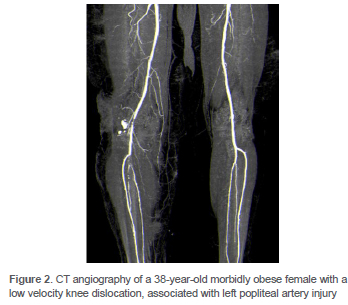
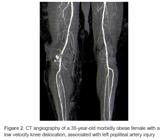
The reported rate of associated vascular injuries with knee dislocations is variable, ranging from 25-30% of all knee dislocations.10,24,28,29 Vascular injuries requiring surgical treatment occurred in 26-41% of ULV knee dislocations.25524,30 Georgiadis et al. reported that a greater percentage of obese patients sustained vascular injuries (33%) compared to non-obese patients (9%)10,17 and were also more likely to have a popliteal artery injury requiring repair: vascular repair was required in 28% of patients with BMI > 30 kg/m22,10 (Figure 2).
Neurologic injury
Reported rates of neurologic injury with knee dislocation have also varied widely, from 9-49%. Common peroneal nerve or tibial nerve injuries are reported in 39-41% of knee dislocations, with approximately half having return to normal function.2531 1723,26,32 In dislocations with disruption of the posterior cruciate ligament (PCL) and posterolateral corner (PLC), the incidence of peroneal nerve injury may be as high as 45%. It occurs because of traction along the posterior aspect of the lateral femoral condyle.
Clinical evaluation and diagnosis
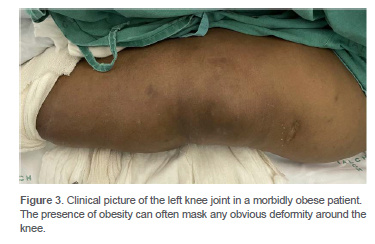
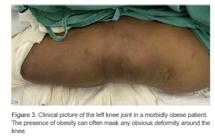
ULV knee dislocation is an orthopaedic emergency. These patients usually present with a chief complaint of knee pain after seemingly innocuous trauma, and the presence of obesity can often mask any obvious deformity around the knee (Figure 3). Knee dislocations are also difficult to diagnose because approximately 20-50% will spontaneously reduce before presentation.10,13 Therefore, a thorough ligamentous examination is important when assessing an obese patient with knee pain after low energy trauma, and radiographs should be obtained on all patients. There is still significant controversy about the role of arteriography versus less invasive measures such as ankle-brachial index (ABI) to determine the vascular status of a patient after an ULV knee dislocation.331,4,11 ABI is a useful tool for the initial evaluation of suspected vascular injury in low velocity knee dislocation. However pre-existing peripheral vascular disease may render it less reliable; thus, positive results must always be confirmed with additional imaging.8,9 Duplex sonography (DUS) is widely used in the setting of trauma. Accessibility, low cost, easy mobility, non-invasiveness and lack of ionising radiation are its advantages.8,20 Luminal narrowing, hypoechoic intramural haematoma, dissected arterial wall, haemodynamic relevant stenosis, the 'yin-yang' sign (pseudoaneurysm) and occlusion are the features consistent with vascular injury.88,20 Observation for 48 hours with routine examinations without arteriography has been shown to be safe in patients with a normal neurovascular examination and an ABI > 0.9. The selective use of arteriography has been recommended because of a potential delay in treatment of popliteal artery injuries, and many algorithms have been proposed to determine the necessity of arteriography after knee dislocation. Smith et al. proposed a selective arteriography protocol that begins with reduction of the dislocation and physical examination after reduction.1421,33
Management
Initial treatment
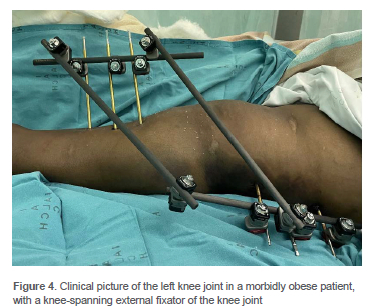
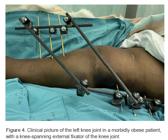
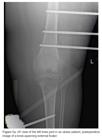
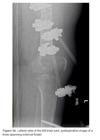
Once a patient has been diagnosed with an ULV knee dislocation, a closed reduction should be performed immediately under conscious sedation. A neurovascular examination should be completed and documented before and after reduction of the knee joint. Ligamentous examination should be performed once the knee is reduced, and a brace or well-padded splint is fitted with the knee in 30-40° of flexion. If the reduction cannot be maintained in a splint or brace, an external fixator (knee spanning) should be applied in the operating room. The main indications for initial spanning external fixation were significant vascular injury, gross instability on examination with failure to maintain joint reduction, and open knee dislocation.1,2,15 The timing between vascular reconstruction and the placement of an external fixator remains controversial. Some authors recommend the placement of an external fixator after vascular exploration or repair. This reduces the ischaemic time and allows knee flexion, which is critical for medial popliteal exposure by the vascular surgery team. However, other authors recommend the use of external fixation before definitive arterial repair and the presence of a vascular surgeon to assist with planning the placement of external fixation. There are currently no recommendations regarding the optimal timing pertaining to the removal of the external fixator in cases with an associated vascular injury (Figures 4 and 5).
Definitive treatment
There has been considerable debate regarding the most appropriate technique to manage these difficult injuries. The recent literature has provided some solutions. However, there remain several unresolved considerations.
Operative versus nonoperative management
Several studies have compared operative and nonoperative management of ULV knee dislocations. Azar et al. reported that patients who underwent ligament reconstruction demonstrated better Hospital for Special Surgery scores (HSS), than those treated without reconstruction.54,16,34 Multiligamentous reconstruction in the obese or morbidly obese population is associated with several challenges including longer operative procedures, need for special equipment (e.g., bariatric table), and difficulty with positioning. Operative times have been reported to be significantly longer (5 hours compared to 2.5 hours) when obese and morbidly obese patients were matched to patients with similar surgery and BMIs between 20 and 30 kg/m,2,34 respectively.
Timing of surgery
Timing of surgery is often determined by the severity of ligamentous injury, the vascular status of the extremity, the overall degree of instability, post-reduction stability, and status of the skin and soft tissue.2,35 There is increasing consensus that surgical intervention for isolated knee dislocation injuries should be performed early (within two to three weeks), compared with delayed reconstruction (greater than three weeks from the initial injury).27,35-3731
Surgical technique
The selection of arthroscopic versus open reconstruction in ULV knee dislocation depends on the timing of surgery as well as the structures involved. PLC, MCL and PMC require open reconstruction given their subcutaneous nature and proximity to neurovascular structures.15,34 No randomised trials have compared open versus arthroscopic reconstruction after knee dislocation, thus the advantages of either are theoretical. Coexisting injuries that require open repair, such as fractures, popliteal artery injuries and compartment syndrome, may dictate a more aggressive open approach. Arthroscopy allows for evaluation and treatment of concomitant intra-articular pathology, including cartilage damage and meniscal tears. Arthroscopic management may also allow for a smaller infection rate compared with open knee reconstruction. Open reconstruction is usually reserved for lateral collateral ligament/PLC and MCL/PMC reconstructions. A wide variety of surgical techniques have been described in the management of these injuries. The most important principle is to define the components contributing to the instability and to reconstruct the primary restraints as anatomically and isometrically as possible.35 5,15,34
Postoperative external fixation versus hinged knee bracing
Prior to surgery, there may be difficulty in obtaining braces or stabilising the knee without external fixation, while postoperatively there may be difficulty in Atting custom braces to patients. The benefits of postoperative reconstructive spanning external fixation have been described by many authors. The postoperative external fixator helps to protect the graft tissue from excessive force. The Compass Knee Hinge (CKH) (Smith & Nephew, Memphis, TN) is a hinged, multiplanar, external fixator that can be applied at the isometric point of the knee joint.
Outcomes
Surgical reconstruction leads to improved subjective and objective results in patients with ULV knee dislocation. These patients may have low postoperative activity scores, reflective of their preoperative activity status. Despite improved objective outcomes with surgery, many patients with ULV knee dislocation do poorly overall, with 71% in one study describing themselves as 'dissatisfied' or 'extremely dissatisfied' with their results after ligamentous reconstruction.165,10,16 Azar et al. published the first large case series of ultra-low velocity knee dislocations in 17 patients.5516 1010,16
Complications
Despite improved outcomes with surgery, most patients with ULV knee dislocations do poorly overall. Reported complication rates can be as high as 47%.4
• Arthrofibrosis and loss of motion - Arthrofibrosis and loss of motion are frequently up to 40% after ULV knee dislocations in obese patients.5,16
• Recurrent instability - Werner et al. reported graft failure and instability in two of 17 patients with ULV knee dislocations,1634
• Thromboembolic complications - Rates of deep vein thrombosis (DVT) in ULV knee dislocations are infrequently reported; an incidence of 3.5% has been reported in studies that include all mechanisms of knee dislocations.55,14
• Amputation - Like other complications, amputation rates after ULV knee dislocations vary significantly. Among all knee dislocations in a large case series, the rate of amputations was reported to be 9.2%, with an increased risk following open or high energy injury. Smaller case series of ULV knee dislocations in obese patients report amputation rates of 12-28%.14,16
South African context
Little doubt exists of a rising trend in BMI and consequently, in the prevalence of overweight and obesity in the South African population. In 2008, the average BMI at population level was estimated at 26.9 kg/m222222383837 37
Conclusion
ULV knee dislocations frequently occur after innocuous trauma, yet these injuries should still be considered high energy. Given the high frequency of associated neurovascular injuries, these injuries must be treated as an emergency to minimise the risk of limb-threatening complications. There is evidence that increasing BMI correlates with a significant risk of neurovascular injuries as well as other complications. Given the size of the limb, maintenance of reduction in these patients almost always requires external fixation. While surgery may be technically challenging, surgical reconstruction leads to improved subjective and objective results. Discussion with the patient should focus on limited expectations of an optimistic outcome and the high complication rates because of the nature of their injury. Randomised, prospective studies for surgical timing and surgical techniques are currently lacking and further research into this specific entity is required.
Ethics statement
The authors declare that this submission is in accordance with the principles laid down by the Responsible Research Publication Position Statements as developed at the 2nd World Conference on Research Integrity in Singapore, 2010. Ethics approval was not obtained (review article).
Declaration
The authors declare authorship of this article and that they have followed sound scientific research practice. This research is original and does not transgress plagiarism policies.
Author contributions
SM: literature review, epidemiology, technical and surgical factors, external knee spanning fixator, outcomes, complications, South African context, first draft preparation, manuscript preparation
PR: contributed to conceptualisation, literature review, technical and surgical factors, first draft preparation
BP: literature review, epidemiology, technical and surgical factors, outcomes, first draft preparation, manuscript preparation
ORCID
Mzamo S https://orcid.org/0000-0002-3122-1979
References
-
1. Ramírez-Bermejo E, Gelber PE, Pujol N. Management of acute knee dislocation with vascular injury: the use of the external fixator. A systematic review. Arch Orthop Trauma Surg. 2022;142:255-61. https://doi.org/10.1007/s00402-020-03684-0
» https://doi.org/10.1007/s00402-020-03684-0 -
2. Howells NR, Brunton LR, Robinson J, et al. Acute knee dislocation: an evidence based approach to the management of the multiligament injured knee. Injury. 2011;42:1198-204. https://doi.org/10.1016/j.injury.2010.11.018
» https://doi.org/10.1016/j.injury.2010.11.018 -
3. Carr J, Werner B, Miller M, et al. Knee dislocation in the morbidly obese patient. J Knee Surg. 2016;29. https://doi.org/10.1055/s-0036-1571432
» https://doi.org/10.1055/s-0036-1571432 - 4. Marin EL, Bifulco SS, Fast A. Obesity. A risk factor for knee dislocation. Am J Phys Med Rehabil. 1990;69:132-34.
-
5. Azar FM, Brandt JC, Miller RH 3rd, Phillips BB. Ultra-low-velocity knee dislocations. Am J Sports Med. 2011;39:2170-74. https://doi.org/10.1177/0363546511414855
» https://doi.org/10.1177/0363546511414855 - 6. Perreault L. Obesity in adults: prevalence, screening, and evaluation. Waltham, MA, USA: UpToDate Inc 2018.
-
7. Moselakgomo VK, Van Staden M. Diagnostic comparison of Centers for Disease Control and Prevention and International Obesity Task Force criteria for obesity classification in South African children. Afr J Prim Health Care Fam Med. 2017. 2017 Aug 31;9(1):e1-e7. https://doi.org/10.4102/phcfm.v9i1.1383
» https://doi.org/10.4102/phcfm.v9i1.1383 -
8. Petersen R, Pan L, Blanck HM. Peer reviewed: racial and ethnic disparities in adult obesity in the United States: CDC's tracking to inform state and local action. Prev Chronic Dis. 2019 Apr 11;16:E46. https://doi.org/10.5888/pcd16.180579.
» https://doi.org/10.5888/pcd16.180579 - 9. Purnell JQ. Definitions, classification, and epidemiology of obesity. Endotext [Internet] South Dartmouth (MA): MDText.com, Inc.; 2000-. PMID: 25905390
-
10. Georgiadis AG, Mohammad FH, Mizerik KT, et al. Changing presentation of knee dislocation and vascular injury from high-energy trauma to low-energy falls in the morbidly obese. J Vasc Surg. 2013;57:1196-203. https://doi.org/10.1016/j.jvs.2012.11.067
» https://doi.org/10.1016/j.jvs.2012.11.067 -
11. McKee L, Ibrahim MS, Lawrence T, et al. Current conceptsin acute knee dislocation: the missed diagnosis? Open Orthop J. 2014;8:162-67. https://doi.org/10.2174/1874325001408010162
» https://doi.org/10.2174/1874325001408010162 -
12. Mühlenfeld N, Berthold DP, Münch LN, et al. Epidemiology of complete knee dislocations: an updated classification system. Arch Orthop Trauma Surg. 2022;142:2711-18. https://doi.org/10.1007/s00402-021-04079-5
» https://doi.org/10.1007/s00402-021-04079-5 -
13. Brautigan B, Johnson DL. The epidemiology of knee dislocations. Clin Sports Med. 2000;19:387-97. https://doi.org/10.1016/s0278-5919(05)70213-1
» https://doi.org/10.1016/s0278-5919(05)70213-1 -
14. Smith PJ, Azar FM. Knee dislocations in the morbidly obese patient. Sports Med Arthrosc Rev. 2020;28:110-15. https://doi.org/10.1097/jsa.0000000000000273
» https://doi.org/10.1097/jsa.0000000000000273 -
15. Carr JB, Werner BC, Miller MD, et al. Knee dislocation in the morbidly obese patient. J Knee Surg. 2016;29:278-86. https://doi.org/10.1055/s-0036-1571432
» https://doi.org/10.1055/s-0036-1571432 -
16. Werner BC, Gwathmey FW, Jr., Higgins ST, et al. Ultra-low velocity knee dislocations: patient characteristics, complications, and outcomes. Am J Sports Med. 2014;42:358-63. https://doi.org/10.1177/0363546513508375
» https://doi.org/10.1177/0363546513508375 -
17. Edwards GA, Sarasin SM, Davies AP. Dislocation of the knee: an epidemic in waiting? J Emerg Med. 2013;44:68-71. https://doi.org/10.1016/j.jemermed.2011.06.064
» https://doi.org/10.1016/j.jemermed.2011.06.064 -
18. Robertson A, Nutton RW, Keating JF. Dislocation of the knee. J Bone Joint Surg Br. 2006;88(6):706-11. https://doi.org/10.1302/0301-620x.88b6.17448
» https://doi.org/10.1302/0301-620x.88b6.17448 - 19. Kennedy JC. Complete dislocation of the knee joint. J Bone Joint Surg Am. 1963;45:889-904.
-
20. Figueras JH, Johnson BM, Thomson C, et al. Team approach: treatment of traumatic dislocations of the knee. JBJS Rev. 2023; 11(4). https://doi.org/10.2106/JBJS.RVW.22.00188
» https://doi.org/10.2106/JBJS.RVW.22.00188 -
21. Schenck R. Classification of knee dislocation. Operat Techniq Sports Med. 2003;11:193-98. https://doi.org/10.1053/otsm.2003.35918
» https://doi.org/10.1053/otsm.2003.35918 -
22. Medina O, Arom GA, Yeranosian MG, et al. Vascular and nerve injury after knee dislocation: a systematic review. Clin Orthop Relat Res. 2014;472:2621-29. https://doi.org/10.1007/s11999-014-3511-3
» https://doi.org/10.1007/s11999-014-3511-3 -
23. Constantinescu D, Luxenburg D, Syros A, et al. Vascular injury after knee dislocation: a meta-analysis update. J Am Acad Orthop Surg. 2023;31:e198-e206. https://doi.org/10.5435/jaaos-d-22-00339
» https://doi.org/10.5435/jaaos-d-22-00339 - 24. Hobbs H, Walters J. Acute dislocations of the knee. SA Orthop J. 2009;8(2):35-39.
-
25. James EW, Wolfe I, Marx RG. Results of treatment of the multiple ligament injured (dislocated) knee. Sports Med Arthrosc Rev. 2020;28:116-19. https://doi.org/10.1097/jsa.0000000000000274
» https://doi.org/10.1097/jsa.0000000000000274 - 26. Green NE, Allen BL. Vascular injuries associated with dislocation of the knee. J Bone Joint Surg Am. 1977;59:236-39.
-
27. Johnson JP, Kleiner J, Klinge SA, et al. Increased Incidence of vascular injury in obese patients with knee dislocations. J Orthop Trauma. 2018;32:82-87. https://doi.org/10.1097/bot.0000000000001027
» https://doi.org/10.1097/bot.0000000000001027 -
28. Hagino RT, DeCaprio JD, Valentine RJ, et al. Spontaneous popliteal vascular injury in the morbidly obese. J Vasc Surg. 1998;28:458-62; discussion 462-53. https://doi.org/10.1016/s0741-5214(98)70131-4
» https://doi.org/10.1016/s0741-5214(98)70131-4 -
29. Natsuhara KM, Yeranosian MG, Cohen JR, et al. What is the frequency of vascular injury after knee dislocation? Clin Orthop Relat Res 2014;472:2615-20. https://doi.org/10.1007/s11999-014-3566-1
» https://doi.org/10.1007/s11999-014-3566-1 -
30. Stewart RJ, Landy DC, Khazai RS, et al. Association of injury energy level and neurovascular injury following knee dislocation. J Orthop Trauma. 2018;32:579-84. https://doi.org/10.1097/bot.0000000000001277
» https://doi.org/10.1097/bot.0000000000001277 -
31. Tay AK, MacDonald PB. Complications associated with treatment of multiple ligament injured (dislocated) knee. Sports Med Arthrosc Rev. 2011;19:153-61. https://doi.org/10.1097/JSA.0b013e31820e6e43
» https://doi.org/10.1097/JSA.0b013e31820e6e43 - 32. Henrichs A. A review of knee dislocations. J Athl Train. 2004;39:365-69.
-
33. McCoy GF, Hannon DG, Barr RJ, et al. Vascular injury associated with low-velocity dislocations of the knee. J Bone Joint Surg Br. 1987;69:285-87. https://doi.org/10.1302/0301-620x.69b2.3818761
» https://doi.org/10.1302/0301-620x.69b2.3818761 -
34. Vaidya R, Roth M, Nanavati D, et al. Low-velocity knee dislocations in obese and morbidly obese patients. Orthop J Sports Med. 2015;3:2325967115575719. https://doi.org/10.1177/2325967115575719
» https://doi.org/10.1177/2325967115575719 -
35. Levy BA, Fanelli GC, Whelan DB, et al. Controversies in the treatment of knee dislocations and multiligament reconstruction. J Am Acad Orthop Surg. 2009;17:197-206. https://doi.org/10.5435/00124635-200904000-00001
» https://doi.org/10.5435/00124635-200904000-00001 -
36. Cook S, Ridley TJ, McCarthy MA, et al. Surgical treatment of multiligament knee injuries. Knee Surg Sports Traumatol Arthrosc. 2015;23:2983-91. https://doi.org/10.1007/s00167-014-3451-1
» https://doi.org/10.1007/s00167-014-3451-1 -
37. Held M, Schenck RC, Khanduja V, et al. Prioritised challenges in the management of acute knee dislocations are stiffness, obesity, treatment delays and associated limb-threatening injuries: a global consensus study. J Isakos. 2021;6:193-98. https://doi.org/10.1136/jisakos-2020-000565
» https://doi.org/10.1136/jisakos-2020-000565 -
38. Held M, Laubscher M, Von Bormann R, et al. High rate of popliteal artery injuries and limb loss in 96 knee dislocations, SA Orthop J. 2016;15(1):72-76. https://doi.org/10.17159/2309-8309
» https://doi.org/10.17159/2309-8309
Accepted: June 2024
Published: March 2025
Editor: Dr Luan Nieuwoudt, University of KwaZulu-Natal, Durban, South Africa
Funding: No funding was received for this study.
Conflict of interest: The authors declare they have no conflicts of interest that are directly or indirectly related to the research.