Orthopaedics and COVID-19: The surgery, the surgeon and the susceptible - a scoping review
Abstract
BACKGROUND: The coronavirus disease of 2019 (COVID-19) pandemic is taxing South Africa's already over-burdened healthcare system. Orthopaedics is not exempt; patients present with COVID-19 and musculoskeletal pathology and so surgeons should be familiar with the current evidence to best manage patients and themselves. The aims of this scoping review were firstly to inform peri-operative decision-making for COVID-positive patients as well as the routine orthopaedic milieu during the pandemic; secondly to assess the outcomes of orthopaedic patients managed in endemic areas; and Anally to determine the effect the pandemic has had on our orthopaedic peersMETHODS: A scoping review was conducted following the PRISMA-ScR guidelines of 2018. The search terms 'Orthopaedics' or 'Orthopedics' and 'COVID-19' or 'Coronavirus' were used to perform the search on Scopus, PubMed and Cochrane databases. All peer-reviewed articles utilising evidence-based methodology and addressing one of the objectives were eligible. A thematic approach was used for qualitative data synthesisRESULTS: Seventeen articles were identified for inclusion. All articles represented level 4 and 5 evidence and comprised ten review-type articles, one consensus statement, two web-based surveys and four observational studies. Most articles (n=11) addressed the objective of peri-operative considerations covering the stratification and testing of patients, theatre precautions and personal protective equipment (PPE). Evidence suggests that patients should be stratified for surgery according to the urgency of their procedure, their risk of asymptomatic disease (related to the community prevalence of COVID-19) and their comorbidities. The consensus is that all patients should be screened (asked a set of standardised questions with regard their symptoms and contacts). Only symptomatic patients and those asymptomatic patients from high prevalence areas or those with high-risk contacts should be tested. Healthcare workers (HCWs) in theatre should maintain safety precautions considering every individual is a potential contact. In the operating room in addition to the standard orthopaedic surgery PPE, if a patient is COVID positive, surgeons should don an N95 respirator. The three articles that addressed the effects on the orthopaedic surgeon showed a significant redeployment rate, effects on monetary renumeration of specialists and also effects on surgeons in training causing negative emotional ramifications. Of the surgeons who have contracted the illness and have been investigated, all showed mild symptomatology and recovered fully. The final three articles concentrated on orthopaedic patient considerations; they all showed high mortality rates in the vulnerable patient populations investigated, but had significant limitationsCONCLUSION: Orthopaedics is significantly affected by the COVID pandemic but there remains a dearth of high-quality evidence to guide the specialtyLevel of evidence: Level 3
COVID-19; SARS-CoV-2; coronavirus; orthopaedic; surgery
Introduction
The first case of COVID-19 illness in South Africa (SA), caused by the severe acute respiratory syndrome coronavirus-2 (SARS-CoV-2), was diagnosed on 5 March 2020. This was several months after the index case in Wuhan, People's Republic of China. South Africa observed as the World Health Organization (WHO) declared the pandemic on 11 March and as it coursed the globe, declaring a national state of disaster and an eight-stage response to the pandemic on 24 March.
In the initial stages, a national lockdown was instituted and a rigorous public screening and testing programme was established in an attempt to flatten the curve. South Africa faces many of the healthcare challenges experienced globally, such as a shortage of test reagent and acquisition of personal protective equipment (PPE) to name a few. In addition, it is encumbered with the greatest human immunodeficiency virus (HIV) burden in the world, and the strain of 80% of the population reliant on the public service for care.1
Currently, in the midst of the surge, each sector of the South African healthcare team has a duty to respond to the pandemic as it affects their field. We acknowledge that while orthopaedics is not on the frontline in medically managing the illness, we will encounter COVID-19 patients during our scope of practice and be required to use resources responsibly, offering support to more burdened sectors. Knowledge of infection control and prevention measures has been shown to have a protective effect on contraction of the COVID-19 illness.2
Three objectives were identified to achieve this end:
1. To outline the peri-operative considerations highlighted in literature.
2. To assess the current evidence on orthopaedic patients and their outcomes.
3. To evaluate the effect the pandemic has had on our international orthopaedic counterparts.
While there is a plethora of anecdotal evidence in the form of current status quo, there is a paucity of evidenced-based data, making presentation of the information suited to a scoping format.
Methods
We conducted a scoping review following the PRISMA-ScR guidelines of 2018.3
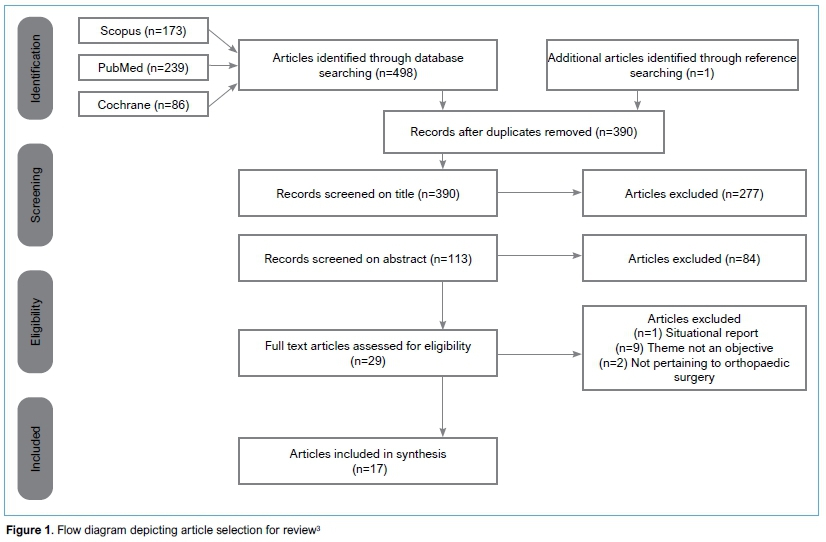
The search was performed on 23 May 2020 on the Scopus, Cochrane and PubMed databases. The search was performed with the terms 'Orthopaedics' and 'Orthopedics' applying the Boolean operator 'OR'. Similarly, 'COVID-19' and 'coronavirus' were searched using 'OR' and the operator 'AND' was employed between the two groups. Limitations applied included English language articles and those published from December 2019 (Figure 1).
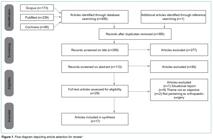
Search citations were exported to EndNote (EndNote X9.3.3, Michael O. McCracken) and transferred to Excel (Microsoft Excel for Mac version 16.31, Microsoft Corporation) for data collation. For qualitative synthesis, columns were added to the spreadsheet to capture the article type, date of publication, country of origin, level of evidence, main theme or objective of the article as well as sub-themes. A comments column was included for additional points of interest. Two authors independently performed title, abstract and full text reviews in this format. In the event of disagreement, consensus was reached by discussion.
Results
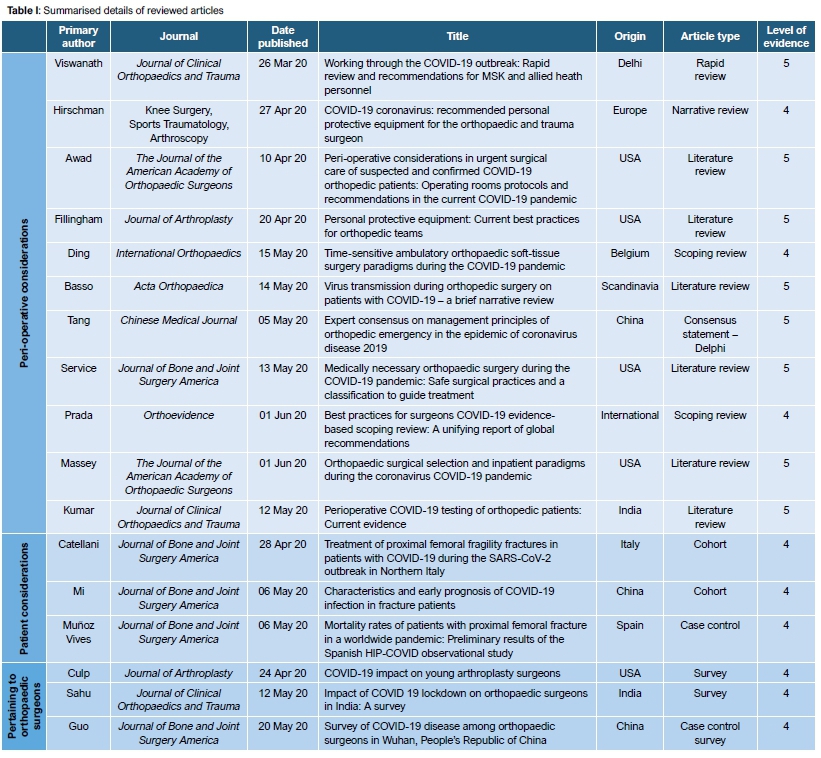
A total of 17 articles met the inclusion criteria. Eight articles re-presented level 4 evidence and nine articles level 5 evidence. These articles comprised ten reviews (literature, rapid, narrative or scoping types), three of which followed systematic approach guidelines. There was one consensus statement that applied the Delphi method, two web-based cross-sectional surveys and four observational cohort or case control studies. Contributions were made from across the globe, with one international report, five from the United States, Five from Europe (namely Spain, Italy, Belgium and Scandinavia), three from India, and the remaining three came from China. Interestingly, the majority (n=9) of the articles were published in May (actual print date and not the accessed date), reflecting a surge in publications immediately post-epidemiological peaks in Europe and America respectively. Some overlap was present regarding the main theme of each article; the majority of articles (n=11) addressed the first objective encompassing peri-operative considerations, three addressed the effects on the orthopaedic surgeon, and the remaining three concentrated on orthopaedic patient outcomes. An article overview is represented in Table I. The main findings of each of the objectives are summarised hereafter.
Peri-operative decision-making
Patient operative urgency grading, testing and risk stratification
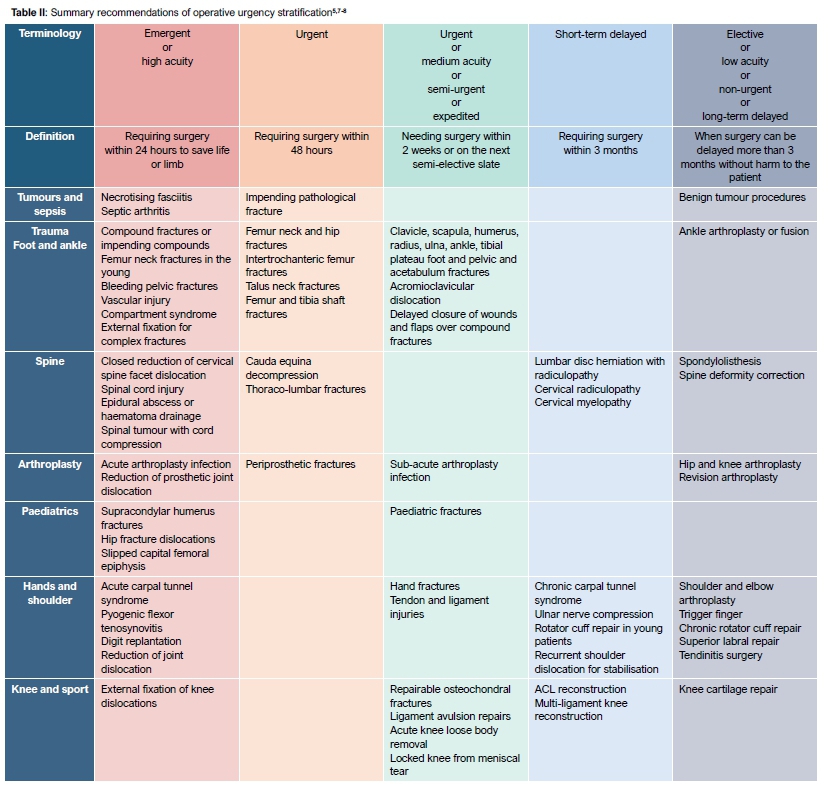
There is agreement on grading the level of urgency of surgery for patients; however, a standard nomenclature has not emerged.
Table II summarises the different terminologies utilised in the various texts and provides examples of cases ascribed to each grade. It is however not a fully comprehensive list, and several societies representing orthopaedic sub-disciplines have issued specific recommendations.45,6 In essence then, when the prevalence and resource demand is great, limit surgery only to emergency cases, but allow ongoing management of the routine burden when the COVID load is low. Singapore has adopted into policy DORSCON levels which represents phasing of their response based on resource demands and disease prevalence.76et al. performed a review specifically on timing to surgery for traumatic soft tissue injuries in order to prevent negative outcomes.8
Testing patients for SARS-CoV-2 is considered to be necessary for a myriad of reasons. First, there is a high proportion of asymptomatic patients shedding viral matter (estimates vary across a wide range, from 5 to 80%). Secondly, the incubation period is on average 5-14 days and the virus has proven highly contagious with a reproduction number (R0) of 2.68, meaning that on average each COVID-positive person will infect 2.7 people.5,9-11 Thirdly, there is a growing body of evidence to suggest patients with COVID-19 that undergo surgery have high morbidity and mortality rates.12-15 This should give us pause to earnestly evaluate the benefits of surgery in such patients who require life- or limb-saving surgery and should prompt us to involve a multidisciplinary team early on.9
In the ideal setting, each patient would be tested, but this is not feasible with a global reagent supply deficit. Also, the real-time polymerase chain reaction (RT-PCR) test offered in SA has a false negative rate that approaches 29% in one systematic review.16 11,16 Computerised tomography (CT) scans and other blood diagnostics have been investigated to improve the sensitivity of testing but at this stage all prove to have a low specificity to diagnose COVID illness.14
On the matter of patient risk stratification in consideration for surgery, one also has to consider the scenario that despite being asymptomatic and PCR negative, that this result is falsely negative. The greater the prevalence rate, the more likely we are to encounter this scenario, hence the importance of establishing the local infection rate. Two studies stratified community infection rates as a means to guide index of suspicion on patient positivity.5,13 They considered infection rates as low, medium or high, corresponding to infections of <50, 50-100 or >100 COVID-19 cases per 100 000 inhabitants. For example then, if the prevalence is high, an institution should be more aggressive in testing asymptomatic patients and in adopting the practice of treating all individuals as suspects.
If a patient should test positive and require surgery, one must also consider the physiological insult of the surgery to the body and the patient's underlying comorbidities. These have the potential to affect the severity of COVID illness. Risk factors shown to predispose patients to more severe COVID illness, and subsequent increased morbidity and mortality, include: age more than 60 years, smokers, body mass index (BMI) more than 30 kg/m21718
Summary points: Peri-operative decision-making
• Consider the community infection rate.5,13
• Grade the urgency of the orthopaedic procedure.5,6,18
• Consider if the procedure can be performed as an outpatient.6
• Ideally screen all patients prior to surgery and if admitted, daily screening should be performed.5,18
• Test all symptomatic patients. Test asymptomatic patients with a high risk contact.9119
• If the patient tests positive, whenever possible, surgery should be delayed or non-operative management considered. The multidisciplinary team should be involved early if surgery is pursued.19
• In emergent cases where surgery must ensue, comorbidities and physiological stress of surgery should be considered in the risk-benefit equation.18
• The least invasive surgical option should be performed.19
• Absorbable sutures and transparent wound dressings can help minimise follow-ups.18
Personal protective equipment (PPE)
SARS-CoV-2 is believed to be of zoonotic origin.11115,10,20-22 Literature draws an important distinction between aerosols from cells of respiratory and intestinal origin as opposed to all other bodily fluids and tissue.21,22 The former have been shown to contain infectious virus where the latter have not. There is evidence in orthopaedic surgery, particularly when using a high-speed burr, power drills, oscillating saws, reamers, electrocautery and pulsed lavage, that blood and tissue aerosolised particles are found in an area up to 6*8 m around the operative field. Essentially then transmission in this fashion is theoretically possible, but not proven.21
Surgical masks by design are to protect the patient from infection derived from the surgeon. In addition they have been proven to adequately protect the surgeon from infectious disease during procedures when aerosols are not generated.222 232321
Extended use refers to the continued use of the same respirator while treating different patients for a prolonged period of time. The current consensus on duration of use is 8-12 hours,10,20 provided that no soiling occurs.1010,18 Donning and doffing technique is highlighted as it is poorly performed in general.109,11 Another recommendation to preserve PPE is to issue staff with five respirators. HCWs should utilise the FFP as before, but after doffing should place the FFP in a paper bag. It should remain in the bag for a minimum of 72 hours, by which time the remaining viruses are not viable, and the respirator is again regarded as safe to use.18
Counterintuitively, surgical hoods do not provide the protection of a respirator. They are designed to protect the wearer from particles in motion but not for particle filtration. So a surgical hood alone is not protective, but can be used in conjunction with a respirator provided it is adequately cleaned between cases.5,20 Surgical gowns are rated by the Association of Advancement of Medical Instrumentation (AAMI) from 1 to 4 according to the protection they afford to the critical area, defined as the regions from cuff to elbow and chest to knees. Class 4 offers the greatest protection.9,21 Eye protection is commonplace in orthopaedic theatres but recommendations suggest that eye covering should extend to the areas above, below and to the sides of the eye to protect the vulnerable conjunctiva.2121
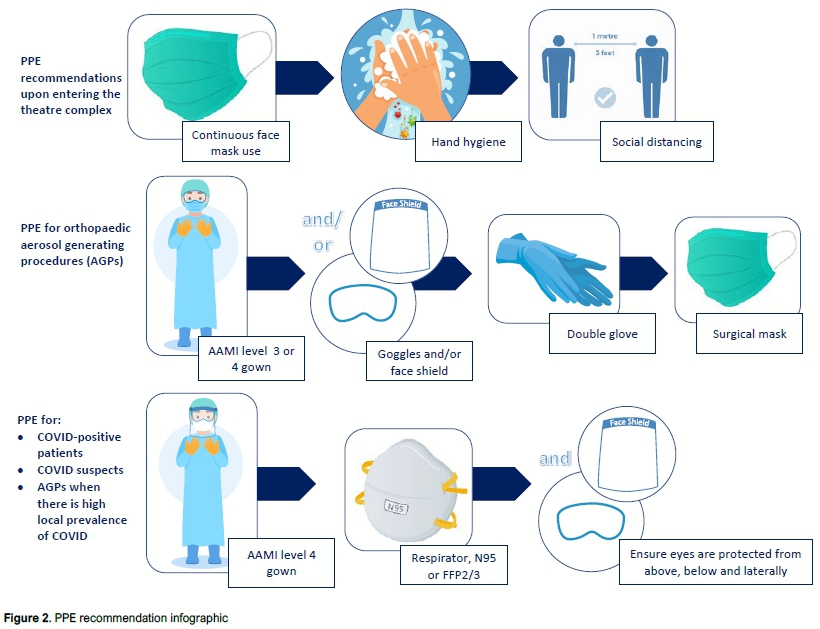
Summary points: Personal protective equipment (Figure 2)
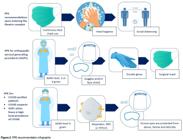
• A surgical mask, eye protection (goggles or shield), double gloving and AAMI grade 3 or 4 gowns are needed for orthopaedic surgery that entails production of aerosols.5,9,21
• Additional requirements for a COVID suspect, confirmed cases or high community prevalence rate, is the use of an N95 mask or equivalent (FFP2/3). A surgical mask can be worn over the respirator if contamination is anticipated.5,18,20,21
• If a surgical hood is utilised it needs to be in conjunction with a
respirator.5,20,22
• Extended use and re-use are recommended as preservation strategies for PPE ensuring correct donning and doffing technique and use not exceeding 12 hours.10,20
Operating room considerations
With the South African lockdown tapering and the alcohol ban lifted (at the time of writing), emergent and urgent trauma cases will increase with a concurrent rise in COVID-19 infections.24189,20
General recommendations while in the theatre complex:
• All HCWs and patients are to practise hand hygiene and wear surgical masks.6,8,9,18,20
• All staff should practise social distancing.6,8
• Regular decontamination of personal items such as stethoscopes and cellphones is to be done.9
• Theatre should run with the minimum staff required.6,10,18
• A negative pressure OR or an OR where there is a minimum of between 5-20 air changes per hour should be used.9,18-20 If the theatre runs on a positive pressure system then a free-standing filter should be acquired.10
• Minimise traffic through the theatre complex and each operating room.5,9,18
• All theatre surfaces should be disinfected between cases.18
Recommendations for COVID theatre:
• A path from the ward to the OR for COVID-positive patients should be identified. This path should be separate from normal traffic and disinfected after each transport of a patient.10
• The OR should have zones denoting potential risk. One recommendation refers to 'hot' and 'cold' zones where the high-risk area and OR itself is 'hot'. The 'cold' zone refers to the buffer region between the normal areas and the hot zone.9,20 There should also be isolated areas for the purpose of donning and doffing.9,18
• Only one access point should be allowed to the OR while a procedure is taking place.10
• Theatre should contain the minimum equipment required to proceed.18
• Preference is shown for regional anaesthesia to prevent respiratory aerosol generation from intubation.5,10,18
• If intubation is required it is recommended that it be performed by the most senior anaesthetist present.10185,18
• Post-operatively the patient should be recovered in the OR. This will mitigate the risk of exposure to other patients in the general recovery room.10,18
• One should allow adequate time to elapse post-intubation before entering theatre and similarly, post-operatively a certain amount of time should elapse prior to re-entry to start decontamination. This timing is relative to the amount of air changes per hour of the filtration system, where each change removes 63% of the virus.259,18
Patient outcome studies
While travel restrictions have decreased the high-energy motor vehicle accident (MVA) rate, patients still require orthopaedic trauma care due to, for example, low-energy falls. These patients will now encounter a resource-depleted healthcare system adapted for COVID-19. They will be susceptible to severe COVID illness as they are usually elderly, frail, have multiple comorbidities and are slow to ambulate, predisposing them to the usual respiratory illness and COVID illness.145 14
This study highlights:
• The need for strict infection control measures to limit nosocomial transmission of the disease.
• Common symptoms of COVID disease in fracture patients including fever, cough and fatigue.
• Multiple sensitive but non-specific laboratory findings.
• The need for supplemental oxygen in most patients.
• A mortality rate of 40% in COVID-positive patients with concomitant fracture.
The next study was conducted in Italy using the STROBE guidelines. It had a study population of 16 COVID-positive patients (diagnosed with CT scan and oropharyngeal PCR) with a proximal femur fracture. Three patients died pre-operatively and four died within seven days post-operatively; all deaths were attributed to respiratory failure. Either a cephalomedullary nail or hemi-arthroplasty was performed within three days of admission, and patients were mobilised the day after surgery. Again, inferring conclusions from this study is difficult due to lack of a comparative sample.
This study highlights:
• A 44% early mortality rate in COVID-positive patients with proximal femur fractures.
• Similar mortality rates, irrespective of receiving surgery or not.
A Spanish cohort study had the largest study population and aimed to assess the mortality rate of elderly patients with proximal femur fractures within a pandemic environment.13
There are several limitations of this study. There were 74 COVID-unknown patients, which introduces a potential bias. Potentially the more ill patients were selected for testing and would consequently have a higher mortality rate. Secondly, the established high false negative rate of PCR testing was mitigated in the previous two studies with the use of CT scanning to aid in diagnosis. Interestingly the study did not discuss that the mortality rate of COVID-negative patients in this cohort was higher than that recorded in the Spanish national registry for similar patients. This raises the concern that the pandemic is possibly resulting in an increased morbidity and mortality rate to the uninfected orthopaedic patient because of resource constraints or other limitations posed by the crisis.
This study highlights:
• 30.4% mortality rate in COVID-positive patients with hip fractures.
• 10.3% mortality in COVID-negative patients.
Orthopaedic surgeons
HCWs are at an increased risk for contracting COVID-19 disease as hospitals are high zones of transmission.192126
A cross-sectional study, by way of online survey, was distributed to SARS-CoV-2 infected orthopaedic surgeons in Wuhan. The same survey was distributed to an age-matched uninfected group. The questionnaire engaged surgeons on their behaviours and practices during the preceding months.2
This study highlights:
• Most infections occurred in the general (non-COVID) wards - deduced by the authors to be as a result of a false sense of security in wards not allocated for COVID patients.
• The symptomatology was mild with 100% recovery rate, albeit only one positive surgeon had a comorbidity.
• Compliant wearing of an N95 mask and a knowledge of infection control guidelines contribute to reducing the risk of contracting the virus.
• There was a high number of virus transmissions to family members.
A second web-based survey charted the qualitative impact of the pandemic on arthroplasty sub-specialty residents, fellows and junior consultants.27
This study highlights:
• There was a 25% redeployment rate.
• 56% of respondents reported a change to their monetary compensation.
• With regard to trainees, 84% felt they had received adequate training to continue with exams, while 16% felt their exams may be delayed leading to a prolonged training time.
A third survey aimed to assess orthopaedic surgeon stress levels in India during their national lockdown.28
This study highlights:
• The emotional toll the pandemic has on orthopaedic surgeons is evident.
Discussion
This scoping review highlighted the need for further study with regard to COVID-19 and orthopaedics. While there are numerous publications, most were institutional experiences or situational reports commenting on surgeons' attempts to streamline their own practice during this time. There remains a paucity of scientific evidence-based research and several gaps have been identified.
With regard to peri-operative considerations, patient stratification remains non-standardised and decisions to operate patients are largely at the discretion of the surgeon or institution. Patient management would benefit from the development of a test for SARS-CoV-2 that is both rapid, sensitive and specific. In the OR it is unknown whether aerosolised tissues containing virus other than respiratory and intestinal are able to cause disease, knowledge of which could better guide PPE use.
The patient outcome studies at present are limited. Case control studies are needed with matched comorbidities or regression analysis of comorbidities comparing COVID and non-COVID patients with fractures who demise. This would help determine if mortality and morbidity is in fact increased in COVID-positive patients. The current studies focus on morbidity and mortality in a vulnerable population; it is possible that the pandemic may also be affecting healthy patients with emergent and urgent orthopaedic surgery requirements, for which there are no studies at present.
Orthopaedic surgeons have contracted the virus and fortunately recovered. However, they have experienced other negative consequences as a result of the pandemic. Regarding the work environment, many have been redeployed, many are receiving reduced compensation and many trainees face doubtful futures. The reasons for distress arising out of the crisis have been identified and can serve to help us recognise and address them as the COVID surge ensues.
The main limitation of this study is that scant evidence-based methodological studies are available at present. The pandemic is evolving rapidly and so too is the research thereon. It is highly probable that more articles meeting the inclusion criteria will be available at time of publication of this study. At the time of the review, there were also no South African studies on orthopaedic patients with COVID disease; these will be necessary in order to guide practice in our uniquely challenged health system.
Conclusion
Orthopaedics is significantly affected by the COVID pandemic. Orthopaedic surgeons, despite the emotional and physical toll on themselves, need to remain abreast of the strategies to safely continue surgery and maximise favourable patient outcomes. More scientific study is required to make informed decisions in this regard.
Ethics statement
The authors declare that this submission is in accordance with the principles laid down by the Responsible Research Publication Position Statements as developed at the 2nd World Conference on Research Integrity in Singapore, 2010. Ethical clearance was not required as no human participants were involved in the generation of this article.
This article is a systematic literature review and therefore does not involve a study with human or animal participants performed by any of the authors.
Declaration
The authors declare authorship of this article and that they have followed sound scientific research practice. This research is original and does not transgress plagiarism policies.
Author contributions
MO contributed to conceptualisation, design, literature review, study screening and selection, data analysis and manuscript preparation.
LN contributed to design, literature review, study screening and selection, data analysis and manuscript review.
LCM contributed to conceptualisation, design and manuscript review.
ORCID
O'Connor M https://orcid.org/0000-0001-8864^916
Nieuwoudt L https://orcid.org/0000-0002-1309-2210
Marais LC https://orcid.org/0000-0002-1120-8419
References
-
1. Abdool Karim SS. The South African response to the pandemic. New England Journal of Medicine. 2020;382:e95. https://doi.org/10.1056/NEJMc2014960.
» https://doi.org/10.1056/NEJMc2014960 -
2. Guo X, Wang J, Hu D, et al. Survey of COVID-19 disease among orthopaedic surgeons in Wuhan, People's Republic of China. J Bone Joint Surg Am. 2020. https://doi.org/10.2106/jbjs.20.00417.
» https://doi.org/10.2106/jbjs.20.00417 -
3. PRISMA Extension for Scoping Reviews (PRISMA-ScR): Checklist and explanation. Ann Intern Med. 2018;169:467-73. https://doi.org/10.7326/m18-0850%m30178033.
» https://doi.org/10.7326/m18-0850%m30178033 -
4. American College of Surgeons. COVID-19 guidelines for triage of orthopaedic patients. Available from: https://www.facs.org/covid-19/clinical-guidance/elective-case/orthopaedics (2020).
» https://www.facs.org/covid-19/clinical-guidance/elective-case/orthopaedics -
5. Service BC, Collins AP, Crespo A, et al. Medically necessary orthopaedic surgery during the COVID-19 pandemic: safe surgical practices and a classification to guide treatment. J Bone Joint Surg Am. 2020. https://doi.org/10.2106/jbjs.20.00599.
» https://doi.org/10.2106/jbjs.20.00599 -
6. Massey PA, McClary K, Zhang AS, et al. Orthopaedic surgical selection and inpatient paradigms during the coronavirus (COVID-19) pandemic. J Am Acad Orthon Surg. 2020;28:436-50. https://doi.org/10.5435/jaaos-d-20-00360.
» https://doi.org/10.5435/jaaos-d-20-00360 -
7. Tay K, Kamarul T, Lok W, et al. COVID-19 in Singapore and Malaysia: Rising to the challenges of orthopaedic practice in an evolving pandemic. Malays Orthop J. 2020;14(2). https://doi.org/10.5704/MOJ.2007.001.
» https://doi.org/10.5704/MOJ.2007.001 -
8. Ding BTK, Decruz J, Kunnasegaran R. Time-sensitive ambulatory orthopaedic soft-tissue surgery paradigms during the COVID-19 pandemic. Int Orthop. 2020 https://doi.org/10.1007/s00264-020-04606-w.
» https://doi.org/10.1007/s00264-020-04606-w -
9. Awad ME, Rumley JCL, Vazquez JA, et al. Peri-operative considerations in urgent surgical care of suspected and confirmed COVID-19 orthopedic patients: operating rooms protocols and recommendations in the current COVID-19 pandemic. J Am Acad Orthop Surg. 2020. https://doi.org/10.5435/JAAOS-D-20-00227.
» https://doi.org/10.5435/JAAOS-D-20-00227 -
10. Kumar A, Kumar A, Das S. Perioperative COVID-19 testing of orthopedic patients: Current evidence. J Clin Orthop Trauma. 2020. https://doi.org/10.1016/j.jcot.2020.04.031.
» https://doi.org/10.1016/j.jcot.2020.04.031 -
11. Yung CS-Y, Fok KCH, Leung CN, et al. What every orthopaedic surgeon should know about COVID-19: A review of the current literature. Journal of Orthopaedic Surgery. 2020;28:2309499020923499. https://doi.org/10.1177/2309499020923499.
» https://doi.org/10.1177/2309499020923499 -
12. Lei S, Jiang F, Su W, et al. Clinical characteristics and outcomes of patients undergoing surgeries during the incubation period of COVID-19 infection. EClinicalMedicine. 2020;21:100331. https://doi.org/10.1016/j.eclinm.2020.100331.
» https://doi.org/10.1016/j.eclinm.2020.100331 -
13. Muhoz Vives JM, Jornet-Gibert M, Cámara-Cabrera J, et al. Mortality rates of patients with proximal femoral fracture in a worldwide pandemic: preliminary results of the Spanish HIP-COVID observational study. J Bone Joint Surg Am. 2020. https://doi.org/10.2106/jbjs.20.00686.
» https://doi.org/10.2106/jbjs.20.00686 -
14. Mi B, Chen L, Xiong Y, et al. Characteristics and early prognosis of COVID-19 infection in fracture patients. J Bone Joint Surg Am . 2020. https://doi.org/10.2106/jbjs.20.00390.
» https://doi.org/10.2106/jbjs.20.00390 -
15. Catellani F, Coscione A, D'Ambrosi R, et al. Treatment of proximal femoral fragility fractures in patients with COVID-19 during the SARS-CoV-2 outbreak in Northern Italy. J Bone Joint Surg Am. 2020. https://doi.org/10.2106/jbjs.20.00617.
» https://doi.org/10.2106/jbjs.20.00617 -
16. Woloshin S, Patel N, Kesselheim AS. False negative tests for SARS-CoV-2 infection - challenges and implications. N Engl J Med. 2020. https://doi.org/10.1056/NEJMp2015897.
» https://doi.org/10.1056/NEJMp2015897 -
17. Vannabouathong C, Devji T, Ekhtiari S, et al. Novel coronavirus COVID-19: current evidence and evolving strategies. J Bone Joint Surg Am. 2020;102:734-44. https://doi.org/10.2106/jbjs.20.00396.
» https://doi.org/10.2106/jbjs.20.00396 -
18. Prada C, Chang Y, Poolman R, et al. Best practices for surgeons. COVID-19 evidence-based scoping review. Orthoevidence. 2020. https://doi.org/10.13140/RG.2.2.20752.76809/1.
» https://doi.org/10.13140/RG.2.2.20752.76809/1 -
19. Tang PF, Hou ZY, Wu XB, et al. Expert consensus on management principles of orthopedic emergency in the epidemic of corona virus disease 2019. Chin Med J. 2020. https://doi.org/10.1097/CM9.0000000000000810.
» https://doi.org/10.1097/CM9.0000000000000810 -
20. Fillingham YA, Grosso MJ, Yates AJ, et al. Personal protective equipment: current best practices for orthopedic teams. J Arthroplasty. 2020. https://doi.org/10.1016/j.arth.2020.04.046.
» https://doi.org/10.1016/j.arth.2020.04.046 -
21. Hirschmann MT, Hart A, Henckel J, et al. COVID-19 coronavirus: recommended personal protective equipment for the orthopaedic and trauma surgeon. Knee Surg Sports Traumatol Arthrosc. 2020. https://doi.org/10.1007/s00167-020-06022-4.
» https://doi.org/10.1007/s00167-020-06022-4 -
22. Basso T, Dale H, Langvatn H, et al. Virus transmission during orthopedic surgery on patients with COVID-19 - a brief narrative review. Acta Orthop. 2020:1-4. https://doi.org/10.1080/17453674.2020.1764234.
» https://doi.org/10.1080/17453674.2020.1764234 -
23. Viswanath A, Monga P. Working through the COVID-19 outbreak: Rapid review and recommendations for MSK and allied heath personnel. J Clin Orthop Trauma. 2020. https://doi.org/10.1016/j.jcot.2020.03.014.
» https://doi.org/10.1016/j.jcot.2020.03.014 -
24. The Washington Post. South Africa's alcohol ban during lockdown reveals its deadly drinking habits. Available from: https://www.washingtonpost.com/world/africa/south-africa-coronavirus-lockdown-alcohol-ban/2020/05/09/a2b964a2-8eef-11ea-9322-a29e75effc93_story.html (2020).
» https://www.washingtonpost.com/world/africa/south-africa-coronavirus-lockdown-alcohol-ban/2020/05/09/a2b964a2-8eef-11ea-9322-a29e75effc93_story.html -
25. Cook TM. Personal protective equipment during the coronavirus disease (COVID) 2019 pandemic - a narrative review. Anaesthesia 2020;75:920-27. https://doi.org/10.1111/anae.15071.
» https://doi.org/10.1111/anae.15071 - 26. Ranuccio F, Tarducci L, Familiari F, et al. Disruptive effect of COVID-19 on orthopaedic daily practice: a cross-sectional survey. J Bone Joint Surg Am. 2020 Jul 15;102(14):e77.
-
27. Culp BM, NB Frisch. COVID-19 impact on young arthroplasty surgeons. J Arthroplasty 2020. https://doi.org/10.1016/j.arth.2020.04.058.
» https://doi.org/10.1016/j.arth.2020.04.058 -
28. Sahu D, Agrawal T, Rathod V, et al. Impact of COVID-19 lockdown on orthopaedic surgeons in India: A survey. J Clin Orthop Trauma. 2020. https://doi.org/10.1016/j.jcot.2020.05.007.
» https://doi.org/10.1016/j.jcot.2020.05.007
Dr Megan O'Connor
Department of Orthopaedic Surgery, GJGM Memorial Hospital
23A King Shaka Street, KwaDukuza, Durban, 4450, South Africa
tel: 082 441 0295; email:

Accepted: July 2020
Published: August 2020
Funding: No funding was required for this study.
Conflict of interest: The authors declare they have no conflicts of interest that are directly or indirectly related to the research.