Uncemented long-stemmed hip arthroplasty as a salvage procedure for failed internal fixation of intertrochanteric fractures in elderly patients
Abstract
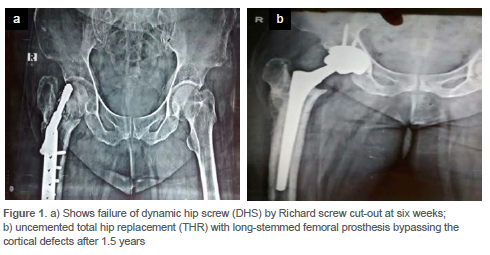
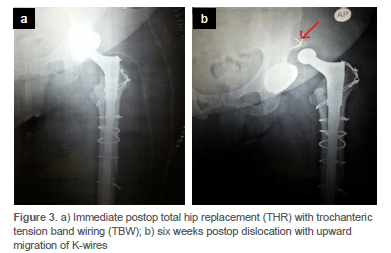
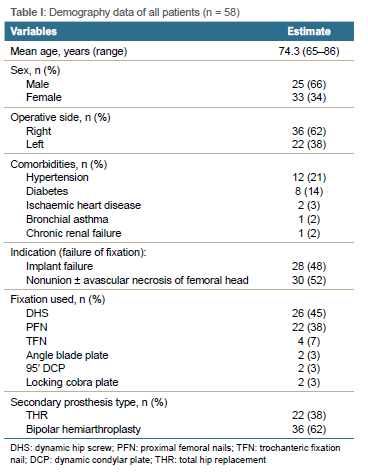
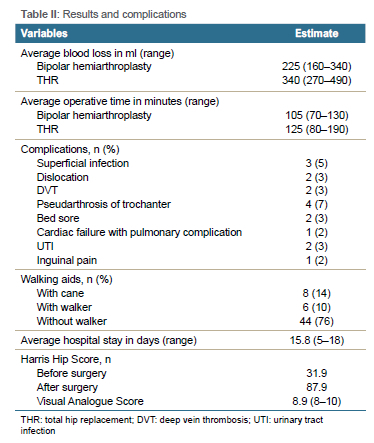
BACKGROUND: Trochanter fractures after failed osteosynthesis in the elderly population with osteoporosis poses great difficulty to the orthopaedic surgeon. Hip arthroplasty is viewed favourably as an effective solution in these cases but is technically demanding due to difficulties in previous implant removal, poor proximal bone stock, stress risers from previous screw holes, infection, malunion, extensive fibrosis, and scar tissue. The aim of the study was to assess the early outcomes of uncemented long-stemmed bipolar hemiarthroplasty and total hip arthroplasty (THA), both clinically and radiologically, in treating failed osteosynthesis of unstable intertrochanteric (IT) fracture among elderly patients. METHODS: This prospective study included elderly patients with unstable IT fractures and failed internal fixation. Subsequently, they underwent uncemented long-stemmed hip arthroplasty. The patients were recruited over a two-year period in a tertiary care centre. Surgical choice between THA and bipolar hemiarthroplasty was based on acetabular involvement. Standard clinical care and surgical management were followed. Clinical and radiological data were collected at regular follow-up intervals up to 24 months. Functional outcomes were assessed using the Harris Hip Score (HHS) and Visual Analog Scale (VAS), and complications were recorded. Data was analysed using descriptive statistics. RESULTS: The study recruited 58 patients, with a mean age of 74.3 years. Patients with acetabular changes underwent THA (n = 22, 38%) and the remainder underwent bipolar hemiarthroplasty (n = 36, 62%). The complications included dislocation without periprosthetic fractures (n = 2, 3%); superficial infection (n = 2, 3%); bed sores (n = 2, 3%); deep vein thrombosis (DVT) (n = 2, 3%); and urinary tract infection (UTI) (n = 1, 2%), which were treated accordingly. All patients were ambulatory with significant pain relief, except four who had pseudoarthrosis of the greater trochanter (HHS 87.9 [57-89]). Radiographically, we did not observe any migration of the uncemented acetabular components, periacetabular osteolysis, or significant radiolucency around the femoral component at the end of follow-up. There was no mortality by completion of follow-up. CONCLUSION: Although technically demanding, hip arthroplasty can produce predictable outcomes in failed primary intertrochanter fractures in the elderly, with an early mobile pain-free hip joint. Level of evidence: 4
failed internal fixation; arthroplasty; elderly; uncemented
 Thumbnail
 Thumbnail