A retrospective review of adolescent idiopathic scoliosis in a spinal unit in Cape Town, South Africa
Abstract
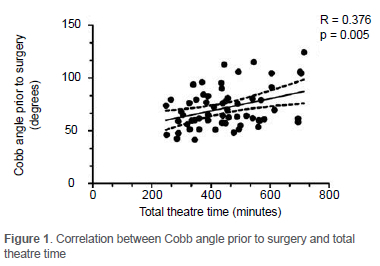
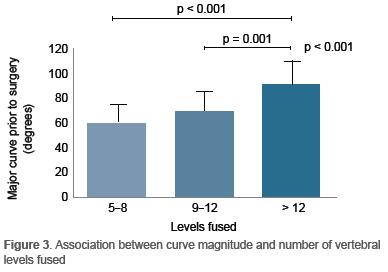
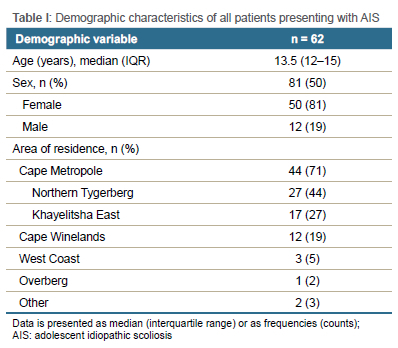
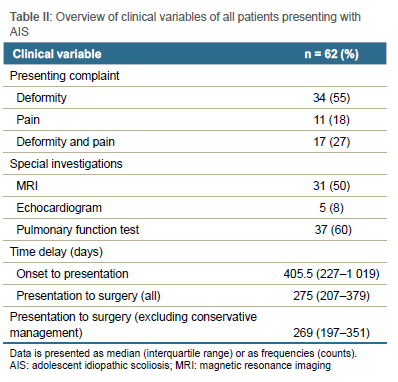
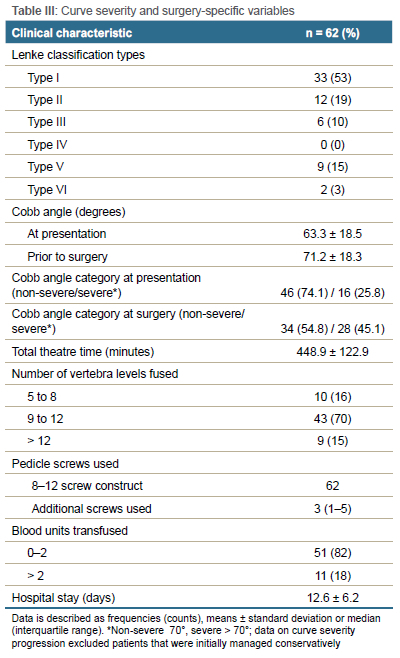
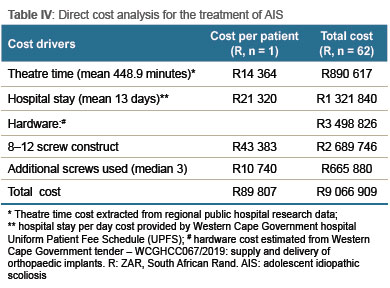
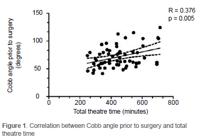
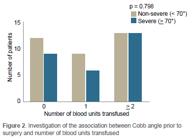
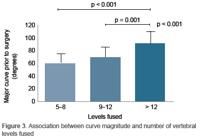
BACKGROUND: The aim of this study was to retrospectively review adolescent idiopathic scoliosis (AIS) patients treated surgically at a tertiary institution in the Western Cape. Additional objectives were to determine whether clinical parameters prior to surgery are associated with specific peri- and postoperative outcomes, and to determine crude costs of AIS treatment in this spinal unit METHODS: A retrospective observational study of clinical and radiological records was performed for 62 AIS patients treated between 1 January 2011 and 31 December 2019 at a tertiary academic hospital. Patient demographics and clinical characteristics were recorded, and appropriate correlation and associations were investigated, with post-hoc tests being performed where necessary, to investigate differences between multiple groups RESULTS: The median age was 13.5 (interquartile range [IQR] 12-15) years and the cohort included predominantly females. It took a median of 405.5 (IQR 227-1 019) days before patients presented at the spinal clinic, after which they waited a median of 275 (IQR 207-379) days for surgery. The mean Cobb angle at presentation was 63.3° ± 18.5°, compared to 71.2° ± 18.3° prior to surgery, with 18% of participants progressing from a 'non-severe curve' (< 70°) to 'severe' (> 70°) while awaiting surgery. A weak positive correlation was observed between the curve magnitude prior to surgery and the total theatre time, with larger curves requiring more theatre time. As expected, a significant association between the curve magnitude and the number of vertebrae levels requiring fusion (p < 0.001) was observed. The cost of treatment for the total study cohort amounted to more than R9 million, with a crude estimate of R89 807 per patient CONCLUSION: AIS patients treated in this study demonstrated long waiting times for surgery with a significant use of financial and physical resources. Eighteen per cent of patients progressed from a non-severe to a severe curve type due to prolonged waiting times. Early detection of AIS could potentially result in significant reduction of patients requiring surgery and as such, school and other screening programmes should be investigated as a potential tool to identify at-risk patients LEVEL OF EVIDENCE: 4
scoliosis; adolescent idiopathic scoliosis; Cobb angle; spinal deformity
 Thumbnail
 Thumbnail
 Thumbnail
 Thumbnail