Communicate, collaborate and document: the pillars to avoid and manage complaints
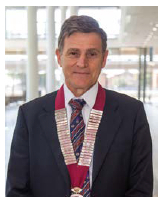
Basil Vrettos
President 2022/2023, South African Orthopaedic Association

It is an unfortunate sign of the times that complaints and litigation against the medical profession are increasing, even going as far as doctors being accused of assault and culpable homicide. Orthopaedic surgery is not exempt from this, and the SAOA has received a number of complaints from patients over the last year regarding surgeons. In other cases, patients have gone directly down the legal route and/or to the HPCSA. Complaints can result in extreme stress, affecting the mental health of the surgeon, and cases can take years to resolve. An example is a case in the last few years which went to court 11 years after the initial complaint. The surgeon endured extreme stress for all those years and in the end, the case was dismissed in court.
The reasons for increasing complaints include commercialisation of medical practice, patients being more aware of their rights, the emergence of legal firms targeting the medical profession (with some openly offering litigation services against the medical profession), and the existence of expert witnesses acting as 'hired guns' for the litigation attorneys.
It is very unfortunate that there are colleagues who, as expert witnesses, act as advocates for the plaintiff and the litigation attorneys. An expert witness 'should be of high standing in the medical profession, be an expert in their field of medicine, and have a reputation for being independent and unbiased in their views'.1 2
An expert witness appointed by the indemnifier,may find that the surgeon had acted in an unreasonable way and find the surgeon at fault. In such a case the surgeon's indemnifier will settle the case without going through an extensive legal process, thereby preventing a prolonged dispute. No offence should be taken when the expert finds the surgeon at fault in such a case as they have acted independently and impartially.
Although we are fortunate to have indemnity insurance, it is preferable to prevent or to avoid such situations. There are three pillars that will help to protect against complaints:
• Communication
• Collaboration
• Documentation
Communication
Communication is the hallmark of preventing complaints. It has been shown that a happy and satisfied patient is far less likely to make a complaint even where there has been a complication.
Complications themselves are not necessarily due to negligence, and are part and parcel of surgical practice. It is the manner in which surgeons deal with the patient who has a complication which is crucial.
Communication starts with the initial assessment of the patient. Patients often just want to be heard, and allowing them time to explain their condition will often result in revealing the diagnosis, revealing the patient's character, and establishing a rapport and relationship with the patient. There is an inverse correlation between time spent with the patient and the likelihood of being sued.34
If the patient has a complication, it is important to keep a clear line of communication, communicating regularly and explaining the situation clearly. One must not try to avoid the patient or avoid discussing the complication. Regularly seeing the patient will make the patient feel that their surgeon is concerned and that they are being looked after.
Consent
Communication involves consent, and under South African law, it is a requirement to take informed consent (National Health Act 61 of 2003).56
Consent to use patient's notes, radiographs and intraoperative pictures for teaching, research and presentations should be obtained. This should be on your agreement with the patient when they attend for consultation and should be on the operation consent form.
Colleagues
Communication with colleagues is important. If one sees a patient for a second opinion, it is courtesy to send a letter to the first surgeon unless the patient specifically requests that you do not, in which case this should be recorded in the notes. One should be very cautious when seeing a patient for a second opinion to not pass comments or judgements on the first surgeon's treatment. It is unfortunate that comments made by the second opinion surgeon may be construed as criticism and this has resulted in patients pursuing a legal case against the primary surgeon. Patients who are unhappy with the initial treating surgeon may be very quick to pounce on a comment which may be made innocently regarding the initial treatment and construe this as criticism, using it to make a case against the initial doctor. Red flags should be raised when patients seek opinions from multiple surgeons and are critical of the previous surgeons. We all have cases in which we have made an error of judgement. We would certainly not like a surgeon who sees the patient for a second opinion to criticise us and potentially put us in a precarious legal position. As the saying goes, 'do unto others as you would have them do unto you'.
Collaboration
'No man is an island' (John Donne: Dean of St. Paul's Cathedral, 17th century). Get advice and assistance. When faced with a difficult condition or operation, it is wise to consult other surgeons. In this age of technology, communication is very easy and a colleague or group of colleagues is available for consultation (e.g. Shoulder Society WhatsApp group). When one is faced with either a difficult condition, a difficult patient or a postoperative complication, bringing such a patient to a meeting for advice will often defuse a potentially litigious situation. Patients often appreciate surgeons who get a second opinion from colleagues. It is wise to nurture relationships with other surgeons and work in collaboration. When faced with an operation with which you may not be totally familiar, it is wise to seek the assistance of another orthopaedic surgeon. Even experienced surgeons will obtain the assistance of another specialist for difficult cases. This provides shared responsibility and reassurance that one is making correct decisions, and is often very much appreciated by the patient.
Documentation
In cases in which complaints have been made, documentation is often very poor. This not only reflects poorly on the surgeon, but means that the surgeon's side of the story cannot be totally substantiated. A clinical note will be accepted as clear evidence in these situations. In this age of technology, clinical notes should be made in digital form. Although it is acceptable to have written notes, these are often illegible and have to be deciphered when there is a query. Digital notes provide clear evidence of what has been said and done. One should make an effort to record everything that is discussed, including phone calls. This will go a long way towards protecting the surgeon if a complaint is made. Patients will often not hear or remember what the surgeon has told them, and will dispute that the surgeon informed them of the facts. If the surgeon has documented the details of the consultation, this provides clear evidence. The operation notes should be comprehensive.
Photography
Photographic and video footage of surgical procedures is the norm in arthroscopic surgery. This provides evidence in cases of complaints. In one such case, this showed clearly what the surgeon had seen and done, although the patient disputed this. It is prudent to take photographs in open surgery so that one can show evidence of what was done. In cases in which a nerve has been released, it is good practice to take a photograph or a video showing that the nerve is intact at the end of the surgery. This gives peace of mind to the surgeon if the patient has a neurapraxia following surgery, and the patient can be reassured that the nerve was intact.
Confidentiality
It goes without saying that confidentiality is of utmost importance, and in South Africa it is legislated by the POPI Act.7
Summary
Communicating well with patients, collaborating with colleagues and being meticulous with documentation are essential to good practice and an effective means of mitigating complaints.
References
- 1. Grobler S. The role of the expert witness. The South African Gastroenterology Review. March 2007:11-14.
- 2. Vinen J. Negligence of medical experts. MBJ. 2005;330:1027.
- 3. Hickson GB, Federspiel CF, Pichert JW, et al. Patient complaints and malpractice risk. JAMA. 2002;287:2951-57.
- 4. Oyebode F. Clinical errors and negligence. Med Princ Pract. 2013;22:323-33.
- 5. National Health Act 61 of 2003, South African Government.
- 6. HPCSA: guidelines for good practice in the health care professions seeking patients' informed consent: the ethical considerations; booklet 4. Pretoria. September 2016.
- 7. Protection of Personal Information Act, No 4 of 2013. South African Government.