HIV and multiple myeloma: do patients present at a younger age? A perspective from a South African orthopaedic oncology unit
Abstract
BACKGROUND: Multiple myeloma (MM) is the third most common haematological malignancy and the most common malignancy affecting the skeletal systems of the elderly. Skeletal-related events (SREs) such as hypercalcaemia, bone pain, spinal cord compression, and pathological fracture are common sequelae of multiple myeloma bone disease (MMBD) and are the reasons patients might consult an orthopaedic surgeon. It has been established that infection with the human immunodeficiency virus (HIV) increases one's risk of developing haematological malignancies. However, there is scant literature on how HIV infection affects MMBD, particularly from a South African perspective. We hypothesised that MMBD presents at a younger age and with more advanced disease in HIV-positive individuals. METHODS: A retrospective single-centre descriptive study was undertaken of patients with newly diagnosed MM presenting with SREs to an orthopaedic oncology unit between 1 January 2016 and 31 December 2020. Patient demographic data (e.g., age, race and sex), biochemical and histopathological results, and whole-body X-rays (WBXR) were collected for each participant. RESULTS: Twenty-seven patients were included. The median age at presentation was 56 years (interquartile range [IQR]: 49-47). Regarding HIV infection, 19% (n = 5) were HIV-positive, 45% (n = 12) were HIV-negative, and 37% (n = 10) had an unknown status due to absent screening. The age at presentation in HIV-positive patients was 44 years (IQR: 41-51); in HIV-negative patients, it was 58 years (IQR: 48-66). The difference in age at presentation between HIV-positive and HIV-negative patients was statistically significant, with a Kruskal-Wallis p-value of 0.041. Among HIV-positive patients, 60% (n = 3) presented with International Staging System (ISS) stage III disease, while 50% (n = 10) of HIV-negative patients presented with ISS stage II disease, with the Fisher's exact p-value = 0.836 indicating an insignificant difference. The presenting complaint was mainly a pathological fracture in 67% (n = 20), predominantly affecting the femur in 50% (n = 10). CONCLUSION: The majority of MM patients present to the orthopaedic surgeon with pathological fractures and commonly have more advanced disease. In our setting, when treating a young HIV-infected individual with a pathological fracture, one should always consider MM as a likely diagnosis. Level of evidence: 4
multiple myeloma; myeloma bone disease; skeletal-related events; HIV; pathological fracture
Introduction
Multiple myeloma (MM) is a disorder of plasma cells, ranking as the third most common haematological malignancy and the most prevalent malignancy affecting the elderly.1,2 MM arises from the neoplastic transformation of plasma cells or their precursors, leading to the production of light- and heavy-chain immunoglobulins, along with resulting end-organ damage, hypercalcaemia, renal dysfunction, anaemia, and bone pain (collectively referred to as CRAB). The outcomes lead to significant patient morbidity and a reduction in overall survival.3
Multiple myeloma bone disease (MMBD) is characterised by osteolytic bone lesions predominantly in the cancellous bone of the vertebral bodies, ribs, and the metaphysis of long bones. Osteolytic bone destruction occurs due to the accumulation of myeloma cells in the bone marrow microenvironment, which is responsible for MM's symptoms and systemic effects.1-4 Myeloma cells disrupt the homeostasis of bone metabolism, leading to increased bone resorption by overactive osteoclasts, and reduced bone formation due to suppressed or inactive osteoblasts.3,5 Of the patients with MMBD, approximately 50% will experience skeletal-related events (SREs), such as hypercalcemia, spinal cord compression, bone pain that necessitates radiation therapy or surgical intervention, and pathologic fractures.3,4,6,7 Among individuals diagnosed with MM, approximately 20% experience pathological fractures, with 40% encountering such fractures within the initial year of diagnosis, and 60% experiencing them over their lifetime.3 3,4,6,8,9
Risk factors for developing MM have been reported to include advanced age, male sex, and African descent.1-4,9,10 According to the Statistics South Africa (StatsSA) Census 2022, 81% of the South African population in 2022 was of black African descent.1112131214,15 A meta-analysis on the incidence of cancer in immunocompromised patients, including those with HIV, demonstrated an increased prevalence of malignancy in these individuals. However, the pathophysiological mechanism is poorly understood.1616-20
Plasma cell dyscrasias encompass a spectrum of conditions, ranging from an asymptomatic premalignant increase in plasma cells known as monoclonal gammopathy of undetermined significance (MGUS), progressing to smouldering multiple myeloma (SMM), and culminating in malignant forms such as MM and plasma cell leukaemia.2,3 The International Myeloma Working Group (IMWG) guidelines are used to diagnose and stage these conditions. They also offer treatment recommendations.21,22 There is limited research on the epidemiology of MM and the impact of co-infection with HIV in the local population, particularly from an orthopaedic oncological perspective.
Methods
We conducted a retrospective single-centre descriptive study of patients with newly diagnosed multiple myeloma (NDMM) who presented with SREs to an orthopaedic oncology unit between 1 January 2016 and 31 December 2020. The study aimed to identify the clinicopathological and radiological characteristics of patients with NDMM. Furthermore, the study aimed to 1) determine the demographics of patients presenting with MM, 2) identify the clinical and laboratory characteristics of patients presenting with MM, 3) outline the radiological presentation of MM, and 4) describe any differences in the presentation of MM between HIV-negative and HIV-positive patients. Our study hypothesised that MMBD presents at a younger age and with more advanced disease in HIV-positive patients.
Of the 39 patients who presented with NDMM during the study period, 31% (n = 12) were excluded due to incomplete data, and 69% (n = 27) had sufficient medical records and were included in the study analysis. Patient demographic data (e.g., age, race and sex), biochemical and histopathological results, and whole-body X-rays (WBXR) were collected for each case. The principal investigator entered all data into a Microsoft Excel spreadsheet.
Inclusion criteria were all individuals aged 18 years and above who received a new diagnosis of MM; and patients newly diagnosed with MM confirmed and presenting with an SRE to the Orthopaedic Tumour and Sepsis Unit. Criteria resulting in exclusion were those individuals diagnosed with MGUS and SMM; those with solitary plasmacytoma; and anyone with inadequate medical records.
Data analysis
The data was transferred to Stata version 17 for interpretation. To establish the demographics of patients presenting with MMBD, continuous data, age and normality were evaluated using the Shapiro-Wilk test and histogram plots. Since the data was not normally distributed, the median, interquartile range (IQR), was used. Categorical variables were summarised using frequencies and percentages. A pie chart was used to give a pictorial view of sex distribution. Frequencies and percentages were used to establish the presenting features of the individuals presenting with MMBD, and the results were presented in a table. Frequencies and percentages were used to establish the radiological presentation of MMBD, and the results were reported using pie/bar charts and tables. Frequencies and percentages were used to describe the differences in the International Staging System (ISS) stage and age by HIV infection. The Fisher's exact test was conducted to establish the significance between HIV infection and the ISS stage. In contrast, the Kruskal-Wallis test was used to compare the median age differences by ISS stage. Significance was set at 5%.
Results
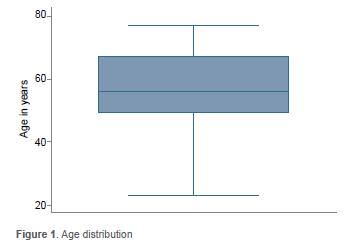
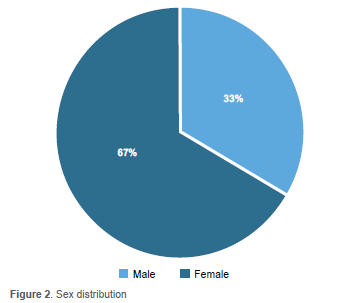
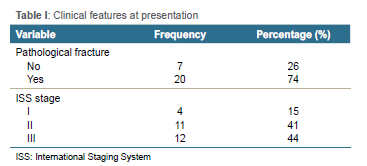
One hundred per cent (n = 27) of the cohort were Africans. The median age was 56 years (IQR: 49-67). The age distribution is depicted in Figure 1. The age range spanned from 23 to 77 years. Sixty-seven per cent (n = 18) of the cohort were female, and 33% (n = 9) were male. The female-to-male ratio was 2:1. Figure 2 illustrates the sex distribution of the patients. Table I outlines the clinical characteristics of the patients at presentation. Most patients, 74% (n = 20), presented with a pathological fracture, while 26% (n = 7) had an impending fracture at presentation. The ISS stage at presentation was as follows: 44% (n = 12) had stage III disease, 41% (n = 11) had stage II disease, and 15% (n = 4) had stage I disease. The ISS stages of MM are as follows: ISS stage I (serum -2 microglobulin level 3.5 mg/L and serum albumin level 3.5 g/dL), ISS stage II (NOT ISS I or III) and ISS stage III (serum -2 microglobulin 5.5 mg/L).
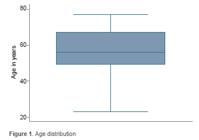
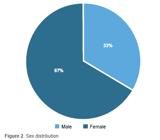
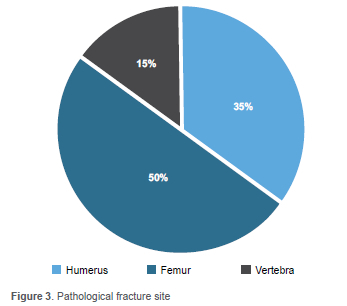
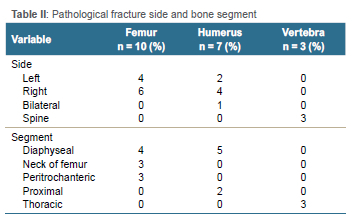
Figure 3 illustrates the distribution of fracture sites among patients with pathological fractures. Fifty per cent (n = 10) had a femur fracture, 35% (n = 7) had a humerus fracture, and 15% (n = 3) had a spinal vertebra fracture. Table II displays the fracture side, and the anatomical bone segment categorised by the fracture site. Sixty per cent (n = 6) of the pathological femur fractures were right-sided, and 40% (n = 4) were left-sided. Furthermore, 40% (n = 4) of the pathological femur fractures were diaphyseal, while 30% (n = 3) were located at the neck of the femur, and another 30% (n = 3) were peritrochanteric. Regarding humerus fractures, 57% (n = 4) occurred on the right side, 29% (n = 2) on the left side, and 14% (n = 1) represented cases with bilateral fractures. Seventy-one per cent (n = 5) of the humeral fractures were diaphyseal, while 29% (n = 2) were situated at the proximal end of the humerus. Of the patients with vertebral body fractures, 100% (n = 3) were in the thoracic spine.
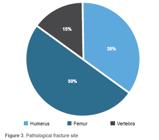
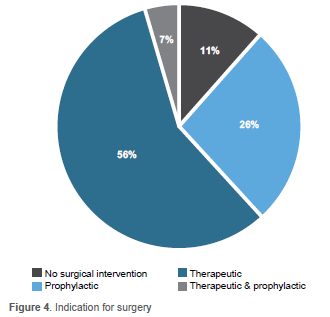
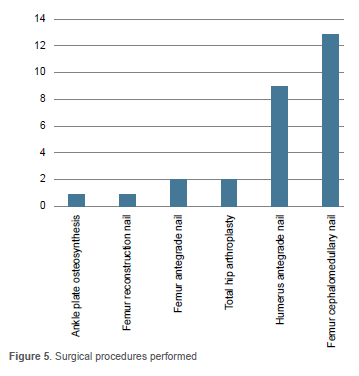
Figure 4 illustrates the indications for surgical treatment in patients diagnosed with MMBD. Fifty-six per cent (n = 15) underwent therapeutic surgical treatment, 26% (n = 7) received prophylactic surgical treatment, and 7% (n = 2) obtained both prophylactic and therapeutic treatments. These patients presented with a pathological fracture and an impending fracture of another bone. Eleven per cent (n = 3) did not have any surgical intervention. Of the 24 patients who underwent surgery, 28 surgical procedures were conducted. Figure 5 illustrates the surgical procedures performed on the 28 extremities. Forty-six per cent (n = 13) received a femoral cephalomedullary nail, 32% (n = 9) received an antegrade humeral intramedullary nail, 7% (n = 2) received an antegrade femoral nail, 7% (n = 2) underwent primary total hip arthroplasty, 4% (n = 1) received a femoral reconstruction nail, and 4% (n = 1) received an ankle plate osteosynthesis.
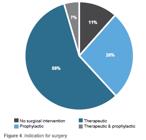
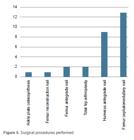
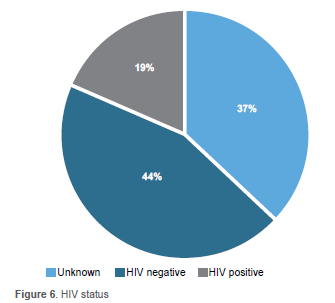
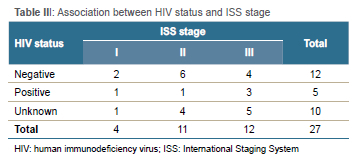
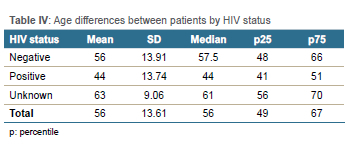
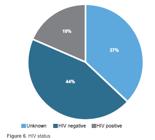
Figure 6 illustrates the HIV status of the patients. Nineteen per cent (n = 5) were HIV-positive, while 44% (n = 12) were HIV-negative. The HIV status remained unknown for 37% (n = 10) of the patients as screening was not conducted. Table III outlines the relationship between the ISS stage and HIV status. Most HIV-positive individuals were found to have ISS stage III disease, while the majority of HIV-negative individuals presented with ISS stage II disease. However, there was no significant association between the ISS stage and HIV infection, as indicated by Fisher's exact p-value of 0.836. Table IV illustrates the difference in age at presentation based on HIV status. The HIV-infected patients had a median age of 44 years (IQR: 41-51), making them the youngest group. In contrast, the HIV-uninfected patients had a median age of 58 years (IQR: 48-66), indicating they were older on average. A significant age discrepancy existed between the groups, with a Kruskal-Wallis p-value of 0.041.
Discussion
Of the 27 patients who presented with MMBD, 19% (n = 5) were HIV-infected, compared to 44% (n = 12) who were HIV non-infected (Figure 6). When comparing these groups, variation was observed in the severity of disease at presentation. Sixty per cent of the HIV-infected population presented with ISS stage III disease. In comparison, half (50%) of the HIV non-infected population presented with less severe disease - ISS stage II (Table III). This was not a statistically significant difference in our study, and further investigation is needed to determine whether the HIV-infected population presents with more advanced disease.
However, a statistically significant finding between the two groups was age at presentation, with the HIV-infected population presenting at a younger age, namely 44 years (IQR: 41-51), compared to their non-infected counterparts who presented at 58 years (IQR: 48-66) (Table IV). Kimani et al. support the finding of a lower median age of MM presentation in HIV-positive populations.17Figure 1). This aligns with the continental findings of de Groot et al. and El Husseiny et al., which indicate a mean age of 58 years.12,13 The HIV-positive population not only has a higher incidence of haematological malignancies, including MM, but also a lower mean age of presentation.16-18,20
All the patients analysed were Africans, which underrepresents the other racial groups present in South Africa. According to the Statistics South Africa 2022 census, the composition of the unrepresented racial groups is Coloured (8%), White (7%), Indian/ Asian (3%), and Other (0.4%).11231-3,24,25
An unexpected demographic finding was a 2:1 female-to-male ratio (Figure 2), which is contrary to the reported risk factor, male sex, for the development of MM.2627-29 This suggests that, in our study, the median female is likely to have inferior bone quality when myeloma bone disease begins, relative to the median male. This may explain why women made up the majority of patients who experienced SREs. An alternative explanation for this variation could be the lack of cancer awareness among South African men and the difference in health-seeking behaviour among black men and women.30-32
SREs, complications arising from MM, and bone metastases from solid tumours, result in diminished quality of life, increased pain, and reduced overall survival.3334
The first clinical staging system for MM was introduced by Durie and Salmon in 1975. This system consists of three stages: accurately determining myeloma tumour burden, and predicting treatment response and prognosis. Their staging system included the biochemical and radiological findings most significantly correlated with myeloma cell mass. This included serum haemoglobin, creatinine and calcium levels, serum and urine monoclonal immunoglobulins (M-component), and the extent of bone lesions.3521Table I, most patients, 44% (n = 12) who presented with SREs had ISS stage III disease, 41% (n = 11) had stage II disease, and 15% (n = 4) had stage I disease. Our cohort exhibited more advanced disease than the 370 NDMM patients studied by Kanellias et al.9
Figure 1 outlines the SREs responsible for hospital admissions. Pathological and impending fractures accounted for 74% (n = 20) and 26% (n = 7) of admissions, respectively. Figure 3 depicts the patients who experienced a pathological fracture (n = 20): 50% (n = 10) had femoral fractures, 35% (n = 7) had humeral fractures, and 15% (n = 3) had spinal fractures.
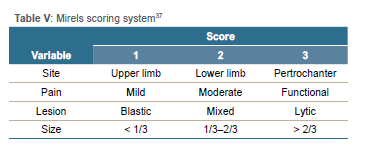
In the study by Kanellias et al., pathological fractures were mainly of the spine and ribs.9Figure 4 illustrates the indications for the surgical procedures performed, where 56% (n = 15) were therapeutic, 26% (n = 7) were prophylactic, and 7% (n = 2) had both prophylactic and therapeutic surgeries conducted. The decision to undertake prophylactic surgical intervention for impending pathological fractures is challenging but crucial, as a pathological fracture is a poor predictor of survival outcomes.4,22 However, no consensus exists on the best criteria for diagnosing impending fractures.36Table V) to identify which patients need prophylactic surgery. However, we acknowledge the limitations of Mirels' scoring system, including its subjectivity, the lack of consideration for the underlying tumour type, and the fact that it exhibits fair-to-moderate interobserver variability yet demonstrates better intra-observer consistency.37,38
Of those who presented with fractures, the distribution of the fractures by anatomical bone segment (Table II) was as follows: of the n = 10 femur fractures, 40% (n = 4) were diaphyseal, 30% (n = 3) were of the neck of the femur, and 30% (n = 3) were in the peritrochanteric region. Of the n = 7 humerus fractures, 71% (n = 5) were diaphyseal, while 29% (n = 2) were of the proximal humerus. All (n = 3) vertebral fractures involved the thoracic spine. The higher incidence of pathological fractures in the extremities than in the axial skeleton is likely due to selection bias. Patients with spinal pathology are typically managed by either the orthopaedic spine unit or the neurosurgery division. The 11% (n = 3) of patients who presented with spine fractures and did not undergo surgery with the Tumour and Sepsis Unit were ultimately referred to the Orthopaedic Spine Unit for further management.
Figure 5 illustrates the surgical procedures performed. Forty-six per cent (n = 13) of the pathological femur fractures were treated with a femoral cephalomedullary nail, 7% (n = 2) with an antegrade femur nail, 7% (n = 2) with primary total hip arthroplasty and 4% (n = 1) with a femur reconstruction nail. All (n = 7) of the humerus fractures were addressed with an antegrade humeral nail. The single patient who presented with an ankle fracture, a rarity in MM, was treated with a plate osteosynthesis.39
Conclusion
MMBD is the most common malignant bone neoplasm affecting the elderly population, leading to considerable morbidity and putting significant pressure on healthcare resources. Most MM patients visit the orthopaedic surgeon with pathological fractures, making screening for impending fractures essential. Patients presenting with SREs often have more advanced ISS-stage disease and a worse prognosis. Further research is needed to understand the real impact of HIV on MM, especially considering the small sample size (n = 27) and the significant percentage of patients with an unknown HIV status (37%) in our study.
Finally, in our context, when treating a young HIV-infected patient who presents with a pathological fracture, one must always consider MM as a probable diagnosis.
Ethics statement
The authors declare that this submission is in accordance with the principles laid down by the Responsible Research Publication Position Statements as developed at the 2nd World Conference on Research Integrity in Singapore, 2010.
Before initiating the study, ethical clearance was obtained from the Human Research Ethics Committee (Medical) at the University of the Witwatersrand, under reference number M181184. All procedures were in accordance with the ethical standards of the responsible committee on human experimentation (institutional and national) and with the Helsinki Declaration of 1975, as revised in 2008. Informed written consent was not obtained from all patients for being included in this retrospective study.
Declaration
The authors declare authorship of this article and that they have followed sound scientific research practice. This research is original and does not transgress plagiarism policies.
Author contributions
OP: study conceptualisation, data capture, data analysis, manuscript preparation, revision and approval of final manuscript
TVN: manuscript revision and approval of final manuscript
PMK: study conceptualisation, manuscript revision and approval of final manuscript
ZL: study conceptualisation and approval of final manuscript
ORCID
Phakathi O https://orcid.org/0009-0003-2117-0033
Ngcana TV https://orcid.org/0000-0003-4802-6317
Kgagudi PM https://orcid.org/0000-0002-0078-3995
References
- 1. Huang J, Chan SC, Lok V, et al. The epidemiological landscape of multiple myeloma: a global cancer registry estimate of disease burden, risk factors, and temporal trends. Lancet Haematol. 2022 Sep 1;9(9):e670-77.
- 2. Kazandjian D. Multiple myeloma epidemiology and survival: A unique malignancy. Vol. 43, Seminars in Oncology. WB Saunders; 2016. p. 676-81.
- 3. Silbermann R, Roodman GD. Myeloma bone disease: Pathophysiology and management. J Bone Oncol. 2013;2(2):59-69.
- 4. Saad F, Lipton A, Cook R, et al. Pathologic fractures correlate with reduced survival in patients with malignant bone disease. Cancer. 2007 Oct 15;110(8):1860-67.
- 5. Galson DL, Silbermann R, Roodman GD. Mechanisms of multiple myeloma bone disease. Bonekey Rep. 2012 Aug 1;1(8).
- 6. Melton LJ, Kyle RA, Achenbach SJ, et al. Fracture risk with multiple myeloma: A population-based study. J Bone Miner Res. 2005 Mar;20(3):487-93.
- 7. Bernstein ZS, Kim EB, Raje N. Bone disease in multiple myeloma: biologic and clinical implications. Cells. 2022 Jul 27;11(15):2308.
- 8. Chen JH, Chung CH, Wang YC, et al. Prevalence and mortality-related factors of multiple myeloma in Taiwan. PLoS One. 2016 Dec 1;11(12).
- 9. Kanellias N, Ntanasis-Stathopoulos I, Gavriatopoulou M, et al. Newly diagnosed multiple myeloma patients with skeletal-related events and abnormal MRI pattern have poor survival outcomes: a prospective study on 370 patients. J Clin Med. 2022 Jun 1;11(11).
- 10. McNally RJQ, Cartwright RA. Epidemiology of multiple myeloma. Hematol. 1998;3:1-15.
-
11. Statistics South Africa | Census Dissemination [Internet]. [cited 2024 Dec 30]. Available from: https://census.statssa.gov.za/#/
» https://census.statssa.gov.za/#/ - 12. De Groot JJB, Webb MJ, Raubenheimer JE, et al. Concomitant HIV infection in newly diagnosed multiple myeloma patients is hard to recognise and should be tested for routinely in areas of high endemicity. SAMJ. 2017;107(9):781-87.
- 13. El Husseiny NM, Kasem N, El Azeeim HA, Mattar MW. Multiple myeloma: A descriptive study of 217 Egyptian patients. Ann Hematol. 2014 Jan;93(1):141-45.
- 14. GHO | By category | People (all ages) living with HIV - Estimates by WHO region. WHO.
- 15. GHO | By category | People (all ages) living with HIV - Estimates by country. WHO.
- 16. Grulich AE, van Leeuwen MT, Falster MO, Vajdic CM. Incidence of cancers in people with HIV/AIDS compared with immunosuppressed transplant recipients: a meta-analysis. Lancet. 2007 Jul 7;370(9581):59-67.
- 17. Kimani SM, Painschab MS, Horner MJ, et al. Epidemiology of haematological malignancies in people living with HIV. Lancet HIV. 2020;7:e641-51.
- 18. Lanoy E, Spano JP, Bonnet F, et al. The spectrum of malignancies in HIV-infected patients in 2006 in France: the ONCOVIH study. Int J Cancer. 2011 Jul 15;129(2):467-75.
- 19. Venkatesh KK, Saghayam S, Devaleenal B, et al. Spectrum of malignancies among HIV-infected patients in South India. Indian J Cancer. 2012 Jan;49(1):176-80.
- 20. Reed M, Cosgrove JM, Cindrich R, et al. Ten years later: A single hospital experience with malignancy in HIV/AIDS. J Surg Oncol. 2010 Sep 1;102(3):282-86.
- 21. Palumbo A, Avet-Loiseau H, Oliva S, et al. Revised international staging system for multiple myeloma: A report from international myeloma working group. J Clin Oncol. 2015;33(26):2863-69.
- 22. Terpos E, Morgan G, Dimopoulos MA, et al. International myeloma working group recommendations for the treatment of multiple myeloma-related bone disease. J Clin Oncol. 2013 Jun 20;31(18):2347-57.
- 23. Confronting the right to ethical and accountable quality health care in South Africa. A Consensus Report of the South African Lancet National Commission. 2019.
- 24. Zappasodi P, Corso A, Klersy C, et al. Changes in multiple myeloma epidemiology in the last thirty years: A single centre experience. Eur J Cancer. 2006 Feb;42(3):396-402.
-
25. Vélez R, Turesson I, Landgren O, et al. Incidence of multiple myeloma in Great Britain, Sweden, and Malmö, Sweden: the impact of differences in case ascertainment on observed incidence trends. BMJ Open 2016;6:e009584. https://doi.org/10.1136/bmjopen-2015-009584
» https://doi.org/10.1136/bmjopen-2015-009584 -
26. Alexander DD, Mink PJ, Adami HO, et al. Multiple myeloma: A review of the epidemiologic literature. Int J Cancer [Internet]. 2007 Jan 1;120(S12):40-61. https://doi.org/10.1002/ijc.22718
» https://doi.org/10.1002/ijc.22718 - 27. Kelly PJ, Twomey L, Sambrook PN, Eisman JA. Sex differences in peak adult bone mineral density. J Bone Miner Res. 1990;5(11):1169-75.
-
28. Ning HT, Du Y, Zhao LJ, et al. Racial and gender differences in the relationship between sarcopenia and bone mineral density among older adults. Osteoporos Int. 2020;32(5):841-51. https://doi.org/10.1007/s00198-020-05744-y
» https://doi.org/10.1007/s00198-020-05744-y - 29. Taaffe DR, Cauley JA, Danielson M, et al. Race and sex effects on the association between muscle strength, soft tissue, and bone mineral density in healthy elders: The health, aging, and body composition study. J Bone Miner Res. 2001;16(7):1343-52.
-
30. Tiruneh YM, Anwoju O, Harrison AC, et al. Examining health-seeking behavior among diverse ethnic subgroups within black populations in the United States and Canada: A cross-sectional study. Int J Environ Res Public Health. 2024;21(3):368. https://doi.org/10.3390/ijerph21030368
» https://doi.org/10.3390/ijerph21030368 -
31. Mgawi O, Maree JE. An Inquiry into cancer-related knowledge, understanding, and health-seeking behavior of men living in South Africa. J Cancer Educ [Internet]. 2022 Dec 1;37(6):1855-60. https://0-link-springer-com.innopac.wits.ac.za/article/10.1007/s13187-021-02052-9
» https://0-link-springer-com.innopac.wits.ac.za/article/10.1007/s13187-021-02052-9 - 32. Dlamini SB, Sartorius B, Ginindza TG. Pre- and post-intervention survey on lung cancer awareness among adults in selected communities in KwaZulu-Natal, South Africa: A quasi-experimental study. J Public Health Afr. 2023 Jan 27;14(1):14.
-
33. Cadieux B, Coleman R, Jafarinasabian P, et al. Experience with denosumab (XGEVA®) for prevention of skeletal-related events in the 10 years after approval. J Bone Oncol. 2022 Feb 7:33:100416. https://doi.org/10.1016/jjbo.2022.100416
» https://doi.org/10.1016/jjbo.2022.100416 - 34. Bhowmik D, Song X, Intorcia M, et al. Examination of burden of skeletal-related events in patients naive to denosumab and intravenous bisphosphonate therapy in bone metastases from solid tumors population. Curr Med Res Opin. 2019 Mar 4;35(3):513-23.
- 35. Durie BGM, Salmon SE. A clinical staging system for multiple myeloma correlation of measured myeloma cell mass with presenting clinical features, response to treatment, and survival. Cancer. 1975 Sep;36(3):842-54.
- 36. Piccioli A, Spinelli MS, Maccauro G. Impending fracture: A difficult diagnosis. Injury. 2014 Dec 1;45(S6):S138-41.
- 37. Mirels H. Metastatic disease in long bones: A proposed scoring system for diagnosing impending pathologic fractures. Clin Orthop Relat Res. 2003;415(Suppl).
- 38. Howard EL, Shepherd KL, Cribb G, Cool P. The validity of the Mirels score for predicting impending pathological fractures of the lower limb. Bone Joint J. 2018 Aug;100-B(8):1100-05
- 39. Saviet BM, Marcoux JT, Narayanasami U. Rare pedal manifestation of diffuse multiple myeloma lesions. J Foot Ankle Surg. 2017 Mar 1;56(2):357-61.
Accepted: March 2025
Published: November 2025
Editor: Dr Thomas Hilton, University of Cape Town, Cape Town, South Africa
Funding: No funding was received for this study.
Conflict of interest: The authors declare they have no conflicts of interest that are directly or indirectly related to the research.