Pelvic fractures in children: experience at a Johannesburg academic hospital
Abstract
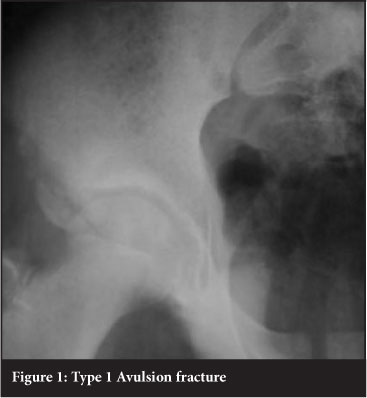
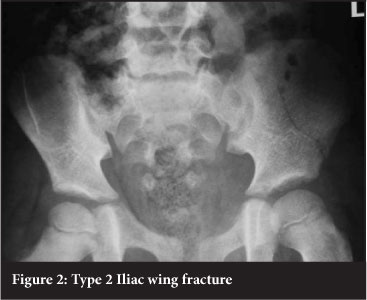
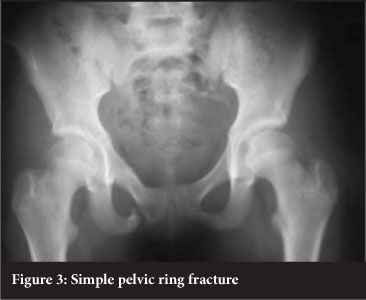
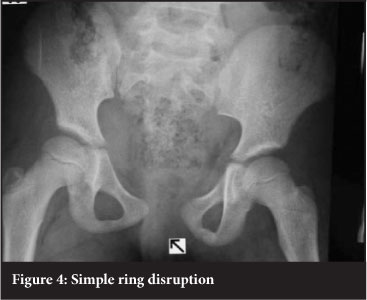
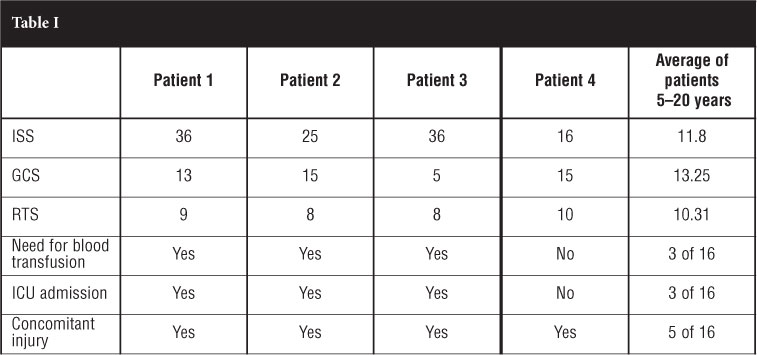
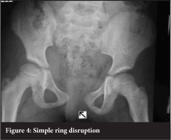
BACKGROUND: Pelvic fractures in the paediatric population are rare. The skeletally immature pelvis is flexible and therefore a pelvic fracture suggests significant force with a high association of concomitant injuries. Despite these being potentially devastating injuries there are no clear outlines with respect to the investigation, classification and management of these fractures. MATERIALS AND METHODS: We retrospectively reviewed 20 children with pelvic fractures. We utilised the Injury Severity Score (ISS) and Revised Trauma Score (RTS) to assess the physiological instability of the patient. The Torode and Zieg classification was used to describe pelvic fractures. At follow-up the functional independence for self-care, mobility and cognition was assessed. RESULTS: Pelvic fractures represented only 0.03% of paediatric orthopaedic admissions. Concomitant injuries were present in 55% of patients. Four of the 20 pelvic fractures were unstable (type 4), of which three required ICU admission and external pelvic fixation for haemodynamic instability. At a mean follow-up of 4 months all patients were functionally independent. CONCLUSIONS: Although rare, pelvic fractures in children have a high rate (55%) of concomitant injuries. The ISS and RTS scoring systems are useful to predict the severity of the injury. Conservative management and external pelvic fixation (in haemodynamically unstable type 4 fractures) resulted in favourable outcomes
paediatric; pelvic; fractures; Torode and Zieg classification
 Thumbnail
 Thumbnail
 Thumbnail
 Thumbnail