Wide awake local anaesthesia no tourniquet: a review of current concepts
Abstract
BACKGROUND: Wide awake local anaesthesia no tourniquet (WALANT) is a local anaesthetic technique that employs lignocaine combined with adrenaline to maintain a pain-free and bloodless field during surgery on an awake patient, without the use of a tourniquet METHODS: This article is a narrative review of the literature on the use of this mode of anaesthesia in orthopaedic and hand surgery RESULTS: The review summarises the existing research pertaining to WALANT. It discusses the anaesthetic solution constituents, administration technique and applications of WALANT, highlighting the safety profile and benefits to patients and healthcare systems alike CONCLUSION: The WALANT technique is safe, economical, and acceptable to patients. It should form part of the orthopaedic surgeon's armamentarium. Future research should investigate the benefits of intraoperative functional assessment of the awake patient Level of evidence: Level 5
WALANT; wide-awake; narrative review; current concept review; awake surgery; orthopaedic
Background
The false belief that adding adrenaline to the anaesthetic solution, when providing local blocks to the fingers or hand, will cause digital necrosis has meant that many surgeons have missed the opportunity to use a safe and cost-effective means of anaesthetic. It has been established that patients accept this mode of anaesthetic, and it has demonstrated both outcome and postoperative pain-relief benefits. The trepidation when using adrenaline with local anaesthetic originated before the 1950s when extremely acidic procaine was mixed with adrenaline, and when injected into digits, caused necrosis in some patients. Procaine becomes more acidic over time, and medicine expiry dates were not regulated at that time.
As early as the 1990s, surgeons sporadically started using lignocaine with adrenaline in hands and fingers. In the early 2000s, Dr Lalonde began popularising this method under the acronym WALANT (Wide Awake Local Anaesthetic No Tourniquet).1
Local anaesthetic mixture
Because of its relatively low toxicity, lignocaine combined with adrenaline can safely be injected in volumes of up to 7 mg per kg. Burk et al. published their experience during liposuction, where they used lignocaine volumes of up to 28 mg per kg and total adrenaline doses of up to 10 mg, with no side effects noted by either the patient or the administrator.22334
In addition to prolonging the local effect of lignocaine, adrenaline serves to ensure a bloodless field, the safety of which has historically been questioned. Lalonde described a 1:100 000 adrenaline solution, in which a 1 ml vial of 1:1 000 adrenaline is diluted with 99 ml of saline to produce 100 ml of the mixture (any volume mixture can be reproduced provided the ratios are maintained).15,6 In a prospective study, Lalonde et al. reported on 3 110 consecutive cases in which they used adrenaline in the hand and digits; 1 340 of these cases had the solution injected in their fingers.5577 8
With the safety of adrenaline established, the benefit of adrenaline providing a bloodless surgical field, and eliminating the need for a tourniquet, can be appreciated.9with a tourniquet, has been extensively investigated. Farzam et al. performed a prospective trial assessing 86 patients who had hand surgery of 30 minutes or less. Forty-three patients had a below elbow Bier's block, and 43 received WALANT. None of the WALANT group needed additional analgesia or sedation, but 20% of the Bier's block group required intravenous (IV) analgesia and sedation during the procedure due to tourniquet discomfort. Furthermore, pain in the WALANT group was significantly less at one hour postoperatively.1011
The final additive to the WALANT solution is sodium bicarbonate (NaHCO3). A 1% lignocaine, with 1:100 000 adrenaline, solution has a mean pH of 4.24 (standard deviation [SD] 0.42). By adding between 1.1 and 1.8 ml of 8.5% sodium bicarbonate to a 10 ml mixture (or 10% of any volume solution), the pH is increased to a value of between 7.38 and 7.62. This is termed buffering, when an additive to a solution stabilises the solution's pH close to neutral. Buffering the WALANT solution results in a higher pH, which lessens the pain of the injection, and accelerates the onset of action of the lignocaine.12-15 A premixed lignocaine solution with adrenaline becomes more acidic over time once opened, so it is recommended that the 8.5% sodium bicarbonate be added to the lignocaine on the day of use.
Anaesthetic administration in practice and special considerations
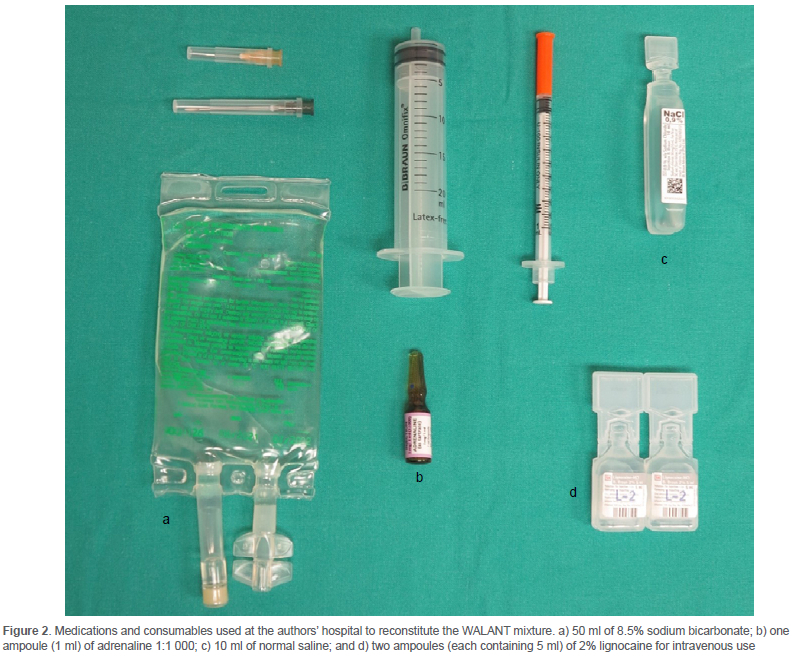
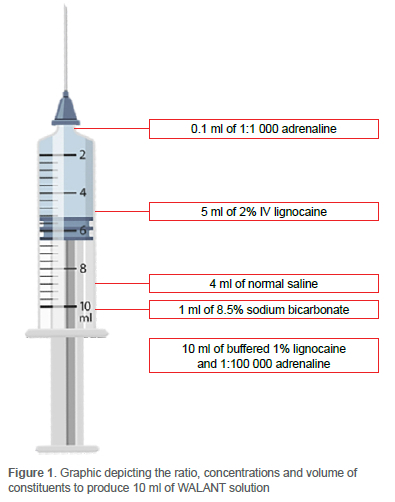
For a typical WALANT slate in the authors' practice, comprising three or four patients with a range of pathologies including tendon lacerations, Dupuytren's contracture, trigger finger or carpal tunnel syndrome, 200 ml of the solution is prepared. The authors choose to mix a large volume at the beginning of a slate to prevent mixing the solution in haste, where ratio and dosing discrepancies are most likely to occur, one of the few risks in conducting WALANT surgery. In a stepwise fashion, 122 ml of the contents of a 200 ml bag of saline is removed, 100 ml of 2% lignocaine (intravenous-use lignocaine) is then added to the contents, along with 2 ml (two ampoules) of 1:1 000 adrenaline and 20 ml of 8.5% sodium bicarbonate. Sodium bicarbonate is added last to prevent precipitation of crystals, which occurs if sodium bicarbonate is mixed directly with the acidic lignocaine. This achieves the desired concentration ratio of 1% lignocaine, 1:100 000 adrenaline and 0.85% sodium bicarbonate solution, and can similarly be reproduced for any volume required.
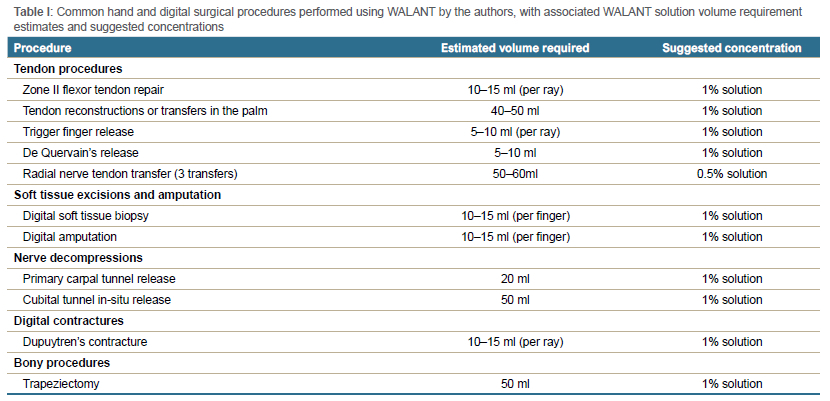
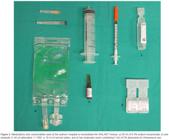
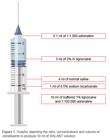
At this concentration, the average 70 kg male (using 7 mg per kg as the upper dose limit for lignocaine) can receive 49 ml of the mixture, and the total 200 ml of solution would be adequate for four patients requiring the maximum volume. Figure 1 is a graphic depicting the volumes of constituents required to produce 10 ml of WALANT mixture using the same ratio, and Figure 2 is a photo of the medications and consumables the authors use locally to reconstitute 20 ml of the mixture. The solution concentration can be altered; primarily this is performed when the surgical area is extensive, such that a larger volume of solution is required. In this instance, only the lignocaine volume is altered, and the adrenaline and bicarbonate volume ratios remain unchanged. Table I lists common procedures for which the authors use the solution, and the corresponding approximate volumes and concentrations for each. The authors refer the reader to an instructional course lecture prepared by Lalonde et al. for a more detailed description, beyond the scope of this article.16
Significant bleeding during surgery has not been reported; however, it should be noted, according to a study by McKee et al., that after injecting adrenaline the surgical site takes on average 26 minutes (± 5 minutes) to reach the targeted maximum bloodless surgical field.1718 18
Other considerations when conducting WALANT are patient factors that could result in negative outcomes. Current literature supports the safety of WALANT for use in the hand and fingers, with fewer complications than Bier's block, sedation and local anaesthesia or general anaesthesia.192020
Technique of injection
There are two main goals when injecting local anaesthesia. The first is to infiltrate the subcutaneous tissue of the surgical site with a large volume of diluted local anaesthesia. The second is to do this as pain-free as possible, and several techniques have been advocated to achieve this. In a meta-analysis conducted in 2011, Hogan et al. concluded that warming local anaesthesia before injection reduces the discomfort of the injection.21142222
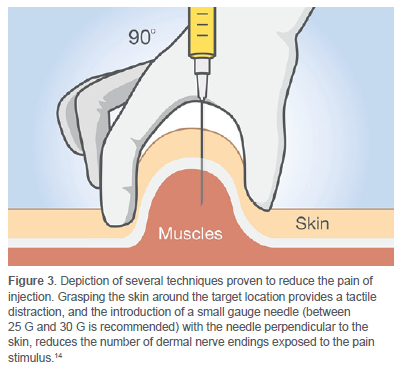
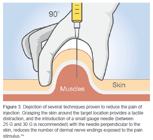
In addition to solution preparation, the technique of injection has also been shown to reduce the pain experience.14Figure 3). Cognitive and sensory distraction can be performed by discussing unrelated topics with the patient and applying an ice pack proximal to the injection site. These distractions minimise the discomfort of the initial injection. The needle is then directed distally within the already numb region, and further local anaesthetic injected, advancing the anaesthetic bullous ahead of the needle tip. When blocks need to cover large areas, the injection can be performed through a single skin puncture, by replacing the short 27 G needle with a spinal or liposuction needle through the initial skin puncture. Strazar et al. discuss these and other injection techniques to make WALANT administration as comfortable as possible for patients.13,14 Utilising these methods, patients typically report pain scores of 4 or less on the visual analogue scale (VAS) for WALANT anaesthesia administration.13
WALANT soft-tissue applications and benefits
WALANT is most commonly used for minor soft tissue procedures on the hand. Lee et al. found a significant difference in pain between two similar populations, who received either WALANT or conventional local anaesthetic with a tourniquet, for either a carpal tunnel, trigger finger or De Quervain's release.2314,23 The WALANT group had much longer postoperative pain relief, with the most significant difference in VAS scores occurring six hours postoperatively.2323
The applications and benefits of WALANT use in common soft tissue conditions of the hand have been studied extensively, in many geographical locations and by multiple authors. The consensus is that WALANT is safe, effective and well-tolerated by patients.24 25-28 De Quervain's tenosynovectomy;23 29,30 and trigger finger release.31-33 The advantage of WALANT in trigger finger release and tenolysis is the immediate assessment of the release - the awake patient is asked to actively move the affected finger or joint to determine if a pulley constriction or tethering still exists. Similarly, immediate assessment of tendon repairs is especially beneficial. Assessing the tensile strength of the repair and uninterrupted gliding of the tendon is possible during WALANT anaesthesia, where active finger range of motion can be performed by the awake patient. Unresolved tendon repair gapping and pulley entrapment would otherwise result in poor outcomes, if not identified during surgery. There is also an opportunity for the surgeon to discuss the rehabilitation process with the patient, who can appreciate the functional result before postoperative pain and stiffness are experienced and while fully awake.34-36
The advantage of using WALANT during tendon transfer surgery has also been cited.343734,37,38 In addition, under wide-awake conditions, the muscle tension, repair strength and excursion can immediately be assessed and altered if necessary, and the patients can witness the effect of the tendon transfer immediately.34,37,38
WALANT has also been utilised for extended soft tissue surgery applications such as local and distant flaps to cover hand and finger skin defects.7,39 Xing and Tang reported on 27 local soft tissue flap cases, for skin defect coverage, that were closely monitored by a trained nurse for five hours after surgery. One of the 27 patients was injected with phentolamine near the flap to reverse the effect of adrenaline.39404141
The use of WALANT has recently been expanded to include small joint arthroscopy. The popularity of wrist, metacarpophalangeal and interphalangeal arthroscopy is increasing, and the use of WALANT for these procedures has been reported.4242
WALANT bony procedure applications and benefits
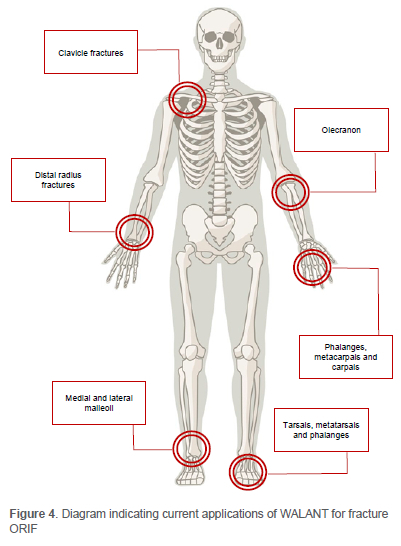
Common bony hand procedures, such as thumb carpometacarpal joint surgery, phalangeal fracture plating, and metalware removal from the fingers and wrist, have also been cited as appropriate indications for WALANT anaesthesia.33,43 Bony procedures require additional deep administration of solution near the periosteum for effective anaesthesia. More recently, the use of WALANT has been investigated for use in the management of certain acute fractures by open reduction and internal fixation (ORIF).4445-47 WALANT use for distal radius fracture ORIF has been investigated extensively.48-51 Abd Hamid et al. compared distal radius ORIFs performed with the use of general anaesthesia (in 32 patients) and WALANT (33 patients) respectively, in a randomised controlled trial.525219
Foot and ankle surgery
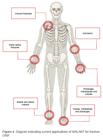
The anaesthetic requirements for peripheral lower extremity surgery seem essentially the same as those of the wrist and hand. However, using WALANT for foot and ankle surgery has not yet been researched as extensively. Bilgetekin et al. reported their experience with lateral and medial malleolus ankle fractures, toe phalangeal fractures, Lisfranc injuries, Achilles tendon ruptures, and various other bony and ligamentous injuries of the foot and ankle. They successfully treated these injuries under WALANT, without patients requiring additional anaesthesia.535454 Figure 4 depicts the current applications of WALANT for fracture fixation of the upper and lower limb.
Efficiency and cost-saving
Economic and workflow considerations are institution-specific and not easily generalisable. To make universal claims in this regard is difficult, but cost-effectiveness and efficiency are recurring themes in many WALANT articles.31,55-57 The medications and equipment required to perform WALANT are inexpensive. Furthermore, 7 mg per kg lignocaine dosing with adrenaline is safely administered without the need for routine preoperative blood testing, preoperative fasting, intraoperative IV access and intraoperative monitoring, which allows for more rapid patient turnover and cost-saving.2 1
Due to the established safety of WALANT, minor surgical procedures have been performed in office side rooms and minor operating theatres, raising the concern for increased infection rates when surgery is performed in these less stringently controlled environments. In a prospective multicentre study of 1 500 cases, Leblanc et al. reported that only six patients who had carpal tunnel release surgery performed in a minor procedure room developed superficial infections, of which four required antibiotics to resolve the infection.585858
Low and middle-income countries (LMICs)
As surgeons in the public sector in South Africa, the authors regularly experience the frustration of scarce resources and unpredictable infrastructure, such as limited theatre access, limited availability of nursing and anaesthetic staff, and sporadic water and power shortages. Resource constraints and disruption of infrastructure interrupt not only clinical service delivery but also training. Having the hand surgery scarce skill, being reliant on an unstable infrastructure is unmerited. Holoyda et al. described the establishment of an outpatient procedure room for WALANT hand surgery in their Ghanaian hospital. They highlighted that despite the significant increase in surgical capacity afforded by the procedure room, the cost to the hospital and individual patients decreased.26 24,33,45,46,59
COVID-19 and the positive patient experience
Not only did the simplicity of WALANT anaesthesia lessen the burden on overwhelmed health systems, but viral spread through airway manipulation was reduced (WALANT does not require intubation), hospital stays were shortened, and many elective hand surgery procedure cancellations avoided while patient surgical experience was maintained.60-62
With the healthcare system crippled by COVID-19 and elective surgery ravaged by the lack of theatre time, the overwhelmingly positive patient experience with WALANT was the silver lining in those challenging times. WALANT was a game-changer worldwide during the peak of the pandemic. Kurtzman et al.'s review article summarises the advantages of wide-awake surgery in optimising patient satisfaction, pertinent in the context of a pandemic where accessibility to theatre is reduced and resources constrained.44 116364
Research opportunities
There has been ample research investigating the safety, benefits and applications of WALANT anaesthesia. In their article, Festen-Schrier and Amadio highlighted new investigative directions to pursue, particularly those where awake patients are required to perform active movement during surgery, a unique feature of WALANT.6565
Conclusion
There is consensus in the current literature in support of the use of WALANT for a wide range of surgical procedures. Most notably its use is advantageous on account of its established safety profile, positive patient experience and postoperative benefits, and should form part of the orthopaedic surgeon's armamentarium. Additionally, pertinent to the local context, is the accord across investigations that utilisation of the technique profits resource-constrained healthcare systems by improving cost-saving, efficiency and expansion of surgical capacity. Future investigation should be directed toward determining the benefits of intraoperative functional assessment.
Ethics statement
The authors declare that this submission is in accordance with the principles laid down by the Responsible Research Publication Position Statements as developed at the 2nd World Conference on Research Integrity in Singapore, 2010.
As this is a review article, no studies on humans or animals were conducted for this study. No ethics or institutional review board approval were required.
Declaration
The authors declare authorship of this article and that they have followed sound scientific research practice. This research is original and does not transgress plagiarism policies.
Author contributions
AGLR: literature review, first draft preparation, manuscript preparation MO: literature review, manuscript revision OK: invited local context commentary
ORCID
Rocher AGL https://orcid.org/0000-0002-9710-5591
O'Connor M https://orcid.org/0000-0001-8864-4916
References
-
1. Lalonde DH. Conceptual origins, current practice, and views of wide awake hand surgery. J Hand Surg Eur. 2017;42(9):886-95. https://doi.org/10.1177/1753193417728427
» https://doi.org/10.1177/1753193417728427 -
2. Burk RW, 3rd, Guzman-Stein G, Vasconez LO. Lidocaine and epinephrine levels in tumescent technique liposuction. Plast Reconstr Surg. 1996;97(7):1379-84. https://doi.org/10.1097/00006534-199606000-00009
» https://doi.org/10.1097/00006534-199606000-00009 - 3. Clarkson CW, Hondeghem LM. Mechanism for bupivacaine depression of cardiac conduction: fast block of sodium channels during the action potential with slow recovery from block during diastole. Anesthesiology. 1985;62(4):396-405.
-
4. Calder K, Chung B, O'Brien C, et al. Bupivacaine digital blocks: how long is the pain relief and temperature elevation? Plast Reconstr Surg. 2013;131(5):1098-104. https://doi.org/10.1097/PRS.0b013e3182865dbb
» https://doi.org/10.1097/PRS.0b013e3182865dbb -
5. Lalonde D, Bell M, Benoit P, et al. A multicenter prospective study of 3,110 consecutive cases of elective epinephrine use in the fingers and hand: the Dalhousie Project clinical phase. J Hand Surg Am. 2005;30(5):1061-1067. https://doi.org/10.10164.jhsa.2005.05.006
» https://doi.org/10.10164.jhsa.2005.05.006 -
6. Thomson CJ, Lalonde DH, Denkler KA, et al. A critical look at the evidence for and against elective epinephrine use in the finger. Plast Reconstr Surg. 2007;119(1):260-66. https://doi.org/10.1097/01.prs.0000237039.71227.11
» https://doi.org/10.1097/01.prs.0000237039.71227.11 -
7. Tang JB, Gong KT, Xing SG, et al. Wide-awake hand surgery in two centers in China: Experience in Nantong and Tianjin with 12,000 patients. Hand Clin. 2019;35(1):7-12. https://doi.org/10.1016pcl.2018.08.011
» https://doi.org/10.1016pcl.2018.08.011 -
8. Moog P, Dozan M, Betzl J, et al. WALANT-epinephrine injection may lead to short term, reversible episodes of critical oxygen saturation in the fingertips. Arch Orthop Trauma Surg. 2021;141(3):527-33. https://doi.org/10.1007/s00402-020-03744-5
» https://doi.org/10.1007/s00402-020-03744-5 -
9. Saleh E, Saleh J, Govshievich A, et al. Comparing minor hand procedures performed with or without the use of a tourniquet: a randomized controlled trial. Plast Reconstr Surg Global Open. 2021;9(4):e3513. https://doi.org/10.1097/gox.0000000000003513
» https://doi.org/10.1097/gox.0000000000003513 -
10. Farzam R, Deilami M, Jalili S, et al. Comparison of anesthesia results between wide awake local anesthesia no tourniquet (WALANT) and forearm tourniquet bier block in hand surgeries: a randomized clinical trial. Arch Bone Jt Surg. 2021;9(1):120-25. https://doi.org/10.22038/abjs.2020.49526.2487
» https://doi.org/10.22038/abjs.2020.49526.2487 -
11. Davison PG, Cobb T, Lalonde DH. The patient's perspective on carpal tunnel surgery related to the type of anesthesia: a prospective cohort study. Hand. 2012;8(1):47-53. https://doi.org/10.1007/s11552-012-9474-5
» https://doi.org/10.1007/s11552-012-9474-5 -
12. Schwarz W, Palade PT, Hille B. Local anesthetics. Effect of pH on use-dependent block of sodium channels in frog muscle. Biophys J. 1977;20(3):343-68. https://doi.org/10.1016/S0006-3495(77)85554-9
» https://doi.org/10.1016/S0006-3495(77)85554-9 -
13. Steiner MM, Calruccio JH. Use of wide-awake local anesthesia no tourniquet in hand and wrist surgery. Orthop Clin North Am. 2018;49(1):63-68. https://doi.org/10.1016/j.ocl.2017.08.008
» https://doi.org/10.1016/j.ocl.2017.08.008 -
14. Strazar AR, Leynes PG, Lalonde DH. Minimizing the pain of local anesthesia injection. Plast Reconstr Surg. 2013;132(3):675-84. https://doi.org/10.1097/PRS.0b013e31829ad1e2
» https://doi.org/10.1097/PRS.0b013e31829ad1e2 -
15. Frank SG, Lalonde DH. How acidic is the lidocaine we are injecting, and how much bicarbonate should we add? Can J Plast Surg. 2012;20(2):71-73. https://doi.org/10.1177/229255031202000207
» https://doi.org/10.1177/229255031202000207 - 16. Lalonde DH, Eaton C, Amadio P, et al. Wide-awake hand and wrist surgery: a new horizon in outpatient surgery. Instr Course Lect. 2015;64:249-59.
-
17. McKee DE, Lalonde DH, Thoma A, et al. Optimal time delay between epinephrine injection and incision to minimize bleeding. Plast Reconstr Surg. 2013;131(4):811-14. https://doi.org/10.1097/PRS.0b013e3182818ced
» https://doi.org/10.1097/PRS.0b013e3182818ced -
18. Croutzet P, Guinand R. Maintaining anticoagulant treatmentin hand surgery - a review of 63 procedures. Hand Surg Rehabil. 2017;36(6):428. https://doi.org/10.1016/j.hansur.2017.10.008
» https://doi.org/10.1016/j.hansur.2017.10.008 -
19. Tahir M, Chaudhry EA, Zaffar Z, et al. Fixation of distal radius fractures using wide-awake local anaesthesia with no tourniquet (WALANT) technique A randomized control trial of a cost-effective and resource-friendly procedure. Bone Joint Res. 2020;9(7):429-39. https://doi.org/10.1302/2046-3758.97.bjr-2019-0315.r1
» https://doi.org/10.1302/2046-3758.97.bjr-2019-0315.r1 -
20. Zhang JX, Gray J, Lalonde DH, et al. Digital necrosis after lidocaine and epinephrine injection in the flexor tendon sheath without phentolamine rescue. J Hand Surg Am. 2017;42(2):e119-23. https://doi.org/10.10164.jhsa.2016.10.015
» https://doi.org/10.10164.jhsa.2016.10.015 -
21. Hogan ME, VanderVaart S, Perampaladas K, et al. Systematic review and meta-analysis of the effect of warming local anesthetics on injection pain. Ann Emerg Med 2011;58(1):86-98 e81. https://doi.org/10.1016/j.annemergmed.2010.12.001
» https://doi.org/10.1016/j.annemergmed.2010.12.001 -
22. Yang CH, Hsu HC, Shen SC, et al. Warm and neutral tumescent anesthetic solutions are essential factors for a less painful injection. Dermatol Surg. 2006;32(9):1119-22. https://doi.org/10.1111/j.1524-4725.2006.32254.x
» https://doi.org/10.1111/j.1524-4725.2006.32254.x -
23. Lee SK, Gul Kim S, Sik Choy W. A randomized controlled trial of minor hand surgeries comparing wide awake local anesthesia no tourniquet and local anesthesia with tourniquet. Orthop Traumatol Surg Res. 2020;106(8):1645-51. https://doi.org/10.10164.otsr.2020.03.013
» https://doi.org/10.10164.otsr.2020.03.013 -
24. Gunasagaran J, Sean ES, Shivdas S, et al. Perceived comfort during minor hand surgeries with wide awake local anaesthesia no tourniquet (WALANT) versus local anaesthesia (LA)/tourniquet. J Orthop Surg (Hong Kong). 2017;25(3): 2309499017739499. https://doi.org/10.1177/2309499017739499
» https://doi.org/10.1177/2309499017739499 - 25. Farkash U, Bain O, Sagiv P, et al. A radical innovative change in the practice of hand surgery using wide awake local anesthesia. Acta Orthop Belg. 2020;86:37-41.
-
26. Holoyda KA, Farhat B, Lalonde DH, et al. Creating an outpatient, local anesthetic hand operating room in a resource-constrained Ghanaian hospital builds surgical capacity and financial stability. Ann Plast Surg. 2020;84(4):385-89. https://doi.org/10.1097/sap.0000000000002196
» https://doi.org/10.1097/sap.0000000000002196 -
27. Kang SW, Park HM, Park JK, et al. Open cubital and carpal tunnel release using wide-awake technique: reduction of postoperative pain. J Pain Res. 2019;12:2725-31. https://doi.org/10.2147/jpr.s210366
» https://doi.org/10.2147/jpr.s210366 -
28. Nikkhah D, Ruston J, Pearl R, et al.'WALANT carpal tunnel release: Technical considerations and pain outcomes'. J Plast Reconstr Aesthet Surg. 2019;72(9):1576-606. https://doi.org/10.1016/j.bjps.2019.05.014
» https://doi.org/10.1016/j.bjps.2019.05.014 -
29. Woo SH, Yoo MJ, Ahn HC. Lessons learned in the authors' first years of wide-awake hand surgery at the W Hospital in Korea. Hand Clin. 2019;35(1):59-66. https://doi.org/10.10164.hcl.2018.08.006
» https://doi.org/10.10164.hcl.2018.08.006 -
30. Pires Neto PJ, Ribak S, Sardenberg T. Wide awake hand surgery under local anesthesia no tourniquet in South America. Hand Clin. 2019;35(1):51-58. https://doi.org/10.1016/j.hcl.2018.08.005
» https://doi.org/10.1016/j.hcl.2018.08.005 -
31. Codding JL, Bhat SB, Ilyas AM. An economic analysis of MAC versus WALANT: a trigger finger release surgery case study. Hand (NY). 2107;12(4):348-51. https://doi.org/10.1177/1558944716669693
» https://doi.org/10.1177/1558944716669693 -
32. Gil JA, Hresko AM, Weiss AC. Current concepts in the management of trigger finger in adults. J Am Acad Orthop Surg. 2020;28(15):e642-50. https://doi.org/10.5435/jaaos-d-19-00614
» https://doi.org/10.5435/jaaos-d-19-00614 -
33. Mohd Rashid MZ, Sapuan J, Abdullah S. A randomized controlled trial of trigger finger release under digital anesthesia with (WALANT) and without adrenaline. J Orthop Surg (Hong Kong). 2019;27:2309499019833002. https://doi.org/10.1177/2309499019833002
» https://doi.org/10.1177/2309499019833002 -
34. Lalonde D, Martin A. Tumescent local anesthesia for hand surgery: improved results, cost effectiveness, and wide-awake patient satisfaction. Arch Plast Surg. 2014;41(4):312-16. https://doi.org/10.5999/aps.2014.4L4.312
» https://doi.org/10.5999/aps.2014.4L4.312 -
35. Lalonde DH. Latest advances in wide awake hand surgery. Hand Clin. 2019;35(1):1-6. https://doi.org/10.1016/j.hcl.2018.08.002
» https://doi.org/10.1016/j.hcl.2018.08.002 -
36. Tang JB. Flexor tendoninjuries. Clin Plast Surg. 2019;46(3):295-306. https://doi.org/10.1016/j.cps.2019.02.003
» https://doi.org/10.1016/j.cps.2019.02.003 -
37. Bezuhly M, Sparkes GL, Higgins A, et al. Immediate thumb extension following extensor indicis proprius-to-extensor pollicis longus tendon transfer using the wide-awake approach. Plast Reconstr Surg. 2007;119(5):1507-12. https://doi.org/10.1097/01.prs.0000256071.00235.d0
» https://doi.org/10.1097/01.prs.0000256071.00235.d0 -
38. Mohammed AK, Lalonde DH. Wide Awake tendon transfers in leprosy patients in India. Hand Clin. 2019;35(1):67-84. https://doi.org/10.1016pcl.2018.09.001
» https://doi.org/10.1016pcl.2018.09.001 -
39. Xing SG, Tang JB. Extending applications of local anesthesia without tourniquet to flap harvest and transfer in the hand. Hand Clin. 2019;35(1):97-102. https://doi.org/10.1016/j.hcl.2018.08.009
» https://doi.org/10.1016/j.hcl.2018.08.009 -
40. Xu JH, Yin L, Cao SM, et al. Application of WALANT technique for repairing finger skin defect with a random skin flap. J Orthop Surg Res. 2021;16(1):164. https://doi.org/10.1186/s13018-021-02319-3
» https://doi.org/10.1186/s13018-021-02319-3 -
41. Wong J, Lin CH, Chang NJ, et al. Digital revascularization and replantation using the wide-awake hand surgery technique. J Hand Surg Eur. 2017;42(6):621-25. https://doi.org/10.1177/1753193417703516
» https://doi.org/10.1177/1753193417703516 -
42. Liu B, Ng CY, Arshad MS, et al. Wide-awake wrist and small joints arthroscopy of the hand. Hand Clin. 2019;35(1):85-92. https://doi.org/10.1016/jhcl.2018.08.010
» https://doi.org/10.1016/jhcl.2018.08.010 -
43. Kritiotis C, Phillips A, Muir L, et al. Practice in wide-awake hand surgery: differences between United Kingdom and Cyprus. Hand Clin. 2019;35(1):43-50. https://doi.org/10.1016/j.hcl.2018.08.007
» https://doi.org/10.1016/j.hcl.2018.08.007 -
44. Kurtzman JS, Etcheson JI, Koehler SM. Wide-awake local anesthesia with no tourniquet: an updated review. Plast Reconstr Surg Glob Open. 2021;9(3):e3507. https://doi.org/10.1097/gox.0000000000003507
» https://doi.org/10.1097/gox.0000000000003507 -
45. Ahmad AA, Sabari SS, Ruslan SR, et al. Wide-awake anesthesia for olecranon fracture fixation. Hand (N Y). 2021;16(3):402-406. https://doi.org/10.1177/1558944719861706
» https://doi.org/10.1177/1558944719861706 -
46. Ahmad AA, Kamal MAUM, Ruslan SR, et al. Plating of clavicle fracture using the wide-awake technique. J Shoulder Elbow Surg. 2020;29(11):2319-25. https://doi.org/10.1016/j.jse.2020.03.003
» https://doi.org/10.1016/j.jse.2020.03.003 -
47. Niempoog S, Tanariyakul Y, Jaroenporn W. Wide-awake local anesthesia for clavicle fracture fixation: A case report. Int J Surg Case Rep. 2021;79:112-15. https://doi.org/10.1016/j.ijscr.2021.01.005
» https://doi.org/10.1016/j.ijscr.2021.01.005 -
48. Abitbol A, Merlini L, Masmejean EH, et al. Applying the WALANT technique to surgical treatment of distal radius fractures. Hand Surg Rehabil. 2021;40(3):277-82. https://doi.org/10.1016/j.hansur.2021.02.001
» https://doi.org/10.1016/j.hansur.2021.02.001 -
49. Ahmad AA, Yi LM, Ahmad AR. Plating of distal radius fracture using the wide-awake anesthesia technique. J Hand Surg Am. 2018;43(11):1045. https://doi.org/10.1016/j.jhsa.2018.03.033
» https://doi.org/10.1016/j.jhsa.2018.03.033 -
50. Huang YC, Hsu CJ, Renn JH, et al. WALANT for distal radius fracture: open reduction with plating fixation via wide-awake local anesthesia with no tourniquet. J Orthop Surg Res. 2018;13(1):195. https://doi.org/10.1186/s13018-018-0903-1
» https://doi.org/10.1186/s13018-018-0903-1 -
51. Orbach H, Rozen N, Rubin G. Open reduction and internal fixation of intra-articular distal radius fractures under wide-awake local anesthesia with no tourniquet. J Int Med Res. 2018;46(10):4269-76. https://doi.org/10.1177/0300060518793036
» https://doi.org/10.1177/0300060518793036 -
52. Abd Hamid MH, Abdullah S, Ahmad AA, et al. A randomized controlled trial comparing wide-awake local anesthesia with no tourniquet (WALANT) to general anesthesia in plating of distal radius fractures with pain and anxiety level perception. Cureus. 2021;13(1):e12876. https://doi.org/10.7759/cureus.12876
» https://doi.org/10.7759/cureus.12876 -
53. Bilgetekin YG, Kuzucu Y, Oztiirk A, et al. The use of the wide-awake local anesthesia no tourniquet technique in foot and ankle injuries. Foot Ankle Surg. 2021;27(5):535-38. https://doi.org/10.1016/j.fas.2020.07.002
» https://doi.org/10.1016/j.fas.2020.07.002 -
54. Borg TM, Tahir M, Heidari N. The use of a wide-awake local anaesthesia no tourniquet (WALANT) technique in foot and ankle procedures - a randomised control trial. Br J Surg. 2021;108(Supple 2):znab134.456. https://doi.org/10.1093%2Fbjs%2Fznab134.456
» https://doi.org/10.1093%2Fbjs%2Fznab134.456 -
55. Leblanc MR, Lalonde J, Lalonde DH. A detailed cost and efficiency analysis of performing carpal tunnel surgery in the main operating room versus the ambulatory setting in Canada. Hand (N Y). 2007;2(4):173-78. https://doi.org/10.1007/s11552-007-9043-5
» https://doi.org/10.1007/s11552-007-9043-5 -
56. Alter TH, Warrender WJ, Liss FE, et al. A cost analysis of carpal tunnel release surgery performed wide awake versus under sedation. Plast Reconstr Surg. 2018;142(6):1532-38. https://doi.org/10.1097/prs.0000000000004983
» https://doi.org/10.1097/prs.0000000000004983 -
57. Kamal RN, Behal R. Clinical care redesign to improve value in carpal tunnel syndrome: a before-and-after implementation study. J Hand Surg Am. 2019;44(1):1-8. https://doi.org/10.1016/j.jhsa.2018.09.013
» https://doi.org/10.1016/j.jhsa.2018.09.013 -
58. Leblanc MR, Lalonde DH, Thoma A, et al. Is main operating room sterility really necessary in carpal tunnel surgery? A multicenter prospective study of minor procedure room field sterility surgery. Hand (N Y). 2011;6(1):60-63. https://doi.org/10.1007/s11552-010-9301-9
» https://doi.org/10.1007/s11552-010-9301-9 -
59. Ahmad TS, Ahmad AA, Abdullah S. Hand surgery in Malaysia. J Hand Microsurg. 2021;13(1):21-26. https://doi.org/10.1055/s-0040-1721942
» https://doi.org/10.1055/s-0040-1721942 -
60. Hobday D, Welman T, O'Neill N, et al. A protocol for wide awake local anaesthetic no tourniquet (WALANT) hand surgery in the context of the coronavirus disease 2019 (COVID-19) pandemic. Surgeon. 2020;18(6):e67-e71. https://doi.org/10.1016/j.surge.2020.06.015
» https://doi.org/10.1016/j.surge.2020.06.015 -
61. Turcotte JJ, Gelf JM, Jones CM, et al. Development of a low-resource operating room and a wide-awake orthopedic surgery program during the COVID-19 pandemic. Surg Innov. 2021;28(2):183-88. https://doi.org/10.1177/15533506211003530
» https://doi.org/10.1177/15533506211003530 -
62. Turcotte JJ, Petre BM, Jones CM, et al. Maintaining access to orthopaedic surgery during periods of operating room resource constraint: expanded use of wide-awake surgery during the COVID-19 pandemic. J Am Acad Orthop Surg Glob Res Rev. 2020;4(12):e20.00100. https://doi.org/10.5435/jaaosglobal-d-20-00100
» https://doi.org/10.5435/jaaosglobal-d-20-00100 -
63. Naude JJ, Koch O, Schmidt LW, et al. Positive patient experience of wide awake local anaesthesia no tourniquet (WALANT) hand surgery in the government setting: a prospective descriptive study. SA Orthop J. 2021;20(3):141-46. http://dx.doi.org/10.17159/2309-8309/2021/v20n3a1
» http://dx.doi.org/10.17159/2309-8309/2021/v20n3a1 -
64. Rhee PC, Fischer MM, Rhee LS, et al. Cost savings and patient experiences of a clinic-based, wide-awake hand surgery program at a military medical center: a critical analysis of the first 100 procedures. J Hand Surg Am. 2017;42(3):e139-47. https://doi.org/10.10164.jhsa.2016.11.019
» https://doi.org/10.10164.jhsa.2016.11.019 -
65. Festen-Schrier VJMM, Amadio PC. Wide awake surgery as an opportunity to enhance clinical research. Hand Clin. 2019;35(1):93-96. https://doi.org/10.1016/j.hcl.2018.08.003
» https://doi.org/10.1016/j.hcl.2018.08.003
Accepted: May 2022
Published: August 2022
Editor: Dr Ajmal Ikram, Stellenbosch University, Cape Town, South Africa
Funding: No funding was received for this study.
Conflict of interest: The authors declare they have no conflicts of interest that are directly or indirectly related to the research.