One screw, two screw, red screw, blue screw: a survey of the preferred methods of syndesmotic fixation used by South African orthopaedic surgeons
Abstract
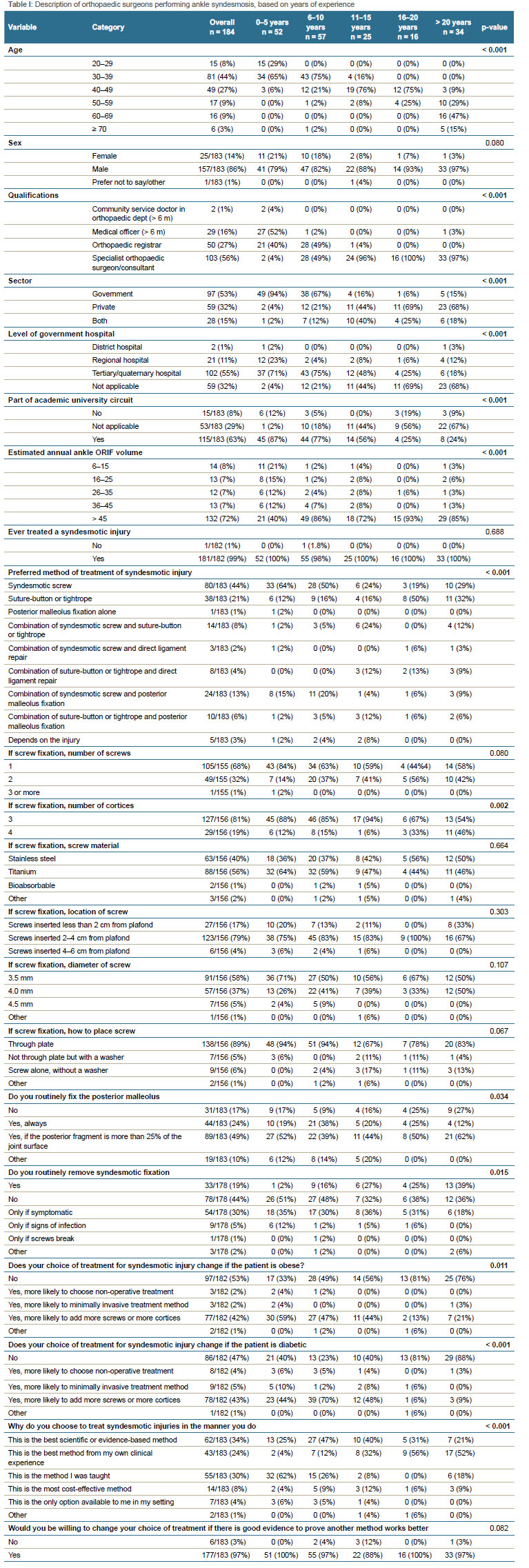
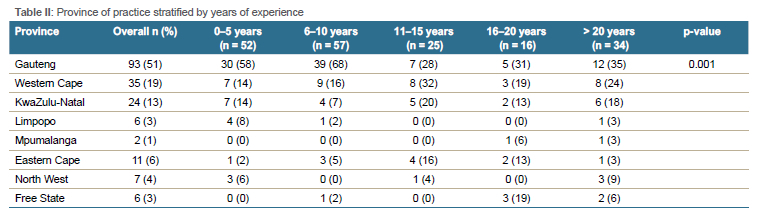
BACKGROUND: Distal tibiofibular syndesmotic injuries account for up to 18% of ankle injuries which, if missed or poorly treated, can cause pain, prolonged recovery and even disability. International studies on syndesmotic injuries show a wide variation in treatment and surgical practice. Similar variation is suspected locally, yet South African management patterns remain poorly described. This study aims to describe current treatment practices for syndesmotic ankle injuries in South Africa and to determine whether these preferences differ by surgeon subgroup, experience, work sector or academic affiliation. METHODS: A national cross-sectional survey was conducted among orthopaedic surgeons, registrars and medical officers with > 6 months of orthopaedic experience and > 5 ankle open reduction and internal fixations (ORIFs) performed. An anonymous online questionnaire was distributed through the South African Orthopaedic Association (sAOA) and institutional networks. RESULTS: A total of 184 respondents participated; 84% were male (n = 157), with 44% (n = 81) aged 30-39 years, and 56% (n = 103) being consultants. Gauteng had the highest number of respondents at 51% (n = 93). Almost 99% (n = 181) had treated syndesmotic injuries in their practice. Screw fixation was preferred by government and earlier-career surgeons (54%, n = 80), whereas private sector and more senior surgeons (> 15 years) often used suture-button or hybrid constructs 44% (n = 65) (p < 0.001). Academic-affiliated surgeons more frequently used three-cortex fixation (87%, n = 100), vs 60% (n = 41) in non-academic surgeons (p = 0.001), and placed screws through a plate (94%, n = 108) vs 71% (n = 49) (p = 0.001). Fixation was usually placed 2-4 cm above the tibial plafond (79%, n = 123). Routine screw removal was more common among private, experienced surgeons, while government surgeons removed hardware only when indicated. Earlier-career/government surgeons were more likely to modify constructs in obese/diabetic patients, and in contrast to literature, very few surgeons (24%, n = 44) routinely fixed posterior malleolar fragments if smaller than 25%. Nearly all respondents (97%, n = 177) were willing to adjust practice based on new evidence. CONCLUSION: Syndesmotic screw fixation predominates in government/early-career practice, whereas suture-button and hybrid methods are favoured in private/senior practice. Variation persists in fixation technique and hardware removal, but almost all surveyed surgeons indicated that they are willing to update their practices if high quality evidence is available. Level of evidence: 4
syndesmosis; ankle; suture-button; screw fixation; practice variation; South Africa; orthopaedics