Decision making in trimalleolar ankle fracture management: a current concepts review
Abstract
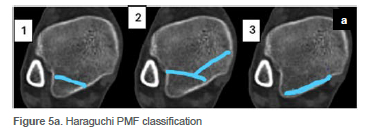
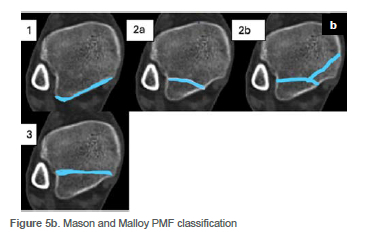
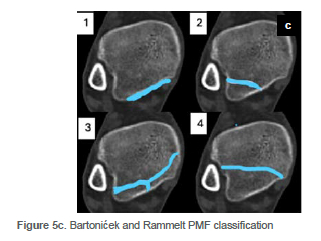
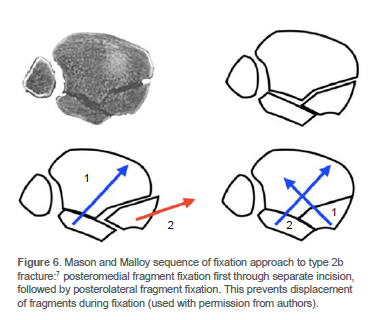
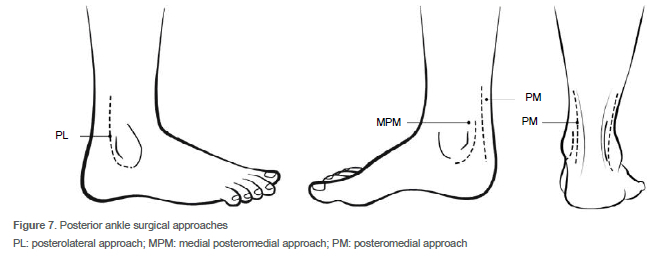
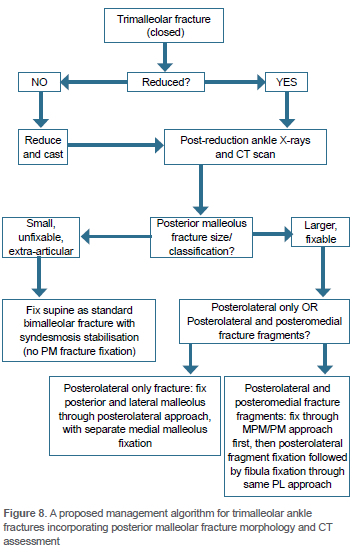
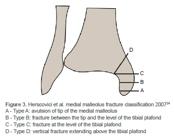
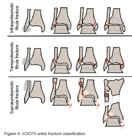
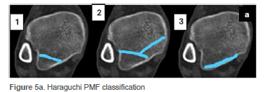
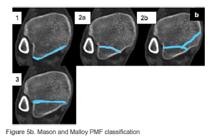
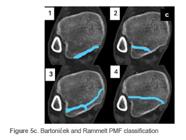
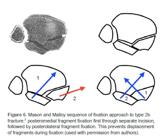
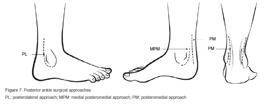
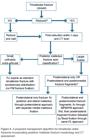
Decision making regarding the management of trimalleolar and more so, posterior malleolar ankle fractures, elicits much debate. The concerns relate to the poorer outcomes seen in ankle fractures with associated posterior malleolar fractures due to articular incongruity, syndesmotic instability as well as the increased risk of post-traumatic arthritis. Opinions differ as to which posterior malleolar fractures (PMF) to fix, surgical approaches, fracture fixation methods, fracture fragment size, and if the posterior malleolar fracture may be fixed indirectly from the front. Historical management limitations include reliance on posterior malleolus fragment size alone, if the fracture can be fixed by indirect AP screw, as well as the absence of computed tomography (CT)-based assessment. Advances in CT scans have led to them, in addition to standard ankle X-rays, being recommended for all trimalleolar ankle fractures. These are essential for adequate preoperative evaluation as well as surgical planning of these complex injuries. In the absence of a specific trimalleolar ankle fracture classification, a combination approach using the CT-based posterior malleolar fracture classifications with existing ankle fracture classifications (OTA and Herscovici) are recommended to best assess and plan management. Direct surgical approach with accurate anatomical reduction and stabilisation of these complex fractures is recommended and associated with optimal outcomes. The posterior surgical approach to the ankle has become the standard of care for PMF fixation. Here both posteromedial and posterolateral or combined approaches are recommended to address both posteromedial and posterolateral fracture fragments. More prospective studies regarding trimalleolar ankle fracture outcomes and classification are required. Contemporary evidence-based studies confirm that posterior malleolus (PM) fracture morphology, articular congruity, syndesmotic stability and posteromedial fracture extension are more important than fracture size alone regarding decision making and outcomes. This review summarises the evolution in current management strategies, including the latest classification systems, while discussing the evidence supporting direct PM fixation techniques. A treatment algorithm is proposed using CT assessment, fracture morphology, and ankle stability to enhance surgical planning and optimal patient outcomes. Level of evidence: 5
trimalleolar ankle fracture; posterior malleolus; syndesmotic injury; decision making; operative management
 Thumbnail
 Thumbnail
 Thumbnail
 Thumbnail
 Thumbnail
 Thumbnail
 Thumbnail
 Thumbnail
 Thumbnail
 Thumbnail