Early and medium-term complications of the modified Latarjet procedure
Abstract
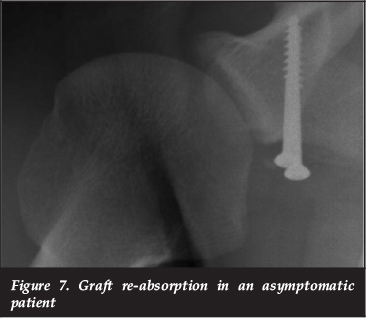
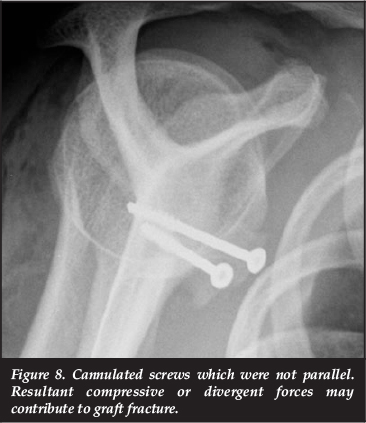
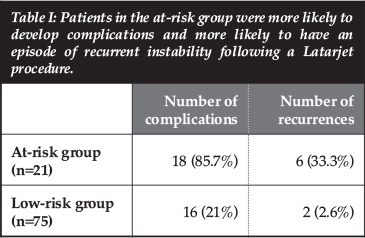
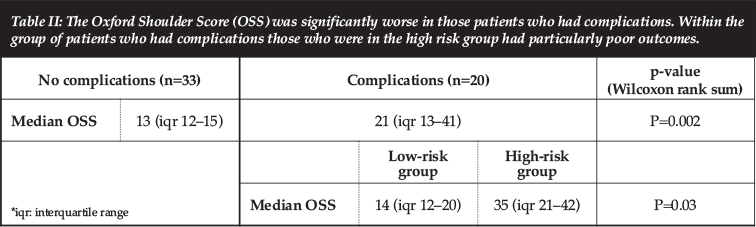
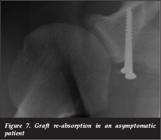
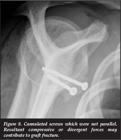
PURPOSE: We aimed to assess the short- and medium-term complications of patients who had undergone a modified Latarjet procedure. METHOD: We retrospectively reviewed the notes and X-rays of all patients identified by surgical log books and/or operation codes for instability. A telephonic follow-up was used to obtain an Oxford Shoulder Score (OSS) and information regarding complications. Patients who had a soft tissue stabilisation procedure were excluded. RESULTS: The data for 96 shoulders in 93 patients were available for follow-up. Thirty-four complications were noted in 30 patients. These included seven nerve injuries, all of which had resolved at final clinical follow-up; five screw-related complications; five early recurrent dislocations and three early recurrent subluxations, and 14 other minor complications. There was a total re-operation rate of 8%. Patients who developed complications had a median post-op OSS at last follow-up of 21, while those without complications had a median score of 13. A high-risk group of patients was identified. Epileptics, substance abusers and chronic dislocations were statistically more likely to have a poor outcome when they developed complications when compared with patients without these risk factors who developed complications (OSS 35 vs 14, P<0.002). Patients who did not develop a complication had a median OSS of 13. CONCLUSION: Epileptic patients, substance abusers and chronic dislocations were more likely to develop severe complications following a modified Latarjet. Once a complication occurred their outcomes were significantly worse.
Latarjet; complications; anterior instability
 Thumbnail
 Thumbnail
 Thumbnail
 Thumbnail
 Thumbnail
 Thumbnail