Polio-like deformity: a diagnostic dilemma
Abstract
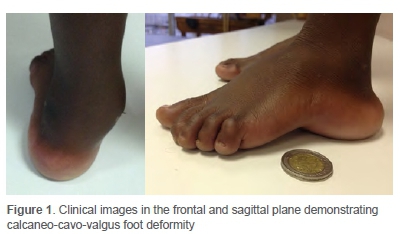
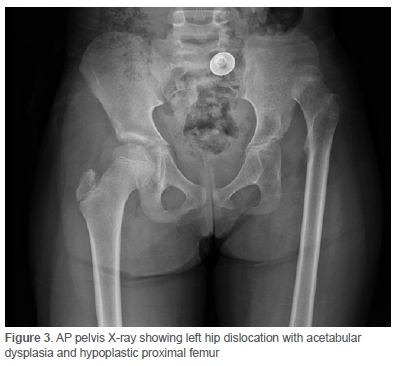
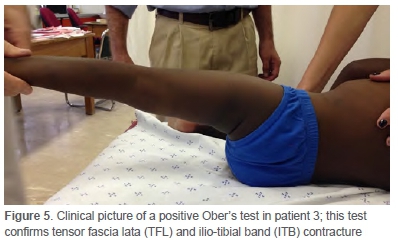
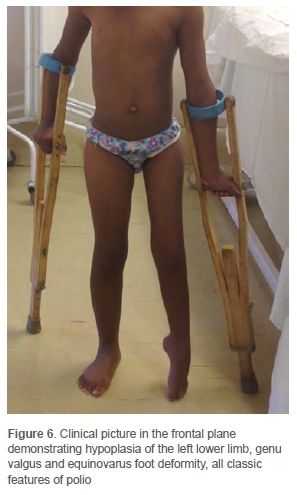
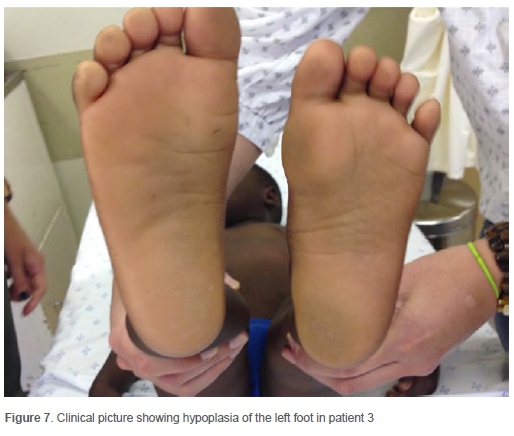
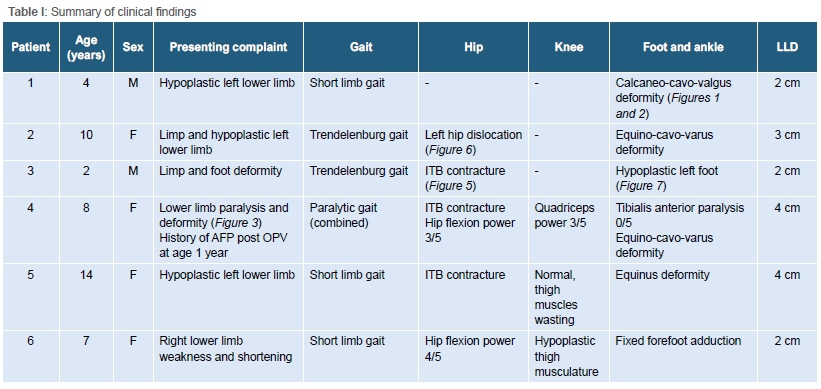
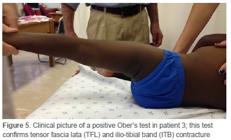
BACKGROUND: Significant advances have been made in the global effort to eradicate polio. Vaccine-associated poliovirus, or other enteroviruses, may still affect the anterior horn cell and cause acute flaccid paralysis. Following the acute disease, residual paralysis results in lower motor neuron weakness, altered growth and deformity. Our study aims to describe the clinical manifestations of a group of children that mimic that of classic paralytic poliomyelitisMETHODS: We identified six children from our paediatric orthopaedic database that presented with polio-like deformities. Their clinical and imaging records were reviewed and described, together with the clinical manifestations of paralytic poliomyelitisRESULTS: Limb hypoplasia, pathological gait patterns and foot deformities were consistent features. The median leg length discrepancy was 2.5 cm (range 2-4 cm). The gait patterns observed included a Trendelenburg gait in 33% (n=2), a short limb gait in 50% (n=3), and one case with a combination of Trendelenburg, short limb and steppage gait. Tensor fascia lata contracture was present in 50% (n=3) of our patients. Foot deformities ranged from calcaneo-cavo-valgus to equino-cavo-varus deformitiesCONCLUSION: Despite significant advances made in the global fight to eradicate polio, we still see children with clinical manifestations reminiscent of the disease. Orthopaedic surgeons should remain familiar with the assessment and diagnosis of the sequelae of paralytic poliomyelitisLevel of evidence: Level 5
poliomyelitis; vaccine-associated paralytic poliomyelitis; polio-like deformity; acute flaccid paralysis
 Thumbnail
 Thumbnail
 Thumbnail
 Thumbnail
 Thumbnail
 Thumbnail