Advancements in venous thromboembolism prophylaxis strategies for total hip arthroplasty: a comprehensive narrative review
Abstract
Worldwide, total hip arthroplasty (THA) is a widely performed procedure. However, it is associated a significant risk of venous thromboembolism (VTE), a serious and potentially life-threatening complication. As a result, VTE prophylaxis has been a focal point of ongoing clinical research and discussion. Despite extensive evaluation, there is still no definitive consensus on the optimal strategy for preventing VTE in patients undergoing THA. The absence of a clear gold standard highlights the complexity of balancing the benefits of thromboprophylaxis with the risks of bleeding and other wound complications. This review aims to address this gap by providing a thorough examination of current literature on VTE prophylaxis in the context of ThA. To explore the most effective and safest strategies for VTE prevention, we conducted a narrative review, analysing studies and guidelines from major medical databases. Our review focuses on key aspects of VTE prophylaxis, including patient-specific risk factors, diagnostic challenges, treatment-related complications, and recent advancements in both pharmacological and mechanical prevention strategies. We evaluated anticoagulants such as low molecular weight heparins, direct oral anticoagulants, and aspirin, alongside mechanical methods such as pneumatic compression devices and early mobilisation. Each prophylactic method was assessed for its effectiveness in reducing VTE incidence as well as its associated risks, including bleeding, wound complications and patient compliance. Our synthesis of the available evidence highlights both established practices and emerging controversies in the field, offering a comprehensive understanding of the various options available to clinicians. Given the individualised nature of VTE risk in THA patients, this review emphasises the importance of tailored prophylaxis strategies, accounting for patient comorbidities, surgical factors and personal preferences. The findings of this review underscore the necessity for ongoing research and interdisciplinary collaboration to refine and optimise VTE prevention in the evolving landscape of THA. As the field progresses, it is crucial that clinicians remain updated on new evidence to make informed, patient-centred decisions that enhance safety and outcomes in THA. Level of evidence: 5
total hip arthroplasty; venous thromboembolism; risk assessment models; thromboprophylaxis; emerging trends
Introduction
Total hip arthroplasty (THA) is the gold standard surgical procedure for end-stage degenerative disease of the hip joint.12 3,4
With the increasing number of THAs performed, there is a parallel increase in associated complications. One of these complications is venous thromboembolism (VTE), which includes both deep vein thrombosis (DVT) and pulmonary embolism (PE).56,7 Globally, ten million VTE episodes are diagnosed annually, with the incidence estimated to be between 0.6 and 1.5% in patients undergoing a THA.5,8 VTE events place a significant financial burden on both the patient and the healthcare system as a result of their recurrence and complications.79
While an abundance of literature and guidelines recommended by major authorities in the USA, Europe, and the UK exist, there is much controversy around which methods of VTE prophylaxis have the greatest efficiency at preventing VTE in patients undergoing THA.10,11 There remains no clear consensus regarding the gold standard for VTE prophylaxis in THA, with difficulty finding the correct balance between eliminating VTE risk and preventing the associated complications arising with VTE prophylaxis postoperatively.
Pathophysiology
VTE encompasses a spectrum of conditions, from undetectable DVT to potentially fatal PE.1213514515
In the context of THA, the surgical approach may directly cause venous stasis and endothelial injury.1616 16
Flevas et al.10
Risk factors for VTE in patients undergoing THA
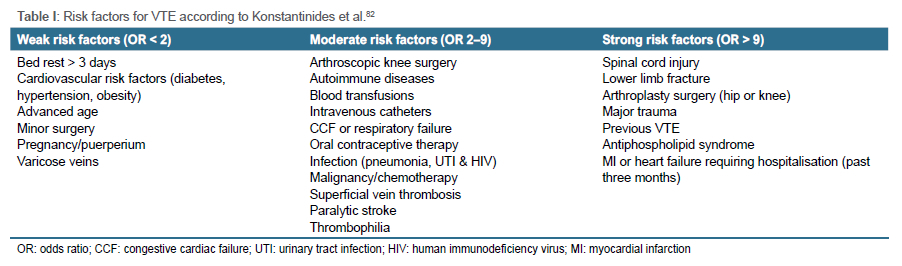
The risk factors for VTE in patients undergoing THA include patient-specific and surgical risk factors. These may be further divided into weak, moderate and strong risk factors based on their odds ratio (OR) (Table I).
Patient-specific risk factors
Patient factors associated with an increased risk of developing VTE after THA include age, sex, body mass index (BMI), race, American Society of Anesthesiologists (ASA) status, and the presence of comorbidities such as HIV infection, blood dyscrasias, chronic kidney disease, and malignancies.17-19 A systematic review by Zhang et al.182
Age is a non-modifiable risk factor for complications associated with THA and an independent risk factor for VTE.18,20,21 Patients over the age of 40 years are at a significantly greater risk of VTE compared to younger patients. This may be related to the imbalance that exists with an increase in the levels of coagulation activation peptides and a reduction in the activity of the fibrinolytic system.222020
Obesity is a moderate, independent risk factor for VTE.18,19,23 A BMI of > 30 kg/m2231922
Surgical risk factors
Surgical risk factors include the surgical approach utilised, surgical duration, cementation of the prosthesis, and anaesthetic technique.
The surgical approach utilised for THA may directly influence the risk of VTE. The manipulation of the limb during the PA and LA may explain the rate of VTE seen in patients undergoing these procedures.1624251626
Surgical duration has been identified as a risk factor for developing VTE, with a vast majority of the literature reporting an increased incidence of VTE associated with prolonged operative time exceeding two hours.19,27-29 However, discrepancies exist regarding the exact cut-off time for which surgical duration influences the risk of developing VTE.27
Cemented versus uncemented prostheses carry different risks. Polymethyl methacrylate (PMMA) used for cementation of both femoral and acetabular components triggers the release of mononuclear cytokines, separation and deformation of endothelial cells, and subsequent coating of the endothelial surface with fibrinogen, which in turn leads to upregulation of the exogenous coagulation cascade and increases the risk of VTE.30,31 Lindberg-Larsen et al.32
Another factor is anaesthetic technique. The association between the type of anaesthesia and the risk of VTE is complex and multifactorial, which can be influenced by various factors.33,34 Under general anaesthesia, the occurrence of vasodilation plays a contributing role in the initiation of VTE by inducing venous stasis, increasing venous capacitance, and resulting in a reduction in venous return.3433,34 The 2019 International Consensus on Anaesthesia-Related Outcomes after Surgery group (ICAROS) guidelines strongly recommend using neuraxial anaesthesia as the preferred method of anaesthesia for patients undergoing THA, where possible.35
Diagnosis and risk stratification
To reduce the mortality from VTE as well as the morbidity associated with the unnecessary administration of thromboprophylaxis, accurate detection of VTE is crucial.36378
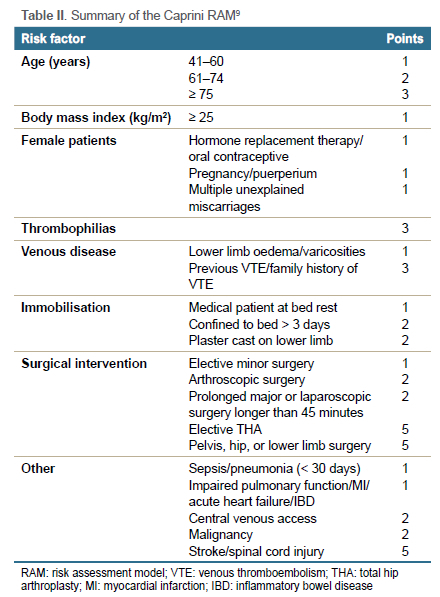
Worldwide, the Caprini score is the most widely used and validated RAM for all surgical specialities, including orthopaedic surgery.37388> 5 points).39Table II for a summary of the Caprini RAM.)
The implementation of specific RAMs, such as the Caprini RAM, has significantly advanced VTE prophylaxis management in patients undergoing THA. This approach has enabled a shift from a 'one-size-fits-all' strategy to a more individualised, risk-stratified method for VTE prevention, allowing for tailored patient-specific interventions.40,41 Recent studies have robustly validated the efficacy of the Caprini RAM in the context of THA. In a 2019 retrospective review of 1 078 patients who underwent elective THA, Krauss et al.4140
The ongoing refinement of the Caprini RAM further enhances its applicability.374243,44 These efforts are essential to ensure that the Caprini RAM remains a vital tool in the evolving landscape of THA.
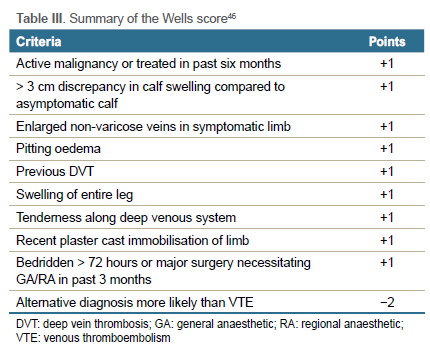
An additional RAM utilised for evaluating VTE risk in patients undergoing THA is the Wells score, which is an effective, clinically validated screening tool for determining a patient's pre-test probability of developing DVT.20Table III summarises the Wells score: it assigns points by assessing ten clinical variables, with each variable contributing one point. Two points are subtracted if an alternative diagnosis is more probable than that of a DVT. The combined total is used to generate a score that ranges from -2 to 9, with a score of < 0 being low risk, 1-2 being moderate risk, and > 3 being associated with a significant probability of DVT.20,45 In low- and moderate-risk groups, a D-dimer laboratory test should be requested. If this is negative, the prevalence of DVT is < 1%, and no further imaging is required. If the D-dimer test is positive, lower limb duplex venous ultrasound (VUS), which is the gold standard initial imaging modality, should be performed.2020
Luksameearunothai et al.46
Management
In general, the management strategies aimed at reducing the incidence of VTE following THA include pharmacological, mechanical, or combined prophylactic measures. Nam et al.47
Currently, mechanical, pharmacological, or combined thromboprophylaxis strategies are considered the standard of care to prevent the occurrence of VTE among all hospitalised patients.48
Pharmacological VTE prophylaxis
The ideal agent for thromboprophylaxis should be effective in preventing VTE, easy to administer (oral), have a short half-life, be inexpensive, have a reversal agent, and be safe to use, especially with regard to bleeding complications. Another concern is persistent wound drainage (PWD) and haematoma formation, which are associated with an increased risk of prosthetic joint infection (PJI).49
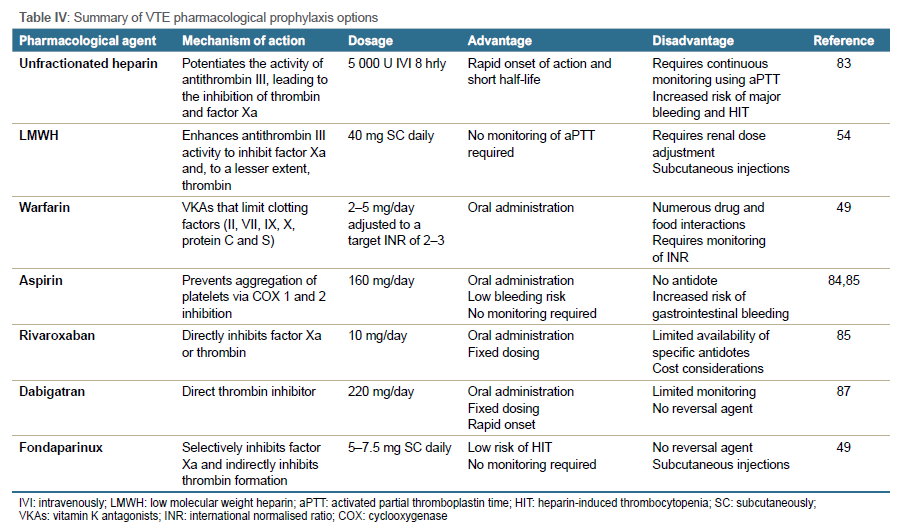
The most used pharmacological prophylaxis agents include low molecular weight heparin (LMWH), unfractionated heparin (UH), aspirin, vitamin K antagonists (VKAs), synthetic inhibitors of factor Xa (fondaparinux), and newer direct-acting oral anticoagulants (DOACs), namely, dabigatran, rivaroxaban, apixaban and edoxaban.10,50 (Refer to Table IV for a summary of pharmacological prophylaxis options.)
Low molecular weight heparin (LMWH)
LMWH is an established pharmacological agent used for VTE prophylaxis in the setting of THA.51,52 Numerous randomised controlled trials (RCTs) have been conducted, establishing the efficacy of LMWH in DVT prevention, not only within the arthroplasty setting but also beyond.53525452
Aspirin
Aspirin exerts an anticoagulant effect through irreversible inhibition of platelet cyclooxygenase and selective inhibition of thromboxane A2.555556 57105558
Vitamin K antagonists (VKAs)
VKAs, namely warfarin, disrupt the hepatic synthesis of factors II, VII, IX, and X.5955 6054 61
Synthetic pentasaccharide factor Xa inhibitors (fondaparinux)
Fondaparinux induces anticoagulation through selective inhibition of factor Xa, facilitated by antithrombin.626363
Direct oral anticoagulants (DOACs)
The DOACs are a group of oral anticoagulant agents that include direct factor Xa inhibitors, namely rivaroxaban, apixaban, edoxaban, and the selective, reversible, direct thrombin inhibitor, dabigatran.6465 10666467
Mechanical VTE prophylaxis
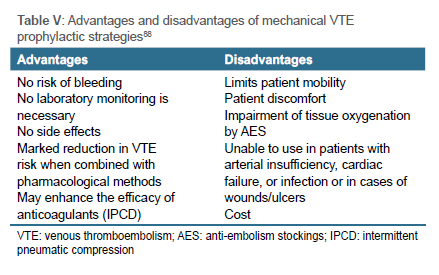
Mechanical methods of prophylaxis are a useful adjunct in VTE prophylaxis and are frequently used in combination with pharmacological methods. Benefits of mechanical prophylaxis strategies include the fact that they can be used in the early postoperative period and can be initiated intraoperatively with no risk of increasing bleeding or the need for any monitoring. They enhance venous blood flow, thereby creating a less favourable environment for clot formation, which may be achieved by static or dynamic systems.6810,50 (Table V).
A systematic review evaluating the incidence of VTE in patients receiving combined mechanical and pharmacological prophylaxis compared to single modality prophylaxis found that the combination prophylaxis reduced the risk of DVT compared to pharmacological methods alone.6968 7071
However, this study lacked randomisation and took place between 1999 and 2016. The improved recovery protocols for patients undergoing THA have developed significantly over the past two decades; therefore, the validity of this data is uncertain due to the influence of medical advances.
Emerging technologies in VTE thromboprophylaxis
Electronic medical records (EMRs) have created novel opportunities for VTE prevention.727374-76 Machine learning has the capacity to recognise patterns in complex sets of information that accurately predict the risk of VTE and bleeding, and this can lead to better outcomes.77
Current guidelines and expert opinion
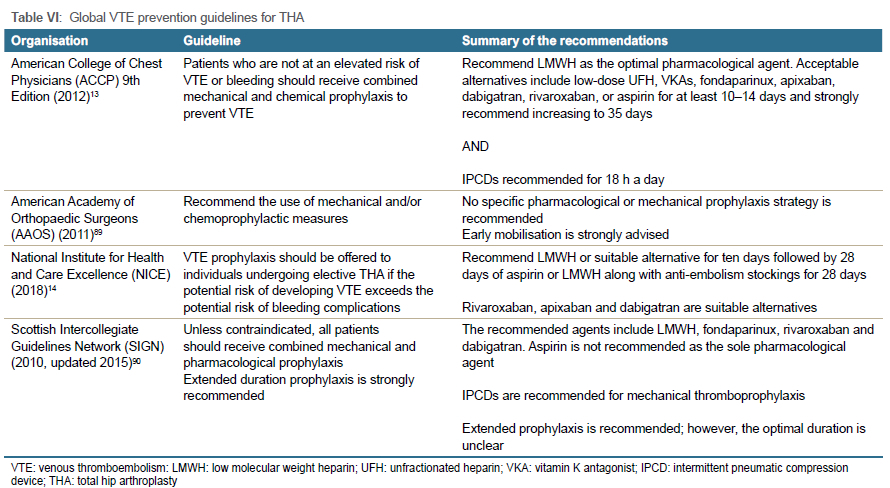
There is significant global debate pertaining to VTE prophylaxis and which pharmacological agent(s) should be used for VTE prophylaxis following THA, with the need to balance cost, clinical efficacy, risk of bleeding, and wound complications.53,78 This has led to discrepancies between the recommendations from major authorities globally, as geographic variation exists between the VTE prophylaxis guidelines followed in different countries (Table VI).
The ACCP recommends chemical prophylaxis using LMWH, fondaparinux or warfarin, with a target INR of 2.5 for at least 10-14 days and up to 35 days. In addition, combined prophylactic strategies should be administered for 18 hours a day while the patient is admitted until discharge.11
The National Institute for Health and Care Excellence (NICE) guidelines recommend LMWH for ten days, followed by aspirin for 28 days, LMWH or fondaparinux for 28 days post-surgery, along with AEs until the patient is discharged, or DOACs for at least 14 days.53
Both the AAOS and SIGN guidelines recommend a combination of chemical and mechanical prophylaxis unless contraindicated; however, no specific agent or duration is mentioned.79,80
All the above-mentioned recommendations acknowledge that some form of pharmacological VTE prophylaxis is required for all patients undergoing THA, with debate around which agent is most effective, especially in high-risk individuals. Furthermore, they all recommend utilising mechanical prophylaxis with IPCD, unless contraindicated.8181
Latest guidelines and emerging trends
Recent guidelines and emerging trends in VTE prophylaxis for patients undergoing THA emphasise a tailored, patient-centred approach.8283,84 Aspirin has gained prominence as a viable option for low- to moderate-risk patients due to its favourable safety profile and ease of administration.85868784
Complications associated with VTE prophylaxis
While chemical prophylaxis strategies are highly effective at reducing the risk of VTE, they are not without complications.88 899090
Anticoagulation in the setting of THA may impede wound healing, increase the risk of PWD, and increase tension on the surgical wound, resulting in wound breakdown and, overall, increasing the risk of peri-PJIs.919293949595,96
Conclusion
The existing literature does not provide a definitive answer regarding the most effective and safest option of chemoprophylaxis for patients undergoing THA. Major guidelines concur on the importance of using some form of VTE prophylaxis for all surgical patients. It is crucial to tailor the use of VTE prophylaxis according to each patient's risk profile, considering their susceptibility to VTE and the potential for bleeding complications, either locally at the surgical site or systemically. However, to better determine the ideal pharmacological agent, dosage, duration of treatment, and outcomes of VTE prophylaxis for THA patients, additional adequately powered prospective studies evaluating large populations are needed.
Ethics statement
The authors declare that this submission is in accordance with the principles laid down by the Responsible Research Publication Position Statements as developed at the 2nd World Conference on Research Integrity in Singapore, 2010. Ethics approval was not obtained (review article).
Declaration
The authors declare authorship of this article and that they have followed sound scientific research practice. This research is original and does not transgress plagiarism policies.
Author contributions
DBG: first draft preparation, manuscript revision, manuscript preparation
RPA: manuscript revision
BN: manuscript revision
NS: study conceptualisation first draft preparation, manuscript revision, manuscript preparation
NG: manuscript revision
JRTP: study conceptualisation, first draft preparation, manuscript revision, manuscript preparation
ORCID
Geldenhuys DB https://orcid.org/0009-0004-3312-7806
Almeida RP https://orcid.org/0009-0004-4252-0036
Ndindwa Β https://orcid.org/0009-0002-5081-2675
Sikhauli N https://orcid.org/0000-0002-0862-8615
Goga N https://orcid.org/0009-0006-2825-8865
Pietrzak JRT https://orcid.org/0000-0001-5694-0016
References
-
1. Chen CC, Wu CT, Chen CPC, et al. Predicting the risk of total hip replacement by using a deep learning algorithm on plain pelvic radiographs: diagnostic study. JMIR Form Res. 2023;7:e42788. https://doi.org/10.2196/42788
» https://doi.org/10.2196/42788 -
2. Singh JA, Yu S, Chen L, Cleveland JD. Rates of total joint replacement in the United States: future projections to 2020-2040 using the national inpatient sample. J Rheumatol. Published online April 15, 2019:jrheum.170990. https://doi.org/10.3899/jrheum.170990
» https://doi.org/10.3899/jrheum.170990 -
3. Pabinger C, Lothaller H, Portner N, Geissler A. Projections of hip arthroplasty in OECD countries up to 2050. HIP Int. 2018;28(5):498-506. https://doi.org/10.1177/1120700018757940
» https://doi.org/10.1177/1120700018757940 -
4. Kurtz S, Ong K, Lau E, et al. Projections of primary and revision hip and knee arthroplasty in the United States from 2005 to 2030. J Bone Jt Surg - Series A. 2007;89(4):780-785. https://doi.org/10.2106/JBJS.F.00222
» https://doi.org/10.2106/JBJS.F.00222 -
5. Santana DC, Emara AK, Orr MN, et al. An update on venous thromboembolism rates and prophylaxis in hip and knee arthroplasty in 2020. Medicina (Kaunas). 2020;56(9). https://doi.org/10.3390/medicina56090416
» https://doi.org/10.3390/medicina56090416 -
6. Siddiqui BM, Patel MS, Rudge S, et al. Incidence of clinically suspected venous thromboembolism in British Indian patients. Ann R Coll Surg Engl. 2018;100(5):413-16. https://doi.org/10.1308/rcsann.2018.0058
» https://doi.org/10.1308/rcsann.2018.0058 -
7. Bui MH, Le QC, Duong DH, et al. Economic burden of venous thromboembolism in surgical patients: A propensity score analysis from the national claims database in Vietnam. PLoS One. 2020;15(4):e0231411-. https://doi.org/10.1371/journal.pone.0231411
» https://doi.org/10.1371/journal.pone.0231411 -
8. Pandor A, Tonkins M, Goodacre S, et al. Risk assessment models for venous thromboembolism in hospitalised adult patients: A systematic review. BMJ Open. 2021;11(7):1-19. https://doi.org/10.1136/bmjopen-2020-045672
» https://doi.org/10.1136/bmjopen-2020-045672 -
9. Grosse SD. Incidence-based cost estimates require population-based incidence data. A critique of Mahan et al. Thromb Haemost. 2012;107(1):192-95. https://doi.org/10.1160/TH11-09-0666
» https://doi.org/10.1160/TH11-09-0666 -
10. Flevas DA, Megaloikonomos PD, Dimopoulos L, et al. Thromboembolism prophylaxis in orthopaedics: an update. EFORT Open Rev. 2018;3(4):136-48. https://doi.org/10.1302/2058-5241.3.170018
» https://doi.org/10.1302/2058-5241.3.170018 - 11. National Institute for Health and Care Excellence (NICE). Venous thromboembolism in over 16s: Reducing the risk of hospital-acquired deep vein thrombosis or pulmonary embolism. NICE Guidance. 2018;2(March):44.
-
12. Heit JA. Epidemiology of venous thromboembolism. Nat Rev Cardiol. 2015;12(8):464-74. https://doi.org/10.1038/nrcardio.2015.83
» https://doi.org/10.1038/nrcardio.2015.83 -
13. Stone J, Hangge P, Albadawi H, et al. Deep vein thrombosis: pathogenesis, diagnosis, and medical management. Cardiovasc Diagn Ther. 2017;7(Suppl 3):S276-S284. https://doi.org/10.21037/cdt.2017.09.01
» https://doi.org/10.21037/cdt.2017.09.01 - 14. Frank B, Maher Z, Hazelton JP, et al. Venous thromboembolism after major venous injuries: Competing priorities. J Trauma Acute Care Surg. 2017;83(6).
-
15. Carter KT, Kutcher ME. Modeling orthopedic injury and its impact: biological measures of hypercoagulability and their applications BT - biomarkers in trauma, injury and critical care. In: Rajendram R, Preedy VR, Patel VB, eds. Springer International Publishing; 2023:1153-76. https://doi.org/10.1007/978-3-031-07395-3_62
» https://doi.org/10.1007/978-3-031-07395-3_62 - 16. Kawano T, Kijima H, Yamada S, et al. A comparison of the incidences of venous thromboembolism after total hip arthroplasty between the direct anterior approach and the direct lateral approach, especially in the early period after introduction of the direct anterior approach. Adv Orthop. v.2020;2020.
-
17. Keller K, Hobohm L, Barco S, et al. Venous thromboembolism in patients hospitalized for hip joint replacement surgery. Thromb Res. 2020;190:1-7. https://doi.org/10.1016/j.thromres.2020.03.019
» https://doi.org/10.1016/j.thromres.2020.03.019 -
18. Zhang Zh, Shen B, Yang J, et al. Risk factors for venous thromboembolism of total hip arthroplasty and total knee arthroplasty: a systematic review of evidences in ten years. BMC Musculoskelet Disord. 2015;16:24. https://doi.org/10.1186/s12891-015-0470-0
» https://doi.org/10.1186/s12891-015-0470-0 -
19. Uzel K, Azboy I, Parvizi J. Venous thromboembolism in orthopedic surgery: global guidelines. Acta Orthop Traumatol Turc. 2023;57(5):192-203. https://doi.org/10.5152/j.aott.2023.23074
» https://doi.org/10.5152/j.aott.2023.23074 -
20. Chopard R, Albertsen IE, Piazza G. Diagnosis and treatment of lower extremity venous thromboembolism: a review. JAMA. 2020;324(17):1765-76. https://doi.org/10.1001/jama.2020.17272
» https://doi.org/10.1001/jama.2020.17272 -
21. Xia ZH, Chen WH, Wang Q. Risk factors for venous thromboembolism following surgical treatment of fractures: A systematic review and meta-analysis. Int Wound J. 2023;20(4):995-1007. https://doi.org/10.1111/iwj.13949
» https://doi.org/10.1111/iwj.13949 -
22. Pastori D, Cormaci VM, Marucci S, et al. A comprehensive review of risk factors for venous thromboembolism: from epidemiology to pathophysiology. Int J Mol Sci. 2023;24(4). https://doi.org/10.3390/ijms24043169
» https://doi.org/10.3390/ijms24043169 -
23. Hotoleanu C. Association between obesity and venous thromboembolism. Med Pharm Rep. 2020;93(2):162-68. https://doi.org/10.15386/mpr-1372
» https://doi.org/10.15386/mpr-1372 -
24. Chen W, Sun JN, Zhang Y, et al. Direct anterior versus posterolateral approaches for clinical outcomes after total hip arthroplasty : a systematic review and meta-analysis. J Orthop Surg Res. 2020 Sep 15;15(1):416. https://doi.org/10.1186/s13018-020-01893-2
» https://doi.org/10.1186/s13018-020-01893-2 -
25. Sun X, Zhao X, Zhou L, Su Z. Direct anterior approach versus posterolateral approach in total hip arthroplasty: a meta-analysis of results on early post-operative period. J Orthop Surg Res. 2021;16(1):1-8. https://doi.org/10.1186/s13018-021-02218-7
» https://doi.org/10.1186/s13018-021-02218-7 -
26. Ang JJM, Onggo JR, Stokes CM, Ambikaipalan A. Comparing direct anterior approach versus posterior approach or lateral approach in total hip arthroplasty: a systematic review and meta-analysis. Eur J Orthop Surg Traumatol. Published online 2023. https://doi.org/10.1007/s00590-023-03528-8
» https://doi.org/10.1007/s00590-023-03528-8 -
27. Sager B, Ahn J, Tran J, Khazzam M. Timing and risk factors for venous thromboembolism after rotator cuff repair in the 30-day perioperative period. Arthroscopy. 2019;35(11):3011-18. https://doi.org/10.1016/j.arthro.2019.05.045
» https://doi.org/10.1016/j.arthro.2019.05.045 -
28. Zhang H, Mao P, Wang C, et al. Incidence and risk factors of deep vein thrombosis (DVT) after total hip or knee arthroplasty: a retrospective study with routinely applied venography. Blood Coagul Fibrinolysis. 2017;28(2):126-133. https://doi.org/10.1097/MBC.0000000000000556
» https://doi.org/10.1097/MBC.0000000000000556 -
29. Mian O, Matino D, Roberts R, et al. Potential risk factors contributing to development of venous thromboembolism for total knee replacements patients prophylaxed with rivaroxaban: a retrospective case-control study. Clin Appl Thromb Hemost. 2020;26:1076029620962226. https://doi.org/10.1177/1076029620962226
» https://doi.org/10.1177/1076029620962226 -
30. Yu X, Wu Y, Ning R. The deep vein thrombosis of lower limb after total hip arthroplasty: what should we care. BMC Musculoskelet Disord. 2021;22(1):1-6. https://doi.org/10.1186/s12891-021-04417-z
» https://doi.org/10.1186/s12891-021-04417-z -
31. Ludwick L, Shohat N, Sherman MB, et al. The use of cement and tourniquet during total knee arthroplasty does not increase the risk of venous thromboembolism postoperatively. Arthroplast Today. 2022;17:211-17.e1. https://doi.org/10.1016/j.artd.2022.08.020
» https://doi.org/10.1016/j.artd.2022.08.020 -
32. Lindberg-Larsen M, Petersen PB, Jorgensen CC, et al. Postoperative 30-day complications after cemented/hybrid versus cementless total hip arthroplasty in osteoarthritis patients > 70 years. Acta Orthop. 2020;91(3):286-92. https://doi.org/10.1080/17453674.2020.1745420
» https://doi.org/10.1080/17453674.2020.1745420 -
33. Gao J, Xue Z, Huang J, et al. Risk of deep vein thrombosis (DVT) in lower extremity after total knee arthroplasty (TKA) in patients over 60 years old. J Orthop Surg Res. 2023;18(1):865. https://doi.org/10.1186/s13018-023-04339-7
» https://doi.org/10.1186/s13018-023-04339-7 - 34. Kang J, Lin W, Wang H, et al. Effects of general anesthesia and epidural anesthesia on deep vein thrombosis and perioperative cognitive function of patients undergoing total knee arthroplasty. Am J Transl Res. 2022;14(7):4786-94.
-
35. Memtsoudis SG, Cozowicz C, Bekeris J, et al. Anaesthetic care of patients undergoing primary hip and knee arthroplasty: consensus recommendations from the International Consensus on Anaesthesia-Related Outcomes after Surgery group (ICAROS) based on a systematic review and meta-analysis. Br J Anaesth. 2019;123(3):269-87. https://doi.org/10.1016/j.bja.2019.05.042
» https://doi.org/10.1016/j.bja.2019.05.042 - 36. Randel A. Diagnosing VTE: guidelines from the American Society of Hematology. Am Fam Physician. 2019;100(11):716-17.
-
37. Cronin M, Dengler N, Krauss ES, et al. Completion of the updated Caprini Risk Assessment Model (2013 Version). Clin Appl Thromb Hemost. 2019;25:1076029619838052. https://doi.org/10.1177/1076029619838052
» https://doi.org/10.1177/1076029619838052 -
38. Wang P, Wang Y, Yuan Z, et al. Venous thromboembolism risk assessment of surgical patients in Southwest China using real-world data: establishment and evaluation of an improved venous thromboembolism risk model. BMC Med Inform Decis Mak. 2022;22(1):59. https://doi.org/10.1186/s12911-022-01795-9
» https://doi.org/10.1186/s12911-022-01795-9 -
39. Lin Z, Sun H, Li D, et al. A prediction nomogram for deep venous thrombosis risk in patients undergoing primary total hip and knee arthroplasty: a retrospective study. Thromb J. 2023;21(1):106. https://doi.org/10.1186/s12959-023-00538-8
» https://doi.org/10.1186/s12959-023-00538-8 -
40. Qiao L, Yao Y, Wu D, et al. The validation and modification of the Caprini Risk Assessment Model for evaluating venous thromboembolism after joint arthroplasty. Thromb Haemost. 2023;124(3):223-35. https://doi.org/10.1055/a-2122-7780
» https://doi.org/10.1055/a-2122-7780 -
41. Krauss ES, Segal A, Cronin M, et al. Implementation and validation of the 2013 Caprini score for risk stratification of arthroplasty patients in the prevention of venous thrombosis. Clin Appl Thromb Hemost. 2019;25:1076029619838066. https://doi.org/10.1177/1076029619838066
» https://doi.org/10.1177/1076029619838066 -
42. Fu Y, Liu Y, Chen S, et al. The combination of Caprini risk assessment scale and thrombotic biomarkers to evaluate the risk of venous thromboembolism in critically ill patients. Medicine (United States). 2018;97(47). https://doi.org/10.1097/MD.0000000000013232
» https://doi.org/10.1097/MD.0000000000013232 -
43. Wainwright TW, Gill M, McDonald DA, et al. Consensus statement for perioperative care in total hip replacement and total knee replacement surgery: Enhanced Recovery After Surgery (ERAS®) Society recommendations. Acta Orthop. 2020;91(1):3-19. https://doi.org/10.1080/17453674.2019.1683790
» https://doi.org/10.1080/17453674.2019.1683790 -
44. Gold PA, Ng TY, Coury JR, et al. Can the Caprini score predict thromboembolism and guide pharmacologic prophylaxis after primary joint arthroplasty? J Orthop. 2020;21:345-49. https://doi.org/10.1016/j.jor.2020.07.005
» https://doi.org/10.1016/j.jor.2020.07.005 -
45. Keokgale T, van Blydenstein SA, Kalla IS. Evaluation of the modified Wells score in predicting venous thromboembolic disease in patients with tuberculosis or HIV in a South African setting. South Afr J HIV Med. 2022;23(1):1-11. https://doi.org/10.4102/SAJHIVMED.V23I1.1349
» https://doi.org/10.4102/SAJHIVMED.V23I1.1349 -
46. Luksameearunothai K, Sa-Ngasoongsong P, Kulachote N, et al. Usefulness of clinical predictors for preoperative screening of deep vein thrombosis in hip fractures. BMC Musculoskelet Disord. 2017;18(1):1-8. https://doi.org/10.1186/s12891-017-1582-5
» https://doi.org/10.1186/s12891-017-1582-5 -
47. Nam D, Nunley RM, Johnson SR, et al. Thromboembolism prophylaxis in hip arthroplasty: routine and high risk patients. J Arthroplasty. 2015;30(12):2299-303. https://doi.org/10.1016/j.arth.2015.06.045
» https://doi.org/10.1016/j.arth.2015.06.045 -
48. Delegates* TIVH& K. Recommendations from the ICM-VTE: Hip & Knee. J Bone Joint Surg Am. 2022;104 (Suppl 1):180-231. https://doi.org/10.2106/JBJS.21.01529.
» https://doi.org/10.2106/JBJS.21.01529 -
49. Wagenaar FCBM, Löwik CAM, Zahar A, et al. Persistent wound drainage after total joint arthroplasty: a narrative review. J Arthroplasty. 2019;34(1):175-82. https://doi.org/10.1016/j.arth.2018.08.034
» https://doi.org/10.1016/j.arth.2018.08.034 -
50. Lewis S, Glen J, Dawoud D, et al. Venous thromboembolism prophylaxis strategies for people undergoing elective total hip replacement: a systematic review and network meta-analysis. Value in Health. 2019;22(8):953-69. https://doi.org/10.1016/j.jval.2019.02.013
» https://doi.org/10.1016/j.jval.2019.02.013 - 51. NICE. Venous thromboembolism in over 16s. NICE guideline NG89. 2018;volume 2(March).
-
52. Lu X, Lin J. Low molecular weight heparin versus other anti-thrombotic agents for prevention of venous thromboembolic events after total hip or total knee replacement surgery: a systematic review and meta-analysis. BMC Musculoskelet Disord. 2018;19(1):322. https://doi.org/10.1186/s12891-018-2215-3
» https://doi.org/10.1186/s12891-018-2215-3 -
53. Matharu GS, Blom AW, Board T, Whitehouse MR. Does the publication of NICE guidelines for venous thromboembolism chemical prophylaxis influence the prescribing patterns of UK hip and knee surgeons? Ann R Coll Surg Engl. 2022;104(3):195-201. https://doi.org/10.1308/rcsann.2021.0157
» https://doi.org/10.1308/rcsann.2021.0157 -
54. He T, Han F, Wang J, et al. Efficacy and safety of anticoagulants for postoperative thrombophylaxis in total hip and knee arthroplasty: A PRISMA-compliant Bayesian network meta-analysis. PLoS One. 2021;16(6):e0250096. https://doi.org/10.1371/journal.pone.0250096
» https://doi.org/10.1371/journal.pone.0250096 - 55. Lieberman JR, Bell JA. Venous thromboembolic prophylaxis after total hip and knee arthroplasty. J Bone Joint Surg Am. 2021;103(16).
-
56. Shohat N, Ludwick L, Goh GS, et al. Aspirin thromboprophylaxis is associated with less major bleeding events following total joint arthroplasty. J Arthroplasty. 2022;37(2):379-84.e2. https://doi.org/10.1016/j.arth.2021.10.001
» https://doi.org/10.1016/j.arth.2021.10.001 -
57. Group CS. Effect of aspirin vs enoxaparin on symptomatic venous thromboembolism in patients undergoing hip or knee arthroplasty: the CRISTAL randomized trial. JAMA. 2022;328(8):719-27. https://doi.org/10.1001/jama.2022.13416
» https://doi.org/10.1001/jama.2022.13416 -
58. Pellegrini VD, Eikelboom JW, Evarts CMC, et al. Randomised comparative effectiveness trial of Pulmonary Embolism Prevention after hiP and kneE Replacement (PEPPER): the PEPPER trial protocol. BMJ Open. 2022;12(3). https://doi.org/10.1136/bmjopen-2021-060000
» https://doi.org/10.1136/bmjopen-2021-060000 -
59. Lieberman JR, Bell JA. Venous thromboembolic prophylaxis after total hip and knee arthroplasty. J Bone Jt Surg. 2021;103(16):1556-64. https://doi.org/10.2106/JBJS.20.02250
» https://doi.org/10.2106/JBJS.20.02250 -
60. Liu Z, Song D, Wang L, et al. Rivaroxaban vs. warfarin for the treatment and prevention of venous thromboembolism: A meta-analysis. Front Surg. 2023;10:1086871. https://doi.org/10.3389/fsurg.2023.1086871
» https://doi.org/10.3389/fsurg.2023.1086871 -
61. Hughes LD, Lum J, Mahfoud Z, et al. Comparison of surgical site infection risk between warfarin, LMWH, and aspirin for venous thromboprophylaxis in TKA or THA: a systematic review and meta-analysis. JBJS Rev. 2020;8(12):e20.00021. https://doi.org/10.2106/JBJS.RVW.20.00021
» https://doi.org/10.2106/JBJS.RVW.20.00021 -
62. Kumar A, Talwar A, Farley JF, et al. Fondaparinux sodium compared with low/molecular/weight heparins for perioperative surgical thromboprophylaxis: a systematic review and metaOanalysis. J Am Heart Assoc. 2019;8(10):e012184. https://doi.org/10.1161/JAHA.119.012184
» https://doi.org/10.1161/JAHA.119.012184 -
63. Dong K, Song Y, Li X, et al. Pentasaccharides for the prevention of venous thromboembolism. Cochrane Database of Systematic Reviews. 2016;(10). https://doi.org/10.1002/14651858.CD005134.pub3
» https://doi.org/10.1002/14651858.CD005134.pub3 -
64. Abatzis-Papadopoulos M, Tigkiropoulos K, Nikas S, et al. The effectiveness and safety of direct oral anticoagulants compared to conventional pharmacologic thromboprophylaxis in hip fracture patients: a systematic review and meta-analysis of randomized controlled trials. Orthopaedics & Traumatology: Surgery & Research. 2023;109(2):103364. https://doi.org/10.1016/j.otsr.2022.103364
» https://doi.org/10.1016/j.otsr.2022.103364 -
65. Steffel J, Collins R, Antz M, et al. 2021 European Heart Rhythm Association practical guide on the use of non-vitamin K antagonist oral anticoagulants in patients with atrial fibrillation. Europace. 2021;23(10):1612-76. https://doi.org/10.1093/europace/euab065
» https://doi.org/10.1093/europace/euab065 -
66. Haykal T, Adam S, Bala A, et al. Thromboprophylaxis for orthopedic surgery; An updated meta-analysis. Thromb Res. 2021;199:43-53. https://doi.org/10.1016/j.thromres.2020.12.007
» https://doi.org/10.1016/j.thromres.2020.12.007 -
67. Simon SJ, Patell R, Zwicker JI, et al. Venous thromboembolism in total hip and total knee arthroplasty. JAMA Netw Open. 2023;6(12):e2345883-e2345883. https://doi.org/10.1001/jamanetworkopen.2023.45883
» https://doi.org/10.1001/jamanetworkopen.2023.45883 -
68. Jones A, Al-Horani RA. Venous thromboembolism prophylaxis in major orthopedic surgeries and factor XIa inhibitors. Medical Sciences. 2023;11(3). https://doi.org/10.3390/medsci11030049
» https://doi.org/10.3390/medsci11030049 -
69. Kakkos S, Kirkilesis G, Caprini JA, et al. Combined intermittent pneumatic leg compression and pharmacological prophylaxis for prevention of venous thromboembolism. Cochrane Database of Systematic Reviews. 2022;2022(1). https://doi.org/10.1002/14651858.cd005258.pub4
» https://doi.org/10.1002/14651858.cd005258.pub4 -
70. Loh JLM, Chan S, Wong KL, et al. Chemoprophylaxis in addition to mechanical prophylaxis after total knee arthroplasty surgery does not reduce the incidence of venous thromboembolism. Thromb J. 2019;17(1):9. https://doi.org/10.1186/s12959-019-0200-1
» https://doi.org/10.1186/s12959-019-0200-1 -
71. Gill SK, Pearce AR, Everington T, Rossiter ND. Mechanical prophylaxis, early mobilisation and risk stratification: as effective as drugs for low risk patients undergoing primary joint replacement. Results in 13,384 patients. The Surgeon. 2020;18(4):219-25. https://doi.org/10.1016/j.surge.2019.11.002
» https://doi.org/10.1016/j.surge.2019.11.002 -
72. Nicholson M, Chan N, Bhagirath V, Ginsberg J. Prevention of venous thromboembolism in 2020 and beyond. J Clin Med. 2020;9(8):1-27. https://doi.org/10.3390/jcm9082467
» https://doi.org/10.3390/jcm9082467 -
73. Taha H, Govindraj E, Jaber F, et al. Improving venous thromboembolism prophylaxis through critical thinking and health informatics. BMJ Open Qual. 2020;9(2). https://doi.org/10.1136/bmjoq-2019-000885
» https://doi.org/10.1136/bmjoq-2019-000885 -
74. Henke PK, Kahn SR, Pannucci CJ, et al. Call to action to prevent venous thromboembolism in hospitalized patients: A policy statement from the American Heart Association. Circulation. Published online 2020:E914-E931. https://doi.org/10.1161/CIR.0000000000000769
» https://doi.org/10.1161/CIR.0000000000000769 -
75. Turrentine FE, Sohn MW, Wilson SL, et al. Fewer thromboembolic events after implementation of a venous thromboembolism risk stratification tool. J Surg Res. 2018;225:148-56. https://doi.org/10.1016/j.jss.2018.01.013
» https://doi.org/10.1016/j.jss.2018.01.013 -
76. Depietri L, Marietta M, Scarlini S, et al. Clinical impact of application of risk assessment models (Padua Prediction Score and Improve Bleeding Score) on venous thromboembolism, major hemorrhage and health expenditure associated with pharmacologic VTE prophylaxis: a 'real life' prospective and retrospective observational study on patients hospitalized in a Single Internal Medicine Unit (the STIME study). Intern Emerg Med. 2018;13(4):527-34. https://doi.org/10.1007/s11739-018-1808-z
» https://doi.org/10.1007/s11739-018-1808-z -
77. Nafee T, Gibson CM, Travis R, et al. Machine learning to predict venous thrombosis in acutely ill medical patients. Res Pract Thromb Haemost. 2020;4(2):230-37. https://doi.org/10.1002/rth2.12292
» https://doi.org/10.1002/rth2.12292 -
78. Coveney EI, Hutton C, Patel N, et al. Incidence of symptomatic venous thromboembolism (VTE) in 8,885 elective total hip arthroplasty patients receiving post-operative aspirin VTE prophylaxis. Cureus. 2023;15(3):e36464. https://doi.org/10.7759/cureus.36464
» https://doi.org/10.7759/cureus.36464 -
79. Jacobs J, Mont M, Bozic K, et al. American Academy of Orthopaedic Surgeons Clinical Practice Guideline on: Preventing venous thromboembolic disease in patients undergoing elective hip and knee arthroplasty. J Bone Joint Surg Am. 2012;94:746-47. https://doi.org/10.2106/JBJS.9408.ebo746
» https://doi.org/10.2106/JBJS.9408.ebo746 - 80. Kessler CM. Prevention and management of venous thromboembolism. Clin Adv Hematol Oncol. 2011;9(1):9-11.
-
81. Muscatelli SR, Charters MA, Hallstrom BR. Time for an update? A look at current guidelines for venous thromboembolism prophylaxis after hip and knee arthroplasty and hip fracture. Arthroplast Today. 2021;10:105-107. https://doi.org/10.1016/j.artd.2021.06.015
» https://doi.org/10.1016/j.artd.2021.06.015 -
82. Lam BD, Dodge LE, Datta S, et al. Venous thromboembolism prophylaxis for hospitalized adult patients: a survey of US health care providers on attitudes and practices. Res Pract Thromb Haemost. 2023;7(6):102168. https://doi.org/10.1016/j.rpth.2023.102168
» https://doi.org/10.1016/j.rpth.2023.102168 -
83. Moore MC, Dubin JA, Bains SS, et al. Trends in deep vein thrombosis prophylaxis after total hip arthroplasty: 2016 to 2021. J Orthop. 2024;48:77-83. https://doi.org/10.1016/j.jor.2023.11.030
» https://doi.org/10.1016/j.jor.2023.11.030 - 84. Delegates* TIVH & K. Recommendations from the ICM-VTE: Hip & Knee. JBJS. 2022;104(Suppl 1).
-
85. Haykal T, Kheiri B, Zayed Y, et al. Aspirin for venous thromboembolism prophylaxis after hip or knee arthroplasty: An updated meta-analysis of randomized controlled trials. J Orthop. 2019;16(4):294-302. https://doi.org/10.1016/j.jor.2019.03.003
» https://doi.org/10.1016/j.jor.2019.03.003 -
86. Flevas DA, Megaloikonomos PD, Dimopoulos L, et al. Thromboembolism prophylaxis in orthopaedics: an update. EFORT Open Rev. 2018;3(4):136-48. https://doi.org/10.1302/2058-5241.3.170018
» https://doi.org/10.1302/2058-5241.3.170018 -
87. Abdel MP, Carender CN, Berry DJ. Current practice trends in primary hip and knee arthroplasties among members of the American Association of Hip and Knee Surgeons. J Arthroplasty. 2023;38(10):1921-27.e3. https://doi.org/10.1016/j.arth.2023.08.005
» https://doi.org/10.1016/j.arth.2023.08.005 -
88. Piran S, Schulman S. Treatment of bleeding complications in patients on anticoagulant therapy. Blood. 2019;133(5):425-35. https://doi.org/10.1182/blood-2018-06-820746
» https://doi.org/10.1182/blood-2018-06-820746 -
89. Gunning AC, Maier RV, de Rooij D, et al. Venous thromboembolism (VTE) prophylaxis in severely injured patients: an international comparative assessment. Eur J Trauma Emerg Surg. 2021;47(1):137-43. https://doi.org/10.1007/s00068-019-01208-z
» https://doi.org/10.1007/s00068-019-01208-z -
90. Chindamo MC, Marques MA. Bleeding risk assessment for venous thromboembolism prophylaxis. J Vasc Bras. 2021;20:e20200109. https://doi.org/10.1590/1677-5449.200109
» https://doi.org/10.1590/1677-5449.200109 -
91. Wagenaar FCBM, Löwik CAM, Zahar A, et al. Persistent wound drainage after total joint arthroplasty: a narrative review. J Arthroplasty. 2019;34(1):175-82. https://doi.org/10.1016/j.arth.2018.08.034
» https://doi.org/10.1016/j.arth.2018.08.034 -
92. Illingworth KD, Mihalko WM, Parvizi J, et al. How to minimize infection and thereby maximize patient outcomes in total joint arthroplasty: a multicenter approach: AAOS exhibit selection. J Bone Joint Surg Am. 2013;95(8):e50. https://doi.org/10.2106/JBJS.L.00596
» https://doi.org/10.2106/JBJS.L.00596 -
93. Shahi A, Boe R, Bullock M, et al. The risk factors and an evidence-based protocol for the management of persistent wound drainage after total hip and knee arthroplasty. Arthroplast Today. 2019;5(3):329-33. https://doi.org/10.1016/j.artd.2019.05.003
» https://doi.org/10.1016/j.artd.2019.05.003 -
94. Jones CW, Spasojevic S, Goh G, et al. Wound discharge after pharmacological thromboprophylaxis in lower limb arthroplasty. J Arthroplasty. 2018;33(1):224-29. https://doi.org/10.1016/j.arth.2017.07.046
» https://doi.org/10.1016/j.arth.2017.07.046 -
95. Agaba P, Kildow BJ, Dhotar H, et al. Comparison of postoperative complications after total hip arthroplasty among patients receiving aspirin, enoxaparin, warfarin, and factor Xa inhibitors. J Orthop. 2017;14(4):537-43. https://doi.org/10.1016/j.jor.2017.08.002
» https://doi.org/10.1016/j.jor.2017.08.002 -
96. Pellegrini VDJ. Prophylaxis against venous thromboembolism after total hip and knee arthroplasty: a critical analysis review. JBJS Rev. 2015;3(9). https://doi.org/10.2106/JBJS.RVW.N.00
» https://doi.org/10.2106/JBJS.RVW.N.00
Accepted: June 2024
Published: November 2024
Funding: No funding was received for this study.
Conflict of interest: The authors declare they have no conflicts of interest that are directly or indirectly related to the research.
* Corresponding author: