Physical activity in obesity management
Introduction
Physical activity (PA) is broadly defined as 'any bodily movement produced by skeletal muscles that results in energy expenditure'.[21] Exercise, or exercise training, is a specific subset of PA that is 'planned, structured, and repetitive and purposive in the sense that the improvement or maintenance of one or more components of physical fitness is the objective'.
Within the context of obesity management, although there is a modest effect on weight loss in itself (2 - 3 kg) and it is more effective when combined with dietary strategies (about 6 kg), it is well documented that PA has benefit for broader health outcomes and disease risk.[1] Results of randomised controlled trials (RCTs) indicate that regular PA is associated with a lower prevalence of cardiovascular risk factors (e.g. high blood pressure, glucose, high low-density lipoprotein cholesterol [LDL-C] levels, high triglycerides and low high-density lipoprotein cholesterol [HDL-C] levels) and a lower incidence of chronic disease (e.g. type 2 diabetes [T2DM], cardiovascular disease, certain types of cancer).[22] Increasing one's level of cardiorespiratory fitness is also associated with a reduced risk of chronic disease and all-cause mortality, independent of the body mass index (BMI),[23] which could be partly explained by lower amounts of abdominal fat.[24]
The health benefits related to PA are partly associated with the dose of PA (i.e. type, duration, intensity and frequency).[25] However, reduction of sedentary activity during the day can also produce health benefits, independently of levels of regular PA.[26] Health benefits can therefore occur with even small improvements in PA levels in persons who are less active than recommended, although there are variables that influence therapeutic effect (such as type, volume and intensity of PA, genetics, and other individual characteristics such as age, sex and BMI).[27]
To improve health, it is recommended that individuals perform a minimum of 30 minutes of moderate- to vigorous-intensity aerobic PA on most days of the week (accumulating at least 150 minutes per week), engage in strength (resistance) activity at least 2 days per week,[28] and reduce the amount of daily sedentary time.[29]
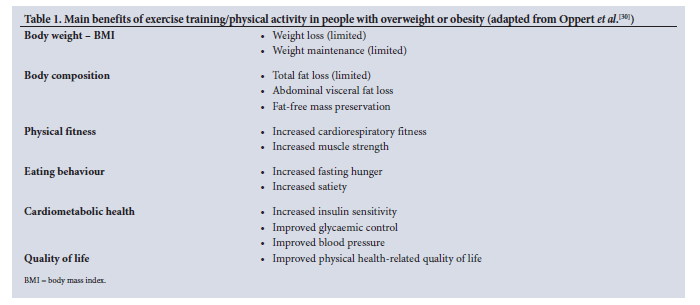
A Physical Activity Group supervised by the European Association for the Study of Obesity systematically reviewed and synthesised literature on trials published since 2010 on the effects of exercise training programmes in obesity management and produced a publication in 2021 of practice guidelines on the role of exercise training in the management of obesity.[30] This included recommendations on weight loss, body composition changes and weight maintenance after weight loss, as well as on physical fitness, cardiometabolic health, eating behaviour and health-related quality of life. It was recently updated following review of evidence in terms of weight loss, weight maintenance after weight loss, body composition changes (fat mass, lean body mass), physical fitness and exercise after metabolic and bariatric surgery, and concluded that increasing PA is but one component in overall obesity management (Table 1). The behaviour change approach as described by the '5As'[31] is appropriately geared towards the topic of PA. The implementation of an exercise programme in the management of people living with obesity (PLWO) should have the primary aim of maximising health benefits.[32] Performing more PA should be pleasant and an opportunity to improve overall wellbeing, while mitigating risks of the activity.[33]
The objective of this chapter is to provide primary care providers and kinesiologists/biokineticists (exercise and movement specialists) with evidence regarding the efficacy of PA as part of a therapeutic and management approach for PLWO.
Physical activity behaviours
PA behaviour and the pursuit of it are influenced by social determinants.[34] Socio-ecological models provide a useful framework to depict influences on PA behaviour and can be understood through concentric circles representing different levels of influence, ranging from individual factors to broader community, sectoral and societal determinants.[35,36] More distal influences, such as community- and sector-related factors, as well as physical and policy environments, play a significant role in shaping PA participation. These include societal norms (shared values and beliefs), physical infrastructure (built environment), and public policies (education, urban planning, healthcare) that promote PA as part of daily life. Barriers to weight management and PA engagement may include unsafe neighbourhoods, poorly designed built environments, and lower household income.[37-40]
Locally, the Physical Activity for Health in Africa policy brief, prepared by PA experts across the African continent around the time of the COVID-19 pandemic, served to guide decision-makers, planners and programme leaders on the importance of prioritising PA.[41] A framework for implementation is offered, recognising that policy actions can take place under three domains: Active Societies, Active Environments and Active People. This document is aligned to the World Health Organization Global Action Plan for Physical Activity (GAPPA),[42] providing various local and global examples of approaches to promote and integrate PA opportunities that address social, environmental and economic inequalities. Four key areas of recommendation for key stakeholders and policymakers are:
1. Develop a National Plan for PA for health and development.
2. Train a cadre of health professionals, educators, sports coaches and community members to promote PA for health.
3. Ensure safe and enjoyable opportunities for PA, through urban planning, provision of parks or public spaces, and low-cost programmes close to where people live.
4. Adopt a 'whole of government' systems approach towards PA embedded in multiple sectors, devising flexible, agile and cost-effective solutions.
The Strategy for the Prevention and Management of Obesity in South Africa (2023 - 2028, Department of Health, https://www.health.gov.za) and the National Strategic Plan for the Prevention and Control of Non-Communicable Diseases (2022 -2027) prioritise reducing obesity prevalence through environmental modifications, screening, and public awareness campaigns. The vision of this strategy is to ensure that 'All South Africans lead a healthy lifestyle and maintain a healthy weight'.
Physical activity throughout the life stages
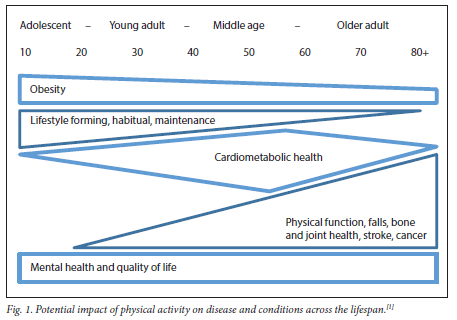
The benefits of PA span across all life stages, although the magnitude of influence and importance of benefits may vary (Fig. 1). Sarcopenic obesity refers to the coexistence of sarcopenia and obesity, and there is now international consensus on the diagnosis.[43] Several pathophysiological mechanisms are shared by sarcopenia and obesity, which may potentiate the detrimental effects of each on health outcomes. This may be especially applicable in older adults. Sarcopenic obesity negatively influences physical function, morbidity and mortality.[43,44]
Body composition
Significant but modest long-term weight loss (about 2 kg) can be expected with exercise alone (e.g. aerobic and resistance) in male and female adults who have overweight and/ or obesity. In general, dietary interventions produce greater weight loss (about 4 kg) compared with exercise alone, and when exercise is combined with diet, there is an additional increase in the amount of weight loss (about 6 kg).[7,8,43,45] Obesity care interventions that incorporate exercise generally report either maintenance of or gain in fat-free mass.[3,8] In addition, PA therapy, with or without dietary changes, is associated with several health benefits. For example, regular PA can have a positive effect on cardiovascular risk factors; this occurs independently of significant weight loss.[23] Behavioural intervention incorporating exercise also reduced weight, fat mass, waist circumference (WC) and cardiometabolic risk factors in individuals with Class II and III obesity.[46-48] In older individuals, exercise alone led to better physical function without significant weight loss, but when added to dietary changes, it attenuated the decrease in muscle and bone mass normally observed with diet alone.[49] The volume and intensity of PA affect the magnitude of health benefits that are associated with exercise.[7]
Regarding the long-term effects of PA, Washburn et al.[8] stated that there is limited evidence in favour of one intervention modality (exercise, diet or combined) in preventing weight regain and/or maintaining changes in cardiovascular risk factors over time. However, in the Look AHEAD (Action for Health in Diabetes) study, Pownall et al.[50] monitored body composition changes in a subset of 1 019 participants with overweight or obesity and T2DM over 8 years. This RCT examined an intensive behavioural intervention that included an increase in PA of up to 175 minutes per week and a reduction of caloric intake to between 1 200 and 1 800 kcal per day. They observed a significant effect of the behavioural intervention on changes in body composition after 1 year. In addition, weight, fat mass and lean mass were lower in the intervention group versus control (diabetes support and education) at all testing points during the 8-year follow-up. Overall, there seems to be consistent evidence from many large, relatively high-quality trials and meta-analyses that PA contributes to improvements in body composition and other indicators of cardiometabolic health.
Brisk walking is the type of PA therapy that is most often recommended for the management of overweight or obesity in adults.[51] In this regard, Mabire et al.[3] performed a systematic review and meta-analysis of 22 studies (N=1 524; 81% female) to investigate the influence of age, sex and BMI on the effectiveness of brisk walking alone for managing obesity in adults. The intervention characteristics (average) were as follows: duration (46 minutes per session), intensity (73% maximum heart rate), frequency (four times per week), and length (12 to 16 weeks), with an exercise compliance rate between 65% and 85%. Based on the pooled analysis, they found a statistically significant reduction in body weight (-2.13 kg), BMI (-0.96 kg/ m2[7] In general, the magnitude of improvement in body composition indices was greater in participants under 50 years old. In addition, baseline BMI did not significantly influence the changes in body weight, WC or body composition.
Body fat distribution
It is well documented that abdominal obesity, especially an excess of abdominal visceral fat, increases the risk for adverse health effects in PLWO.[52] It is important to document the efficacy of exercise alone in reducing abdominal visceral fat, considering the modest weight loss observed with behavioural interventions. Based on multiple systematic reviews and meta-analyses performed since 2005, exercise alone is effective in reducing abdominal visceral fat.[4,5,51,52] Reductions of abdominal visceral fat and total abdominal fat can also occur in the absence of weight loss or changes in WC.[53] Resistance training or its combination with aerobic training do not seem to have a significant impact on abdominal visceral fat reduction in comparison with control or aerobic training alone.[4-6,52]
This is an unexpected finding, which may in part be due to a smaller overall sample size in the meta-analyses of combined aerobic and resistance training, as well as the lower energy expenditure associated with resistance training compared with aerobic training. In general, aerobic training has the potential to result in reductions of abdominal visceral fat greater than 30 cm22[6] With regard to abdominal obesity, as measured by WC, reductions are independent of exercise intensity. However, improvements in the cardiometabolic indices associated with abdominal visceral fat, as well as the increase in cardiorespiratory fitness in both women and men with abdominal obesity, seem to be intensity dependent (e.g. glucose tolerance).[9] Finally, a recent meta-analysis on the effects of high-intensity interval training (HIIT) in PLWO showed that both cycling and running produce a significant reduction in total fat mass, abdominal fat mass and abdominal visceral fat, with no difference between the sexes.[54] Furthermore, sedentary individuals with high abdominal visceral fat are characterised by accumulation of fat at undesired sites (ectopic fat) such as the liver, the heart, the pancreas and the skeletal muscle. Ectopic fat plays an important role in the association between abdominal obesity and the increase in the risk of cardiovascular diseases.[52] In this regard, a meta-analysis showed that exercise alone could lead to a decrease in cardiac adiposity (e.g. epicardial and pericardial fat) and in intra-hepatic lipids, although the effect on the liver is greater when combined with dietary changes and with greater decrease in BMI or body weight.[55] In addition, aerobic training, and not resistance training, had an effect on reducing abdominal visceral fat and showed a trend towards reducing liver fat in adults with overweight or obesity and T2DM.[6,56]
There is therefore quality evidence to recommend that regular aerobic exercise effectively reduces abdominal visceral fat. However, there is limited evidence concerning the effect of exercise alone on ectopic fat, but the available data suggest that exercise alone has the potential to decrease ectopic fat in the liver and the heart in adults with overweight or obesity.
Dose-response considerations
For PLWO who want to start with exercise prescription, it is advisable that all those considering initiating a vigorous exercise programme are encouraged to consult their physician or healthcare team professionals. Typical exercise prescriptions will include the following parameters: (1) type; (2) duration; (3) intensity; and (4) frequency. The volume of PA is based on these four factors and is often defined as the total energy expenditure.
1. Type. We did not identify any study that randomly assigned participants to different aerobic exercise modalities (e.g. walking versus cycling). However, there are several studies randomly assigning PLWO to resistance versus aerobic training. In one trial, 136 older men and women with abdominal obesity were randomly assigned to control, resistance, aerobic or combined aerobic and resistance training.[10] Training took place over 6 months. The prescriptions were as follows: three sessions of about 20 minutes per week in the resistance group, five sessions of 30 minutes in the aerobic group, and three sessions of 50 minutes in the combined aerobic and resistance training group. Fat mass was reduced by about 3 kg in both the aerobic and combined training groups, whereas muscle mass increased by about 1 kg in the resistance and combined training groups. The combined aerobic and resistance training group had the largest increase in insulin sensitivity and decrease in functional limitations. These findings are very similar to those from the Studies Targeting Risk Reduction Interventions through Defined Exercise-Aerobic Training and/or Resistance Training (STRRIDE AT/RT).[13] In addition to the absence of a control group, one of the differences was that the combined training group was asked to complete the totality of the prescription for the aerobic training (14 kcal/kg of body weight per week, or ~130 minutes per week) and resistance training (180 minutes per week).
2. Duration/volume. Previous guidelines on PA for obesity management[57,58] have emphasised the effect of increasing the volume of PA. The studies that directly compare lesser to greater exercise volumes have typically achieved differences in volume by increasing exercise duration while keeping intensity, frequency and type of exercise consistent. While it seemed well established that greater exercise volumes led to greater weight loss,[56] some recent relatively large studies have not confirmed these findings. For example, Ross et al.[91 randomly assigned 300 men and women with obesity to control, low-amount/low-intensity exercise, high-amount/low-intensity exercise or high amount/high-intensity exercise. The high-amount groups were prescribed twice as much energy expenditure as the low-amount group. However, all three exercise groups showed a similar reduction in body weight and WC compared with control. There was, however, a dose-response relationship between exercise volume and improvements in cardiorespiratory fitness. Similarly, Church et al.[15] randomly assigned 464 postmenopausal women with overweight or obesity and with elevated blood pressure to a control group or three exercise groups with increasing volume (i.e. prescribed energy expenditure of 4 v. 8 v. 12 kcal/kg of body weight per week). There was no difference in weight loss between groups, or in decreased WC compared with control. Here again there was a dose-response relationship with greater exercise leading to greater improvements in cardiorespiratory fitness. It is interesting to note that the lower-volume groups in these studies often performed less than 150 minutes per week[9,15,56] and showed some benefits (e.g. cardiorespiratory fitness,[15] or a decrease in WC[9]).
It is unclear why these studies did not show a dose-response relationship when comparing different prescribed exercise volumes on changes in body weight or WC. Studies did not suggest any compensatory decreases in daily PA or increases in energy intake with greater exercise volume. However, compliance with the exercise prescription within groups was highly variable. The volume of exercise actually completed was shown to be a strong predictor of the amount of weight loss in studies such as these. For example, a study[59] cited in the previous edition of the Canadian guideline, which was updated with weight maintenance data,[60] suggested that the actual amount of PA completed predicted the amount of weight loss, whereas the amount prescribed did not. In one of the longest-duration intervention studies comparing different exercise volumes, standard behavioural therapy was compared with high PA levels.[61] Participants from both groups received identical instructions and training on reducing energy and fat intake, but one group was given the goal of participating in 1 000 kcal per week (or about 30 minutes per day) of PA, whereas the other had the goal of 2 500 kcal per week. The interventions lasted 18 months, and participants were followed up for an additional 12 months. There was no difference in weight loss after the first 6 months, but the difference reached significance after 12 and 18 months. After the intervention, PA declined and the differences in weight loss between groups were no longer present, but once again, it was observed that those who maintained greater PA levels maintained greater weight loss.[61]
3.
Intensity. A large amount of literature has compared moderate-versus vigorous-intensity exercise. Three of the studies described in the section above on exercise volume also included comparisons of moderate versus vigorous intensity, matched for exercise volume. The vigorous-intensity groups in these studies had relatively similar intensity prescriptions of 75% of peak oxygen consumption (VO2peak) in the study by Ross et al.,[9] 65 - 80% VO2peak in the study by Slentz et al.,[56] and 70 - 85% of maximum heart rate in the studies by Jakicic and colleagues.[59,60] The moderate-intensity exercise was prescribed as 50% VO2peak, 40 - 55% VO2peak and 50 - 65% of maximum heart rate in these studies, respectively. Greater exercise intensity necessitated less time to complete a given volume and led to greater improvements in cardiorespiratory fitness,[9,62] but was not associated with statistically significant greater weight loss or changes in fat mass in these three studies.Many of the recent studies examining the role of exercise intensity have utilised HIIT. There have been several systematic reviews and meta-analyses on this topic.[12,54,63-67] There is evidence that HIIT reduces total and intra-abdominal fat,[54] but at this time there is no clear evidence that HIIT causes more fat loss compared with moderate-intensity exercise. While some HIIT protocols require less time (and less volume), these HIIT protocols may not lead to as much fat loss when compared with moderate-intensity protocols with greater volumes.[58,61]
HIIT causes greater improvements in cardiorespiratory fitness[12] and some indicators of cardiometabolic health compared with moderate-intensity exercise. A limitation of these meta-analyses was that most included studies had small sample sizes and training was often less than 4 months in duration.[63,64] In one of the longest and largest studies examining HIIT training, Roy et al.[68] allowed participants to choose between unsupervised HIIT 3 days per week or 30 minutes of daily moderate-intensity exercise. Forty-two percent chose HIIT, but after 1 year there was no significant difference in weight or abdominal fat loss between interventions.
4.
Frequency. Few studies directly compared different exercise frequencies while keeping total exercise volume constant. In a study by Madjd et al.,[69] 75 women with overweight and obesity were randomly allocated to high- versus low-frequency PA groups. Both groups were asked to follow the same dietary weight loss programme and to exercise for 300 minutes per week, but either for 50 minutes/ day, 6 days/week (high frequency) or 100 minutes/day, 3 days/week (low frequency). Compared with the high-frequency group, the low-frequency group had a greater decrease in weight (9.6 kg v. 7.8 kg) and a greater increase in daily steps. However, it was not clear whether the greater number of steps was due to better protocol compliance or a greater number of steps outside of the prescribed session. As this is the only study identified by our research, these results should be confirmed before recommending a reduced frequency of exercise sessions. It should also be noted that in recent years a large body of literature is reporting short-term improvements in cardiometabolic risk factors (e.g. glucose and triglycerides) by breaking sedentary time with multiple frequent bouts of standing or light- to moderate-intensity walking (e.g. 2 - 5 minutes every 30 minutes).[70,71] Additional long-term studies on the effects of breaking up sedentary time with frequent short bouts of activity are still required.Cardiometabolic risk factors and chronic diseases
Several large longitudinal studies have consistently observed that greater PA (or cardiorespiratory fitness) was associated with reductions in all-cause mortality, cardiovascular diseases and metabolic diseases such as T2DM.[22,23] Our literature search did not identify any trials with the primary goal of examining the effects of exercise on mortality. This is likely to be due to the challenges of undertaking a study of sufficient duration and including a large sample size. In addition, large trials that have the incidence of chronic diseases as a primary outcome often include a combined diet and PA intervention. It would not be feasible to examine the independent effects of PA on all cardiometabolic risk factors in the present article. The following subsections will therefore focus on components commonly associated with the metabolic syndrome, including hyperglycaemia and insulin resistance, hypertension and dyslipidaemia.
Glycaemia
Meta-analyses have consistently shown improvements in glycated haemoglobin (HbA1c) following structured/supervised aerobic and/ or resistance exercise training in people with T2DM, even in the absence of weight loss.[72,73] In people who do not have diabetes, improvements in postprandial glucose and especially insulin sensitivity can occur with exercise training of sufficient volume and intensity, but improvements in fasting glucose are not typically observed in the absence of large weight loss.[9,13,14] Some of the largest and longest-duration trials have been performed for the prevention and management of T2DM in people with impaired glucose tolerance, for example, trials such as the Diabetes Prevention Program,[74] the Finnish Diabetes Prevention Study,[75] the Indian Diabetes Prevention Programme[76] and the Da Qing Impaired Glucose Tolerance and Diabetes Study.[77] The large majority of participants in these studies had a BMI above 25 kg/m2
The Look AHEAD study was a large RCT evaluating the efficacy of intensive behavioural intervention in adults with overweight or obesity and with T2DM.[78,79] The intensive behavioural intervention group targeted at least 175 minutes per week of unsupervised PA and a >7% weight loss, while the diabetes support and education group received usual care. The intensive behavioural intervention group did not achieve significant reductions in the rate of cardiovascular events. However, they achieved significant weight loss, which was maintained below the standard education group for up to 10 years, and improved cardiorespiratory fitness and glycaemic control with fewer medications. They also achieved decreased rates of sleep apnoea, severe diabetic chronic kidney disease and retinopathy, depression, sexual dysfunction and urinary incontinence. They also had better physical mobility maintenance and quality of life. All of these outcomes were achieved with lower overall healthcare costs.[80]
Blood pressure
Several meta-analyses have examined the effects of supervised exercise on blood pressure without excluding normal-weight participants (for example Lemes et al.[16]). They suggest that exercise reduces systolic blood pressure (-5 mmHg) and diastolic blood pressure (-3 mmHg). People with pre-existing hypertension also show similar or larger improvements in blood pressure. However, in some studies, the reductions in blood pressure were not consistently observed, especially with smaller exercise volumes.[15] Improvements have been shown following both HIIT[811 and resistance training.[82] A recent review concluded that isometric exercises in particular were beneficial in reducing arterial blood pressure.[83]
Blood lipids and lipoproteins
Meta-analyses, including those that have limited studies to those with participants with overweight or obesity, have shown that exercise improves many lipid and lipoprotein risk factors, including reducing total cholesterol and triglycerides,[17,18] and sometimes HDL-C.[16] One of these meta-analyses showed a tendency towards improvements in HDL-C, but results were heterogeneous.[17] However, an effect of exercise on LDL-C is less likely.[17] For example, the Oslo Diet and Exercise Study was a 1-year trial randomising 219 healthy participants (mean BMI 29 kg/m2]84] Exercise did not lower LDL-C, although it increased HDL-C and apolipoprotein AI and decreased apolipoprotein B.]84] It is possible that greater exercise volumes or intensities are required to improve LDL-C and HDL-C. The STRRIDE AT/RT compared walking approximately 12 miles per week at a moderate intensity, 12 miles per week at a high intensity (i.e. greater speed), and 20 miles per week at a high intensity. Improvements in LDL-C and HDL-C (and most other lipid parameters studied) tended to improve with increasing intensity or distance (volume), and often the only significant difference compared with control was in the high-volume, high-intensity group.]56,81]
Although not limited to participants who had overweight or obesity, a meta-analysis also supported their independence in activities of daily living. Such improvements have most often been documented in people who initially had mobility impairments, including older people with obesity, as well as people with Class II or III obesity. For example, in the Lifestyle Interventions and Independence for Elders (LIFE) study,[85] 1 635 sedentary men and women aged 70 - 89 years were randomly assigned to a moderate-intensity PA or health education programme for 24 months. Major mobility disability was defined as inability to walk for 400 metres, which was observed in 30% of the PA group and 35% of the health education group. Older adults with obesity who were at high risk for mobility disability showed a reduced risk of major mobility disability after participating in a structured, moderate-intensity physical activity programme. Findings from the LIFE trial indicate that this type of exercise intervention is both safe and effective, even for individuals with Class II or higher obesity. Resistance training also improved functional limitations in older adults with obesity; adding resistance training to aerobic training led to additional benefits.[10] A meta-analysis of 14 trials[86] comparing energy restriction alone with energy restriction combined with PA suggested that the addition of aerobic and resistance training improved cardiovascular fitness and muscle strength, and increased fat mass loss and preserved lean body mass.
Quality of life and mental health
Individuals with overweight or obesity are at increased risk of developing depression, based on a systematic review and meta-analysis of longitudinal studies.[87] It is documented that PA can be used to prevent, or as a therapy to treat, mood disorders (i.e. depression, anxiety), and to improve quality of life and body image in non-clinical and clinical populations.[19] However, the efficacy of PA to improve mood disorders in adults with overweight or obesity is less conclusive. In fact, based on a systematic review, Baker et al.[20] reported no significant changes in mental health outcomes and quality of life following exercise intervention in postmenopausal women with overweight or obesity. In addition, Baillot et al.[19] recently reported the results of a systematic review and meta-analysis on the effects of PA on quality of life, depression, anxiety and body image in adult (male and female) PLWO. Twenty-two studies (16 RCTs, one controlled clinical trial and five before-and-after studies [N=2 510; >75% female)) met their inclusion criteria. In general, the parameters of the exercise prescription were as follows: type (50% aerobic, 14% resistance, 23% combination and 9% comparison between aerobic v. resistance training), session duration (12 to 90 minutes), frequency (two to five sessions per week) and intensity (light to moderate) for a duration >16 weeks; most were supervised (73%). Results of the meta-analysis of RCTs revealed no significant effect of exercise for physical or mental domains of quality of life or for depression. The few RCTs for anxiety (n=2) and body image (n=1) reported no significant effects of exercise intervention. In contrast, all the controlled clinical trials and before-and-after studies (n=5) reported significant improvements in many quality-of-life domains (e.g. psychosocial and physical functioning, self-esteem, public distress), and one controlled clinical trial showed an improvement in body consciousness and mental representation. Considering the lack of quality studies available, the authors concluded that we must be careful before drawing conclusions that PA therapy is not effective in improving mood disorders, quality of life and/or body image in adult PLWO. In fact, since the publication of this systematic review, Fanning et al.[88] randomised 249 (71.1% female) older adults (66.9 years) with obesity (BMI 34.4 kg/m2) associated with cardiovascular disease or the metabolic syndrome to three different interventions. The interventions were dietary weight loss, dietary weight loss in combination with aerobic training, or dietary weight loss in combination with resistance training. The intervention included a 6-month intensive phase and 12-month follow-up. The results suggested that both combined interventions including exercise were superior to dietary changes alone in improving physical function indicators, such as greater walking and climbing self-efficacy, as well as health-related quality-of-life scores for general physical functioning.
A systematic review of trials in adult PLWO and the psychosocial outcomes of exercise training found modest improvement in quality of life, vitality and mental health only.[89] More studies, with clear description of intervention and longer follow-up, are required.
In summary, there is little evidence to recommend that PA therapy alone may improve quality of life, mood disorder or body image in adults with overweight or obesity.
Risk-benefit ratio of increasing physical activity
It is important to consider that PA can be associated with an increased risk of injury in some studies, but not all.[90,91] In the study by Janney and Jakicic,[91] which included data from 397 participants from two separate trials, walking was prescribed as the primary mode of exercise for 150, 200 or 300 minutes per week. Participants included men and women with BMI ranging from 25 to 40 kg/m2[91] However, in a study by Goodpaster et al.[47] with 130 participants who had a BMI above 35 kg/m2[92] the researchers randomised 3 234 participants to placebo, metformin or a behavioural intervention (which included PA). There was an increased incidence of musculoskeletal symptoms (number of events/100 person-years) in the behavioural intervention group compared with placebo and metformin (24%, 21% and 20%, respectively).
Strategies to reduce the risk of injury could include gradual progression in the intensity, duration and frequency of exercise, as some trials reported a greater increased risk of adverse events with increasing volume and/or intensity.[9] Proper footwear and equipment fitting (if relevant) may also help reduce injuries. Many exercise studies also utilise the expertise of exercise professionals to guide and supervise exercise sessions.[79,93] Social determinants such as safety in the exercise environment play a role. A national population-based survey (N=26 339) found that advancing age, female gender, marital status, residence in rural formal settlements, and poorer self-rated health were associated with a lower likelihood of participating in vigorous PA.[94]
Conclusion
Adult PLWO should incorporate PA as an integral component of all obesity management strategies. PA offers a wide range of health benefits that are partly independent of weight loss.[33] Sedentary individuals should progress to 30 - 60 minutes or more of moderate-to vigorous-intensity aerobic PA (e.g. walking, cycling) on most days of the week (i.e. aim to accumulate 150 minutes or more per week), engage in strength (resistance) activity at least 2 days per week, and reduce the amount of daily sedentary time for body weight control and/or health benefits.
Acknowledgement. 'Physical activity in obesity management' is adapted from the Canadian Adult Obesity Clinical Practice Guideline (the 'Guideline'), which Obesity Canada owns and from whom we have a licence. SAMMSS adapted the Guideline having regard for relevant context affecting South Africa using the ADAPTE Tool.
SAMMSS acknowledges that Obesity Canada and the authors of the Guideline have not formally reviewed 'Physical activity in obesity management' and bear no responsibility for changes made to such chapter, or how the adapted Guideline is presented or disseminated. Therefore, such parties, according to their policy, disclaim any association with such adapted materials. The original Guideline may be viewed in English at: www.obesitycanada.ca/guidelines
Author contributions. MC-S adapted the Canadian guideline and updated the discussion and figures. All authors edited and approved the final version.
References
-
1. ASOI Adult Obesity Clinical Practice Guideline adaptation (ASOI version 1, 2022) by: Dunlevy C, Gregg E, Woods C, O'Malley G. Chapter adapted from: Boulé NG, Prud'homme D. https://asoi.info/guidelines/physicalactivity (accessed May 2025).
» https://asoi.info/guidelines/physicalactivity -
2. Mendham AE, Lundin-Olsson L, Goedecke JH, et al. Sarcopenic obesity in Africa: A call for diagnostic methods and appropriate interventions. Front Nutr 2021;8:661170. https://doi.org/10.3389/fnut.2021.661170
» https://doi.org/10.3389/fnut.2021.661170 -
3. Mabire L, Mani R, Liu L, Mulligan H, Baxter D. The influence of age, sex and body mass index on the effectiveness of brisk walking for obesity management in adults: A systematic review and meta-analysis. J Phys Act Health 2017;14(5):389-407. https://doi.org/10.1123/jpah.2016-0064
» https://doi.org/10.1123/jpah.2016-0064 -
4. Ismail I, Keating SE, Baker MK, Johnson MA. A systematic review and meta-analysis of the effect of aerobic vs resistance exercise training on visceral fat. Obes Rev 2012;13(1):68-91. https://doi.org/10.1111/j.1467-789X.2011.00931.x
» https://doi.org/10.1111/j.1467-789X.2011.00931.x -
5. Sabag A, Way KL, Keating SE, et al. Exercise and ectopic fat in type 2 diabetes: A systematic review and meta-analysis. Diabetes Metab 2017;43(3):195-210. https://doi.org/10.1016/j.diabet.2016.12.006
» https://doi.org/10.1016/j.diabet.2016.12.006 -
6. Vissers D, Hens W, Taeymans J, Baeyens J-P, Poortmans J, van Gaal L. The effect of exercise on visceral adipose tissue in overweight adults: A systematic review and meta-analysis. PLoS ONE 2013;8(2):e56415. https://doi.org/10.1371/journal.pone.0056415
» https://doi.org/10.1371/journal.pone.0056415 -
7. Shaw K, Gennat H, O'Rourke P, del Mar C. Exercise for overweight or obesity. Cochrane Database Syst Rev 2006, Issue 4. Art. No.: CD003817. https://doi.org/10.1002/14651858.CD003817.pub3
» https://doi.org/10.1002/14651858.CD003817.pub3 -
8. Washburn RA, Szabo AN, Lambourne K, et al. Does the method of weight loss effect long-term changes in weight, body composition or chronic disease risk factors in overweight or obese adults? A systematic review. PLoS ONE 2014;9(10):e109849. https://doi.org/10.1371/journal.pone.0109849
» https://doi.org/10.1371/journal.pone.0109849 -
9. Ross R, Hudson R, Stotz PJ, Lam M. Effects of exercise amount and intensity on abdominal obesity and glucose tolerance in obese adults: A randomised trial. Ann Intern Med 2015;162(5):325-334. https://doi.org/10.7326/M14-1189
» https://doi.org/10.7326/M14-1189 -
10. Davidson LE, Hudson R, Kilpatrick K, et al. Effects of exercise modality on insulin resistance and functional limitation in older adults: A randomised controlled trial. Arch Intern Med 2009;169(2):122-131. https://doi.org/10.1001/archinternmed.2008.558
» https://doi.org/10.1001/archinternmed.2008.558 -
11. Mann S, Jimenez A, Steele J, Domone S, Wade M, Beedie C. Programming and supervision of resistance training leads to positive effects on strength and body composition: Results from two randomised trials of community fitness programmes. BMC Public Health 2018;18(1):420. https://doi.org/10.1186/s12889-018-5289-9
» https://doi.org/10.1186/s12889-018-5289-9 -
12. Hwang CL, Wu YT, Chou CH. Effect of aerobic interval training on exercise capacity and metabolic risk factors in people with cardiometabolic disorders: A meta-analysis. J Cardiopulm Rehabil Prev 2011;31(6):378-385. https://doi.org/10.1097/HCR.0b013e31822f16cb
» https://doi.org/10.1097/HCR.0b013e31822f16cb -
13. AbouAssi H, Slentz CA, Mikus CR, et al. The effects of aerobic, resistance, and combination training on insulin sensitivity and secretion in overweight adults from STRRIDE AT/RT: A randomised trial. J Appl Physiol (1985) 2015;118(12):1474-1482. https://doi.org/10.1152/japplphysiol.00509.2014
» https://doi.org/10.1152/japplphysiol.00509.2014 -
14. Frank LL, Sorensen BE, Yasui Y, et al. Effects of exercise on metabolic risk variables in overweight postmenopausal women: A randomised clinical trial. Obes Res 2005;13(3):615-625. https://doi.org/10.1038/oby.2005.66
» https://doi.org/10.1038/oby.2005.66 -
15. Church TS, Earnest CP, Skinner JS, Blair SN. Effects of different doses of physical activity on cardiorespiratory fitness among sedentary, overweight or obese postmenopausal women with elevated blood pressure: A randomised controlled trial. JAMA 2007;297(19):2081-2091. https://doi.org/10.1001/jama.297.19.2081
» https://doi.org/10.1001/jama.297.19.2081 -
16. Lemes ÍR, Turi-Lynch BC, Cavero-Redondo I, Linares S, Monteiro HL. Aerobic training reduces blood pressure and waist circumference and increases HDL-C in metabolic syndrome: A systematic review and meta-analysis of randomised controlled trials. J Am Soc Hypertens 2018;12(8):580-588. https://doi.org/10.1016/j.jash.2018.06.007
» https://doi.org/10.1016/j.jash.2018.06.007 -
17. Kelley GA, Kelley KS, Vu Tran Z. Aerobic exercise, lipids and lipoproteins in overweight and obese adults: A meta-analysis of randomised controlled trials. Int J Obes (Lond) 2005;29(8):881-893. https://doi.org/10.1038/sj.ijo.0802959
» https://doi.org/10.1038/sj.ijo.0802959 -
18. Kuhle CL, Steffen MW, Anderson PJ, Murad MH. Effect of exercise on anthropometric measures and serum lipids in older individuals: A systematic review and meta-analysis. BMJ Open 2014;4(6):e005283. https://doi.org/10.1136/bmjopen-2014-005283
» https://doi.org/10.1136/bmjopen-2014-005283 -
19. Baillot A, Saunders S, Brunet J, Romain AJ. A systematic review and meta-analysis of the effect of exercise on psychosocial outcomes in adults with obesity: A call for more research. Ment Health Phys Act 2018;14:1-10. https://doi.org/10.1016/j.mhpa.2017.12.004
» https://doi.org/10.1016/j.mhpa.2017.12.004 -
20. Baker A, Sirois-Leclerc H, Tulloch H. The impact of long-term physical activity interventions for overweight/obese postmenopausal women on adiposity indicators, physical capacity, and mental health outcomes: A systematic review. J Obes 2016;2016:6169890. https://doi.org/10.1155/2016/6169890
» https://doi.org/10.1155/2016/6169890 -
21. World Health Organization. WHO guidelines on physical activity and sedentary behavior. Geneva: WHO, 2020. https://www.who.int/publications/i/item/9789240015128 (accessed May 2025).
» https://www.who.int/publications/i/item/9789240015128 -
22. Warburton DE, Nicol CW, Bredin SS. Health benefits of physical activity: The evidence. CMAJ 2006;174(6):801-809. https://doi.org/10.1503/cmaj.051351
» https://doi.org/10.1503/cmaj.051351 -
23. Pedersen BK. Body mass index-independent effect of fitness and physical activity for all-cause mortality Scand J Med Sci Sports 2007;17(3):196-204. https://doi.org/10.1111/j.1600-0838.2006.00626.x
» https://doi.org/10.1111/j.1600-0838.2006.00626.x -
24. Janssen I, Katzmarzyk PT, Ross R, et al. Fitness alters the associations of BMI and waist circumference with total and abdominal fat. Obes Res 2004;12(3):525-537. https://doi.org/10.1038/oby.2004.60
» https://doi.org/10.1038/oby.2004.60 -
25. Haskell WL, Lee IM, Pate RR, et al. Physical activity and public health: Updated recommendation for adults from the American College of Sports Medicine and the American Heart Association. Circulation 2007;116(9):1081-1093. https://doi.org/10.1161/CIRCULATIONAHA.107.185649
» https://doi.org/10.1161/CIRCULATIONAHA.107.185649 -
26. De Rezende LF, Rodrigues Lopes M, Rey-Lopez JP, et al. Sedentary behavior and health outcomes: An overview of systematic reviews. PLoS ONE 2014;9(8):e105620. https://doi.org/10.1371/journal.pone.0105620
» https://doi.org/10.1371/journal.pone.0105620 -
27. King NA, Hopkins M, Caudwell P, Stubbs RJ, Blundell JE. Beneficial effects of exercise: Shifting the focus from body weight to other markers of health. Br J Sports Med 2009;43(12):924-927. https://doi.org/10.1136/bjsm.2009.065557
» https://doi.org/10.1136/bjsm.2009.065557 -
28. Tremblay MS, Warburton DE, Janssen I, et al. New Canadian physical activity guidelines. Appl Physiol Nutr Metab 2011;36(1):36-46:47-58. https://doi.org/10.1139/H11-009
» https://doi.org/10.1139/H11-009 -
29. Hamilton MT, Healy GN, Dunstan DW, Zderic TW, Owen N. Too little exercise and too much sitting: Inactivity physiology and the need for new recommendations on sedentary behavior. Curr Cardiovasc Risk Rep 2008;2(4):292-298. https://doi.org/10.1007/s12170-008-0054-8
» https://doi.org/10.1007/s12170-008-0054-8 -
30. Oppert JM, Bellicha A, van Baak MA, et al. Exercise training in the management of overweight and obesity in adults: Synthesis of the evidence and recommendations from the European Association for the Study of Obesity Physical Activity Working Group. Obes Rev 2021;22(Suppl 4):e13273. https://doi.org/10.1111/obr.13273
» https://doi.org/10.1111/obr.13273 - 31. Vallis M, Piccinini-Vallis H, Sharma AM, Freedhoff Y. Modified 5 As: Minimal intervention for obesity counseling in primary care. Can Fam Physician 2013;59(1):27-31.
-
32. Oppert J-M, Ciangura C, Bellicha A. Health-enhancing physical activity in obesity management: The need to (seriously) go beyond weight loss. Int J Obes (Lond) 2025;49(2):211-213. https://doi.org/10.1038/s41366-024-01632-1
» https://doi.org/10.1038/s41366-024-01632-1 -
33. Oppert J-M, Ciangura C, Bellicha A. Physical activity and exercise for weight loss and maintenance in people living with obesity. Rev Endocr Metab Disord 2023;24(5):937-949. https://doi.org/10.1007/s11154-023-09805-5
» https://doi.org/10.1007/s11154-023-09805-5 -
34. Medvedyuk S, Ali A, Raphael D. Ideology, obesity and the social determinants of health: A critical analysis of the obesity and health relationship. Crit Public Health 2018;28(5):573-585. https://doi.org/10.1080/09581596.2017.1356910
» https://doi.org/10.1080/09581596.2017.1356910 -
35. Richard L, Gauvin L, Raine K. Ecological models revisited: Their uses and evolution in health promotion over two decades. Annu Rev Public Health 2011;32(1):307-326. https://doi.org/10.1146/annurev-publhealth-031210-101141
» https://doi.org/10.1146/annurev-publhealth-031210-101141 -
36. Sallis JF, Cervero RB, Ascher W, Henderson KA, Kraft MK, Kerr J. An ecological approach to creating active living communities. Annu Rev Public Health 2006;27:297-322. https://doi.org/10.1146/annurevpublhealth.27.021405.102100
» https://doi.org/10.1146/annurevpublhealth.27.021405.102100 -
37. Godongwana M, Gama K, Maluleke V, et al Virtual assessment of physical activity-related built environment in Soweto, South Africa: What is the role of contextual familiarity? J Urban Health 2024;101(6):1221-1234. https://doi.org/10.1007/s11524-024-00914-3
» https://doi.org/10.1007/s11524-024-00914-3 -
38. Linder S, Abu-Omar K, Geidl W, et al. Physical inactivity in healthy, obese, and diabetic adults in Germany: An analysis of related socio-demographic variables. PLoS ONE 2021;16(2):e0246634. https://doi.org/10.1371/journal.pone.0246634
» https://doi.org/10.1371/journal.pone.0246634 -
39. Ostendorf DM, Blankenship JM, Grau L, et al Predictors of long-term weight loss trajectories during a behavioral weight loss intervention: An exploratory analysis. Obes Sci Pract 2021;7(5):569-582. https://doi.org/10.1002/osp4.530
» https://doi.org/10.1002/osp4.530 -
40. Sallis JF, Cerin E, Kerr J, et al. Built environment, physical activity, and obesity: Findings from the International Physical Activity and Environment Network (IPEN) Adult Study. Annu Rev Public Health 202041(1):119-139. https://doi.org/10.1146/annurev-publhealth-040218-043657
» https://doi.org/10.1146/annurev-publhealth-040218-043657 -
41. African Physical Activity Network (AFPAN). Policy brief. Physical Activity for Health in Africa: Guidance during and beyond the COVID-19 pandemic. Cape Town: AFPAN, 2020. https://www.sasma.org.za/wp-content/uploads/2020/10/Policy-Brief-Physical-activity-for-Health-in-Africa-PRINT.pdf (accessed May 2025).
» https://www.sasma.org.za/wp-content/uploads/2020/10/Policy-Brief-Physical-activity-for-Health-in-Africa-PRINT.pdf -
42. Bull FC, Al-Ansari SS, Biddle S, et al. World Health Organization 2020 guidelines on physical activity and sedentary behaviour. Br J Sports Med 2020;54(24):1451-1462. https://doi.org/10.1136/bjsports-2020-102955
» https://doi.org/10.1136/bjsports-2020-102955 -
43. Donini LM, Busetto L, Bischoff SC, et al. Definition and diagnostic criteria for sarcopenic obesity: ESPEN and EASO consensus statement. Obes Facts 2022;15(3):321-335. https://doi.org/10.1159/000521241
» https://doi.org/10.1159/000521241 -
44. Breen C, O'Connell J, Geoghegan J, et al. Obesity in adults: A 2022 adapted clinical practice guideline for Ireland. Obes Facts 2022;15(6):736-752. https://doi.org/10.1159/000527131
» https://doi.org/10.1159/000527131 -
45. Miller WC, Koceja DM, Hamilton EJ. A meta-analysis of the past 25 years of weight loss research using diet, exercise or diet plus exercise intervention. Int J Obes Relat Metab Disord 1997;21(10):941-947. https://doi.org/10.1038/sj.ijo.0800499
» https://doi.org/10.1038/sj.ijo.0800499 -
46. Borek AJ, Abraham C, Greaves CJ, Tarrant M. Group-based diet and physical activity weight-loss interventions: A systematic review and meta-analysis of randomised controlled trials. Appl Psychol Health Well Being 2018;10(1):62-86. https://doi.org/10.1111/aphw.12121
» https://doi.org/10.1111/aphw.12121 -
47. Goodpaster BH, Delany JP, Otto AD, et al. Effects of diet and physical activity interventions on weight loss and cardiometabolic risk factors in severely obese adults: A randomised trial. JAMA 2010;304(16):1795-1802. https://doi.org/10.1001/jama.2010.1505
» https://doi.org/10.1001/jama.2010.1505 -
48. Hassan Y, Head V, Jacob D, et al. Lifestyle interventions for weight loss in adults with severe obesity: A systematic review. Clin Obes 2016;6(6):395-403. https://doi.org/10.1111/cob.12161
» https://doi.org/10.1111/cob.12161 -
49. Batsis JA, Gill LE, Masutani RK, et al. Weight loss interventions in older adults with obesity: A systematic review of randomised controlled trials since 2005. J Am Geriatr Soc 2016;65(2):257-268. https://doi.org/10.1111/jgs.14514
» https://doi.org/10.1111/jgs.14514 -
50. Pownall HJ, Bray GA, Wagenknecht LE, et al. Changes in body composition over 8 years in a randomised trial of a lifestyle intervention: The Look AHEAD study. Obesity (Silver Spring) 2015;23(3):565-572. https://doi.org/10.1002/oby.21005
» https://doi.org/10.1002/oby.21005 -
51. Watson KB, Frederick GM, Harris CD, Carlson SA, Fulton JE. U.S. adults' participation in specific activities: Behavioral risk factor surveillance system - 2011. J Phys Act Health 2015;12(Suppl 1):S3-S10. https://doi.org/10.1123/jpah.2013-0521
» https://doi.org/10.1123/jpah.2013-0521 -
52. Després JP, Lemieux I, Bergeron J, et al. Abdominal obesity and the metabolic syndrome: Contribution to global cardiometabolic risk. Arterioscler Thromb Vasc Biol 2008;28(6):1039-1049. https://doi.org/10.1161/ATVBAHA.107.159228
» https://doi.org/10.1161/ATVBAHA.107.159228 -
53. Kay SJ, Fiatarone Singh MA. The influence of physical activity on abdominal fat: A systematic review of the literature. Obes Rev 2006;7(2):183-200. https://doi.org/10.1111/j.1467-789X.2006.00250.x
» https://doi.org/10.1111/j.1467-789X.2006.00250.x -
54. Maillard F, Pereira B, Boisseau N. Effect of high-intensity interval training on total, abdominal and visceral fat mass: A meta-analysis. Sports Med 2018;48(2):269-288. https://doi.org/10.1007/s40279-017-0807-y
» https://doi.org/10.1007/s40279-017-0807-y -
55. Hens W, Taeyman J, Cornelis J, Gielen J, van Gaal L, Vissers D. The effect of lifestyle interventions on excess ectopic fat deposition measured by noninvasive techniques in overweight and obese adults: A systematic review and meta-analysis. J Phys Act Health 2016;13(6):671-694. https://doi.org/10.1123/jpah.2015-0560
» https://doi.org/10.1123/jpah.2015-0560 -
56. Slentz CA, Aiken LB, Houmard JA, et al. Inactivity, exercise, and visceral fat. STRRIDE: A randomised, controlled study of exercise intensity and amount. J Appl Physiol (1985) 2005;99(4):1613-1618. https://doi.org/10.1152/japplphysiol.00124.2005
» https://doi.org/10.1152/japplphysiol.00124.2005 -
57. Lau DC, Douketis JD, Morrison KM, Hramiak IM, Sharma AM, Ur E for members of the Obesity Canada Clinical Practice Guidelines Expert Panel. 2006 Canadian clinical practice guidelines on the management and prevention of obesity in adults and children [summary]. CMAJ 2007;176(8):S1-S13. https://doi.org/10.1503/cmaj.061409
» https://doi.org/10.1503/cmaj.061409 -
58. Colberg SR, Sigal RJ, Fernhall B, et al. Exercise and type 2 diabetes: The American College of Sports Medicine and the American Diabetes Association: Joint position statement. Diabetes Care 2010;33(12):e147-e167. https://doi.org/10.2337/dc10-9990
» https://doi.org/10.2337/dc10-9990 -
59. Jakicic JM, Marcus BH, Gallagher KI, Napolitano M, Lang W. Effect of exercise duration and intensity on weight loss in overweight, sedentary women: A randomised trial. JAMA 2003;290(10):1323-1330. https://doi.org/10.1001/jama.290.10.1323
» https://doi.org/10.1001/jama.290.10.1323 -
60. Jakicic JM, Marcus BH, Lang W, Janney C. Effect of exercise on 24-month weight loss maintenance in overweight women. Arch Intern Med 2008;168(14):1550-1559; discussion 1559-1560. https://doi.org/10.1001/archinte.168.14.1550
» https://doi.org/10.1001/archinte.168.14.1550 -
61. Tate DF, Jeffery RW, Sherwood NE, Wing RR. Long-term weight losses associated with prescription of higher physical activity goals: Are higher levels of physical activity protective against weight regain? Am J Clin Nutr 2007;85(4):954-959. https://doi.org/10.1093/ajcn/85.4.954
» https://doi.org/10.1093/ajcn/85.4.954 -
62. Slentz CA, Houmard JA, Johnson JL, et al. Inactivity, exercise training and detraining, and plasma lipoproteins. STRRIDE: A randomized, controlled study of exercise intensity and amount. J Appl Physiol (1985) 2007;103(2):432-442. https://doi.org/10.1152/japplphysiol.01314.2006
» https://doi.org/10.1152/japplphysiol.01314.2006 -
63. Batacan RB, Duncan MJ, Dalbo VJ, Tucker PS, Fenning AS. Effects of high-intensity interval training on cardiometabolic health: A systematic review and meta-analysis of intervention studies. Br J Sports Med 2017;51(6):494-503. https://doi.org/10.1136/bjsports-2015-095841
» https://doi.org/10.1136/bjsports-2015-095841 -
64. Jelleyman C, Yates T, O'Donovan G, et al. The effects of high-intensity interval training on glucose regulation and insulin resistance: A meta-analysis. Obes Rev 2015;16(11):942-961. https://doi.org/10.1111/obr.12317
» https://doi.org/10.1111/obr.12317 -
65. Keating SE, Johnson NA, Mielke GI, Coombes JS. A systematic review and meta-analysis of interval training versus moderate-intensity continuous training on body adiposity. Obes Rev 2017;18(8):943-964. https://doi.org/10.1111/obr.12536
» https://doi.org/10.1111/obr.12536 -
66. Türk Y Theel W, Kasteleyn MJ, et al. High intensity training in obesity: A meta-analysis. Obes Sci Pract 2017;3(3):258-271. https://doi.org/10.1002/osp4.109
» https://doi.org/10.1002/osp4.109 -
67. Wewege M, van den Berg R, Ward RE, Keech A. The effects of high-intensity interval training vs. moderate-intensity continuous training on body composition in overweight and obese adults: A systematic review and meta-analysis. Obes Rev 2017;18(6):635-646. https://doi.org/10.1111/obr.12532
» https://doi.org/10.1111/obr.12532 -
68. Roy M, Williams SM, Brown RC, et al. High-intensity interval training in the real world: Outcomes from a 12-month intervention in overweight adults. Med Sci Sports Exerc 2018;50(9):1818-1826. https://doi.org/10.1249/mss.0000000000001642
» https://doi.org/10.1249/mss.0000000000001642 -
69. Madjd A, Taylor MA, Neek LS. Effect of weekly physical activity frequency on weight loss in healthy overweight and obese women attending a weight loss program: A randomized controlled trial. Am J Clin Nutr 2016;104(5):1202-1208. https://doi.org/10.3945/ajcn.116.136408
» https://doi.org/10.3945/ajcn.116.136408 -
70. Dunstan DW, Kingwell BA, Larsen R, et al. Breaking up prolonged sitting reduces postprandial glucose and insulin responses. Diabetes Care 2012;35(5):976-983. https://doi.org/10.2337/dc11-1931
» https://doi.org/10.2337/dc11-1931 -
71. Henson J, Davies MJ, Bodicoat DH, et al. Breaking up prolonged sitting with standing or walking attenuates the postprandial metabolic response in postmenopausal women: A randomised acute study. Diabetes Care 2016;39(1):130-138. https://doi.org/10.2337/dc15-1240
» https://doi.org/10.2337/dc15-1240 -
72. Boulé NG, Haddad E, Kenny GP, Wells GA, Sigal RJ. Effects of exercise on glycemic control and body mass in type 2 diabetes mellitus: A meta-analysis of controlled clinical trials. JAMA 2001;286(10):1218-1227. https://doi.org/10.1001/jama.286.10.1218
» https://doi.org/10.1001/jama.286.10.1218 -
73. Umpierre D, Ribeiro PAB, Kramer CK, et al. Physical activity advice only or structured with HbA1c levels in type 2 diabetes: A systematic review and meta-analysis. JAMA 2011;305(17):1790-1799. https://doi.org/10.1001/jama.2011.576
» https://doi.org/10.1001/jama.2011.576 -
74. Knowler WC, Barrett-Connor E, Fowler SE, et al.; Diabetes Prevention Program Research Group. Reduction in the incidence of type 2 diabetes with lifestyle intervention or metformin. N Engl J Med 2002;346(6):393-403. https://doi.org/10.1056/NEJMoa012512
» https://doi.org/10.1056/NEJMoa012512 -
75. Tuomilehto J, Lindström J, Eriksson JG, et al. Prevention of type 2 diabetes mellitus by changes in lifestyle among subjects with impaired glucose tolerance. N Engl J Med 2001;344(18):1343-1350. https://doi.org/10.1056/nejm200105033441801
» https://doi.org/10.1056/nejm200105033441801 -
76. Ramachandran A, Snehalatha C, Mary S, Mukesh B, Bhaskar AD, Vijay V; Indian Diabetes Prevention Programme. The Indian Diabetes Prevention Programme shows that lifestyle modification and metformin prevent type 2 diabetes in Asian Indian subjects with impaired glucose tolerance (IDPP-1). Diabetologia 2006;49(2):289-297. https://doi.org/10.1007/s00125-005-0097-z
» https://doi.org/10.1007/s00125-005-0097-z -
77. Pan XR, Li GW, Hu YH, et al. Effects of diet and exercise in preventing NIDDM in people with impaired glucose tolerance: The Da Qing IGT and Diabetes Study. Diabetes Care 1997;20(4):537-544. https://doi.org/10.2337/diacare.20.4.537
» https://doi.org/10.2337/diacare.20.4.537 -
78. Jakicic JM, Egan CM, Fabricatore AN, et al. Four-year change in cardiorespiratory fitness and influence on glycemic control in adults with type 2 diabetes in a randomised trial. Diabetes Care 2013;36(5):1297-1303. https://doi.org/10.2337/dc12-0712
» https://doi.org/10.2337/dc12-0712 -
79. Look AHEAD Research Group; Wing RR, Bolin P, Brancati FL, et al. Cardiovascular effects of intensive lifestyle intervention in type 2 diabetes. N Engl J Med 2013;369(2):145-154. https://doi.org/10.1056/NEJMoa1212914
» https://doi.org/10.1056/NEJMoa1212914 -
80. Pi-Sunyer X. The Look AHEAD trial: A review and discussion of its outcomes. Curr Nutr Rep 2014;3(4):387-391. https://doi.org/10.1007/s13668-014-0099-x
» https://doi.org/10.1007/s13668-014-0099-x -
81. Costa EC, Hay JL, Kehler DS, et al. Effects of high-intensity interval training versus moderate-intensity continuous training on blood pressure in adults with pre- to established hypertension: A systematic review and meta-analysis of randomised trials. Sports Med 2018;48(9):2127-2142. https://doi.org/10.1007/s40279-018-0944-y
» https://doi.org/10.1007/s40279-018-0944-y -
82. Ashton RE, Tew GA, Aning JJ, Gilbert SE, Lewis L, Saxton JM. Effects of short-term, medium-term and long-term resistance exercise training on cardiometabolic health outcomes in adults: Systematic review with meta-analysis. Br J Sports Med 2020;54(6):341-348. https://doi.org/10.1136/bjsports-2017-098970
» https://doi.org/10.1136/bjsports-2017-098970 -
83. Edwards JJ, Deenmamode AH, Griffiths M, et al. Exercise training and resting blood pressure: A large-scale pairwise and network meta-analysis of randomised controlled trials. Br J Sports Med 2023;57(20):1317-1326. https://doi.org/10.1136/bjsports-2022-106503
» https://doi.org/10.1136/bjsports-2022-106503 -
84. Holme I, H0stmark AT, Anderssen SA. ApoB but not LDL-cholesterol is reduced by exercise training in overweight healthy men. Results from the 1-year randomised Oslo Diet and Exercise Study. J Intern Med 2007;262(2):235-243. https://doi.org/10.1111/j.1365-2796.2007.01806.x
» https://doi.org/10.1111/j.1365-2796.2007.01806.x -
85. Kritchevsky SB, Lovato L, Handing EP, et al. Exercise's effect on mobility disability in older adults with and without obesity: The LIFE study randomised clinical trial. Obesity (Silver Spring) 2017;25(7):1199-1205. https://doi.org/10.1002/oby.21860
» https://doi.org/10.1002/oby.21860 -
86. Miller CT, Fraser SF, Levinger I, et al. The effects of exercise training in addition to energy restriction on functional capacities and body composition in obese adults during weight loss: A systematic review. PLoS ONE 2013;8(11):e81692. https://doi.org/10.1371/journal.pone.0081692
» https://doi.org/10.1371/journal.pone.0081692 -
87. Luppino FS, de Wit LM, Bouvy PF. Overweight, obesity, and depression: A systematic review and meta-analysis of longitudinal studies. Arch Gen Psychiatry 2010;67(3):220-229. https://doi.org/10.1001/archgenpsychiatry.2010.2
» https://doi.org/10.1001/archgenpsychiatry.2010.2 -
88. Fanning J, Walkup MP, Ambrosius WT, et al. Change in health-related quality of life and social cognitive outcomes in obese, older adults in a randomised controlled weight loss trial: Does physical activity behavior matter? J Behav Med 2018;41(3):299-308. https://doi.org/10.1007/s10865-017-9903-6
» https://doi.org/10.1007/s10865-017-9903-6 -
89. Carraca EV, Encantado J, Battista F, et al. Effect of exercise training on psychological outcomes in adults with overweight or obesity: A systematic review and meta-analysis. Obes Rev 2021;22(Suppl 4):e13261. https://doi.org/10.1111/obr.13261
» https://doi.org/10.1111/obr.13261 -
90. Campbell K, Foster-Schubert K, Xiao L, et al. Injuries in sedentary individuals enrolled in a 12-month, randomised, controlled, exercise trial. J Phys Act Health 2012;9(2):198-207. https://doi.org/10.1123/jpah.9.2.198
» https://doi.org/10.1123/jpah.9.2.198 -
91. Janney CA, Jakicic JM. The influence of exercise and BMI on injuries and illnesses in overweight and obese individuals: A randomised control trial. Int J Behav Nutr Phys Act 2010;7:1. https://doi.org/10.1186/1479-5868-7-1
» https://doi.org/10.1186/1479-5868-7-1 -
92. Herman WH, Hoerger TJ, Brandle M, et al The cost-effectiveness of lifestyle modification or metformin in preventing type 2 diabetes in adults with impaired glucose tolerance. Ann Intern Med 2005;142(5):323-323. https://doi.org/10.7326/0003-4819-142-5-200503010-00007
» https://doi.org/10.7326/0003-4819-142-5-200503010-00007 -
93. Aubertin-Leheudre M, Lord C, Khalil A, Dionne IJ. Effect of 6 months of exercise and isoflavone supplementation on clinical cardiovascular risk factors in obese postmenopausal women: A randomised, double-blind study. Menopause 2007;14(4):624-629. https://doi.org/10.1097/gme.0b013e31802e426b
» https://doi.org/10.1097/gme.0b013e31802e426b -
94. Mlangeni L, Makola L, Naidoo I, et al. Factors associated with physical activity in South Africa: Evidence from a national population-based survey. Open Public Health J 2018;11(1):516-525. https://doi.org/10.2174/1874944501811010516
» https://doi.org/10.2174/1874944501811010516