Carbapenem-resistant Enterobacterales in patients with bacteraemia at tertiary academic hospitals in South Africa, 2019 - 2020: An update
Abstract
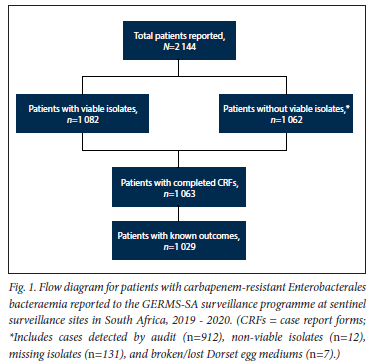
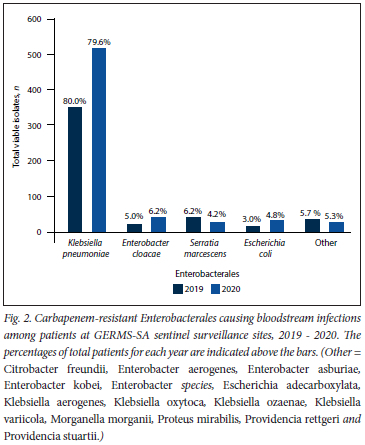
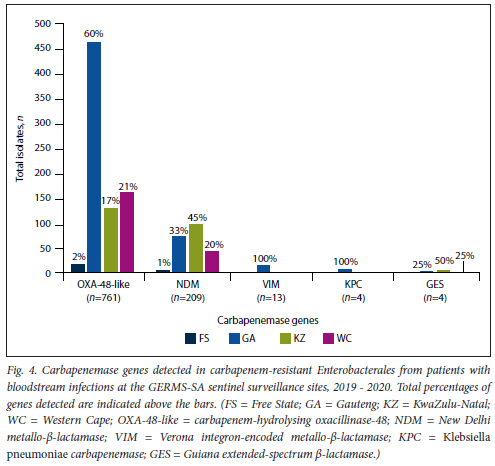
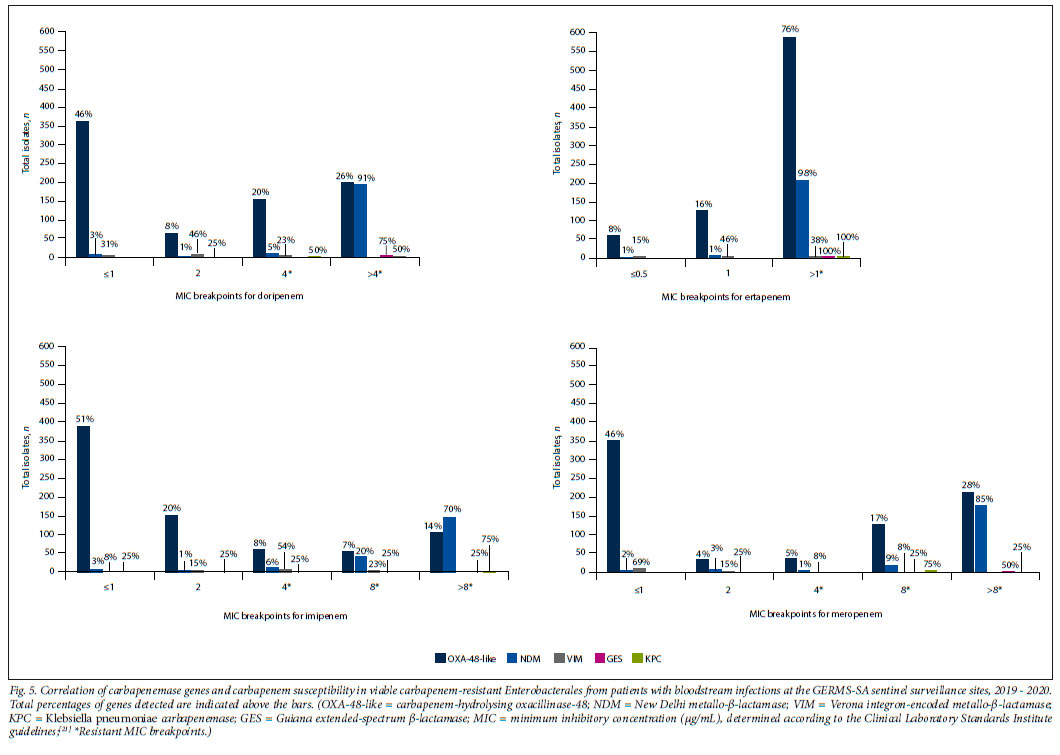
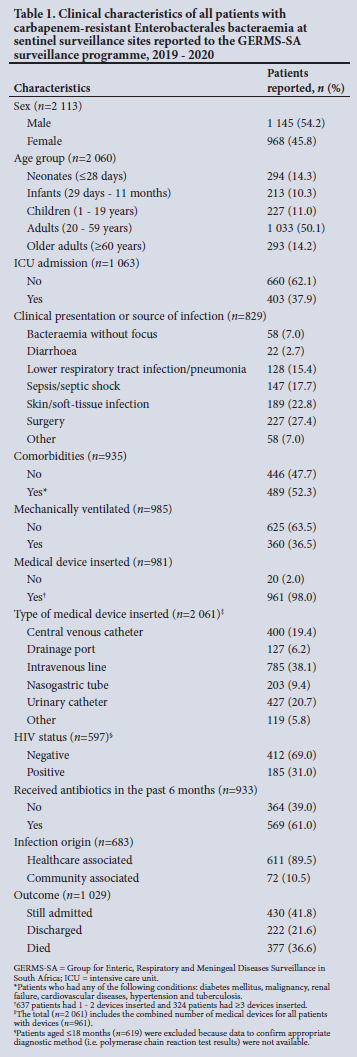
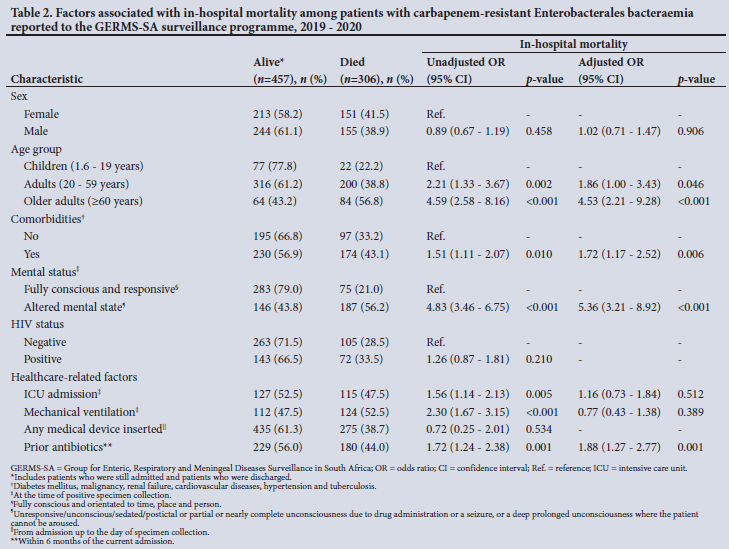
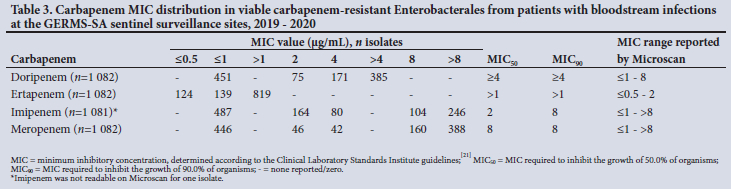
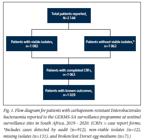
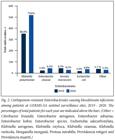
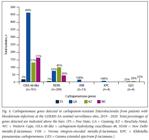
BACKGROUND: The emergence of carbapenem-resistant Enterobacterales (CRE) has become a serious and significant public health threat worldwide, owing to the limited antimicrobial therapy options, and the elevated mortality rates associated with these infections OBJECTIVES: To present an update on the epidemiology of CRE bloodstream infections among hospitalised patients reported under the Group for Enteric, Respiratory and Meningeal Diseases Surveillance in South Africa (GERMS-SA) between January 2019 and December 2020 METHODS: Patients of all ages with CRE bacteraemia were included and isolates, when available, were sent to the reference laboratory for confirmatory testing and molecular characterisation. Multivariable logistic regression analysis was performed to assess factors associated with in-hospital mortality RESULTS: We included 2 144 patients with CRE bacteraemia with a median age of 33 (interquartile range 1-51) years, of whom 1 145 (54.2%) were male. Klebsiella pneumoniae accounted for 79.8% of infections (n=863/l 082), of which 89.5% (n=611/683) were healthcare associated (HA). The most common carbapenemase genes were carbapenem-hydrolysing oxacillinase-48 (bla0XA_48-like) (76.8%; n=761/991), New Delhi metallo-β-lactamase (blaNDM) (21.1%; n=209/991) and Verona integron-encoded metallo-β-lactamase (blaVIM) (1.3%; n=13/991). None of the screened isolates with a colistin minimum inhibitory concentration >2 (ig/mL harboured the mobilised colistin resistance (mcr)-1 to mcr-5 genes. The crude in-hospital mortality rate was 36.6% (n=377/1 029). Patients aged >60 years (v. 1.6-9 years) (adjusted odds ratio (aOR) 4.53; 95% confidence interval (CI) 2.21 - 9.28), those with comorbidities (diabetes, malignancy, renal and/or cardiovascular failure) (aOR 1.72; 95% CI 1.17 - 2.52), those with altered mental state (aOR 5.36; 95% CI 3.21 - 8.92) and those with previous antimicrobial use (aOR 1.88; 95% CI 1.27 - 2.77) had increased odds of in-hospital mortality CONCLUSION: The epidemiology of CRE bloodstream infections remained similar compared with the previous surveillance report. Most infections were HA and caused by OXA-48-like carbapenemase-producing K. pneumoniae with no plasmid-mediated colistin resistance. Standard infection control measures should be strengthened
 Thumbnail
 Thumbnail
 Thumbnail
 Thumbnail
 Thumbnail